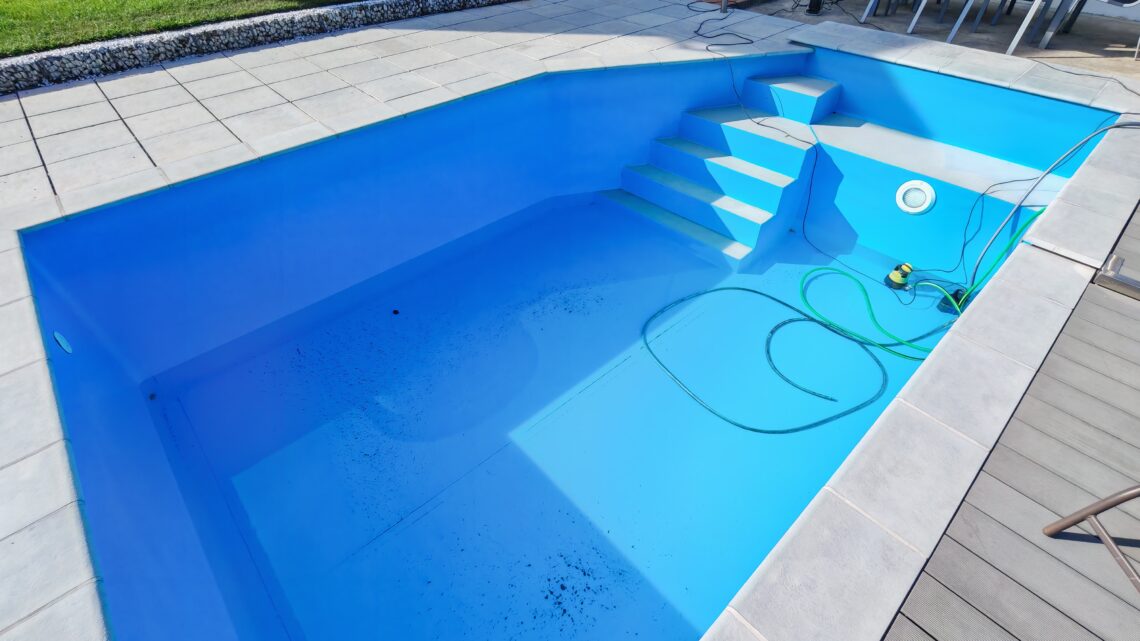
High Chlorine Consumption in the Pool: Why 20 Liters of Chlorine Disappeared in Two Weeks
Too much chlorine in the pool, a chlorine canister that’s constantly empty, or water parameters that don’t add up even though the water is clear: There are many possible causes for high chlorine consumption. In addition to sunlight, temperature, and swimming activity, the pH level, the chlorine products used, and cyanuric acid also play an important role. Even a good redox value does not automatically mean that the measured chlorine level in the pool is interpreted correctly.
I noticed the problem after installing the BAYROL Automatic Cl-pH. In just under two weeks, the dosing system used about 20 liters of liquid chlorine—even though the water was clear and the system appeared to be working properly. The actual cause was not a defect, but rather the long-term use of organic chlorine tablets.
In this guide to pool chlorine, I’ll walk you through my complete troubleshooting process and explain how chlorine works in a pool, what DPD1 and redox levels actually indicate, and why cyanuric acid can build up without you noticing. I also describe the necessary water change, how to restart the automatic dosing system, and how I was subsequently able to reduce chlorine consumption by about 80 percent.
At a glance
- Why chlorine is needed in a pool at all, and how the pH level affects its effectiveness
- Why my BAYROL Automatic Cl-pH used up about 20 liters of liquid chlorine in just under two weeks
- What are the differences between organic and inorganic chlorine?
- How Cyanuric Acid Can Accumulate Unnoticed in Pool Water from Chlorine Tablets
- Why Redox Values and DPD1 Measurements Yield Different Results
- How PoolLab 2.0 Revealed the Root Cause
- How I Calculated the Required Water Replacement and Put It Into Practice
- What water parameters I measured after refilling the tank
- How Chlorine Usage Was Reduced by About 80 Percent After the Water Was Replaced
- Which readings I continue to monitor despite automatic dosing
- What I would do differently if I were to switch back to an automatic dosing system
- How to Track Progress Using My Excel Measurement Logs
Why My Automatic Dosing System Used So Much Chlorine
To make sure the subsequent troubleshooting remains clear, I need to start a little further back. After all, chlorine isn’t just added to the pool simply because that’s how it’s always been done. It plays an important role in water maintenance.
Why Chlorine Belongs in the Pool in the First Place
At first glance, pool water may look perfectly clean, yet it can still contain bacteria, fungi, algae spores, or other unwanted microorganisms. Although a sand filter removes dirt particles from the water, it does not, on its own, ensure reliable disinfection.
That is exactly what chlorine is used for. In water, it forms, among other things, hypochlorous acid. This highly effective ingredient attacks microorganisms and oxidizes organic contaminants. Simply put, chlorine neutralizes germs and breaks down some of the substances that enter the pool from people and the surrounding environment.
These include, for example:
- Sweat and dead skin cells
- Sunscreen and Cosmetics
- Leaves, Pollen, and Insects
- Dust and dirt from the surrounding area
- Algae spores and other microorganisms
- Contamination from rainwater
Chlorine is used in the disinfection process. The more the pool is used and the more dirt gets into the water, the higher the chlorine requirement usually becomes. However, a pool doesn’t lose chlorine just because of dirt. Sunlight, water temperature, pH level, circulation, and the care products used so far also play an important role.
Why pH and Chlorine Go Hand in Hand
The pH level plays a role in determining how effectively the chlorine in the water can work. At a pH of approximately 7.0 to 7.4, a sufficiently large proportion of the free chlorine is present as effective hypochlorous acid.
If the pH value rises significantly, this ratio shifts. Although chlorine is still present in the water and may even be detectable under certain circumstances, its effects are less immediate. This slows down the disinfection process.
However, a very low pH level is also not a practical solution. Water that is too acidic can corrode materials, damage equipment, and irritate the skin and eyes. For my pool, a target value of about 7.2 has therefore proven to be effective.
For reliable water maintenance, several factors must work together:
- The pH must be within an appropriate range.
- There must be a sufficient amount of effective chlorine in the water.
- The filtration system must circulate the water regularly.
- The filter must remove dirt particles from the system.
- The dosage must be able to adjust based on pool usage, temperature, and weather conditions.
More chlorine isn’t necessarily better. The key is to achieve the required disinfection level without pumping an unnecessary amount of chemicals into the pool.
This is how I’ve been maintaining my pool with chlorine tablets so far
Before installing my automatic dosing system, I used a chlorine dosing valve built into the pool’s plumbing. I have already documented the installation and setup of my equipment at that time in detail in the post about the piping in the equipment room.
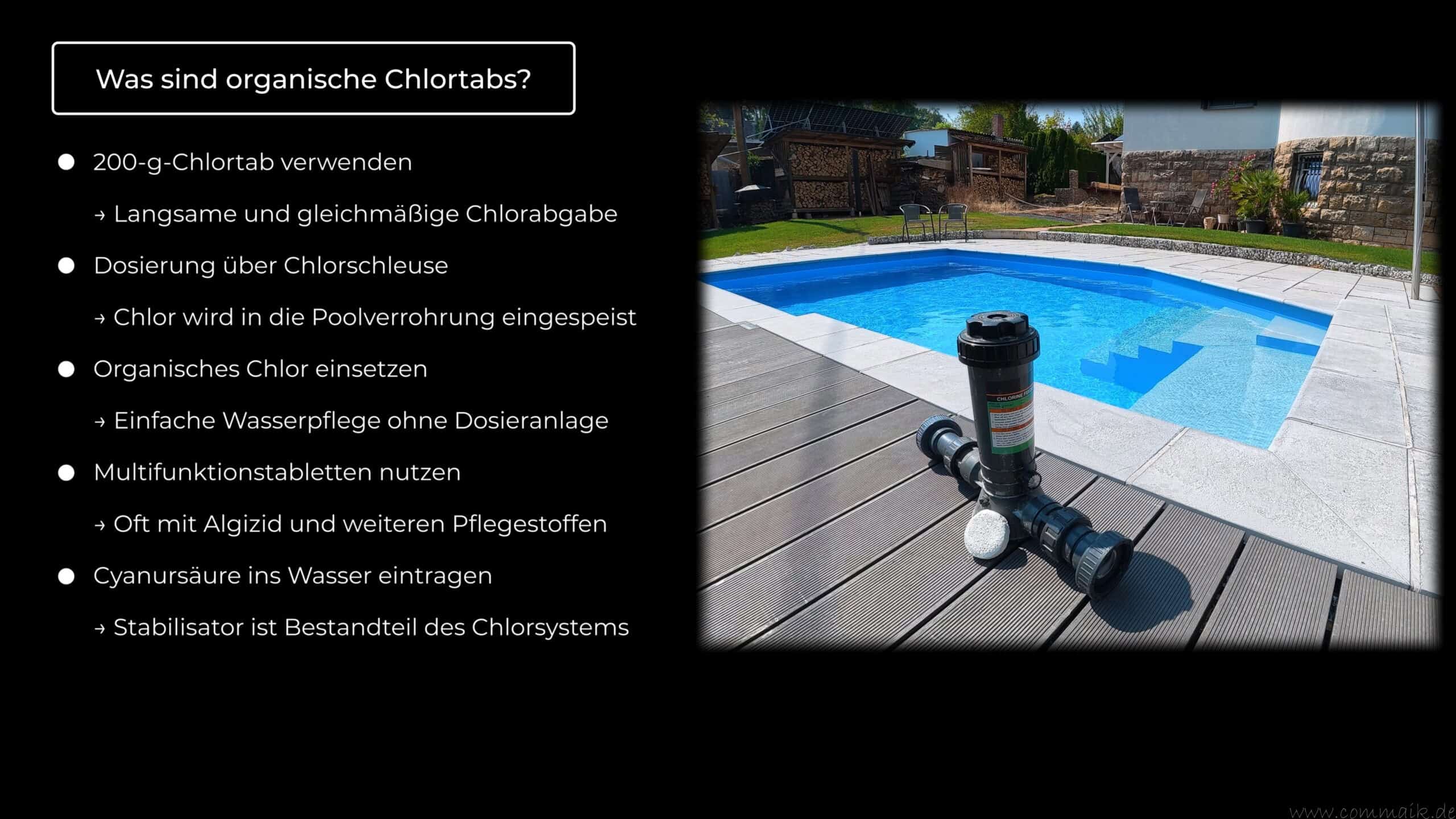
In this dosing chamber, 200-gram organic Multitabs dissolved slowly. It was so convenient: just drop in the tablets, adjust the flow, and the chlorine was gradually released into the pool’s return line.
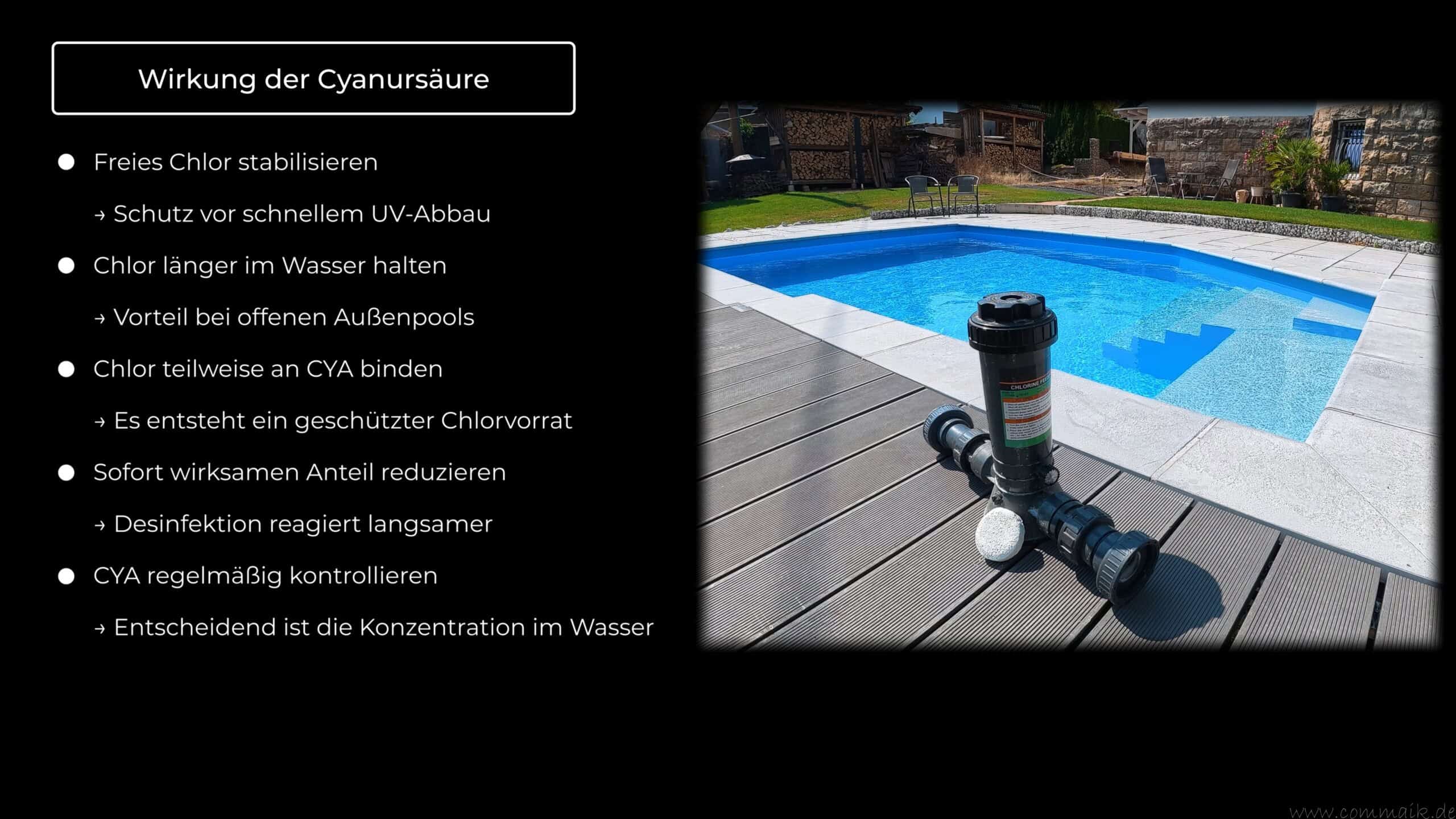
In addition to chlorine, the multifunctional tablets often contained other ingredients for ongoing water maintenance. At the same time, however, they also added cyanuric acid to the pool. This stabilizes the chlorine and protects it from breaking down too quickly due to the sun’s UV radiation.
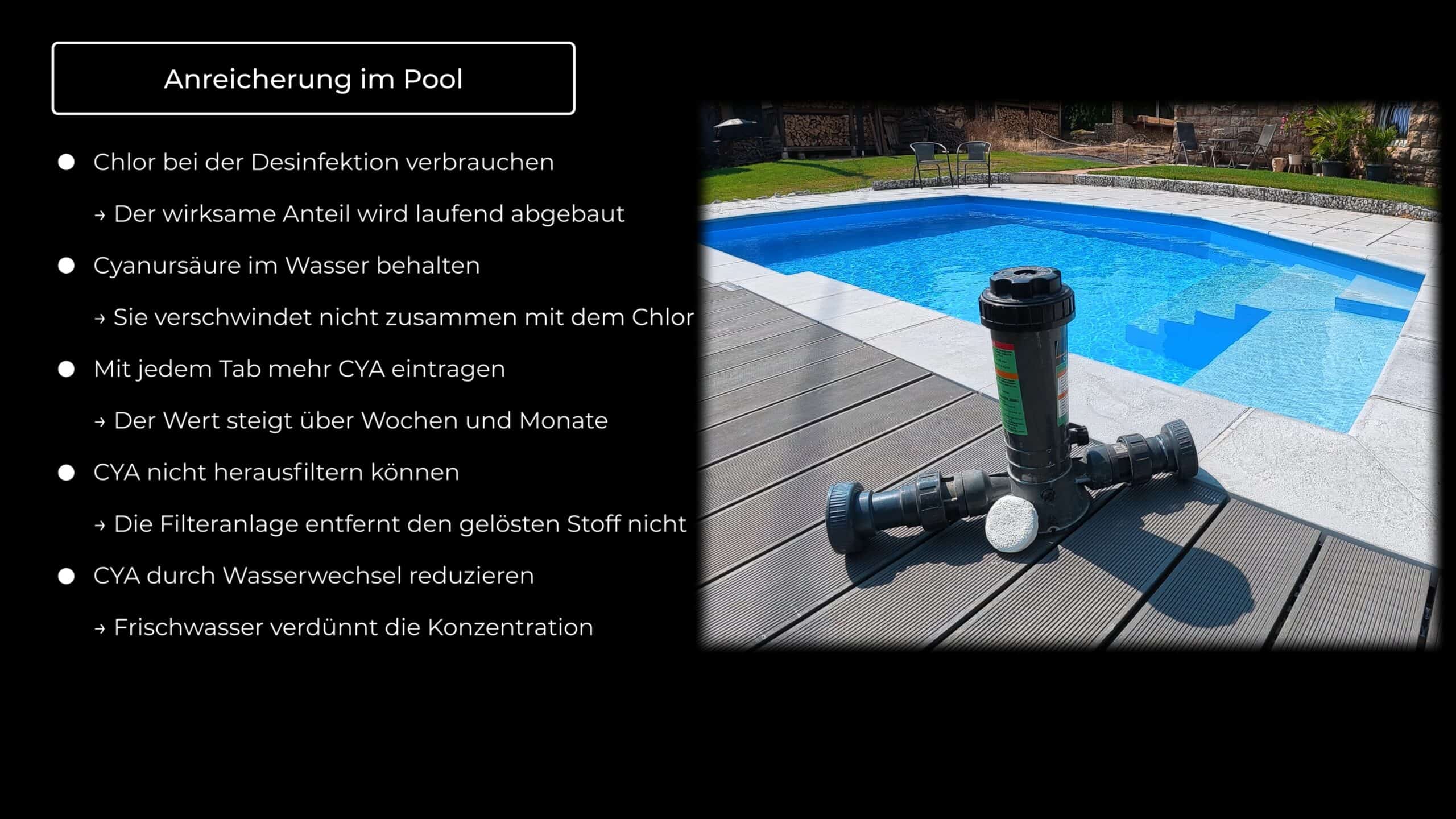
This stabilization is particularly helpful at first, especially for an outdoor pool. The chlorine remains in the water longer, creating a certain reserve. However, cyanuric acid is not consumed along with the chlorine during the disinfection process. Therefore, each organic chlorine tablet releases additional cyanuric acid into the water.
My meter at the time showed me:
- the pH,
- alkalinity
- and the free chlorine.
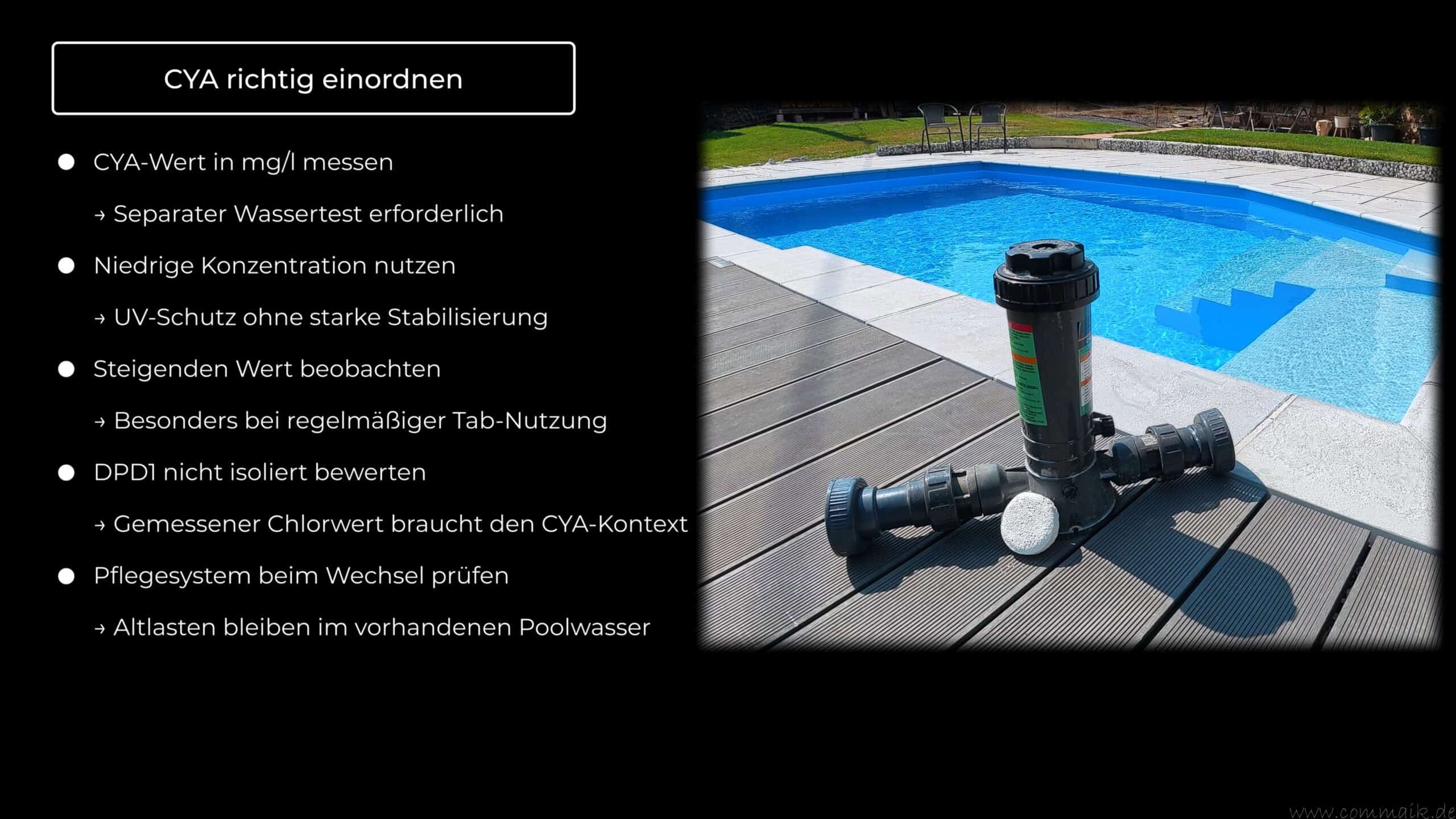
What it didn’t show was the cyanuric acid.
As long as the water treatment with the tablets was working, I had no obvious reason to look into it any further at this point. However, it was precisely this lack of information that proved to be my undoing after the renovation.

- Stufenlose Dosierung der Poolchemie durch Regulierungsschraube
- Kapazität bis zu sieben Stk. 200 g Tabletten
- Für Poolgrößen bis zu 95 m³
- Anschluss 1 ½" Innengewinde
- Integriertes Entlüfungsventil
- Nur für Chlor-Langzeittabletten geeignet
Conversion to the BAYROL Automatic Cl-pH
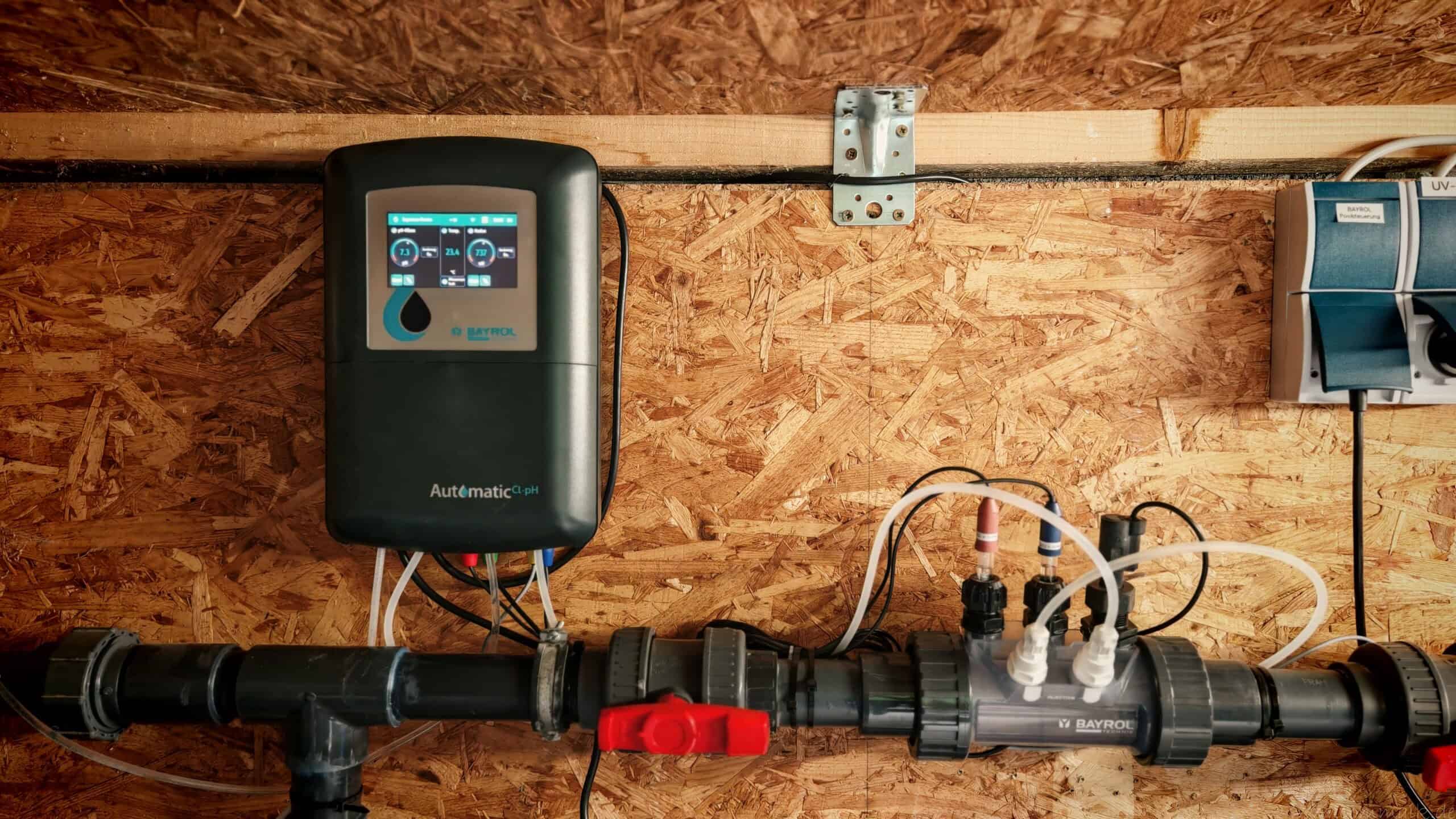
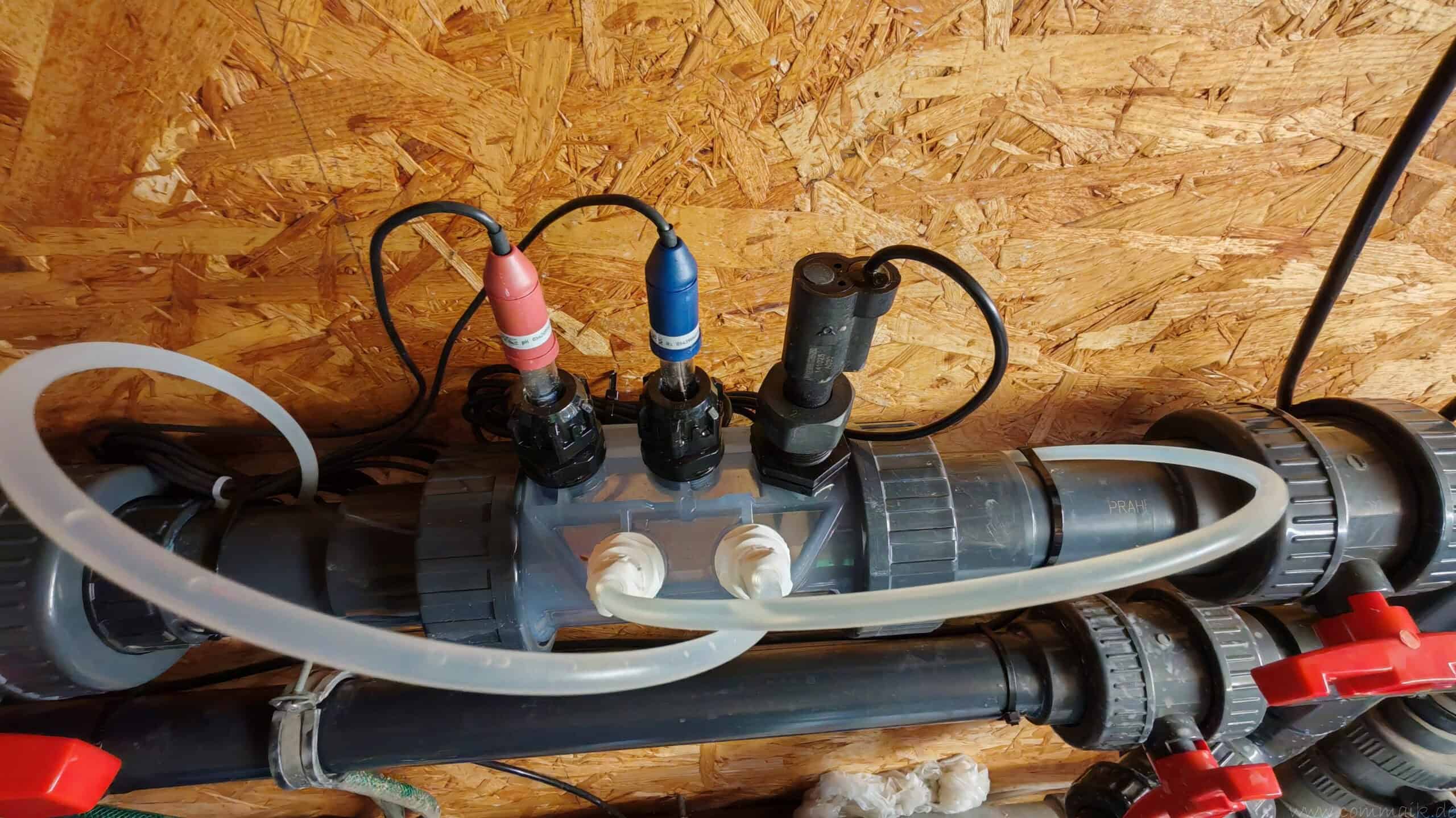
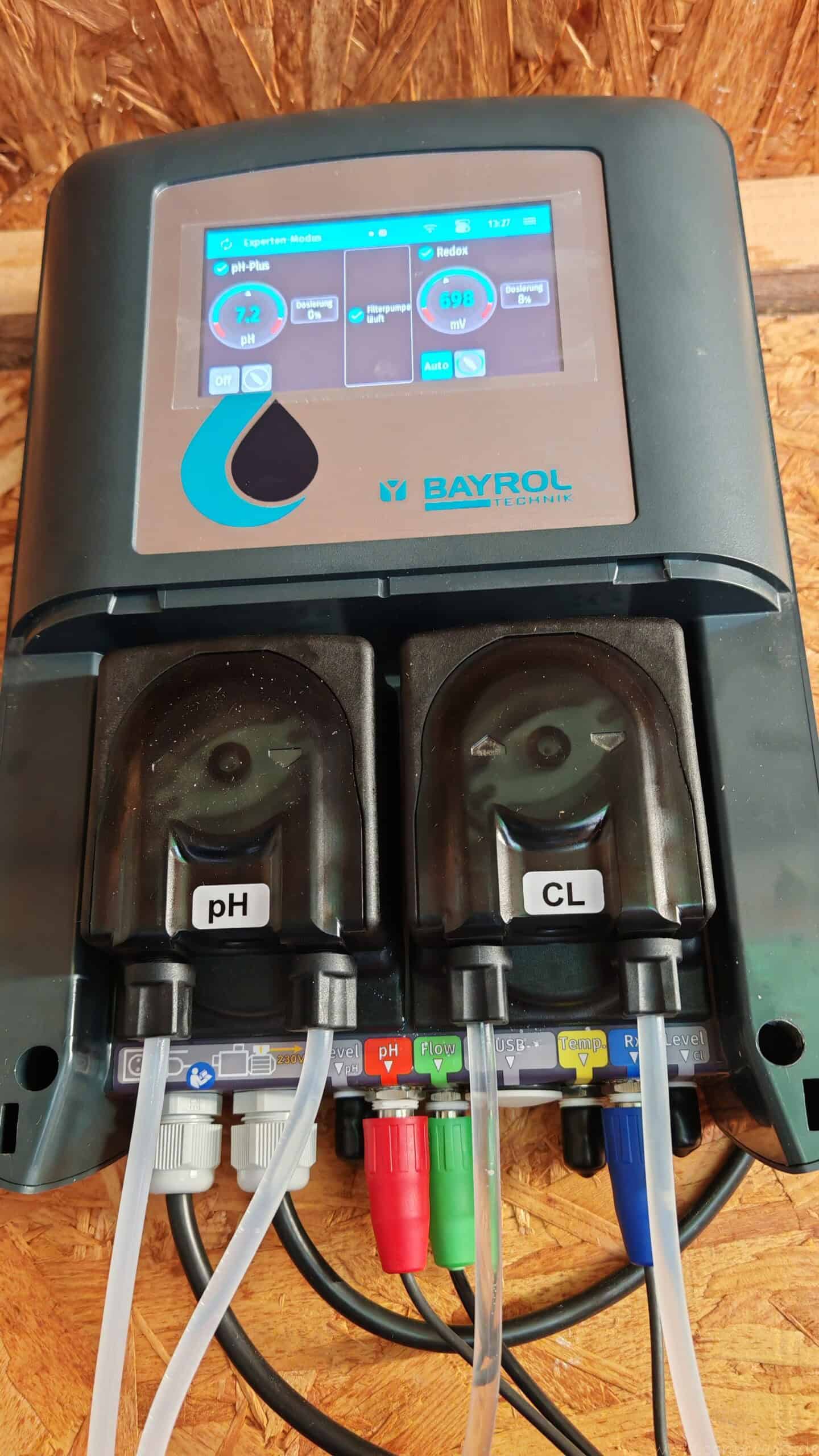
To automate water treatment, I supplemented my existing chlorine dispenser with the BAYROL Automatic Cl-pH* —or rather, replaced it while the system was still running.
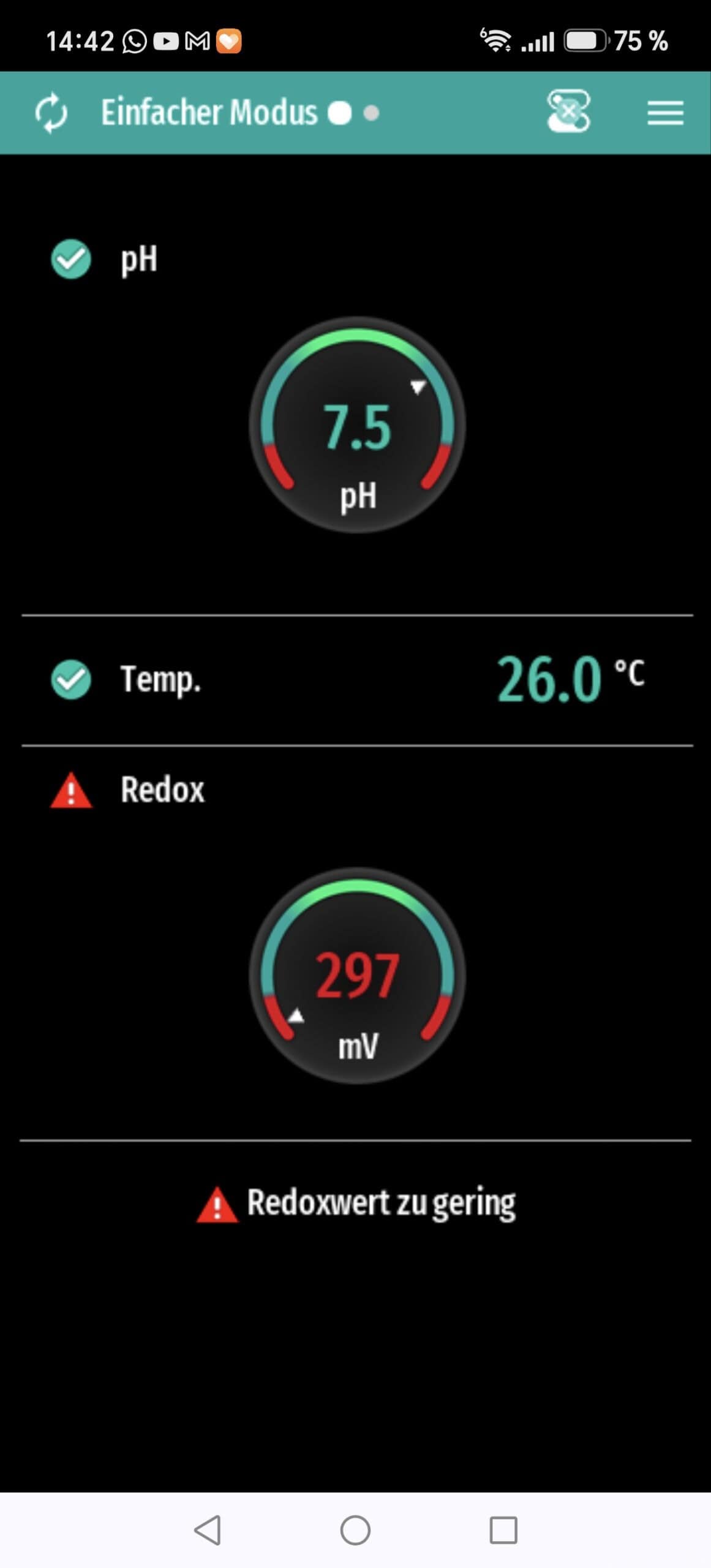
The system does not directly measure the chlorine concentration in mg/l. Instead, it monitors the pH and redox levels of the water. Simply put, the redox value describes the current oxidizing power and thus the reactivity of the disinfectant.
If the redox value falls below the setpoint, the metering pump delivers liquid inorganic chlorine* from the container into the pool piping. As soon as the target range is reached, the dosing stops again. At the same time, the system can regulate the pH level using pH-Minus.
I have already described the complete installation, the Smart&Easy Connector, the measuring probes, and the commissioning process in my detailed post on installing the BAYROL Automatic Cl-pH.
Basically, the new system worked exactly as it was supposed to. The pumps were running, the probes were calibrated, and the system responded to the measured redox value. Even so, after just a short time, I noticed something that didn’t match my expectations at all.
Zuletzt aktualisiert am 20. October 2026 um 05:30 . Ich weise darauf hin, dass sich hier angezeigte Preise inzwischen geändert haben können. Alle Angaben ohne Gewähr. (*) Bei den verwendeten Produktlinks handelt es sich um Affiliate Links. Ich bin nicht der Verkäufer des Produktes. Als Amazon-Partner verdiene ich an qualifizierten Verkäufen. Dein Preis ändert sich jedoch nicht.


The 20-liter canister was empty after just under two weeks
The BAYROL system pumped a surprisingly large amount of liquid chlorine into the pool. In just under two weeks, a 20-liter canister was almost completely used up.
That amounted to about 1.4 liters of liquid chlorine per day—for a pool containing about 27 m³ of water and used by only two or three people. That level of consumption seemed far too high to me.
At first, several possible causes seemed likely:
- Was the redox sensor calibrated incorrectly?
- Did I set an inappropriate setpoint?
- Did the metering pump dispense too much chlorine?
- Was there a problem with the flow of the measurement water?
- Was the liquid chlorine too weak, or had it already deteriorated?
- Was there an unusually high level of contaminants in the water?
- Did the pool really lose that much chlorine due to the sun and the temperature?
I checked the metering pump, recalibrated the probe, and monitored the readings over several days. From a technical standpoint, however, the system behaved as expected. It added chlorine whenever the redox value fell below the set target value.
This made it clear: The real problem was probably not the new dosing system, but rather the existing pool water.
After switching to inorganic liquid chlorine, the cyanuric acid that had been added over the years did not simply disappear. Although the new water treatment system was launched with new technology and a different chlorine product, it inherited the chemical residues from the previous water treatment process.
This is precisely the point that is easily overlooked when switching from organic chlorine tablets to inorganic liquid chlorine—and it was the starting point for my further troubleshooting.
Organic or inorganic chlorine: What’s the difference?
Not all chlorine is the same. Regardless of the product used, the disinfectant is ultimately produced in the pool water; however, the various chlorine products contain different byproducts and have different properties.
For ongoing water maintenance, it is especially important to distinguish between organic and inorganic chlorine. Both options can reliably disinfect a pool. However, they differ significantly in terms of dosage, shelf life, UV resistance, and their long-term effects on water parameters.
Organic chlorine: convenient and protected from the sun
Organic chlorine is often sold as a slow-dissolving chlorine tablet, a multitab, or fast-dissolving granules. Typical active ingredients are trichloroisocyanuric acid—commonly referred to as “trichlor”—and sodium dichloroisocyanurate, which is usually simply called “dichlor.”
In this context, the term “organic” does not mean that the product is particularly natural or organic. It describes the chemical reaction between chlorine and cyanuric acid.
When organic chlorine enters the water, the chlorine used for disinfection is released. At the same time, cyanuric acid remains in the pool as a stabilizer.
It is precisely this stabilizing effect that makes organic chlorine tablets so popular in traditional manual pool maintenance. A 200-gram Multitab* dissolves over several days and continuously releases chlorine. This means you don’t have to adjust the dosage every day.
Benefits of Organic Chlorine
- Simple and easy-to-plan dosing
- long shelf life
- Ideal for chlorine dosing systems and floating dispensers
- Slow-release tablets allow for a continuous release of chlorine
- Cyanuric acid protects some of the chlorine from rapid UV degradation
- In outdoor pools, chlorine remains in the water longer
- Multitabs may contain additional active ingredients
Disadvantages of organic chlorine
- With each addition, more cyanuric acid enters the water
- The CYA level can rise unnoticed over weeks and months
- The proportion of immediately effective chlorine decreases relative to the measured free chlorine
- A high CYA level can significantly affect the redox value
- Cyanuric acid cannot be removed by a sand filter
- To lower the level, a partial or complete water change is usually necessary
- With slowly dissolving tablets, the chlorine release can only be adjusted to a limited extent to meet actual needs
Organic chlorine is therefore not inherently bad. It works well with a classic, well-maintained outdoor pool where chlorine tablets are added manually and some UV protection is desired. However, this requires that, in addition to pH and free chlorine, cyanuric acid be measured regularly as well.
This becomes particularly problematic when organic tabs are used for years but the CYA level is never checked. That was exactly the case with my pool.


Inorganic chlorine: direct effect without additional cyanuric acid
Inorganic chlorine does not contain a cyanuric acid stabilizer. This group includes, for example, sodium hypochlorite (liquid chlorine) and calcium hypochlorite (granules).
My BAYROL Automatic Cl-pH uses sodium hypochlorite. The inorganic liquid chlorine* is drawn directly from the container by the metering pump and fed into the pool plumbing.
In water, this results in an equilibrium between hypochlorous acid and hypochlorite. Hypochlorous acid is the component that is particularly effective for disinfection. The size of this proportion depends heavily on the pH value.
The big advantage: This dosing method prevents any new cyanuric acid from entering the pool. The chlorine can react immediately, and the automated system can control the addition of chlorine based on the redox value as needed.
Advantages of inorganic chlorine
- does not introduce any new cyanuric acid into the water
- takes effect immediately after being added
- is very well suited for automatic dosing systems
- Chlorine addition can be adjusted to actual needs
- Redox-controlled systems can respond quickly to stressors
- No gradual increase in the CYA level due to ongoing dosing
- is well suited for shock chlorination without the addition of CYA
Disadvantages of inorganic chlorine
- Without cyanuric acid, free chlorine breaks down more quickly when exposed to sunlight
- Liquid chlorine loses its active ingredient content when exposed to heat or stored for long periods of time
- Sodium hypochlorite is highly alkaline and can make pH control even more challenging
- Canisters require a suitable, cool, and safe storage area
- Chlorine and acidic pH-Minus must be stored strictly separately
- Calcium hypochlorite adds calcium to the water and can increase water hardness
- Without automatic dosing, more frequent checks and smaller additions are required
Inorganic chlorine is particularly well-suited for automatic dosing systems that continuously monitor actual demand and add more as needed. It also makes sense if no further CYA addition is desired or if the pool already has a sufficient or excessively high concentration of cyanuric acid.
However, with an outdoor pool that does not use cyanuric acid, it is important to keep in mind that UV radiation breaks down chlorine much more quickly. That is precisely why inorganic liquid chlorine is particularly well-suited for a system that can continuously monitor and replenish the chlorine level during the filtration process.
A Direct Comparison of Organic and Inorganic Chlorine
| Feature | Organic chlorine | Inorganic chlorine |
|---|---|---|
| Typical shape | Tablets, multitablets, or granules | Liquid chlorine or granules |
| Typical active ingredients | Dichlor or Trichlor | Sodium hypochlorite or calcium hypochlorite |
| Contains cyanuric acid | Yes | No |
| Protection Against UV Degradation | Provided by CYA | Low without existing CYA |
| Effect | Buffered with CYA | Available immediately |
| Long-term consequences | CYA can accumulate | No additional CYA entry |
| Suitable Applications | Manual Maintenance and Chlorine Lock | Automatic dosing and shock chlorination |
| Control | pH, DPD1, and CYA | pH, DPD1, and, for automatic models, redox as well |
| A typical characteristic | Convenient, but we need to make sure we cover our bases | Can be applied in flexible amounts, but is more sensitive to UV light |

- ✅Erleben Sie die mühelose Rundum-Lösung: Geben Sie einfach eine Multifunktionstablette in den Skimmer und lassen Sie sich vom 5-in-1-Effekt verzaubern. Mit nur einer Tablette erhalten Sie alle wesentlichen Vorteile, ohne umständliches Abmessen und Herumhantieren.
- ✅Genießen Sie die umfassende Pflegewirkung in fünf Phasen: Die spezielle chemische Zusammensetzung der 200g-Tabletten mit 5-in-1-Wirkung löst sich langsam auf und startet sofort mit der Phasenwirkung zur kontinuierlichen Desinfektion.
- ✅Die Formel von Meinpool24.de ist das Ergebnis umfangreicher Erfahrung aus dem Forschungs- und Entwicklungslabor. Unsere Produkte durchlaufen fortlaufende und strenge Qualitätsprüfungen, um höchste Standards sicherzustellen.
- ✅Bitte bachten Sie: es handelt sich um ein Produkt, welche 5 verschiedene Wirkweisen enthält - es sind keine 5 Produkte ✅ ideal für Pools ab 25m³ -> für kleinere Pools haben wir Minitabs im Sortiment
- BAuA Reg.-Nr.: N-111918 Biozidprodukt. Vorsichtig verwenden. Vor Gebrauch stets Etikett- und Produktinformationen lesen
How Cyanuric Acid Stabilizes Chlorine
Stabilization with cyanuric acid does not create a protective film, nor is it an additional treatment that simply makes the chlorine stronger. There is a chemical equilibrium at work here.
In pool water, some of the free chlorine is present as hypochlorous acid. It is precisely this component that reacts particularly quickly with germs and organic contaminants.
If cyanuric acid is present in the water, some of this chlorine may temporarily and reversibly bind to cyanurate compounds. This process produces chlorinated cyanurates. This does not mean the chlorine has disappeared permanently, but it is less reactive for the time being.
When hypochlorous acid, which takes effect immediately, is consumed, the chemical equilibrium shifts. Some of the bound chlorine is released again. Cyanuric acid thus actually functions as a buffer or reservoir.
The simplified logic looks like this:
- Free, active chlorine is present in the water.
- Some of it temporarily binds to cyanurate.
- Bound chlorine is better protected from UV radiation.
- When active chlorine is consumed, some of it is released from the reservoir.
- The cyanuric acid itself remains largely in the pool water.
This works quite well at low CYA concentrations. There remains a sufficient amount of rapidly effective chlorine, while some of it is protected from the sun.
However, if the cyanuric acid level continues to rise, the ratio shifts. A larger proportion of the measured free chlorine is in the buffered pool, while at the same time only a comparatively small portion is available to react immediately.
Cyanuric acid as a practical example
I imagine cyanuric acid as a covered parking garage for chlorine.
Since there is no parking garage, all vehicles are parked right outside the door. You can set off right away, but you’ll be completely exposed to the wind and weather. Applied to a swimming pool, this means that chlorine takes effect immediately but is also broken down more quickly by UV radiation.
In a small parking garage, some of the vehicles are sheltered. As soon as a vehicle is needed outside, one pulls out of the parking garage to take its place. That is the desired stabilizing effect.
However, as the parking garage gets bigger and bigger, there may be many vehicles inside, but only a few are immediately available right outside the entrance. On paper, there are still many vehicles available. In practice, however, it takes longer for enough of them to become available.
Similarly, a pool tester may show a normal DPD1 value even though only a small portion of the measured free chlorine is immediately present as highly effective hypochlorous acid.
The DPD1 method therefore does not simply indicate the amount of active chlorine at any given moment. The measurement determines free available chlorine without fully reflecting its actual reaction rate under the given conditions. To determine the classification, at least the pH and CYA levels are also required.
Why Too Much CYA Is a Problem for a Redox Dosage System
The BAYROL Automatic Cl-pH does not measure CYA levels. It also does not measure the DPD1 value in mg/L. The redox sensor simply measures the current oxidation potential of the water.
If there is only a small amount of immediately active chlorine due to a high CYA concentration, the redox value remains relatively low. The system responds as it was programmed to: It dispenses additional liquid chlorine.
However, the additional chlorine that is introduced is once again incorporated into the existing chemical equilibrium. One portion increases the immediately effective chlorine fraction, while another portion returns to the reserve buffered by cyanuric acid. As a result, the system must add more and more chlorine to achieve the desired redox value.
That’s exactly what created the striking image at my pool:
- The automatic dosing system was functioning properly.
- The redox value had difficulty rising to the setpoint.
- The metering pump kept delivering fresh liquid chlorine.
- The canister emptied much faster than expected.
- The cause was not a faulty pump, but rather the composition of the existing pool water.
Switching to inorganic chlorine therefore does not remove any existing cyanuric acid. It simply prevents the addition of more chlorine from causing even more CYA to be added.
That is exactly why, before switching to a redox-controlled dosing system, you should check more than just the pH and chlorine levels. Cyanuric acid also needs to be put to the test. Otherwise, the new technology will end up having to deal with the legacy issues from the previous pool maintenance—just as happened with my pool.

The redox level and chlorine level in a pool are not the same
When troubleshooting, it was important for me to first understand what the BAYROL Automatic Cl-pH actually measures. The system does not have a traditional chlorine sensor that directly measures the chlorine level in mg/l.
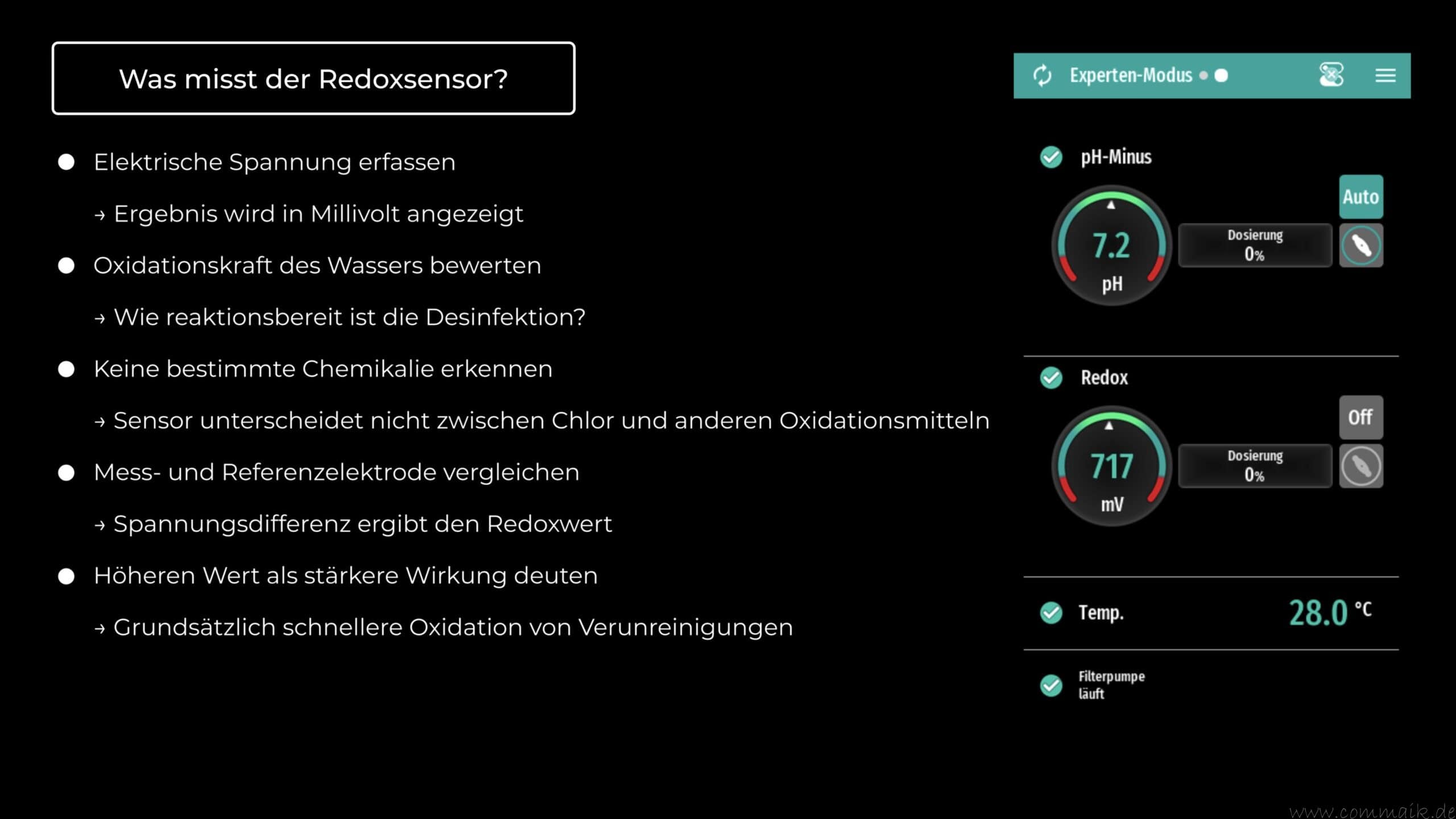
Instead, a redox electrode is located in the measuring chamber. It measures the oxidation-reduction potential of the pool water, often referred to as ORP. The abbreviation stands for “Oxidation-Reduction Potential.”
The redox value is expressed in millivolts, or mV for short. In simple terms, it describes how readily the oxidizing agents present in the water react with germs and other contaminants.
A high redox value generally indicates a strong and rapid oxidizing effect. Conversely, a low value indicates that the disinfectant’s effectiveness is reduced or is being compromised to a greater extent by contaminants.
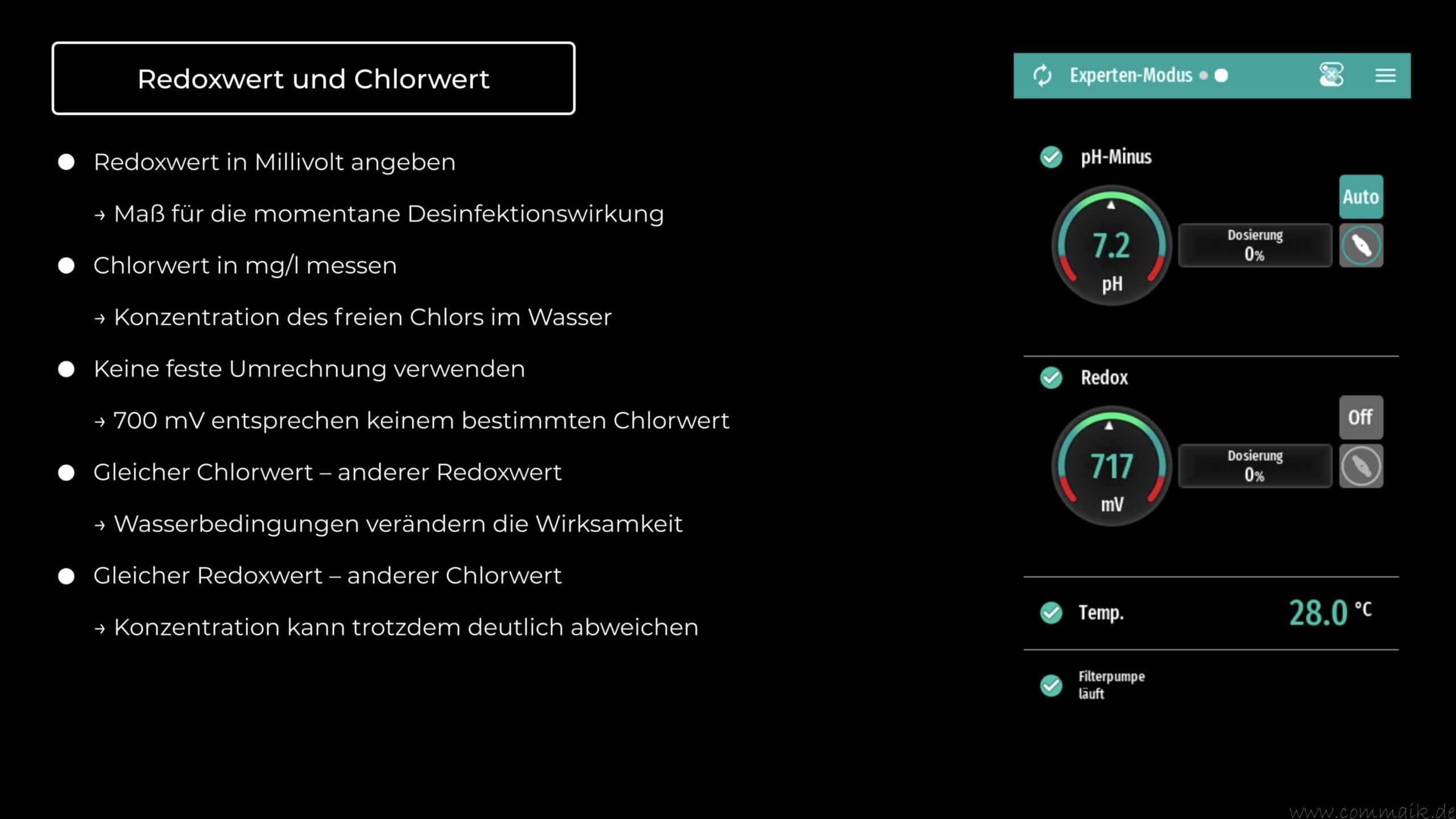
However, that does not mean that the redox value can be directly converted to a chlorine value. 720 mV does not automatically correspond to 0.5, 1.0, or 2.0 mg/L of free chlorine. There is no universally applicable conversion table.
Factors That Affect the Redox Value
The redox sensor does not detect the total amount of chlorine in the water. Nor does it distinguish between chlorine and other oxidizing agents. Only the electrical redox potential is measured under the current conditions.
The displayed value is influenced by, among other things:
- the pH level
- the concentration of cyanuric acid
- the amount of free and immediately active chlorine
- organic contaminants
- other oxidizing or reducing substances
- the water temperature
- the water flow at the electrode
- Contaminants on the measuring tip
- Age and Condition of the Electrode
- the time since the last chlorine dosing
- the circulation of the pool water
The effect of the pH value is particularly noticeable. At a pH of around 7.2, a larger proportion of the free chlorine is present as active hypochlorous acid. As the pH value rises, this proportion decreases. The DPD1 value may remain similar, while the redox value decreases.
Cyanuric acid also alters the ratio. It buffers a portion of the free chlorine, thereby reducing the amount that is immediately available to react at that moment. As a result, a relatively high level of free chlorine can be measured when the CYA level is high, while the redox value remains comparatively low.
How BAYROL Uses the Redox Value for Dosage
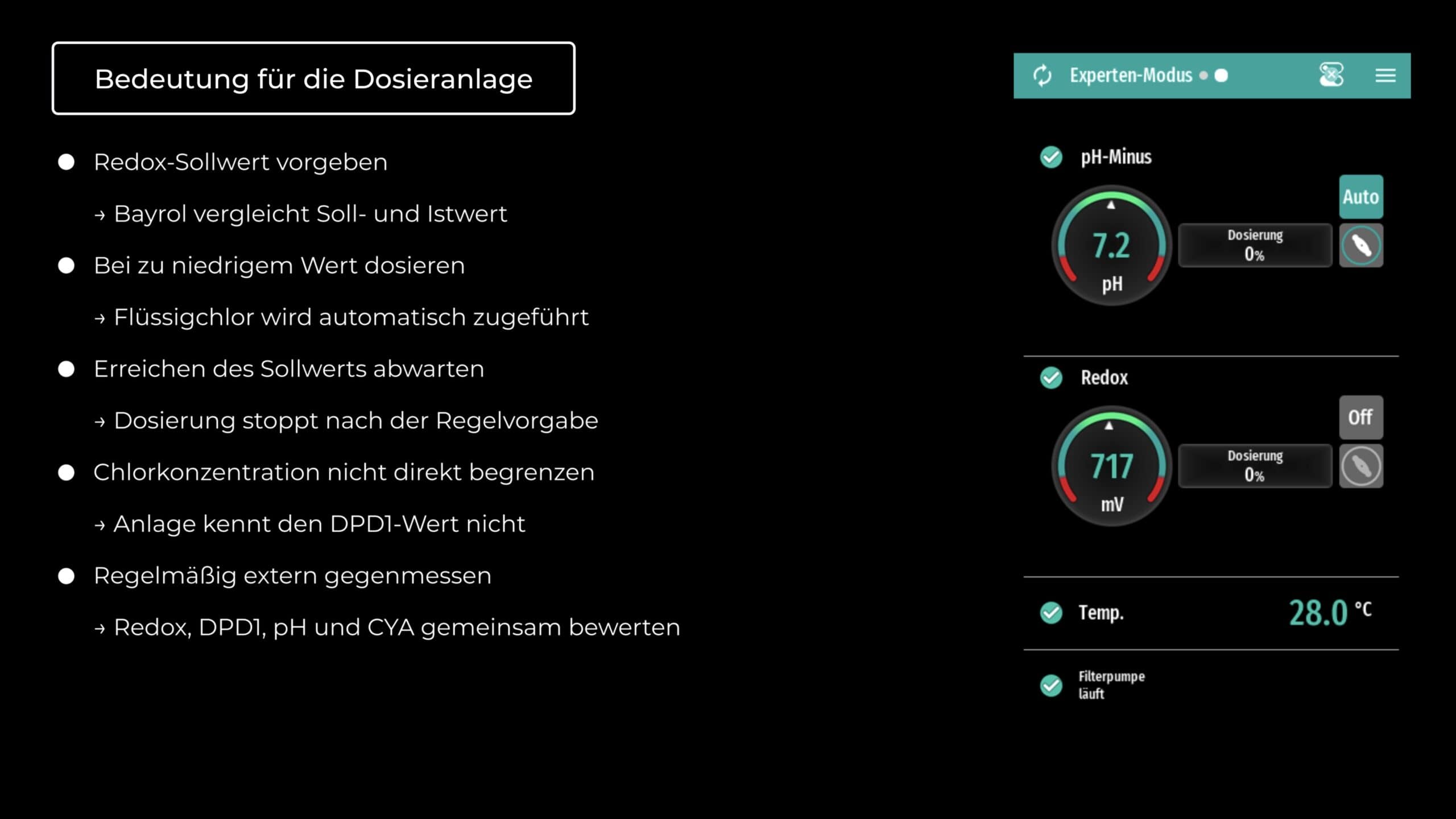
For automatic control, the BAYROL compares the measured redox value with the setpoint.
If the current value is below that, the dosing pump dispenses liquid chlorine into the pool piping. This increases the oxidizing power of the water and, as a result, usually also the redox potential. As soon as the target range is reached, the system stops dosing again.
BAYROL actually operates largely on a needs-based basis and in “real time.” It does not attempt to maintain a fixed chlorine level in mg/l, but rather a specified disinfection performance.
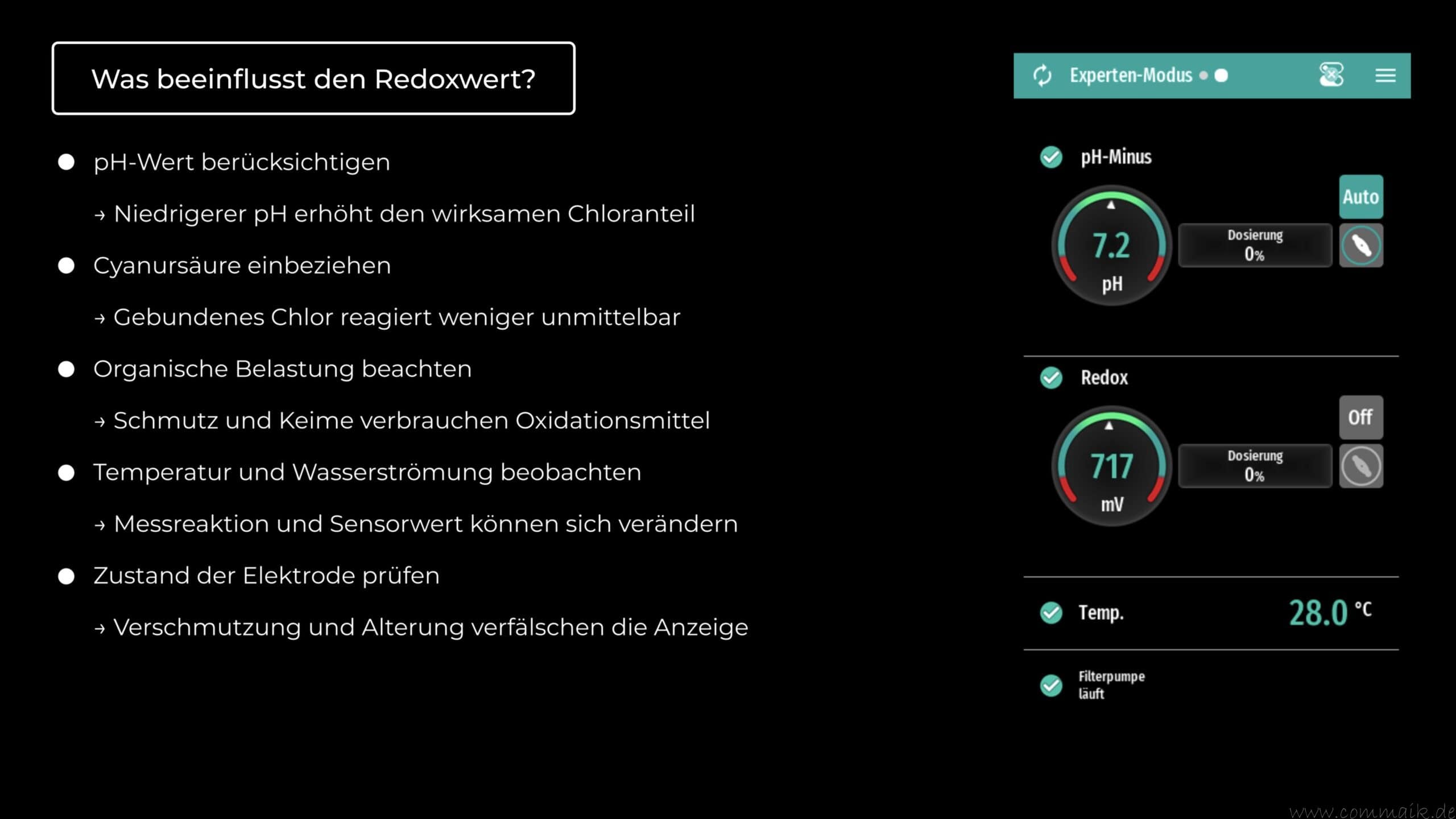
That worked exceptionally well after I changed the water. With a pH of around 7.2 and no detectable cyanuric acid, my pool achieved redox values between about 720 and 750 mV even with relatively low levels of free chlorine.
That makes sense, in principle. Without CYA, a larger proportion of the free chlorine is immediately available for disinfection. If the water is clean and the pollution level is low, a low DPD1 value can therefore occur alongside a high redox value.
Same redox value, different chlorine content
A redox value of 720 mV can be achieved in two pools with completely different chlorine levels.
In a pool without cyanuric acid, with clean water and a pH of around 7.2, even a relatively small amount of free chlorine can provide a high level of oxidizing power.
In another pool with a high CYA level, a higher pH, or a higher organic load, significantly more chlorine may be needed to achieve the same redox value.
Conversely, the same DPD1 value can also result in different redox values. Therefore, two pools, each with a free chlorine concentration of 1.0 mg/l, do not necessarily have the same disinfecting effect.
It was precisely this lack of a stable relationship that had bothered me at first. I expected that a specific redox value would automatically correspond to a specific chlorine concentration. In practice, although the two measurements are related, they describe different properties of the water:
- The redox value describes the current oxidizing power.
- The DPD1 value indicates the measurable concentration of free chlorine.
- The CYA value helps determine what proportion of that can react immediately.
- The pH level affects how effectively the chlorine in the water works.
The redox value is therefore an excellent control variable for automatic dosing. However, it does not completely replace external verification measurements. Although the system quickly detects when the oxidizing power is decreasing, it does not know the DPD1 value, the CYA value, or the amount of bound chlorine.
Why my old meter couldn’t identify the cause
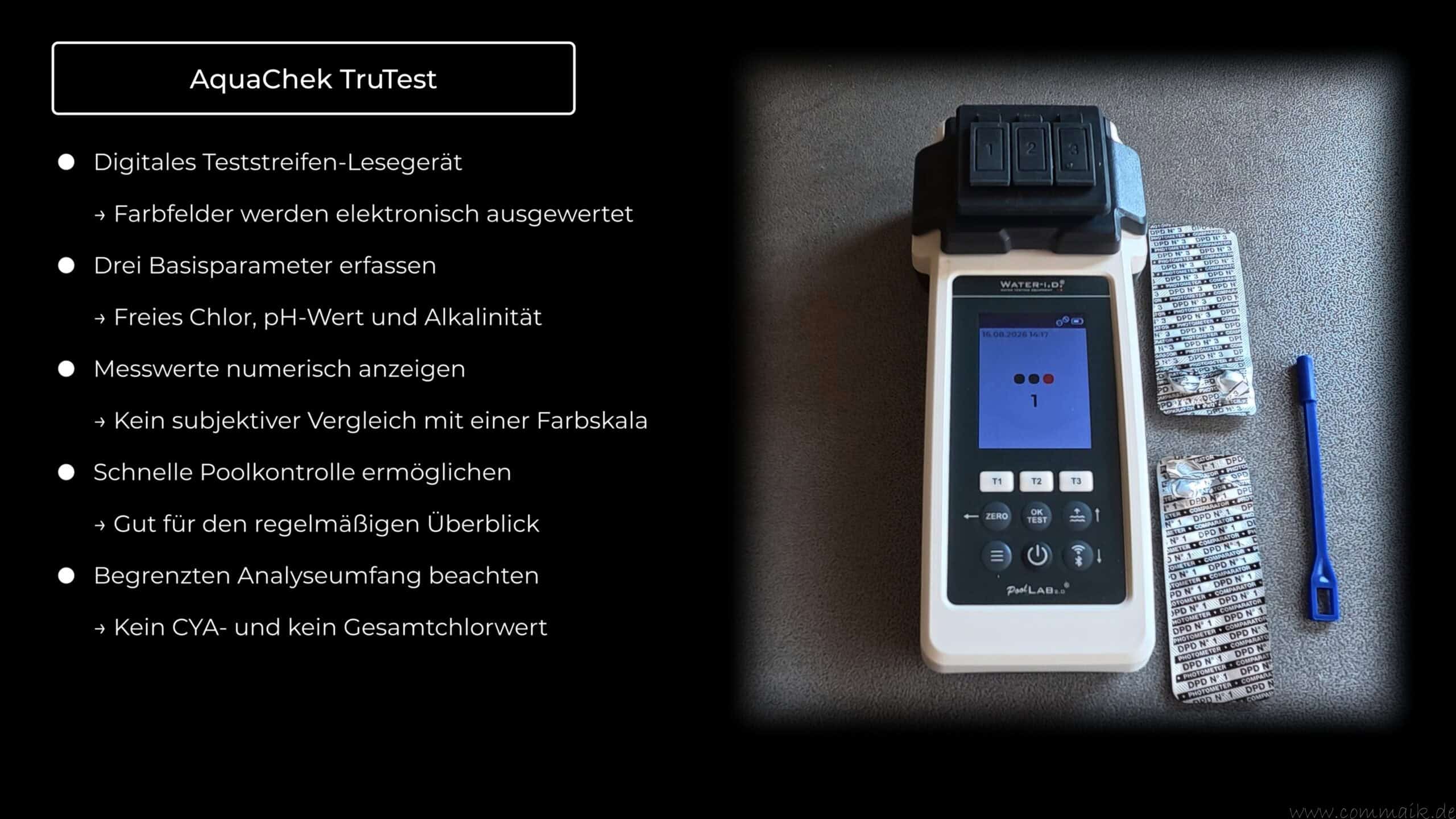
For my regular tests, I initially used an AquaChek TruTest. The device electronically reads special test strips and then displays numerical values for three basic water parameters:
- free chlorine
- pH value
- Alkalinity
I found that much more convenient than the traditional method of comparing a discolored test strip to a printed color scale. For quick checks here and there, the device served its purpose.
However, it reached its limits during my troubleshooting. Neither cyanuric acid nor total chlorine could be determined using this method. But those were exactly the two values I needed to properly interpret the unusually high chlorine consumption.
That’s why I switched to PoolLab 2.0 *.

- & : Elektronischer Wassertester (Photometer) PolLab 2.0 (Nachfolger Pooltester Poollab 1.0) inkl. 70 Tabletten Starterset + 70 Ersatztabletten "Made in Germany"
- : Digitaler Pooltester (wasserdicht IP68) fr Wasseranalyse von 24 Parametern mit Bluetooth, WLAN, 4 Wellenlngen und groem 24-Zoll-Farbdisplay
- : Der Poolwassertester spart wertvolle Zeit bei der Poolmessung durch das Messen von bis zu 3 Parameter gleichzeitig
- -: 40x DPD Nr. 1 Freies Chlor / Brom, 20x DPD Nr. 3 Gesamtchlor, 40x Phenol Red pH Wert, 20x Alkalinitt M Alkalinittskapazitt/Surekapazitt, 20x CYA-Test Cyanursure
- Unsere Produkte bieten, durch strenge Kontrollen, herausragende Qualitt fr alle Poolbesitzer. AlphFa ist eine deutsche Hndlermarke und weder Hersteller noch Exklusivvertreiber dieses Artikels.
A Brief Side Note: How the PoolLab 2.0 Takes Measurements
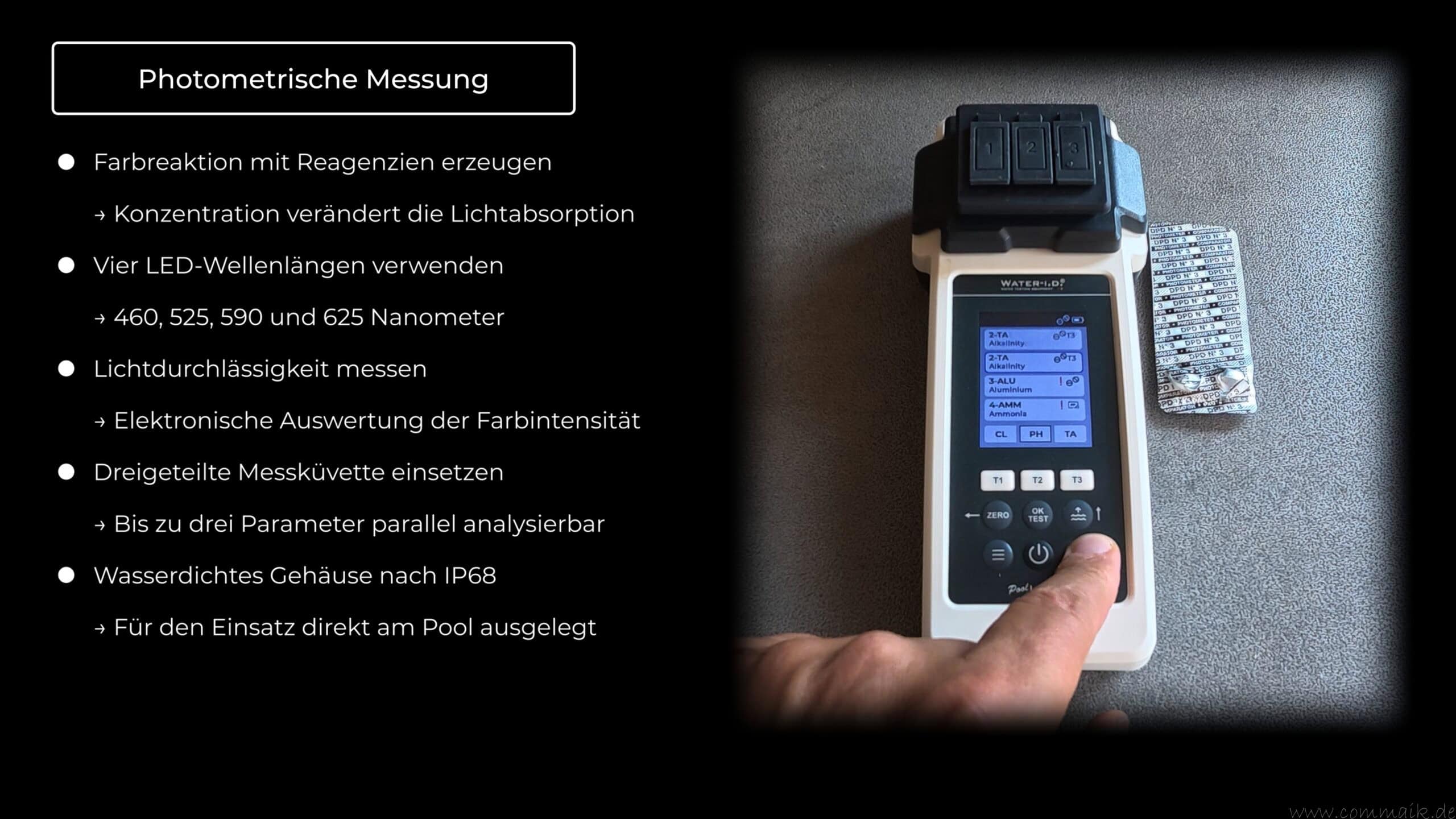
The PoolLab does not use a visually read test strip; instead, it operates on a photometric principle. To do this, a water sample is placed in the measuring chamber and a reagent tablet appropriate for the respective parameter is added.
The reagent triggers a specific color reaction when mixed with water. The higher the concentration of the substance being tested, the more the color of the sample typically changes. The PoolLab shines LEDs of various wavelengths through this sample and measures how much light passes through.
The device then uses this light absorption to calculate the measured value. This eliminates the need for a subjective comparison with a color scale.
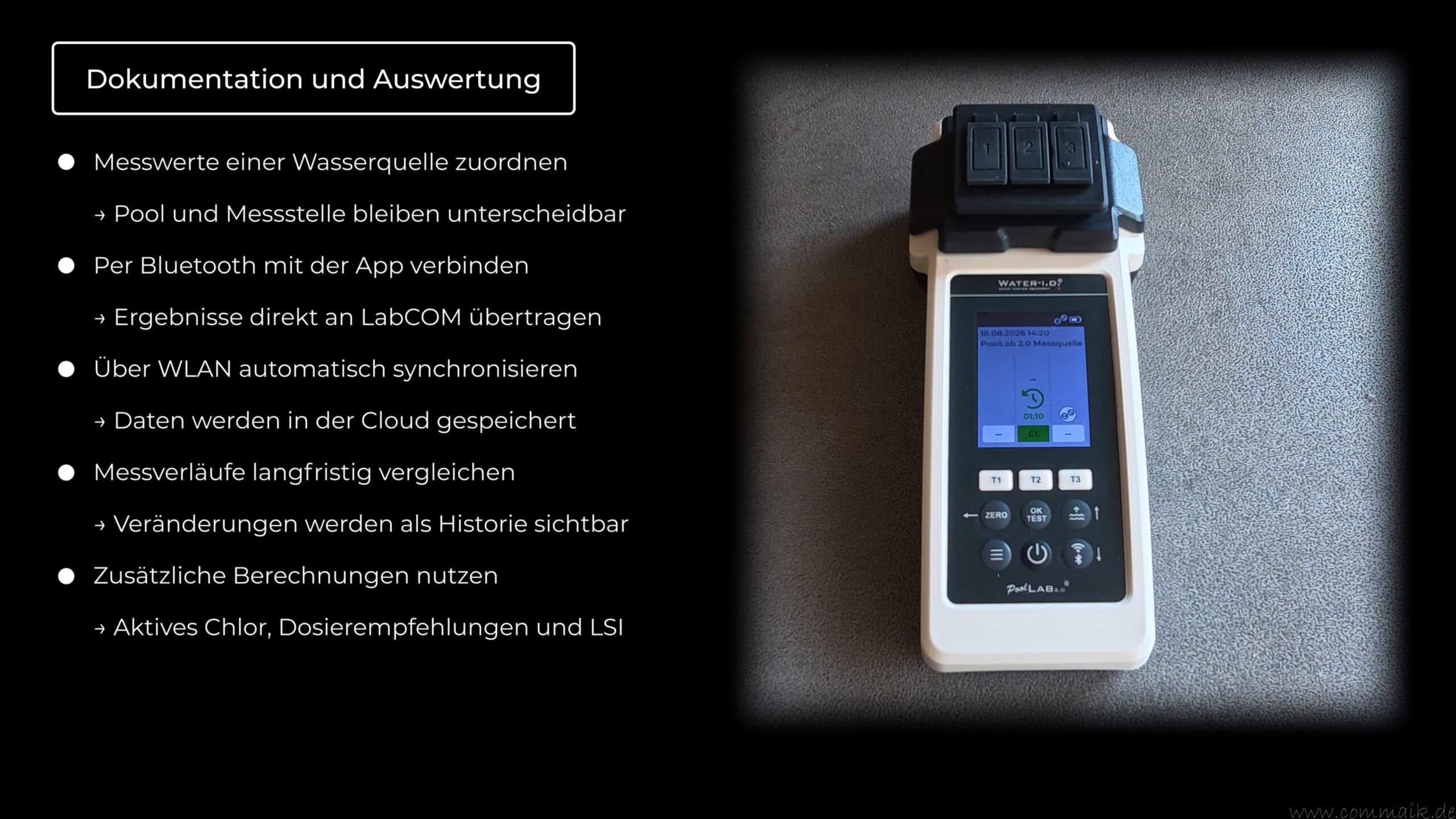
The PoolLab 2.0 features a three-part measuring cuvette. Depending on the measurement procedure, this allows up to three water parameters to be prepared and analyzed simultaneously. In addition to the metrics that are most important for my pool, the device supports numerous other measurement methods.
The measured values can be transmitted to the LabCOM app via Bluetooth. In addition, the data can be synchronized via Wi-Fi and recorded over an extended period of time. This history was particularly helpful for my troubleshooting because it allowed me to compare individual snapshots with the trends over several days.
What do DPD1, DPD3, CYA, ALK, and pH stand for?
At first, the many abbreviations seem more complicated than they actually are. The following terms are particularly important for basic water maintenance:
| Abbreviation | Meaning | What is being measured? |
|---|---|---|
| ORP | Oxidation-Reduction Potential | Redox potential or oxidation potential in mV |
| DPD | N,N-Diethyl-p-phenylenediamine | Reagent for photometric chlorine measurement |
| DPD1 / fCl | Free Chlorine | Free chlorine in mg/L |
| DPD3 / tCl | Total chlorine | Total free and combined chlorine in mg/l |
| bCl | Bound chlorine | Approximate total chlorine minus free chlorine |
| CYA | Cyanuric acid | Concentration of the chlorine stabilizer in mg/L |
| ALK / TA | Alkalinity, or Total Alkalinity | Acid-Binding and Buffering Capacities of Water |
| pH | Measure of acidity or alkalinity | Impact on Water Balance and Chlorine Effectiveness |
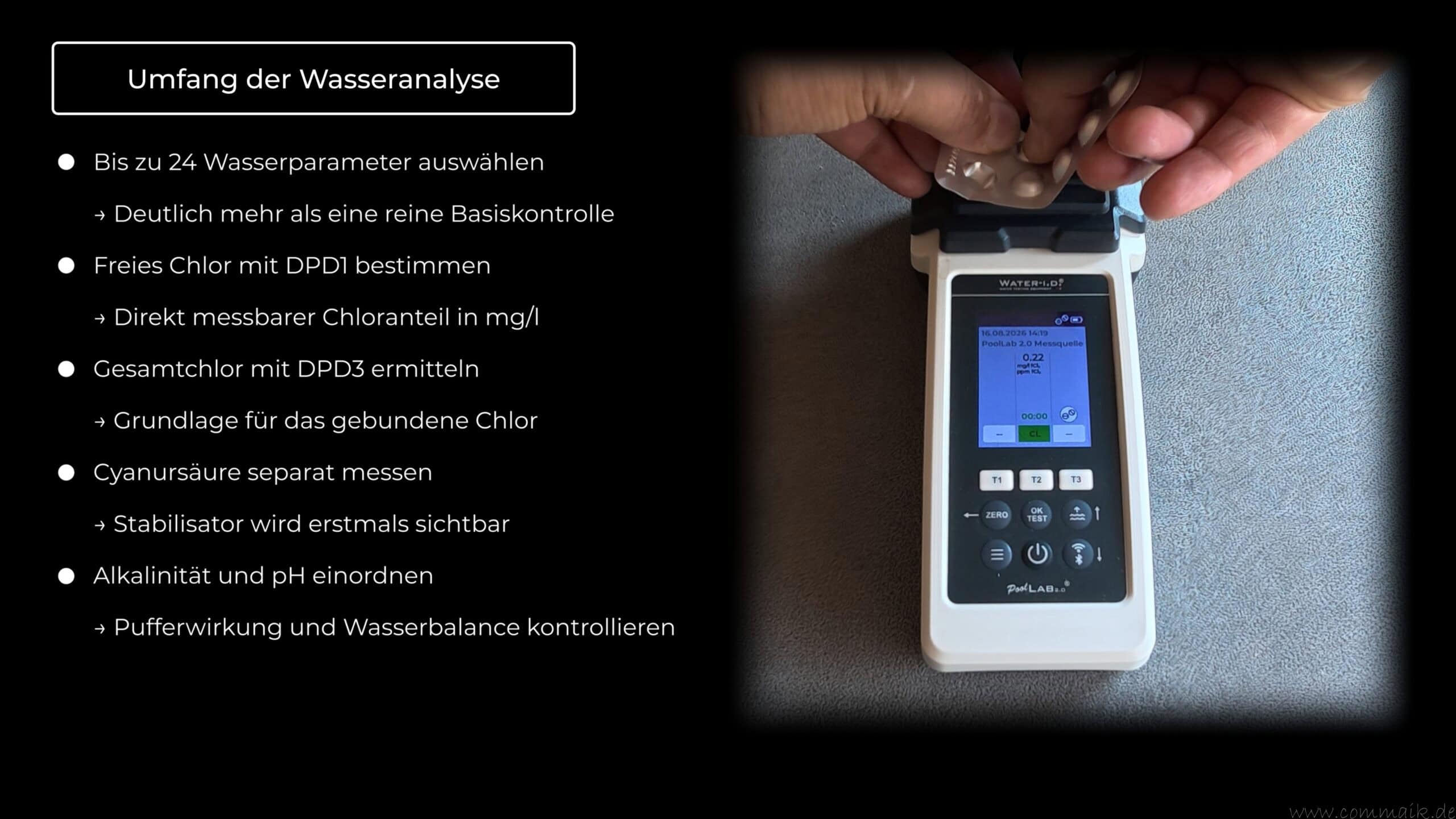
DPD1: Measure free chlorine
DPD is the abbreviation for the chemical color reagent N,N-diethyl-p-phenylenediamine. During the DPD1 measurement, this reagent reacts with the free chlorine in the water sample. Depending on the concentration, the sample turns various shades of pink.
The PoolLab analyzes this color photometrically and displays the result as free chlorine (fCl) in mg/l.
The DPD1 value is important because it indicates how much free chlorine is present in the water sample. However, this alone does not fully explain how quickly this chlorine works. To do this, you must at least take the pH level and CYA concentration into account.
DPD3: Determining Total Chlorine
To determine total chlorine, the DPD3 reagent is used in addition to the DPD1 measurement. It measures both free chlorine and combined chlorine.
The result is expressed as total chlorine, or tCl.
The DPD3 reagent does not, therefore, measure combined chlorine directly as a single value. This is calculated approximately as the difference between:
Bound chlorine = total chlorine − free chlorine
Here’s an example:
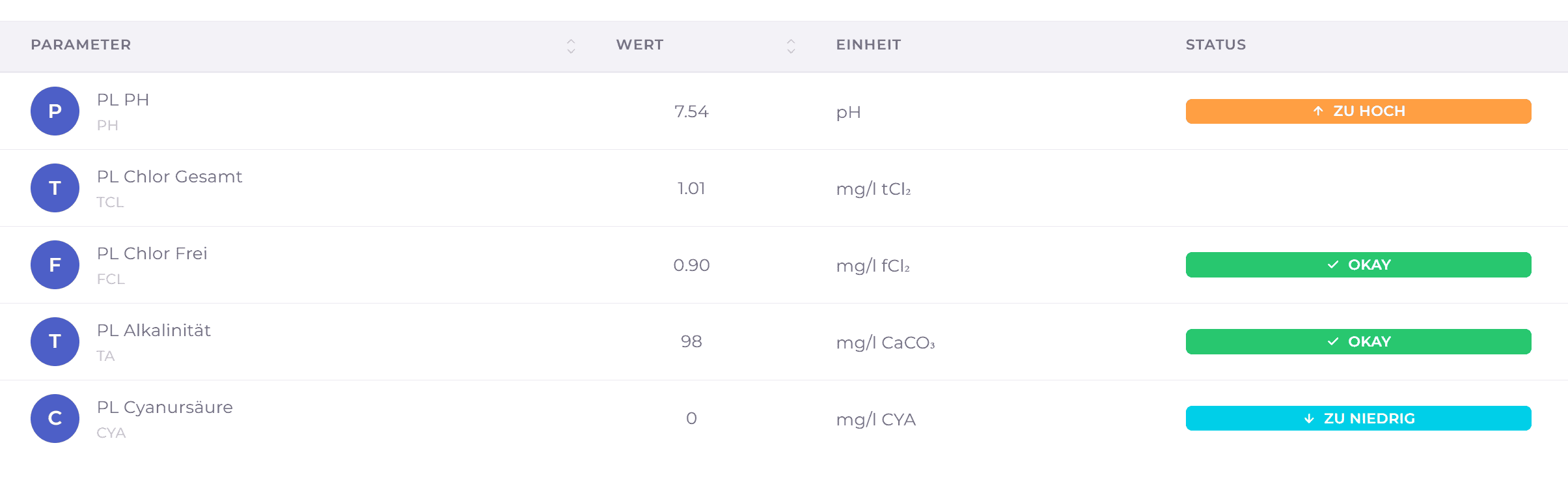
- Free chlorine according to DPD1: 0.90 mg/L
- Total chlorine according to DPD3: 1.01 mg/l
- Bound chlorine: approximately 0.11 mg/L
Bound chlorine consists primarily of chloramines. These are formed when chlorine reacts with nitrogen-containing impurities. Higher levels may be associated with, among other things, the typical indoor swimming pool odor and irritation of the skin and eyes.
CYA: Check cyanuric acid levels
CYA is the internationally recognized abbreviation for cyanuric acid. It is expressed in mg/l and indicates how much chlorine stabilizer is present in the water.
This value was crucial during my troubleshooting. My old meter couldn’t detect it at all. It was only after conducting a separate CYA test that it became clear just how much cyanuric acid had accumulated as a result of years of using organic chlorine tablets.
Without knowing the CYA value, I couldn’t properly interpret my measured DPD1 value.
ALK or TA: Alkalinity as a pH buffer
ALK stands for alkalinity. In English-language advertisements and instructions, the abbreviation TA is also frequently used to stand for “Total Alkalinity.”
Simply put, alkalinity describes the buffering capacity of pool water. It shows how well water can neutralize acids without causing an immediate, significant change in the pH level.
If the alkalinity is too low, the pH level can become unstable and react strongly even to small amounts of pH-Minus or other factors. If the alkalinity is very high, however, it is difficult to lower a pH level that is too high.
Alkalinity is therefore not the same as an alkaline pH level. Rather, it describes how stable the pH value remains in the face of changes.
pH: acidic, neutral, or alkaline
The pH value indicates whether water is acidic or alkaline. It has no unit and is expressed on a logarithmic scale.
It is particularly important for pool maintenance because it affects several areas at once:
- the effectiveness of chlorine
- material compatibility
- bathing comfort
- the tendency to develop limescale
- the stability of the other water parameters
For my pool, the target range is roughly between 7.0 and 7.4. I aimed for a value around 7.2 because chlorine is effective in this range and, at the same time, the water isn’t unnecessarily acidic.
Which values I checked using PoolLab
For my actual troubleshooting, I initially focused on five metrics:
- Free chlorine with DPD1
- Total Chlorine with DPD3
- bound chlorine as the difference between DPD3 and DPD1
- Cyanuric acid
- pH value
- Alkalinity
I also compared these values with the redox value of the BAYROL system.
It was only this combination that provided a coherent overall picture. Previously, the single DPD1 value had only indicated how much free chlorine was detectable. However, he did not explain why the system was still constantly adding more.
Thanks to the PoolLab, I was finally able to see what my AquaChek couldn’t detect: there was a very high level of cyanuric acid in the pool. As a result, the DPD1 value, redox value, and chlorine consumption no longer seemed to match at first glance.
The reagent tablets are consumables. For regular testing, I have therefore included not only the starter kit but also the appropriate replacement test strips for the PoolLab* in my plan. Especially when it comes to DPD1, DPD3, pH, alkalinity, and CYA, you can quickly accumulate quite a few test results over the course of a season.
My first readings with the PoolLab 2.0
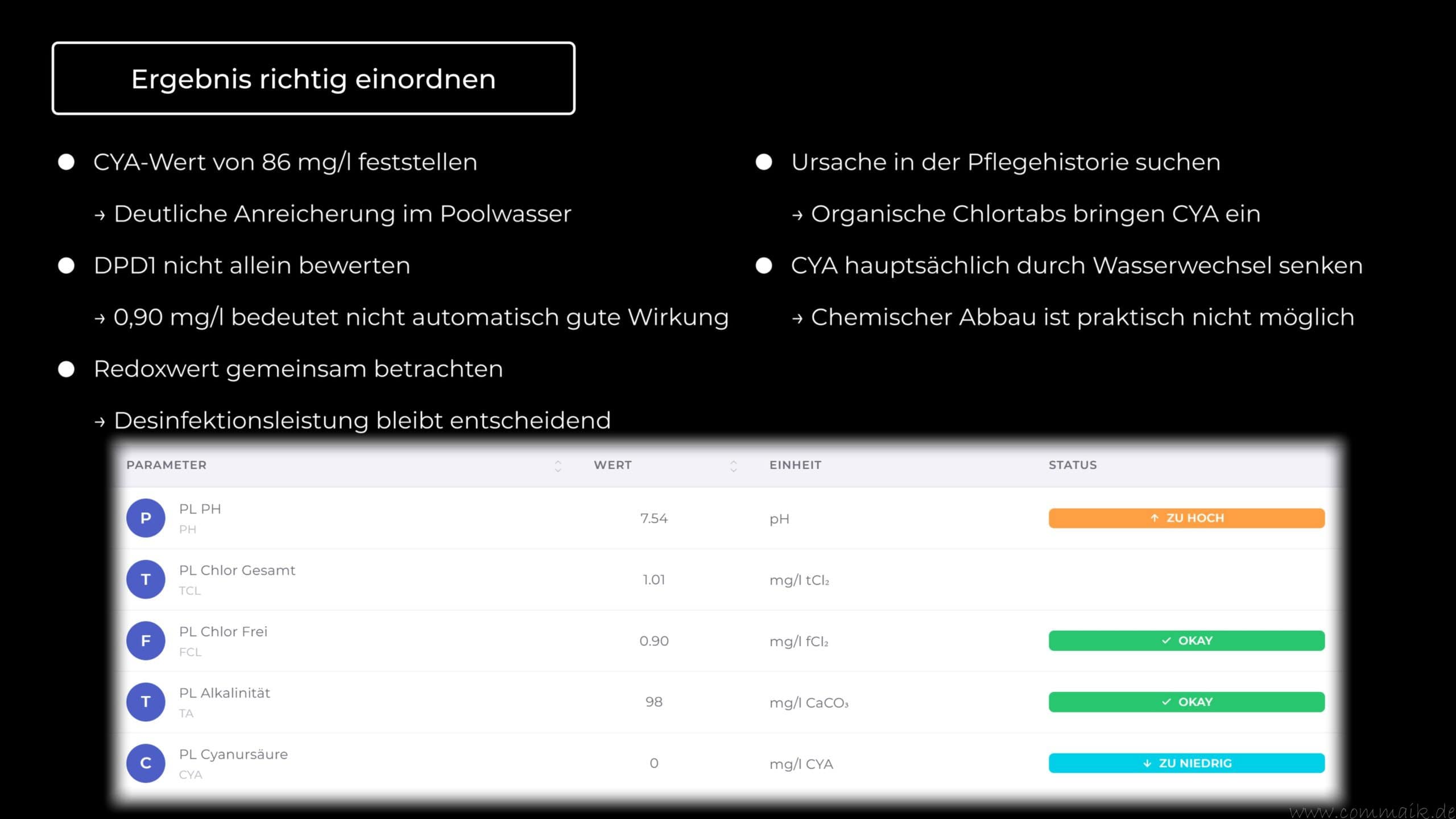
With PoolLab, I was able to monitor more than just pH, alkalinity, and free chlorine for the first time. Total chlorine and cyanuric acid were particularly important to me. My previous pool tester hadn’t measured exactly these two values.
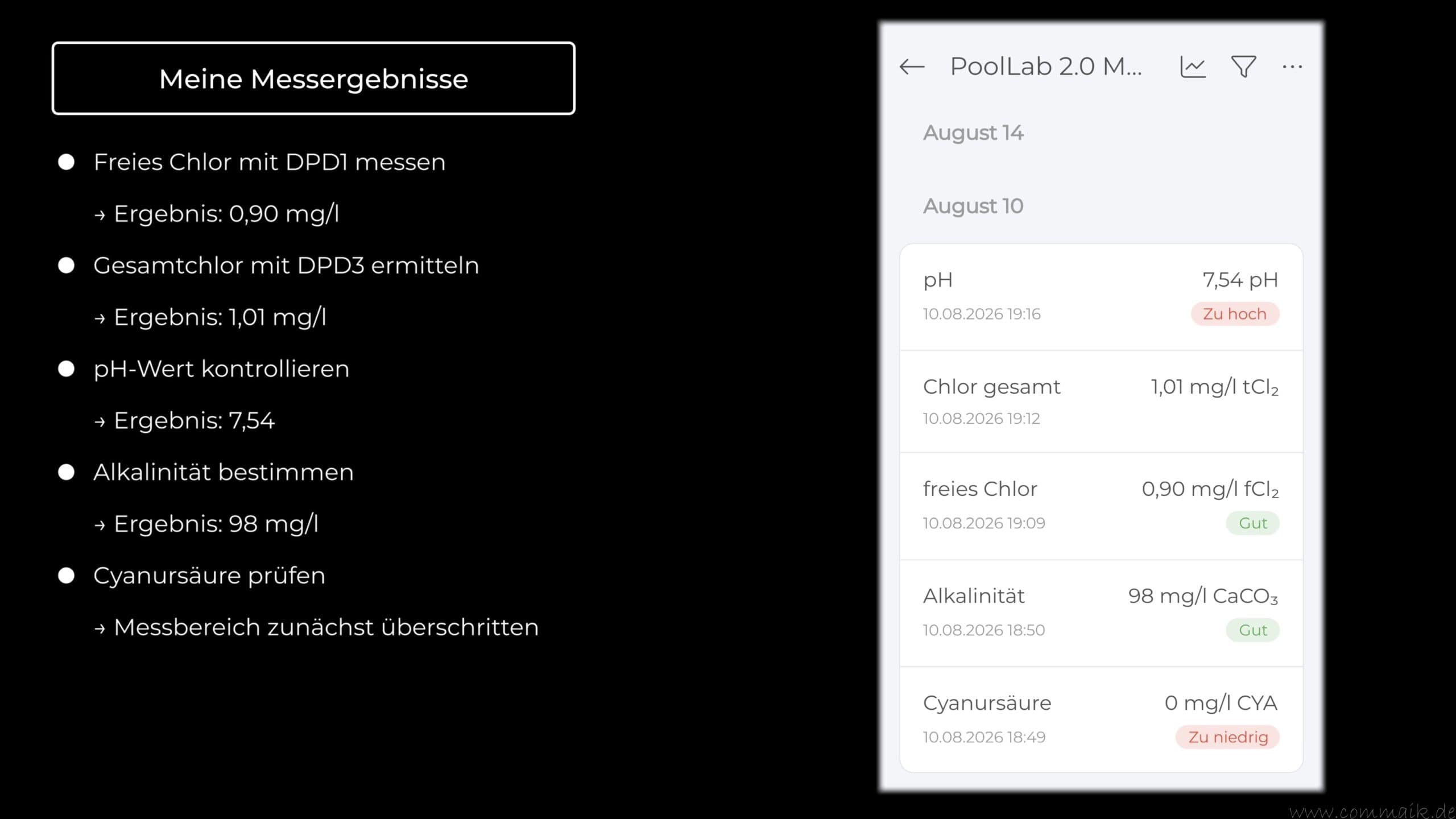
The first complete measurement yielded the following results:
| Measured value | Result | My assessment |
|---|---|---|
| Free Chlorine, DPD1 | 0.90 mg/L | At first glance, it seems unremarkable as a single value |
| Total Chlorine, DPD3 | 1.01 mg/L | only slightly higher than free chlorine |
| Bound chlorine | approx. 0.11 mg/L | unremarkable area |
| pH value | 7,54 | a little too high for optimal chlorine effectiveness |
| Alkalinity, ALK | 98 mg/L | a good and sufficiently stable area |
| Cyanuric acid, CYA | Display outside the measurement range | clear indication of a very high concentration |
The measured DPD1 value of 0.90 mg/l initially appeared completely normal. The total chlorine level of 1.01 mg/l was also not unusually high.
The bound chlorine could be calculated approximately from both measured values:
1.01 mg/L total chlorine − 0.90 mg/L free chlorine = 0.11 mg/L combined chlorine
Thus, there was no indication of a large amount of chloramines or acute, massive overchlorination. That is precisely what is important for assessing my case: It wasn’t the measured chlorine level that was unusually high, but rather the consumption of liquid chlorine.
BAYROL had used up almost an entire 20-liter canister in just under two weeks. So the chlorine had remained somewhere, even though DPD1 and total chlorine did not indicate a correspondingly high level in the pool.
The pH level of 7.54 was also not optimal. At this level, there is less immediately effective hypochlorous acid available than at my target level of around 7.2. The elevated pH level could have affected the chlorine’s effectiveness and, consequently, the redox value. However, that alone did not explain this enormous consumption of liquid chlorine.
The key clue came from the CYA test: the reading was outside the displayed measurement range.

- Harren24 Testtabletten zur Wasseranalyse für elektronische Wassertester (Photometer) wie z.B. PoolLAB, aber aufgrund der genormten Zusammensetzung für Wassertester aller Hersteller geeignet.
- Achtung! Nicht für Schütteltester / Testkit geeignet! Hierfür benötigen Sie Rapid-Tabletten!
- Überlassen Sie Ihre Wasserqualität in Pool, Teich, Whirlpool nicht dem Zufall! Testen Sie regelmäßig mit Harren24 Pooltabletten aus stets frischer Produktion "Made in Germany" mit sehr langer Haltbarkeit.
- Reagenztabletten wahlweise für DPD N°1 - freies Chlor, DPD N°3 - Gesamtchlorkonzentration, DPD N°4 - Aktivsauerstoff / O2, Phenol Red - pH-Wert, Alkality M - Alkalinität / Säurekapazität, CYA Test - Cyanursäure.
- Liefermenge wahlweise 50 Tabletten (5 Blister a´10 Tabletten), 100 Tabletten (10 Blister a´10 Tabletten), 250 Tabletten (25 Blister a´10 Tabletten) oder 500 Tabletten (50 Blister a´10 Tabletten).
Clear water does not automatically mean optimal water parameters
Visually, my pool looked good at that point. The water was clear, and there was neither a strong smell of chlorine nor any visible algae.
That’s exactly what made troubleshooting so confusing. I had an automatic dosing system, clear water, and a DPD1 value that seemed normal at first glance. At the same time, the liquid chlorine was disappearing at a rate that didn’t match my pool or how I use it at all.
Clear water is therefore a good sign, but it is not definitive proof that the pool water has been chemically balanced properly. Neither a high concentration of cyanuric acid nor an unfavorable ratio of active to buffered chlorine is visible to the naked eye.
Only the combination of DPD1, DPD3, pH, alkalinity, CYA, and redox value provided a useful overall picture.
My complete set of measurements as an Excel spreadsheet
While troubleshooting, I documented the measured values, times, pump runtime, dosing operations, and changes to the redox setpoint in an Excel spreadsheet. This made it much easier to assess the development than with individual screenshots.
Measurement Report_Bayrol_Updated
I’m also providing a blank version of the table. You can enter your own measurement values for pH, DPD1, total chlorine, combined chlorine, CYA, alkalinity, redox potential, temperature, and dosing amount.
Pool_Measurement_Log_Blank_COMMAIK
Such a series of measurements is particularly worthwhile when using an automatic dosing system. Individual measurements are always just snapshots. It takes several days to see how changes in setpoints, weather, pool usage, pump runtime, and fresh water affect chlorine consumption.
Measuring Cyanuric Acid: Why I Diluted the Sample
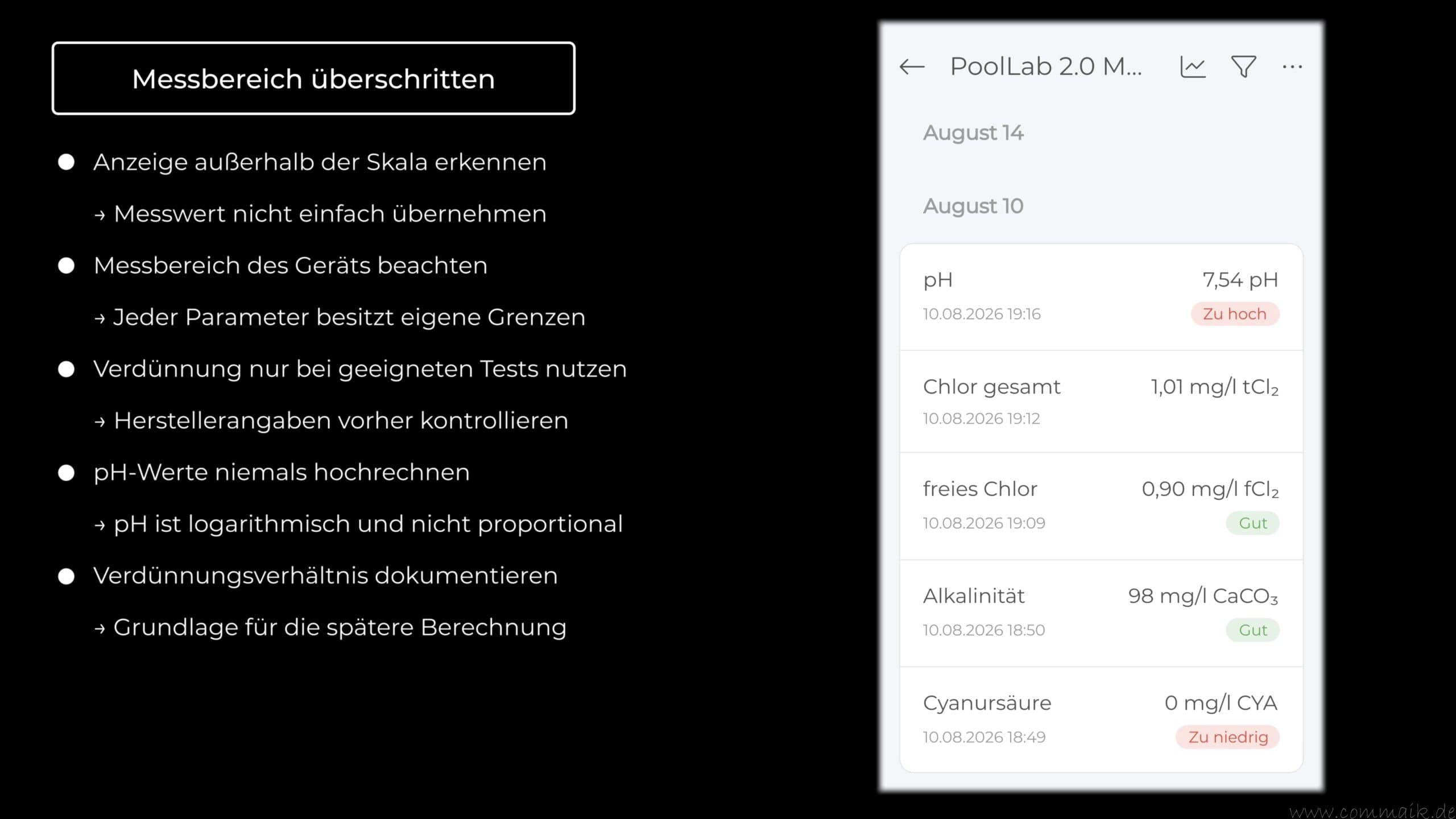
At first, the CYA test no longer displayed a usable numerical value. With PoolLab 2.0, the standard measurement range for cyanuric acid using the corresponding reagent tablet is 0 to 100 mg/L.
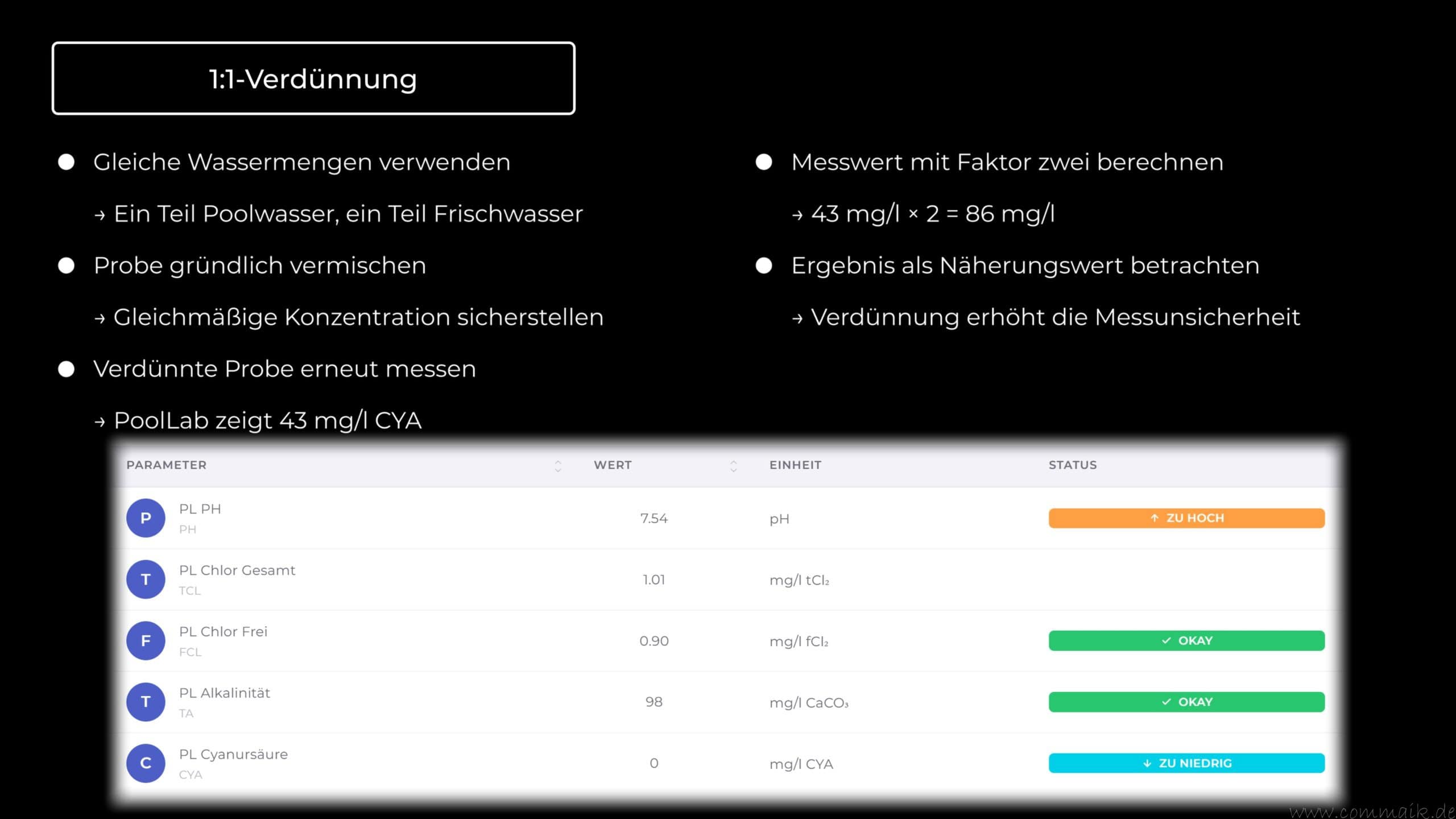
It was already clear from this that the CYA level was very high. I still wanted to get a slightly more accurate idea of the order of magnitude, so I prepared a 1:1 dilution as a test:
- some of the pool water
- some fresh water
- both amounts of water thoroughly mixed
- The diluted sample was measured again
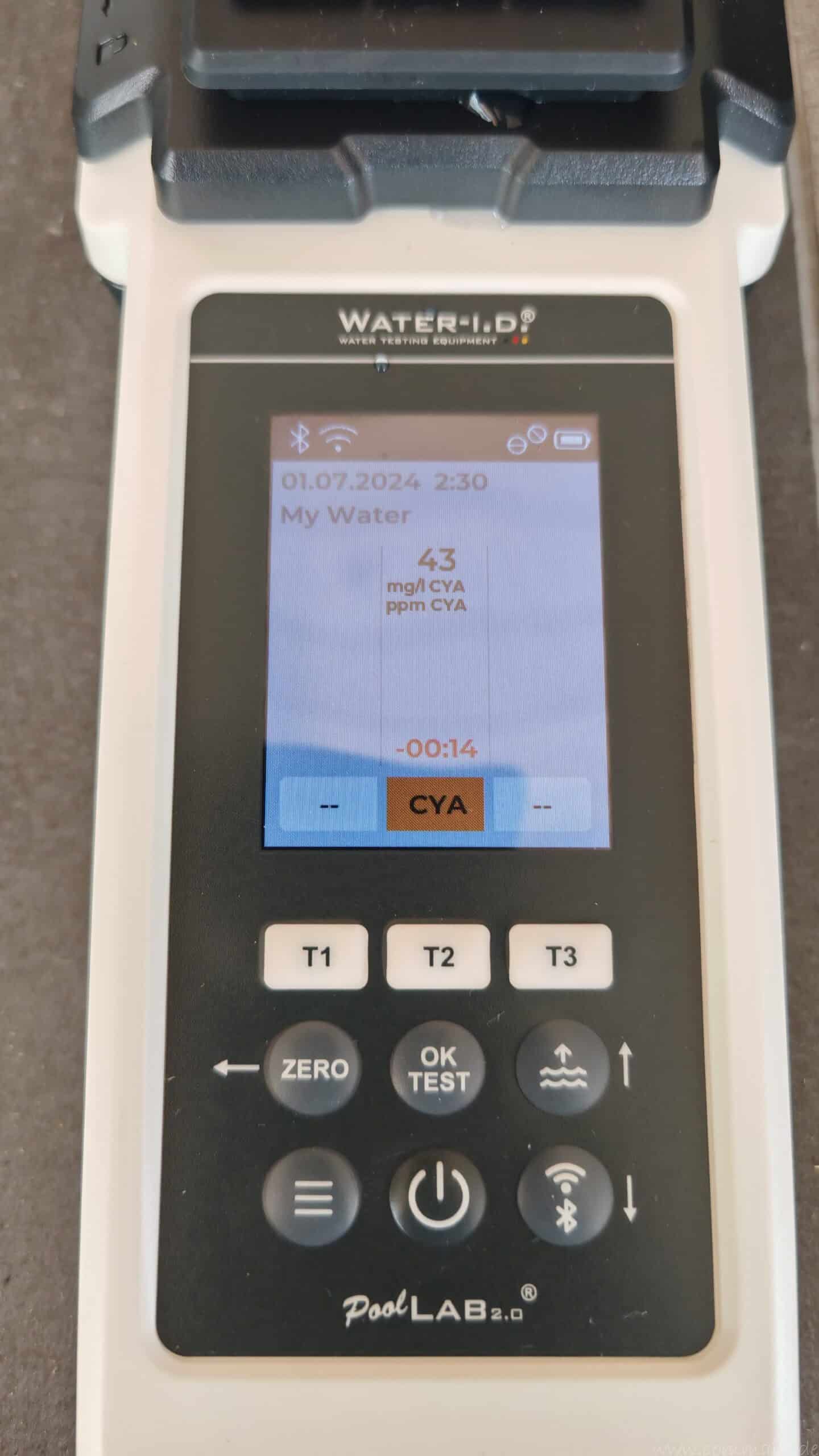
The diluted sample yielded a CYA concentration of 43 mg/l. If a 1:1 dilution were performed exactly, the calculation would show that:
43 mg/L × 2 = approximately 86 mg/L of cyanuric acid
This value was generally consistent with my assumption of a high concentration of CYA. However, it should not be interpreted as an exact laboratory value.
Why 86 mg/l is only an approximate value
According to Water-i.d.’s official parameter overview, CYA testing using the reagent tablets is not listed as a dilutable testing method. My dilution was therefore my own attempt at a rough estimate and not an extension of the measurement range intended by the manufacturer.
In addition, the initial reading outside the measurement range and the extrapolated result of approximately 86 mg/l are not entirely consistent. If the initial sample had actually been significantly above 100 mg/l, the diluted sample should have yielded a correspondingly higher value.
Possible reasons for this discrepancy include:
- minor inaccuracies in the dilution ratio
- incompletely mixed samples
- Residue or air bubbles in the cuvette
- Differences in the dissolution of the reagent tablet
- the generally higher measurement uncertainty of a diluted sample
- Variations in Photometric Turbidity Measurements
Ultimately, whether the actual value was 86, just over 100, or even slightly higher did not play a decisive role in my final decision. Both the initial test and the diluted control sample clearly showed that a large amount of cyanuric acid had accumulated in the pool over the years.
To obtain a reliable control value, a repeat measurement within the regular measurement range or a laboratory analysis would have been the more accurate solution. Since I had decided to do a complete fluid change anyway, the measurement was enough for me to clearly identify the cause.
Diluted pool measurements cannot be extrapolated arbitrarily
My approach should not be applied uncritically to other water parameters. According to the manufacturer, many pool parameters are expressly not intended for use in diluted measurements.
Especially when it comes to pH, simple multiplication doesn’t work. The pH scale is logarithmic. A pH value that has been diluted with water can therefore never be recalculated to its original value by doubling it or using any other simple factor.
Chlorine, alkalinity, and other parameters should also be measured in diluted form only if the testing method used and the manufacturer expressly permit it.
How much water did I have to change?
Cyanuric acid cannot be easily filtered out of a standard residential pool or neutralized with another pool treatment product. To reduce its concentration, some of the contaminated pool water must be drained and replaced with fresh water.
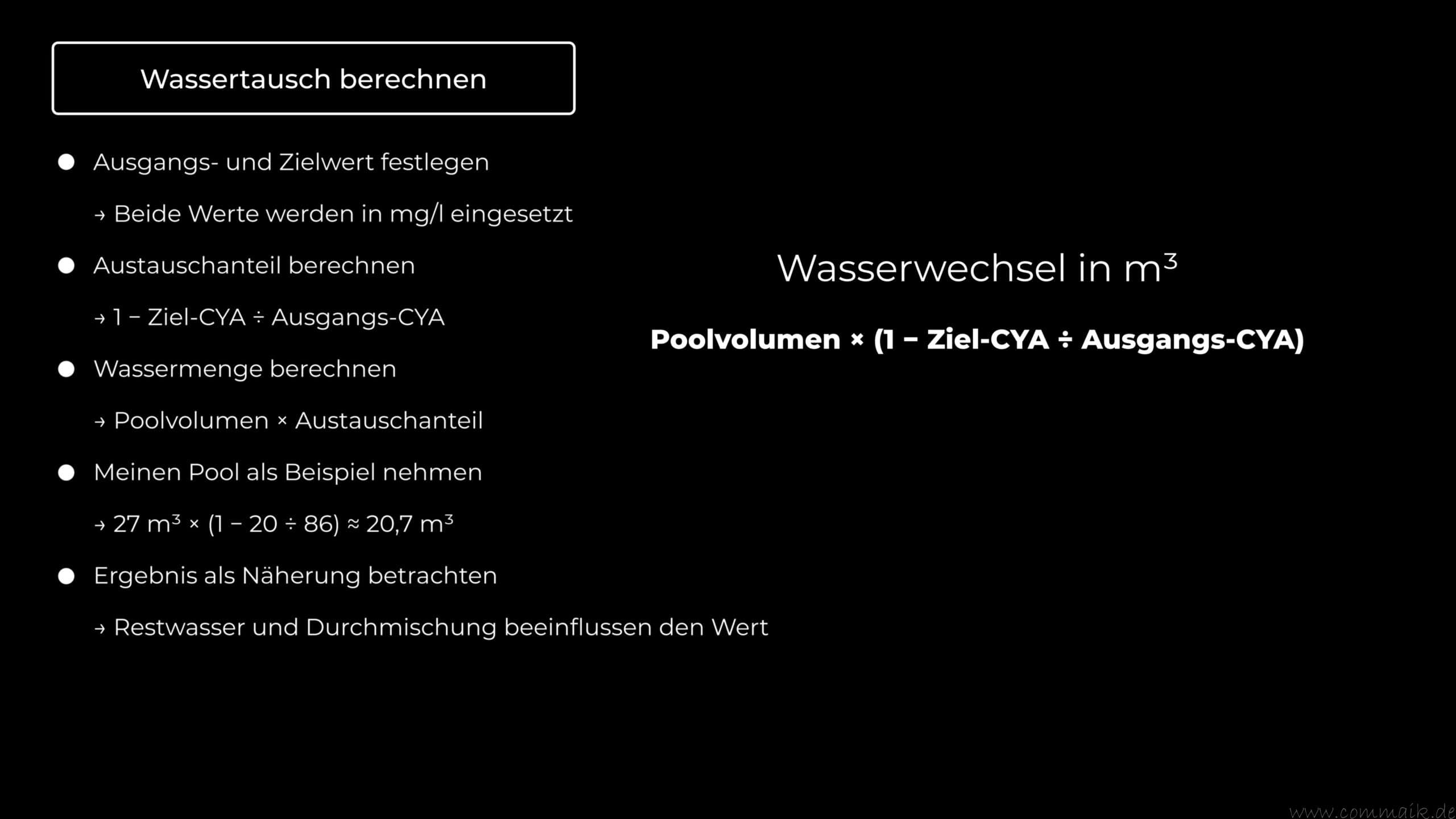
The required replacement volume can be calculated approximately using the following formula:
Pool volume × (1 − Target CYA ÷ Initial CYA)
For my pool, I used the following values:
- Pool volume: 27 m³
- Assumed initial value: 86 mg/l CYA
- Desired target value: 20 mg/L CYA
This resulted in:
27 m³ × (1 − 20 ÷ 86) ≈ 20.7 m³
So, based on the calculations, I would have had to replace about 20.7 m³—or roughly 77 percent—of the pool water.
Since the 86 mg/l was merely an approximate value from my diluted sample, this calculated replacement volume is also only a rough guide. If the actual initial value had been above 100 mg/l, the amount of water that needed to be changed would have been correspondingly greater.
Why I Decided to Do a Complete Water Change Anyway
A partial water change would have significantly reduced the CYA level, but would have left some CYA in the pool. To facilitate further troubleshooting, I wanted to establish the clearest possible starting conditions.
My goal was a fresh start:
- No detectable cyanuric acid
- fresh pool water
- inorganic liquid chlorine
- a stable pH level of around 7.2
- Redox control without residuals from chlorine tablets
- Measurable chlorine consumption after the restart
That’s why I decided not just to do the partial water change required by the calculations, but to do a complete water change.
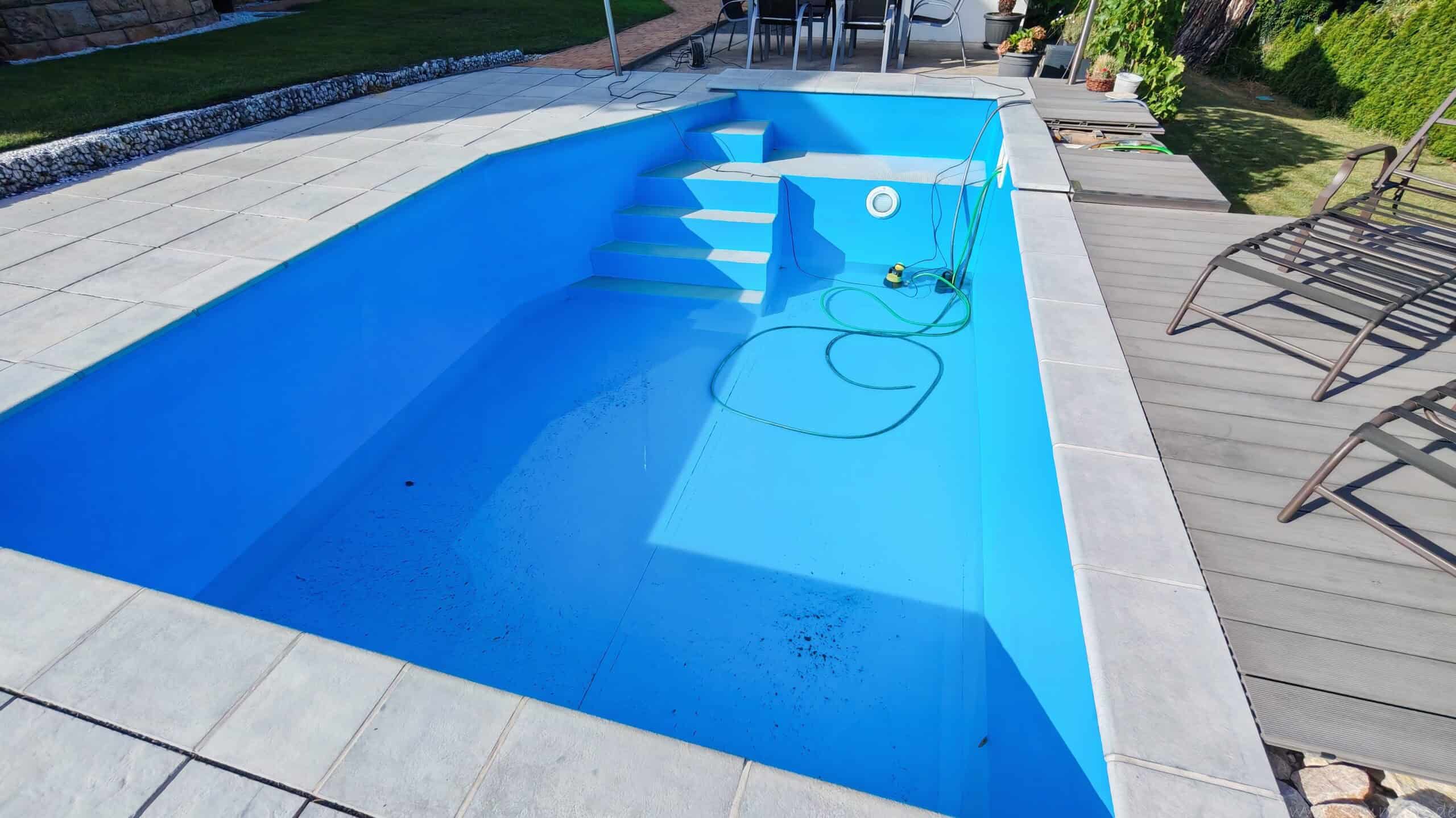
The process of emptying and then refilling took nearly two days in total. With a water rate of just over 6 euros (including tax) per cubic meter, the approximately 27 m³ of fresh water cost me about 160 euros.
Of course, that was annoying. However, it would have been even more frustrating to continue pumping large amounts of liquid chlorine into the pool every day without addressing the actual cause.
Why only changing the water was able to reliably lower the cyanuric acid level
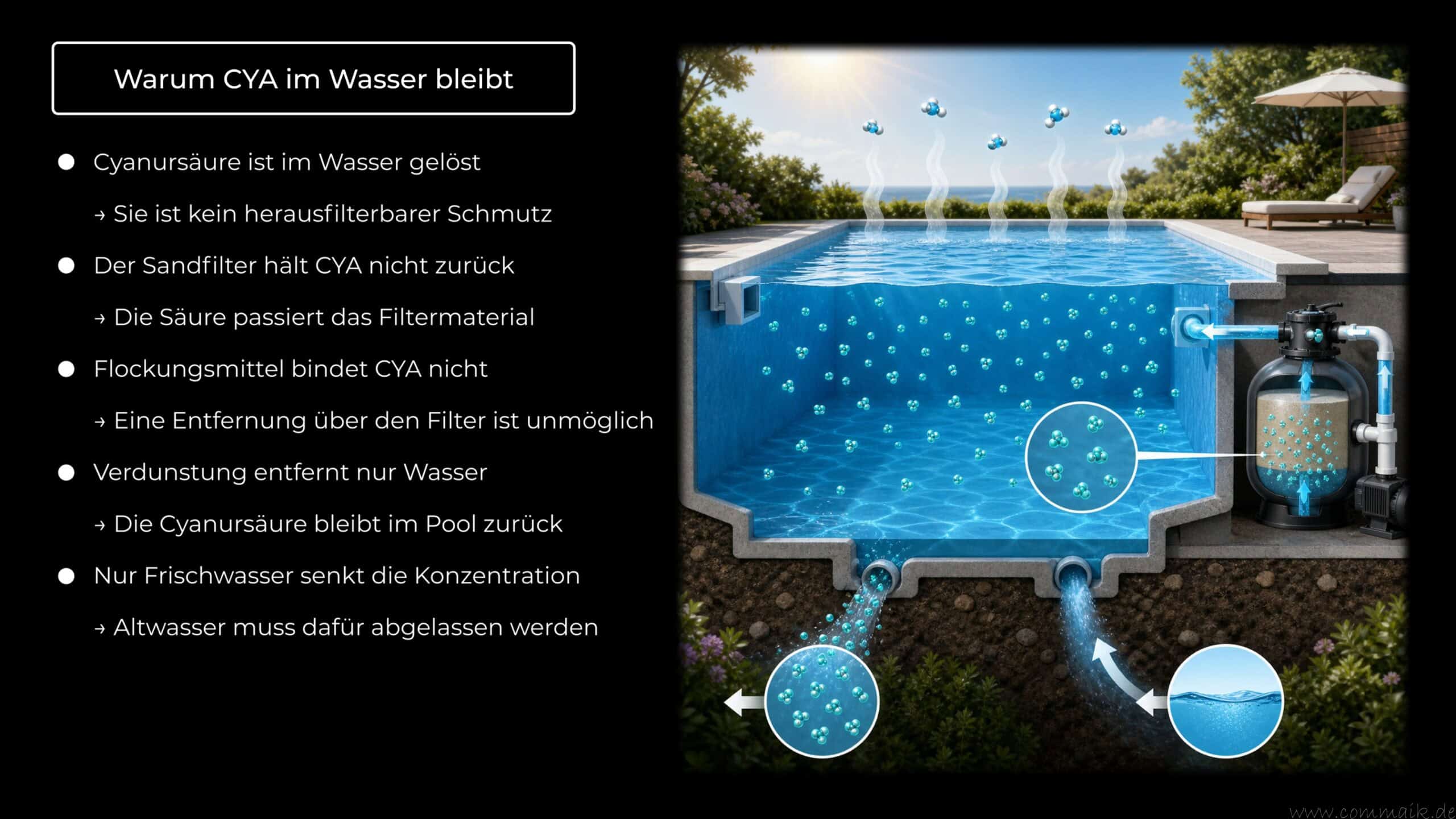
Cyanuric acid is present in solution in the pool water. It does not float on the surface of the pool as visible debris and therefore does not get trapped in the sand filter.
For this reason, the following measures did not significantly reduce my CYA level:
- a longer filter runtime
- Backwashing the filter without a significant water replacement
- Flocculant
- the pool robot
- my additional UV system
- suctioning the pelvic floor
- normal evaporation
During evaporation, only water disappears. The cyanuric acid dissolved in it remains behind. If only the water that has evaporated is replenished afterward, its concentration therefore hardly decreases.
The situation is slightly different with backwashing: In this process, contaminated pool water is actually drained off and then replaced with fresh water. As a result, the CYA level decreases, at least slightly. However, in the case of high enrichment, this process takes a very long time and also consumes significant amounts of fresh water.
For my pool, a controlled water change was therefore the fastest and most straightforward solution. I was then able to use CYA 0 to observe how the redox value, DPD1, and chlorine consumption actually behaved under the new conditions.
Video: Why My Dosing System Used 20 Liters of Chlorine in Two Weeks
I’ve documented the entire troubleshooting process in a detailed video. In this post, I explain why my BAYROL Automatic Cl-pH dispensed an unusually large amount of liquid chlorine after installation and why the system was still functioning properly.
I’ll also compare the redox value and the DPD1 measurement, determine the cyanuric acid level using the PoolLab 2.0, and explain why I ultimately decided to do a complete water change. After restarting the system, I was able to reduce chlorine consumption by about 80 percent.
You can find more videos about my pool maintenance techniques, water care, and the renovations we’ve made to our pool in my YouTube playlist dedicated to the pool. I also regularly post new projects and hands-on experiences on my YouTube channel, COMMAIK.
Zuletzt aktualisiert am 20. October 2026 um 05:30 . Ich weise darauf hin, dass sich hier angezeigte Preise inzwischen geändert haben können. Alle Angaben ohne Gewähr. (*) Bei den verwendeten Produktlinks handelt es sich um Affiliate Links. Ich bin nicht der Verkäufer des Produktes. Als Amazon-Partner verdiene ich an qualifizierten Verkäufen. Dein Preis ändert sich jedoch nicht.

Water parameters immediately after the water change
After completely changing the water, I finally had a clear starting point. The pool contained fresh water, free of the chemical residues from previous years. That was exactly what I wanted to achieve—so that I could observe the behavior of the BAYROL Automatic Cl-pH under controlled conditions.
Immediately after refilling, I performed another complete measurement:
| Measured value | Result | My assessment |
|---|---|---|
| pH value | 7,47 | still a little too high for optimal chlorine effectiveness |
| Cyanuric acid, CYA | 0 mg/L | Desired restart without a stabilizer |
| Free Chlorine, DPD1 | 0.01 mg/L | Virtually no disinfectant available |
| Total Chlorine, DPD3 | 0.05 mg/L | to go with the freshly filled water |
| Alkalinity, ALK | 93 mg/L | good starting point |
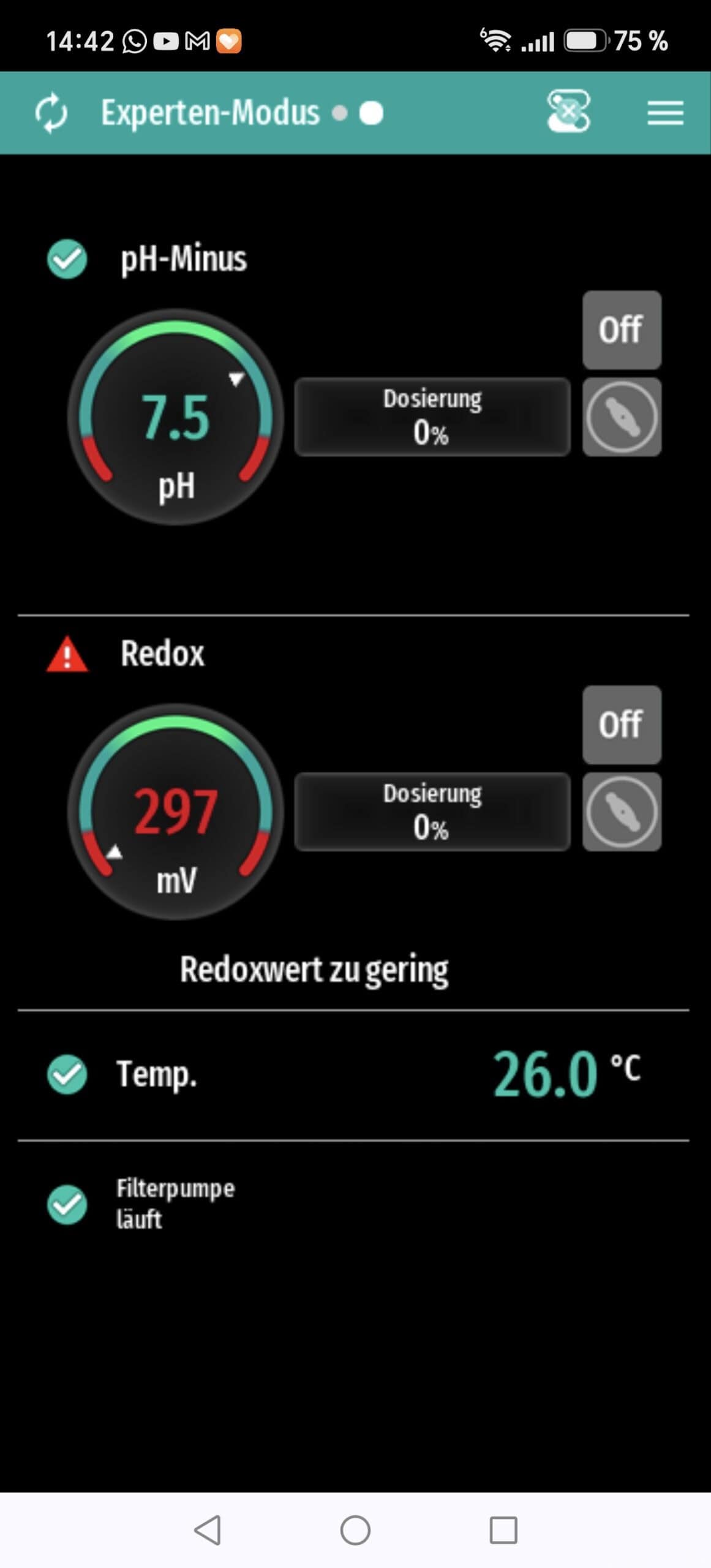
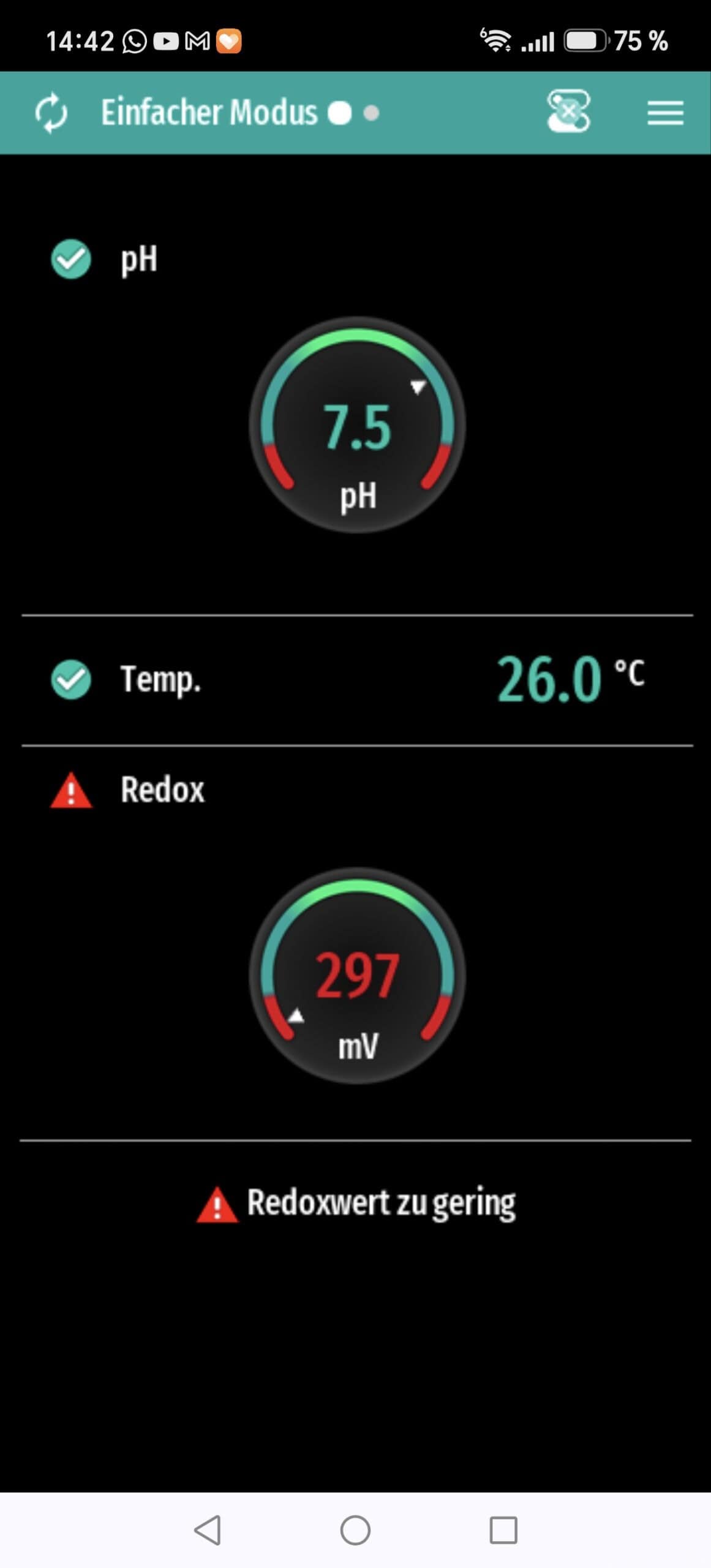
| Redox value of BAYROL | approx. 294 mV | expected to be low due to the lack of chlorine |
The readings were largely in line with what I had expected after refilling the tank. The tap water contained virtually no free chlorine and, as a result, had hardly any oxidizing power. The redox value of about 294 mV was therefore not a cause for concern at first.
The CYA level of 0 mg/l was particularly important to me. This confirmed that the cyanuric acid that had been added earlier had been removed from the pool during the water change.
Adjust the pH first, then add chlorine
Automatic chlorine dosing remained disabled at first after refilling. Before I added chlorine to the fresh water, I let the BAYROL adjust the pH level from 7.47 toward my desired target value of about 7.2.
This order was important to me because pH and chlorine effectiveness are closely related. At a pH of around 7.2, a larger proportion of the free chlorine is present as particularly effective hypochlorous acid. As the pH value rises, the ratio shifts increasingly toward the less reactive hypochlorite.
At the correct pH level, the chlorine present can therefore work more effectively. Simply adding more chlorine to water that hasn’t been balanced yet would therefore not have been my preferred approach.
For automatic correction, the system used the connected liquid pH-Minus*. Meanwhile, the filtration system was running so that the measured amount of chemical could be distributed evenly throughout the pool.
Initial chlorination without adding new cyanuric acid
After adjusting the pH, the freshly added water first had to be disinfected. My goal was to increase the chlorine level in a controlled manner and then return the BAYROL to automatic control mode.
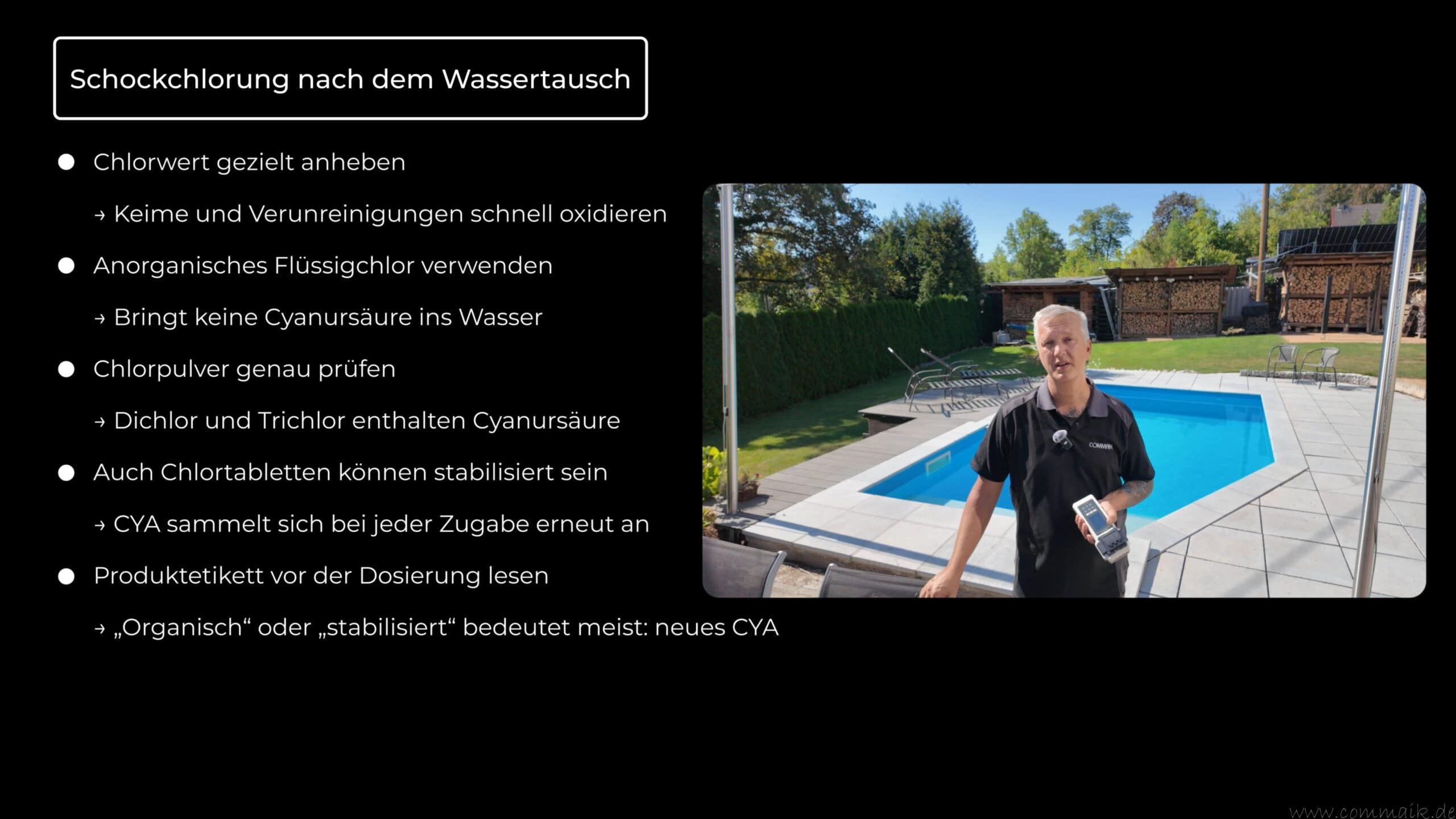
But I definitely didn’t want to add cyanuric acid to the new water right away. A shock treatment or initial chlorination using an unsuitable organic chlorine granule could have caused exactly that.
That is why I used the inorganic liquid chlorine* based on sodium hypochlorite that I already had on hand. This does not introduce any cyanuric acid into the water, so it fit in well with my plan to restart the system with a CYA level of 0.
Why I added the liquid chlorine in small amounts
In total, I used about 600 ml of liquid chlorine. However, the entire amount did not enter the tank all at once.
I added the chlorine in several smaller doses and kept the filter pump running the entire time. After each addition, the water was allowed to circulate first. I then checked the redox value and performed additional DPD1 measurements.
This step-by-step approach had several advantages for me:
- The chlorine was able to distribute evenly throughout the pool.
- The redox value could be observed after each addition.
- It was easier to avoid an unnecessary overdose.
- The reaction of the freshly added water became apparent.
- Automatic dosing was later able to begin under controlled conditions.
The amount of chlorine needed for this initial chlorination depends on the pool’s volume, the product’s concentration, the water quality, and the actual chlorine requirement. My 600 ml is therefore not a general dosage recommendation, but rather the documented amount for my pool, which holds about 27 m³ of water.
When using chlorine powder and granules, pay close attention to the active ingredient
It is not the form of the product that determines whether cyanuric acid is added. Both granules and liquid chlorine can contain different active ingredients.
It is crucial to check the product label:
- Dichlor and Trichlor are organic, stabilized chlorine products that contain cyanuric acid.
- Sodium hypochlorite is inorganic liquid chlorine and does not contain cyanuric acid.
- Calcium hypochlorite is also inorganic, but it adds calcium to the water.
Terms such as “organic,” “stabilized,” “dichlor,” or “trichlor” are therefore a clear indication that CYA has been added again. After going to all that trouble to change the water, that was exactly what I wanted to avoid.
Important Safety Notice: Chlorine must never be mixed with other pool chemicals. In particular, contact between chlorine and acidic pH-Minus can release dangerous chlorine gas. Both products must be stored separately and used in accordance with the manufacturer’s safety and dosage instructions. Do not inhale vapors or dust.
Alkalinity dropped significantly during pH correction
While BAYROL adjusted the pH level toward 7.2, I noticed another value: The alkalinity dropped from an initial 93 to about 45 to 46 mg/l.
It is generally normal for adding an acid to reduce alkalinity. Acid not only lowers the pH level, but also depletes some of the water’s acid-binding capacity.
Still, the extent of the decline I observed surprised me. Individual photometric measurements always have a certain degree of measurement uncertainty. Still, the value was low enough that it couldn’t simply be ignored.
Why Too Low Alkalinity Is a Problem
Alkalinity is often referred to as ALK or TA and, simply put, describes the buffering effect of the pool water. It ensures that the pH level does not spike sharply up or down with every minor chemical change.
If the alkalinity is too low, the pH level may become unstable. Even small amounts of pH-Minus, rainwater, or other factors are enough to significantly alter it.
That would have been problematic for my automatic dosing system. BAYROL would have had to constantly react to a fluctuating pH level, possibly adding even more acid in the process.
So I used BAYZID Alkafix to raise the alkalinity again. After the correction, the PoolLab read approximately 92 mg/l. This brought the water back to a range that ensured sufficiently stable pH control in my pool.
This experience served as a good reminder to me never to look at water parameters in isolation. It’s not enough to just adjust the pH level or the chlorine content. Any correction may affect other values.
My target values for ongoing pool operation
After the restart, I focused on the following areas:
| Measured value | My target range | Meaning |
|---|---|---|
| pH value | 7.0 to 7.4, preferably around 7.2 | Affects chlorine effectiveness, material, and bathing comfort |
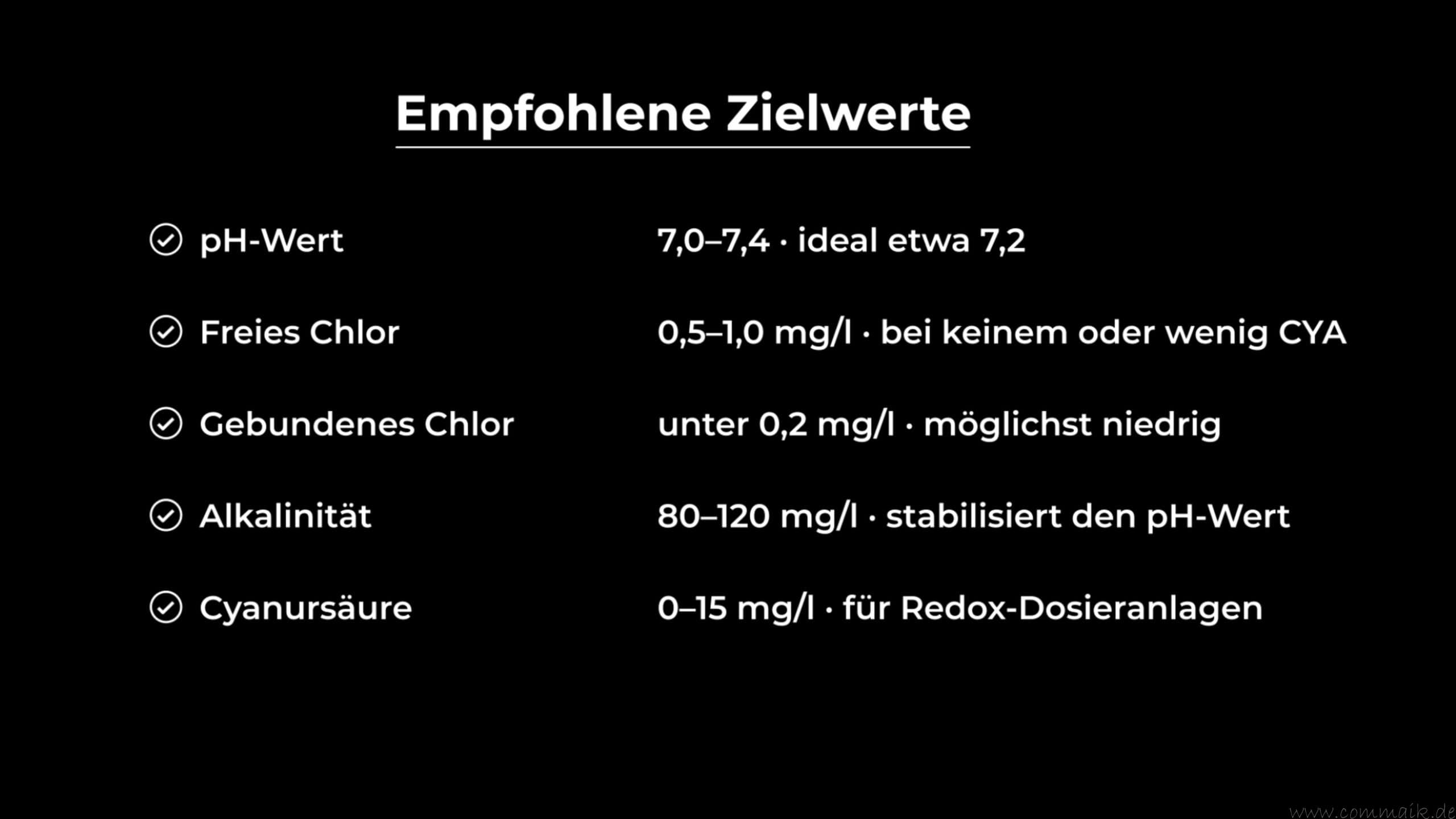
| Free Chlorine, DPD1 | approximately 0.5 to 1.0 mg/L with little or no CYA | measurable chlorine reserve in the water |
| Bound chlorine | as low as possible, below 0.2 mg/L | Note on Chloramines and Residual Chlorine |
| Alkalinity, ALK | approximately 80 to 120 mg/L | stabilizes the pH level |
| Cyanuric acid, CYA | 0 to 15 mg/L | as low as possible for my redox dosing system |
| Redox value | approximately 700 to 750 mV | Guidance on the current oxidation potential |
These values are not universal guidelines that apply to every pool. The appropriate range depends, among other things, on the maintenance system, the cyanuric acid level, the water temperature, the pool usage, and the equipment used.
For my private outdoor pool, which uses inorganic liquid chlorine and a redox-controlled dosing system, these have proven to be a useful guide in testing.
Low levels of free chlorine, yet a good redox value
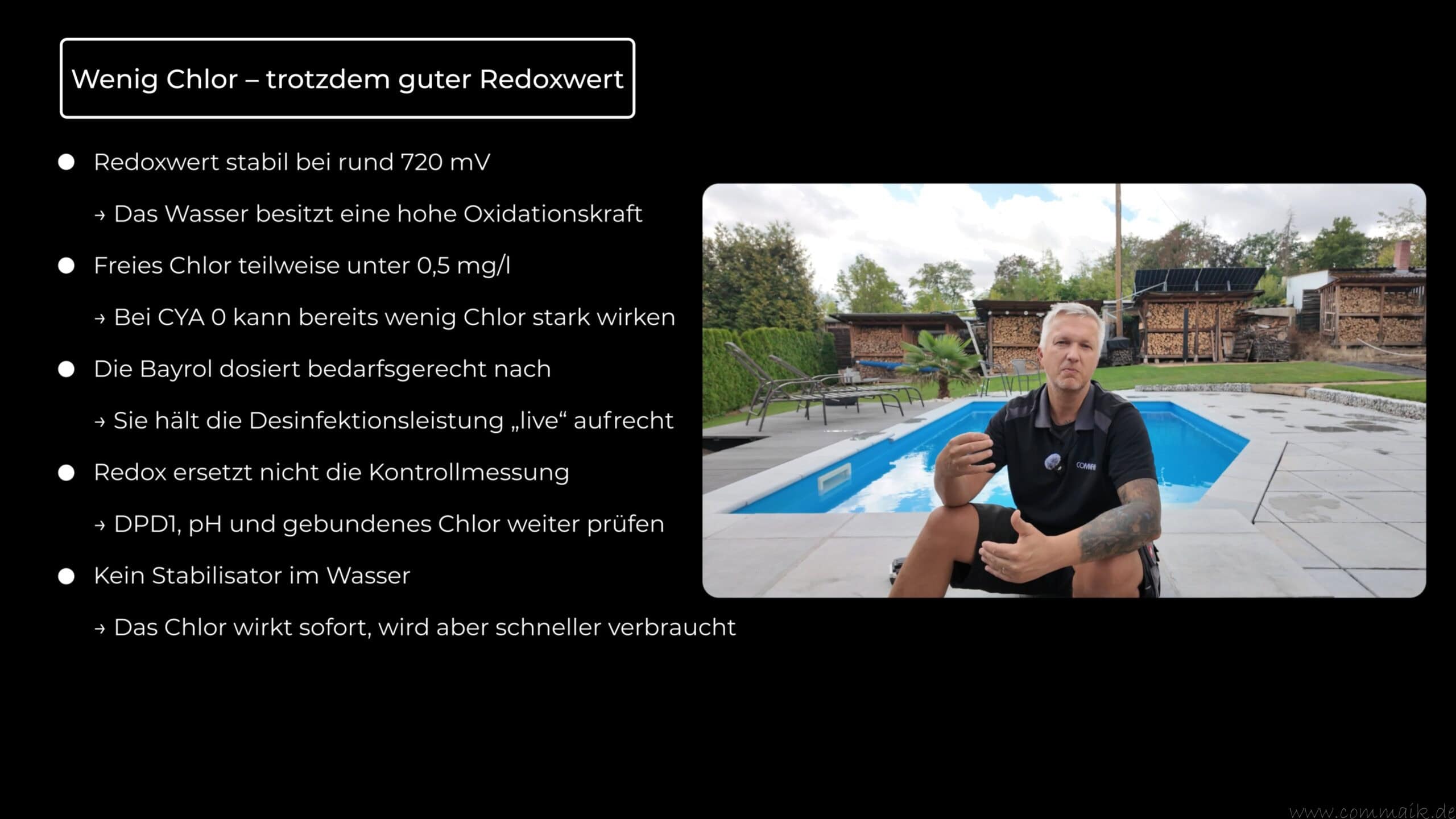
After the restart, the redox value often stabilized between approximately 700 and 750 mV. At the same time, the PoolLab showed levels of only 0.13 to 0.76 mg/l of free chlorine in individual test readings.
At first, this combination struck me as contradictory. After all, I had expected that a high redox value would automatically go hand in hand with a significantly higher DPD1 value.
However, this behavior can be explained given a CYA level of 0, a pH of around 7.2, clean water, and low pool usage. The chlorine present is not bound to cyanuric acid and is therefore available more quickly for disinfection.
Even a relatively low concentration can produce a high oxidative power under these conditions. Chlorine acts immediately; however, without a stabilizer, it is also depleted more quickly by UV radiation and contaminants.
BAYROL dispenses the product largely based on actual needs
The system does not specifically build up a large supply of chlorine in the pool. It monitors the redox value and automatically adds liquid chlorine as soon as the oxidation potential falls below the setpoint.
In my experience, this actually corresponds more closely to a needs-based live dosage:
- The redox value decreases due to UV radiation, pool use, or contaminants.
- BAYROL detects the deviation from the setpoint.
- The metering pump delivers liquid chlorine into the piping.
- The chlorine spreads throughout the pool and increases its oxidizing power.
- Once the setpoint is reached, the system stops dosing.
In my pool, with two to three people, the filter system running, and an additional UV lamp, this principle performed consistently throughout my series of measurements.
Why I Still Use PoolLab to Check the Water
To me, a good redox value is an important indicator that the disinfection process is working properly. However, it is not a free pass and does not replace all other measurements.
The redox sensor does not indicate the concentration of free chlorine, total chlorine, or cyanuric acid. In addition, contamination, aging, or unfavorable flow patterns at the electrode can affect the displayed value.
That’s why I continue to check the following on a regular basis:
- Free chlorine with DPD1
- Total Chlorine Using DPD3
- bound chlorine as the difference
- pH value
- Alkalinity
- Cyanuric acid at longer intervals
It is a good idea to take additional measurements before and after periods of heavy pool use. This also applies after heavy rain, very hot days, or noticeable changes in the water.
If there is visible cloudiness, algae, an unusual odor, or a significantly elevated level of contamination, I wouldn’t rely solely on the redox reading.
- & : Elektronischer Wassertester (Photometer) PolLab 2.0 (Nachfolger Pooltester Poollab 1.0) inkl. 70 Tabletten Starterset + 70 Ersatztabletten "Made in Germany"
- : Digitaler Pooltester (wasserdicht IP68) fr Wasseranalyse von 24 Parametern mit Bluetooth, WLAN, 4 Wellenlngen und groem 24-Zoll-Farbdisplay
- : Der Poolwassertester spart wertvolle Zeit bei der Poolmessung durch das Messen von bis zu 3 Parameter gleichzeitig
- -: 40x DPD Nr. 1 Freies Chlor / Brom, 20x DPD Nr. 3 Gesamtchlor, 40x Phenol Red pH Wert, 20x Alkalinitt M Alkalinittskapazitt/Surekapazitt, 20x CYA-Test Cyanursure
- Unsere Produkte bieten, durch strenge Kontrollen, herausragende Qualitt fr alle Poolbesitzer. AlphFa ist eine deutsche Hndlermarke und weder Hersteller noch Exklusivvertreiber dieses Artikels.
Chlorine consumption before and after the water change
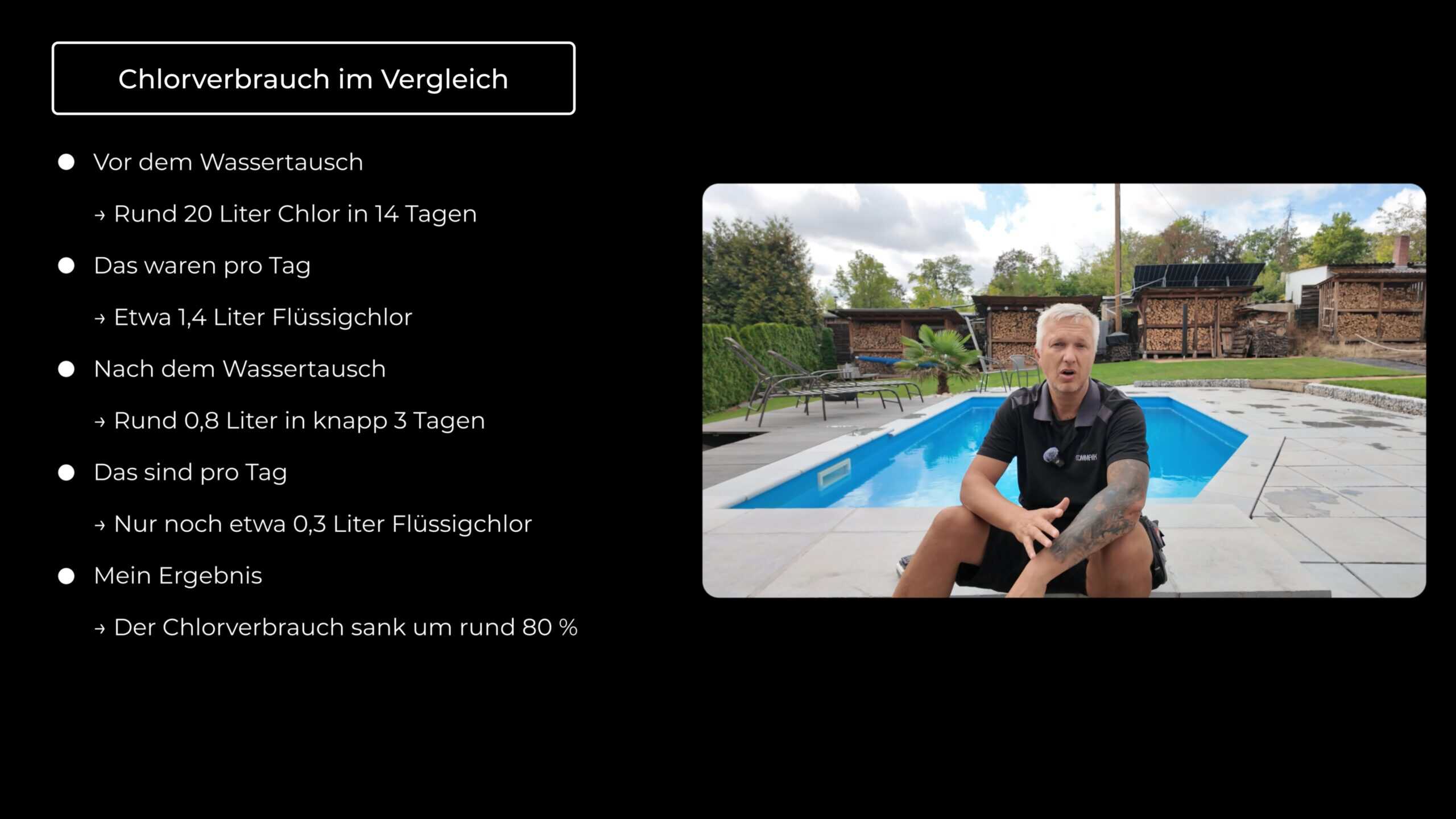
For me, the real success was evident in the fuel economy. Before the water was replaced, the system had dispensed approximately 20 liters of liquid chlorine over the course of just under two weeks.
After the restart, things looked completely different:
| Time period | Measured consumption | Daily Average |
|---|---|---|
| Before Changing the Water | about 20 liters in just under 14 days | about 1.4 liters |
| After changing the water | about 0.8 liters in just under 3 days | about 0.3 liters |
At the time of my analysis, the new value was based on a relatively short measurement period of just under three days. In addition, it was not possible to determine the consumption from the canister with milliliter precision. Therefore, I consider a range of approximately 0.3 to 0.4 liters per day to be realistic for further estimates.
Extrapolated over 14 days, this results in:
- about 4.2 liters at a consumption rate of 0.3 liters per day
- about 5.6 liters at a consumption rate of 0.4 liters per day
Compared to the 20 liters consumed previously, this represents a reduction of approximately 72 to 79 percent. All in all, my chlorine usage dropped by about 80 percent.
Why This Projection Is Not a Seasonal Forecast
In my series of measurements, the difference was so large that it could no longer be explained by normal daily fluctuations. Nevertheless, the projection is no guarantee of consumption over an entire swimming season.
The actual chlorine requirement is affected by, among other things:
- Number and duration of bathers
- Water Temperature
- Sunshine Hours and UV Radiation
- Rain and Freshwater Inflow
- Pollen, leaves, and other debris
- Filter Residence Time and Mixing
- State and Concentration of Liquid Chlorine
- set redox setpoint
- pH and Alkalinity
Still, it was clear to me: The complete water change had eliminated the root cause. BAYROL no longer had to work against the high CYA level and was able to maintain the desired redox value using significantly less liquid chlorine.
The financial and time costs associated with the new water supply were therefore frustrating, but worthwhile. Without this fresh start, I probably would have kept trying to solve the problem by adjusting setpoints and dosing amounts, even though the root cause was the old pool water.
My measurement log as an Excel template
When troubleshooting, I didn’t rely solely on individual PoolLab measurements and screenshots. In addition to the standard water parameters, I recorded the BAYROL redox value, the water temperature, the weather, the filter runtime, pool usage, and the weight of the chlorine canister.
It was only this combination that revealed how the system responded to different conditions and how much liquid chlorine was actually consumed. After all, individual measurements are always just snapshots. A series of measurements, on the other hand, shows whether a value has changed permanently or is merely fluctuating in the short term.
My completed set of measurements
My fully completed spreadsheet contains the measurements taken before and after the water change, as well as the subsequent commissioning of the dosing system. This makes it possible to track how the pH level, chlorine, cyanuric acid, and redox value changed during troubleshooting.
Download my completed BAYROL test series as an Excel file
The table is primarily intended as a practical example. It shows my actual measurement values and the corresponding operating conditions. This also explains why I did not evaluate individual values in isolation.
Blank template for your own measurements
I also created a neutral blank version. It does not contain any of my measurement values and can be used for your own pool or another dosing system.
Download a neutral pool measurement report as an Excel template
Among other things, the template includes input fields for:
- Date and Time
- Test Phase and Test Day
- Free chlorine with DPD1
- Total Chlorine with DPD3
- automatically calculated combined chlorine
- pH value
- Cyanuric acid
- Alkalinity
- Redox value
- Water Temperature
- Canister weight
- calculated consumption of liquid chlorine
- Condition of the Pool Cover
- Number of swimmers
- Filter runtime
- Special Events and Notes
In the analysis, you can also enter the pool volume, the concentration of the liquid chlorine used, and the desired redox setpoint. The prepared charts then show the trends in chlorine, pH, redox potential, and liquid chlorine consumption.
Such documentation is particularly helpful when chlorine consumption is unusually high. Weather, pool users, filter runtime, and pool covers can significantly affect the amount of chlorine needed in the water. Without a series of measurements, it often remains unclear whether the dosing system is consistently delivering too much chlorine or is merely responding to a short-term increase in load.
What I Would Do Differently Today
Looking back, my biggest mistake wasn’t installing the BAYROL Automatic Cl-pH. I had actually expected the new system to simply continue operating using the existing pool water.
In doing so, I changed not only the method of dosing but the entire water treatment system: moving away from organic chlorine tablets and toward inorganic liquid chlorine with redox control. Nevertheless, the cyanuric acid that had been added over the years remained in the water.
If I were to do this conversion again today, the dosing system would come last. Before doing that, I would thoroughly assess the current situation and prepare the existing water for the new maintenance system.
My plan for the next renovation
- Measure All Key Water Parameters: Inaddition to pH and free chlorine, I would also test for total chlorine, combined chlorine, alkalinity, and cyanuric acid right from the start. In particular, the CYA level must be monitored when switching from organic to inorganic chlorine.
- Take previous pool maintenance into account: If organic tablets, multitabs, or stabilized chlorine granules have been used over an extended period, an increase in CYA levels should be expected. The new dosing system is not aware of this history.
- Calculating the Water Change Needed When CYA Is High: Insteadof starting by experimenting with increasingly higher redox setpoints, I would calculate the required water change directly based on the pool volume, the initial value, and the desired target value.
- Adjust the pH and Alkalinity Together: Beforeadding chlorine for the first time, the pH should be within the desired range. At the same time, I would keep an eye on the alkalinity, because a more significant pH adjustment can also reduce the water’s buffering capacity.
- Carefully check the chlorine product. When restarting the system with a redox dosing system, I would only use a product whose active ingredient is clearly known. Dichlor and Trichlor introduce new cyanuric acid. Sodium hypochlorite, on the other hand, does not contain the CYA stabilizer when used as liquid chlorine.
- Commissioning the dosing system: Immediatelyafter turning it on, I would closely monitor the redox value, pH value, and dosing rate. Especially during the first few days, inappropriate setpoints, measurement problems, or unusually high consumption become apparent very quickly.
- Weigh the chlorine canister. The fill level of a canister can only be roughly estimated with the naked eye. With a known starting weight and regular checkweighs, it becomes much easier to track actual consumption.
- I now consider operating conditions—such as weather, water temperature, pool cover, filter runtime, and the number of swimmers—to be just as much a part of the measurement series as DPD1, pH, and redox. This is the only way to distinguish normal fluctuations from a long-term problem.
External control measurements remain particularly important to me. An automatic dosing system saves a lot of work and reacts faster than I could if I were adding the ingredients manually. However, it doesn’t make the water treatment invisible.
BAYROL does not measure CYA levels or free or combined chlorine. I still need to monitor these values myself and interpret them in conjunction with the redox value.
Products and components from my test
The video shows both parts of my previous pool maintenance routine and the components of the new system. The chlorine dispenser and the Multitabs are part of my old setup. I use BAYROL Automatic Cl-pH, liquid chlorine, and pH-Minus for automatic dosing, on the other hand.
Automatic dosing and water analysis
- BAYROL Automatic Cl-pH* – Automatic Control of pH and Redox
- PoolLab 2.0 Photometer* – Measures DPD1, total chlorine, pH, CYA, alkalinity, and other water parameters
- Replacement tablets for the PoolLab* – reagent tablets for regular monitoring tests
Consumables for the new skincare system
- Inorganic liquid chlorine* – Chlorine addition without adding new cyanuric acid
- Liquid pH-Minus* – automatically lowers the pH level
Components of my previous pool maintenance routine
- Chlorine dispenser for pool piping* – slow release of chlorine tablets through the water circulation system
- 200-gram Multitabs* – organic chlorine tablets with stabilized chlorine release
*The links marked with an asterisk are affiliate links. If you make a purchase through one of these links, I’ll receive a small commission. This does not change the price.
My conclusion: Adding more chlorine wasn’t the right solution
The BAYROL Automatic Cl-pH wasn’t the actual cause of my high chlorine consumption. The system responded to the water conditions it encountered after installation.
I had been using organic chlorine tablets for several years. With each tablet, more cyanuric acid entered the pool. The chlorine was used up during the disinfection process, but the stabilizer remained largely in the water.
After switching to inorganic liquid chlorine, no new CYA was added, but the existing concentration did not disappear as a result. BAYROL was also unaware of this figure. She simply noticed that the redox value was too low and kept adding liquid chlorine.
Technically speaking, the system did exactly what it was supposed to do. From a chemical standpoint, however, the initial conditions for efficient redox control were extremely unfavorable.
It wasn’t until the measurement was taken with the PoolLab 2.0 that the decisive clue emerged. My old pool tester measured free chlorine, pH, and alkalinity, but not cyanuric acid. As a result, the actual cause remained hidden for a long time.
Replacing all the water was a time-consuming process and resulted in additional costs. However, the dosing system’s behavior subsequently changed significantly:
- The redox setpoint was reliably achieved.
- The pH level could be stabilized.
- The water remained clear.
- No new cyanuric acid was added.
- Daily chlorine consumption fell significantly.
Before the water was changed, the system used approximately 1.4 liters of liquid chlorine per day. In the first documented period after the restart, the amount had dropped to only about 0.3 to 0.4 liters. This corresponds to a reduction of approximately 72 to 79 percent—rounded, that is, to about 80 percent.
The new figure is based on a significantly shorter measurement period so far and is therefore not a definitive seasonal forecast. Weather, hours of sunshine, water temperature, and pool usage will continue to affect consumption. Still, the difference was significant enough to clearly see the effect of the restart.
My most important insight from this project is therefore:
Always measure the cyanuric acid level before switching to inorganic chlorine or a redox-controlled dosing system.
An automatic dosing system can only respond to the values that its sensors actually detect. It does not use the chlorine tablets that were used in the past, does not contain any hidden stabilizers, and does not have a DPD1 value.
The system handles the dosing. I am still responsible for conducting a full analysis of the pool water.
FAQ: Frequently Asked Questions About Chlorine Consumption, Redox Potential, and Cyanuric Acid
Why is my pool suddenly using so much chlorine?
High chlorine consumption can result from intense sunlight, warm water, a large number of swimmers, organic contaminants, or an unfavorable pH level. Algae, dirty filters, or leaves in the pool also increase the demand.
In my case, the problem was caused by a high concentration of cyanuric acid. It originated from the organic chlorine tablets used previously and affected the control behavior of the redox dosing system. The system had difficulty reaching its setpoint and therefore repeatedly added liquid chlorine.
Is 20 liters of liquid chlorine in two weeks normal?
For my private pool, which holds about 27 m³, 20 liters in two weeks was clearly too much. This corresponded to an average consumption of about 1.4 liters per day—without any significant additional strain from swimming or contamination.
After changing the water, the measured consumption dropped to about 0.3 to 0.4 liters per day. However, the normal chlorine level always depends on the pool size, water temperature, weather, usage, concentration of liquid chlorine, and the set redox value.
Why does an automatic chlorine dosing system keep adding more chlorine?
A redox-controlled dosing system does not directly measure the chlorine level in the pool. It monitors the electrical redox potential and attempts to reach the setpoint.
If the measured value remains too low despite dosing, the system continues to supply chlorine. Possible causes include a high CYA level, a pH level that is too high, heavy water contamination, a dirty probe, poor water flow to the measuring cell, or an incorrect calibration. Therefore, before increasing the dosing capacity, the cause should first be investigated.
Why is the DPD1 value low even though the redox value is good?
DPD1 and redox describe two different properties of pool water. DPD1 measures the concentration of free chlorine in mg/L. The redox value, on the other hand, describes how reactive the available oxidizing agents are at the moment.
After changing the water, no cyanuric acid was detectable. With a pH of around 7.2, the water therefore achieved a redox potential of around 720 mV even with a relatively low level of free chlorine. The chlorine was readily available and was therefore highly effective. Nevertheless, there is no fixed conversion factor from millivolts to mg/L of chlorine.
Is it okay to bathe if my DPD1 level is low and my redox level is good?
The redox value alone is not sufficient for a reliable assessment. A stable reading around 720 mV can indicate good current oxidation performance when the water is clean, the pH level is appropriate, and there is little or no cyanuric acid present. However, it does not guarantee a sufficient chlorine reserve to handle a sudden increase in demand.
Therefore, the assessment should also take into account DPD1, pH, cyanuric acid, combined chlorine, water turbidity, and current usage. It is particularly interesting to see how quickly the redox potential and free chlorine return to their normal ranges, especially after heavy swimming activity.
What is the ideal redox value for a pool?
There is no single, universally perfect redox value for every pool. Values around 700 to 750 mV are often targeted. However, the correct setting depends on the water treatment system, pH level, CYA level, testing setup, and the system manufacturer’s specifications.
On my BAYROL system, a setpoint of around 720 to 730 mV remained stable after the water change. Simply increasing the voltage to 800 mV just to force a higher DPD1 value would not have been a clean solution to the problem. What matters most is how all the measured values interact.
What is cyanuric acid, and how does it affect chlorine?
Cyanuric acid—CYA for short—protects free chlorine from rapid breakdown caused by UV radiation. It can therefore be quite useful for outdoor pools.
At the same time, it temporarily binds some of the chlorine. If their concentration rises too much, less chlorine is immediately available for disinfection even if the DPD1 reading remains the same. The effect becomes slower, and the relationship between chlorine content and redox value also changes. That is precisely what can become problematic with redox-controlled dosing.
What should the CYA level be in an automatic dosing system?
That depends on the care system used and the manufacturer’s instructions. In a redox-controlled system using inorganic liquid chlorine, the cyanuric acid level should be kept particularly low and monitored regularly.
For my pool, I’m aiming for a range of 0 to a maximum of about 15 mg/l. My measured initial value of approximately 86 mg/l was significantly too high for the planned operation. It is also important to note that dilution measurements should be considered only as an approximation.
How can I reduce excess cyanuric acid in my pool?
Cyanuric acid is dissolved in water and is not removed by a standard sand filter. Even longer filter runtime, flocculants, pool robots, or a standard UV system do not reliably lower the CYA level.
In practice, a partial or complete water change is particularly helpful. The approximate replacement rate can be calculated using the following formula:
Pool volume × (1 − Target CYA ÷ Initial CYA)
Based on my calculations, my pool contained about 20.7 m³ of water that needed to be replaced to reduce the concentration from 86 to 20 mg/l. To ensure a controlled restart, I ultimately decided to do a complete water change.
What water parameters should I check even with automatic dosing?
A dosing system reduces the daily workload but does not replace independent verification measurements. At a minimum, the pH level, free chlorine (using DPD1), and cyanuric acid should be checked regularly.
It is also helpful to measure total chlorine, combined chlorine, and alkalinity. Together with the redox value, water temperature, weather, filter runtime, pool usage, and chlorine consumption, this provides a comprehensive set of measurements. Only this performance will show whether the plant operates in a stable and economical manner over the long term.
Zuletzt aktualisiert am 20. October 2026 um 06:34 . Ich weise darauf hin, dass sich hier angezeigte Preise inzwischen geändert haben können. Alle Angaben ohne Gewähr. (*) Bei den verwendeten Produktlinks handelt es sich um Affiliate Links. Ich bin nicht der Verkäufer des Produktes. Als Amazon-Partner verdiene ich an qualifizierten Verkäufen. Dein Preis ändert sich jedoch nicht.
*The links marked with an asterisk are affiliate links. If you make a purchase through one of these links, I’ll receive a small commission. This does not change the price.
Dieser Beitrag ist auch verfügbar auf:
 English
  Deutsch

Ähnliche Beiträge
Repairing broken wires: Finding and repairing the boundary wire for robotic lawnmowers
Efficient heating with infrared heating foil: installation, experience and tips for electric wall heating