Variable-Frequency Drive for a Pool Pump: Installation, Settings, and Saving Electricity
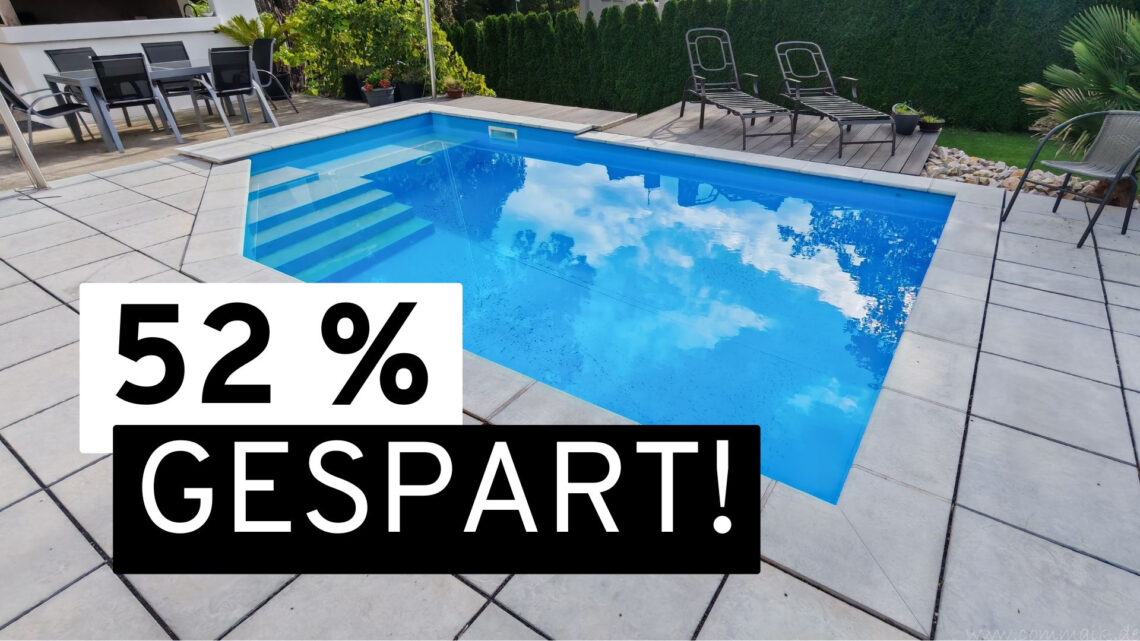
Retrofitting a variable-frequency drive to my pool pump, regulating the speed, and saving electricity in the process—that’s exactly what I did with my SPECK BADU Magic II 8. With the AquaForte Vario+ II, the daily energy consumption of the pump and UV-C lamp dropped by about 43 percent, and at the same time, the system became significantly quieter.
I’ll show you how I installed, connected, and configured the variable-frequency drive, what the measured values were, and why the lowest speed wasn’t the best choice in the practical test. I’ll also cover operating times, costs, and the requirements for a suitable retrofit.
At a Glance: What to Expect When Upgrading the Pool Pump
- Retrofitting a Variable Frequency Drive for the Pool Pump: Why I’m Continuing to Use My SPECK BADU Magic II 8 and Supplementing It with the AquaForte Vario+ II.
- Installation and Connection: How I Installed the Frequency Converter and What Technical Requirements Are Important.
- Adjusting the Pool Pump Speed: Why 1,750 RPM Wasn’t Enough for My System and Why 2,000 RPM Has Proven Effective in Everyday Use.
- Setting the frequency converter: Operation via the touch panel, key lock, and time programs with up to four time windows.
- Comparing electricity consumption: My readings before and after the renovation—with energy consumption down by about 43 percent, including the UV-C lamp.
- Balancing Run Time and Circulation: Why My Pump Runs Longer and How to Estimate Water Flow Rate.
- Costs and Practical Experience: Payback Period, Lower Noise Levels, and the Impact on Skimmers, Solar Heating, Dosing Systems, and PV Storage.
Why I Wanted to Retrofit My Pool Pump with a Variable-Frequency Drive
My pool equipment runs for many hours a day during the season. Before the renovation, my pump ran at full speed for about seven hours and twenty minutes a day using a standard timer. While this generally works reliably, it has two clear drawbacks: The pump operates continuously near full load and is relatively loud as a result.
The idea behind a variable-speed pump or a retrofitted inverter is simple: Instead of always running the pool pump at maximum speed, the pump speed is reduced as needed. The circulation is then slightly slower, but the pump can run longer and much more efficiently.
The most important benefit I was hoping for was, of course, power consumption. Pool pumps are among the devices that run continuously during the season. If power consumption can be significantly reduced, this can lead to noticeable cost savings, depending on the runtime and the price of electricity. At the same time, a lower speed should also reduce noise—which is particularly important if the pool equipment is located near the patio, the house, or a neighbor’s property.
There’s another point to consider: If the pump isn’t running continuously at full power, the pressure and load within the system also decrease. This affects not only the motor but also the filters, piping, seals, and other components of the pool system. Whether this measurably extends the service life cannot, of course, be quantified with certainty in everyday use. However, I believe that reducing continuous stress is generally a good idea.
Especially in a pool with stable water quality, an adequate filtration system, and proper flow, a pump does not need to run at full capacity all day long. However, it’s important to note that a lower speed doesn’t automatically mean that every setting is appropriate. Skimmers, inlet jets, solar heating systems, dosing systems, and the hydraulic system must continue to function reliably.
My pool equipment before the renovation
My pool uses a SPECK BADU Magic II 8. According to the nameplate, its rated power is 610 watts, and its rated speed is 2,840 revolutions per minute. In actual operation, I measured an average power consumption of about 587 watts using a smart outlet. This also shows why it’s worth looking at real-world measurements: The nameplate lists the technical rated value, but actual consumption may vary depending on the system and operating conditions.
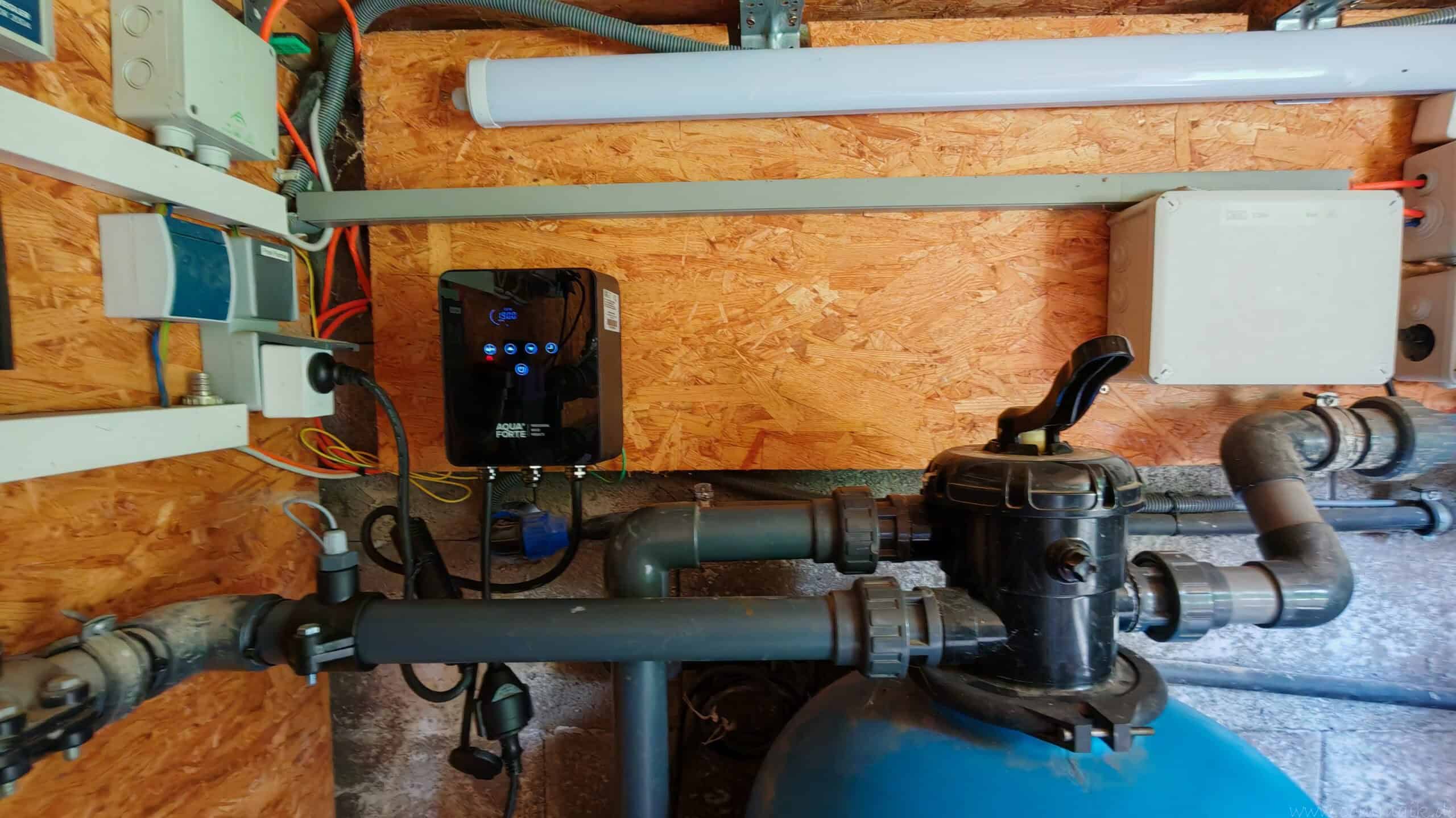
In my setup, the pump supplies water to the filter, the UV-C lamp, the pool heater, and the dosing system, among other things. The equipment room also houses the piping, the electrical controls, and the filtration system. I’ve already described the basic setup in the post “Pool Construction Project: The Equipment Room.”
Before the renovation, the pump ran for about seven hours and twenty minutes each day. This resulted in an electricity consumption of about 4.18 kWh per day for the pump alone. The 75-watt UV-C lamp ran at the same time and consumed an additional 0.55 kWh. In total, my pool equipment consumed about 4.73 kWh per day.
At an electricity rate of 30 cents per kilowatt-hour, that amounts to about 1.42 euros per day. Over the course of a month with 30 operating days, the pump and UV-C lamp alone add up to about 42.50 euros. Over a six-month pool season, that adds up to more than 250 euros—not counting the dosing system, pool heater, or other appliances. That’s exactly when it became clear to me that even a moderate reduction in power consumption over the course of the season can make a noticeable difference.
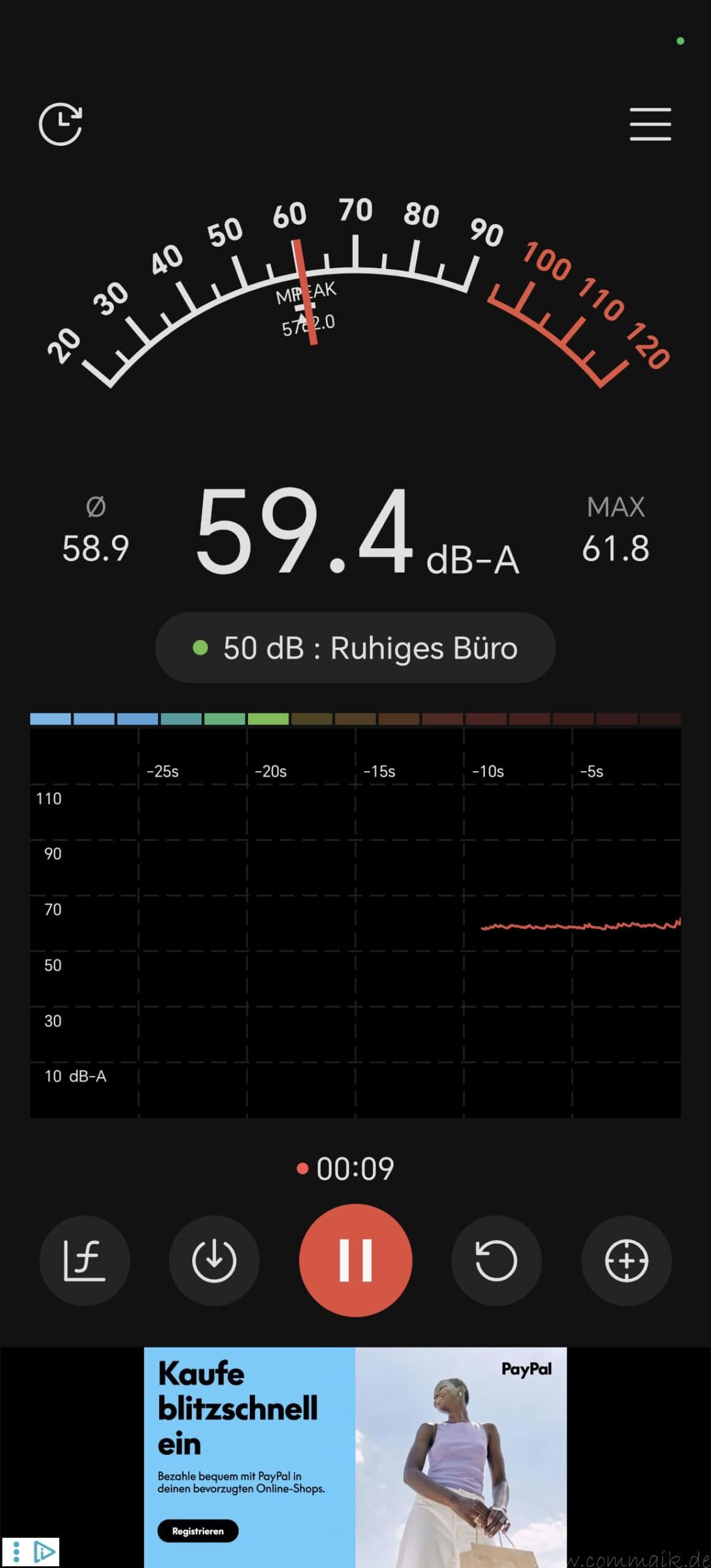
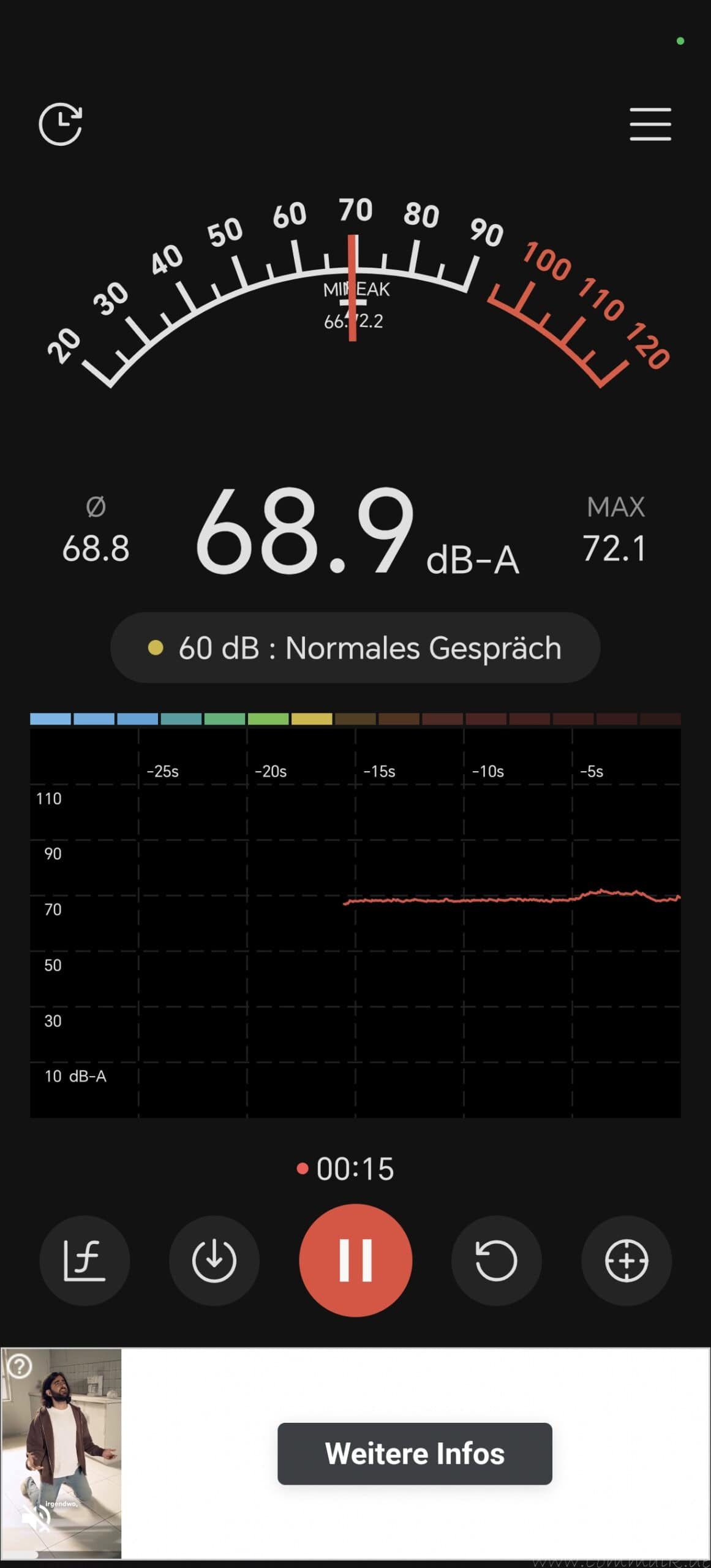
The system was also clearly audible. Right inside the utility shaft, the readings ranged from about 70 to 75 dB, depending on the measurement point. While this isn’t unusual for a standard pool pump, the system was clearly audible when in operation. Especially on warm days, when the patio and garden are in use, this constant noise is more noticeable than initially expected.
Added to this is the constant mechanical stress. At full speed, the pump generates higher pressure, the flow through the piping increases, and the filter housing, seals, and connections are also subjected to greater, constant stress. The pump itself runs at high speed for many hours. It would be irresponsible to claim that this allows us to predict a specific point in time when wear will occur. One thing is clear, however: Lower speed generally means lower pressure, less vibration, and less continuous strain on the motor and pool equipment.
How a variable-frequency drive controls the pool pump
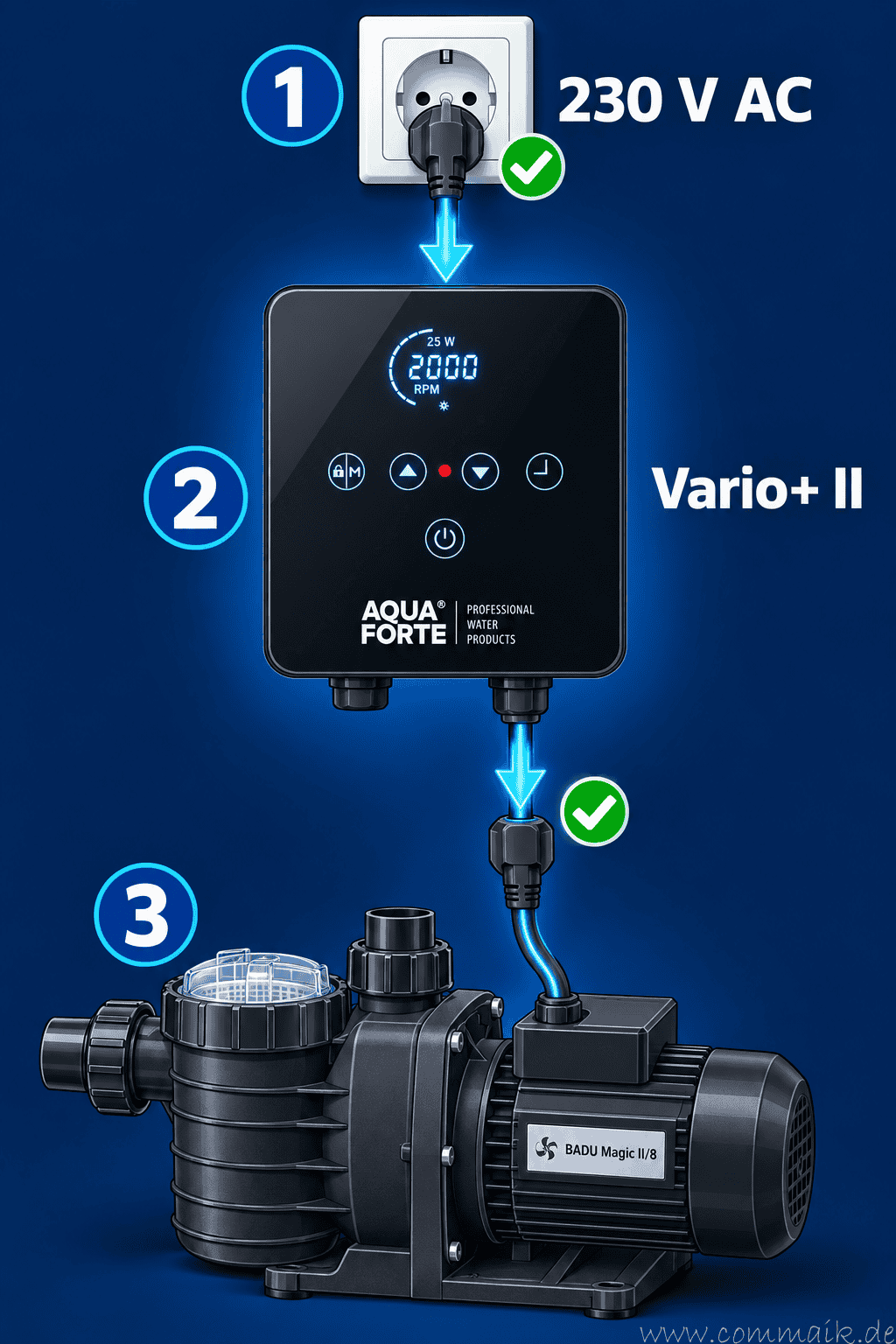
A variable-frequency drive is connected between the outlet and the pump and does more than just adjust the voltage. It converts the available 230-V AC voltage into a new output voltage with a variable frequency. This frequency controls the motor’s speed: a lower frequency results in a lower pump speed, while a higher frequency provides greater power and flow.
With a standard pool pump that doesn’t have its own speed control, the motor usually runs at its rated speed at all times. In my case, that was about 2,840 revolutions per minute. This means the pump always operates at the same capacity, regardless of whether a high flow rate is needed or whether the pool is just running in normal filter mode.
This is exactly where the variable-frequency drive comes in. Instead of running the pump continuously at full speed, its output can be adjusted to actual demand. A lower speed may be sufficient for normal circulation. During backwashing, when priming after cleaning, or when a higher flow rate is needed for the pool heater, however, the speed can be increased again.
This doesn’t just save electricity. As the speed decreases, the flow rate, pressure, vibrations, and noise levels generally decrease as well. The pump runs more quietly, and the overall hydraulic system is subjected to less stress. It’s important not to simply reduce the speed as much as possible. The filter system, skimmer, inlet nozzles, solar collector, heat pump, and dosing equipment still require sufficient flow.
The AquaForte Vario+ II variable-frequency drive* is designed specifically for this retrofit. It allows you to continue using an existing, technically compatible 230-V pump instead of having to replace it solely because of its power consumption. If the pump is still running reliably, this can be more cost-effective than immediately replacing it with a new model.
These types of variable-frequency drives are not used exclusively with pool pumps. In general, they are also used with suitable pond pumps, circulation pumps for swimming ponds, irrigation systems, waterways, or filter circuits. The technical compatibility of the motor is always the decisive factor. The AquaForte Vario+ II is not a universal controller for any device, but is designed for compatible single-phase pump motors.
An alternative to retrofitting is to use modern pool pumps with built-in speed control. These pumps come equipped with the necessary electronics right from the factory and can often be operated directly using multiple power settings, speed levels, or timer programs. This is particularly appealing if a pump replacement is due anyway, or if the existing pump is already old or defective.
View pool pump with built-in speed control on Amazon*
However, if a conventional pump is still in working order, an external variable-frequency drive can be a very attractive solution: The existing equipment remains in place, the speed can be flexibly controlled, and energy consumption can be significantly reduced during normal pool operation.
AquaForte Vario+ II: What the frequency converter can do—and what it can’t
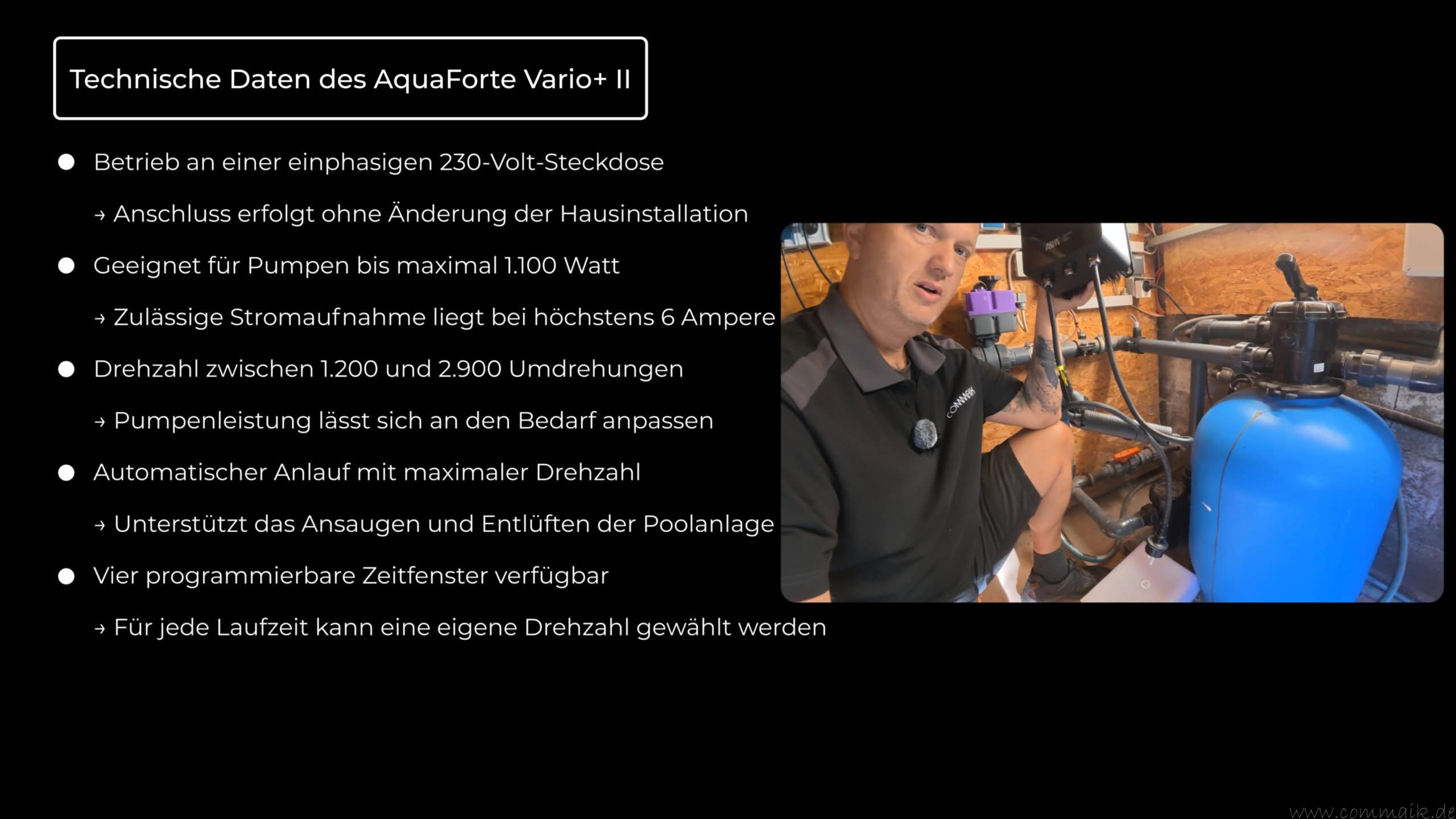
I decided to go with the AquaForte Vario+ II. The inverter plugs right in between the outlet and the pump, allowing you to adjust the speed of a compatible pool pump between 1,200 and 2,900 revolutions per minute.
View the AquaForte Vario+ II Frequency Converter on Amazon*
The big advantage: There’s no need to replace your existing pump with a new model that has built-in speed control. The AquaForte Vario can be retrofitted to compatible pool pumps and handles speed control externally.
Suitable only for compatible 230-V pumps
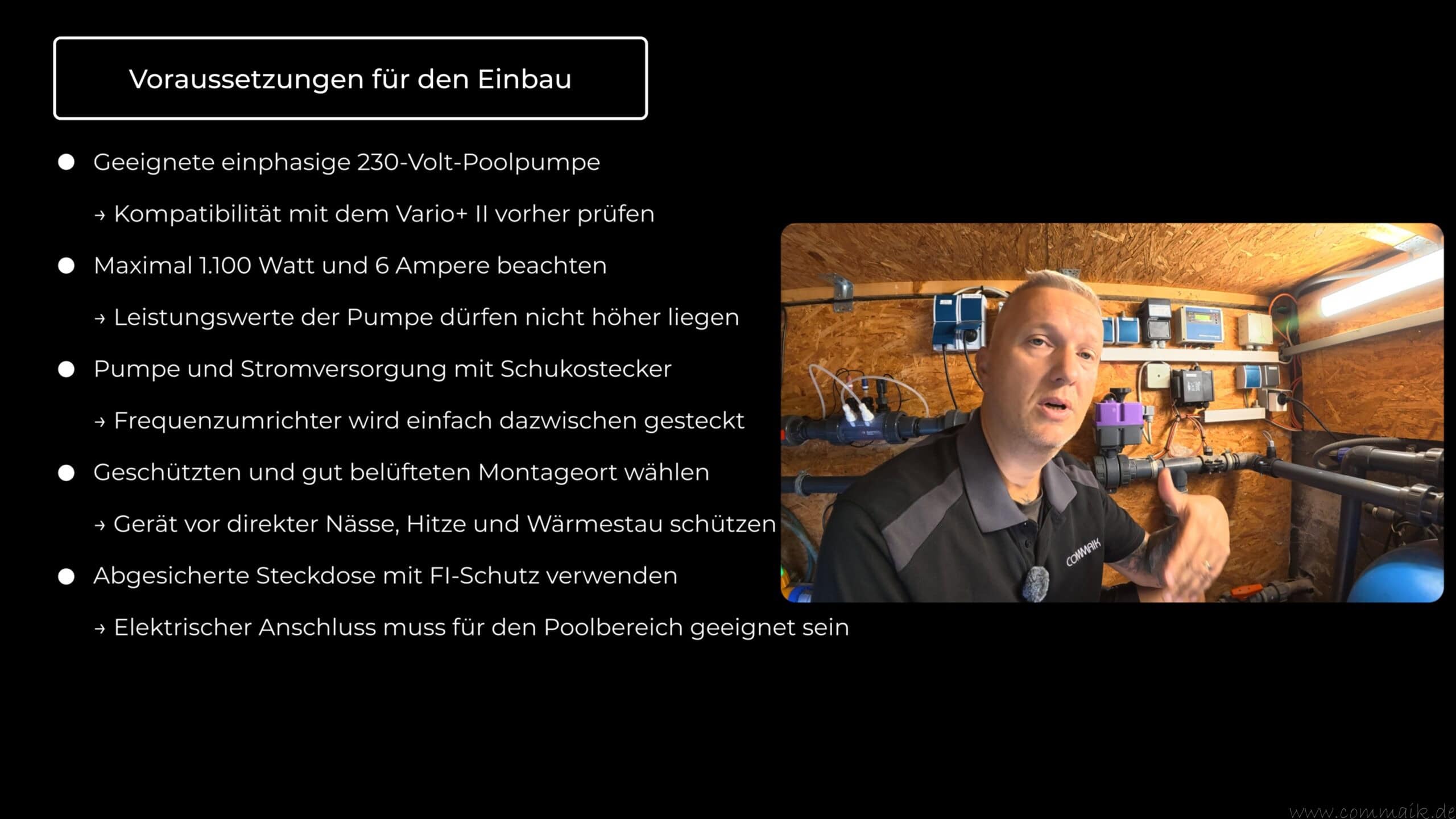
Here’s the most important point to consider when making a purchase: A variable-frequency drive is not automatically compatible with every pump. The AquaForte Vario+ II is designed for compatible single-phase 230-V capacitor motors. Before connecting the unit, check the nameplate, motor type, and the pump manufacturer’s specifications.
The inverter is not designed for a 400V three-phase motor. Caution is also advised when using induction motors, synchronous motors, motors with start relays, centrifugal switches, or motors with damaged capacitors. Older pool pumps, in particular, may have different designs. Therefore, you should not rely solely on the wattage rating before making any modifications.
With my BADU pump, this combination worked without any problems. However, that does not mean this can be taken as a blanket approval for other pool pumps.
Safety with 230V, Water, and Ground-Fault Circuit Interrupters
A frequency converter operates on 230 V AC and is installed in an environment where water is present. The electrical installation must therefore be performed properly. According to the manufacturer’s documentation, an RCD with a maximum rating of 30 mA is required. If there is any doubt as to whether the existing protective measure—such as a Type A RCD—is suitable for the specific installation, a licensed electrician should evaluate this based on the local installation and the manufacturer’s documentation.
I mounted the inverter in a dry, protected location on the wall of my utility shed. I would not use extension cords for this application. The plug connections, cable routing, and circuit protection should be permanently suitable for the environment in which the pool is operated.

- MAXIMALE ENERGIEEINSPARUNG: Verwandeln Sie Ihre herkömmliche Poolpumpe in ein hocheffizientes Modell. Durch die Regelung der Motordrehzahl verbraucht Ihre Pumpe nur so viel Strom wie nötig. Das schont nicht nur die Umwelt, sondern reduziert Ihre Stromkosten für den Poolbetrieb drastisch.
- OPTIMIERTE FILTRATION: Eine langsamere Fließgeschwindigkeit sorgt für ein besseres Filterergebnis, da selbst kleinste Schmutzpartikel effektiver vom Filtermedium erfasst werden. Mit 35 einstellbaren Geschwindigkeiten finden Sie die perfekte Balance für kristallklares Wasser.
- OPTIMIERTE FILTRATION: Eine langsamere Fließgeschwindigkeit sorgt für ein besseres Filterergebnis, da selbst kleinste Schmutzpartikel effektiver vom Filtermedium erfasst werden. Mit 35 einstellbaren Geschwindigkeiten finden Sie die perfekte Balance für kristallklares Wasser.
- OPTIMIERTE FILTRATION: Eine langsamere Fließgeschwindigkeit sorgt für ein besseres Filterergebnis, da selbst kleinste Schmutzpartikel effektiver vom Filtermedium erfasst werden. Mit 35 einstellbaren Geschwindigkeiten finden Sie die perfekte Balance für kristallklares Wasser.
- MODERNER TOUCHSCREEN & KOMPATIBILITÄT: Der Nachfolger des beliebten Vario+ besticht durch ein intuitives Touchscreen-Display für einfachste Bedienung. Er ist für fast alle einphasigen Poolpumpen (220-240V) geeignet und lässt sich schnell und unkompliziert zwischen Steckdose und Pumpe installieren.
Technical Specifications of the AquaForte Vario+ II
| Feature | Technical Specifications |
|---|---|
| Model | AquaForte Vario+ II |
| Model Number | RB345 |
| Device Category | External frequency converter for speed control of compatible pool pumps |
| Entrance | Single-phase alternating current |
| Input Voltage | 220 to 240 V |
| Input Frequency | 50 Hz |
| Output Voltage | Single-phase, 0 to 240 V |
| Maximum Output Power | 1.1 kW |
| Maximum Output Current | 6 A |
| Suitable Pumps | Single-phase pool pumps with a permanent split-capacitor motor, i.e., a motor equipped with a matching capacitor |
| Adjustable speed range | 1,200 to 2,900 revolutions per minute |
| Operating Modes | Three freely selectable speed settings for, for example, night, day, and backwash modes |
| Time Programs | Up to four customizable time slots per day with individual speed settings |
| Advertisement | Current speed, power consumption, time, operating mode, and timer status |
| Operation | Touch Control Panel with Key Lock |
| Cooling | Active Ventilation |
| Protective functions | Protection against, among other things, overheating and overcurrent; if the internal temperature becomes too high, the device can automatically reduce its speed |
| Dimensions | 222 × 117 × 166 mm |
| Required Protective Measure | Residual-current circuit breaker with a maximum rated residual current of 30 mA |
| Not suitable for | 400-volt three-phase motors, motors with centrifugal switches, start relays, or start switches, DC motors, and damaged or incompatible single-phase motors |
The AquaForte Vario+ II is therefore not a universal controller for just any pump. Its strength lies in retrofitting compatible single-phase pool pumps that have previously operated only at a fixed speed. Especially in the case of an existing pump that is still in good working order, this can be a sensible alternative to completely replacing the pump.
Installing and Connecting a Frequency Converter for a Pool Pump
Installing it in my system was surprisingly straightforward. The AquaForte Vario II is mounted on the wall, the pool pump is plugged into the unit’s outlet, and the frequency converter itself is connected to the existing power supply.
With my setup, installation took less than 15 minutes. The package included, among other things, the wall mount, screws, a grounding cable, and the user manual. After that, all I had to do was connect the pump, set the desired speed, and start the test run.
I initially kept the existing control system with the Theben timer. This ensures that the pump continues to run at the usual times. However, the variable-frequency drive also offers a built-in control system with up to four time slots and different power levels. This means the timer can be replaced if necessary.


Operating the AquaForte Vario+ II and Setting Time Programs
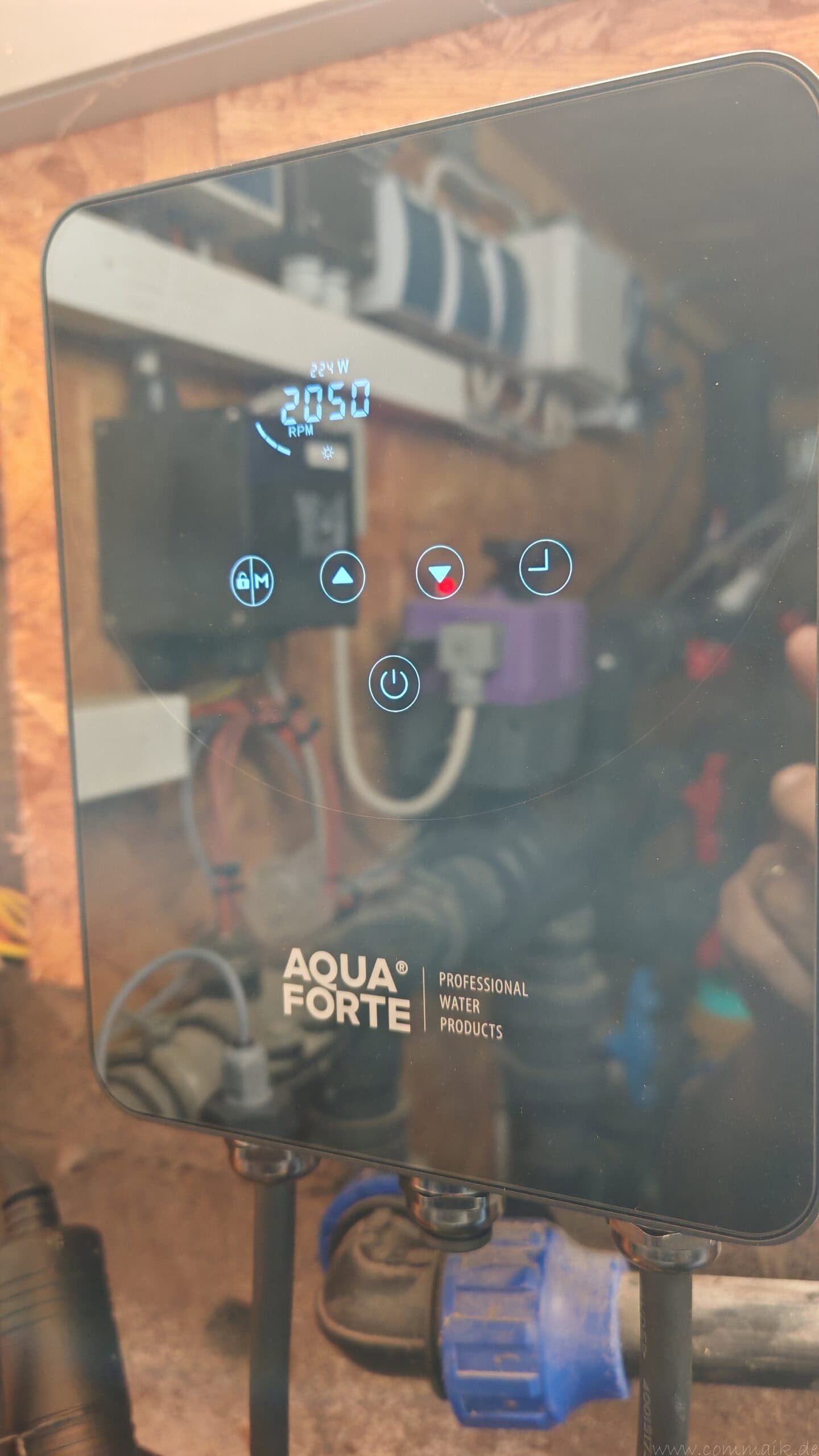
The AquaForte Vario+ II is operated entirely via the touch control panel on the front. No app, Wi-Fi connection, or additional controls are required. In normal operation, the display shows, among other things, the set speed, the current operating status, and—depending on the view—additional values such as power output or the time.
Before you can change any settings, you must first unlock the keypad. To do this, press and hold the lock icon for a few seconds. Only then can you adjust the speed, time, or time programs. This is useful in everyday use because it prevents settings from being accidentally changed while cleaning or by accidentally touching the appliance.
For quick operation, the desired speed can be set directly. After the initial tests, I selected 2,000 revolutions per minute as the continuous speed for normal filter operation on my system. The variable-frequency drive first starts the pump at a higher speed and then reduces it to the set value. This ensures that the motor starts up safely before economical normal operation begins.
In addition, the Vario+ II offers several freely configurable time slots. A total of up to four phases can be programmed per day. For each time slot, a start time, an end time, and the desired speed are set. This allows the pump, for example, to run at higher power in the morning and evening, while operating at a reduced speed for normal circulation during the rest of the day.
The timer programs can also be used to effectively simulate specific operating modes. A higher speed may be useful, for example, during backwashing, when drawing in water after cleaning, or when there is increased demand due to the pool heater. For normal filter operation, however, a lower speed is often sufficient, provided that the skimmers, inlet jets, and dosing system continue to function reliably.
At first, I didn’t use the built-in programming because my pool system is already controlled by a Theben timer. That timer continues to handle the daily operating times. So, in my case, the variable-frequency drive primarily controls the pump speed. However, if you don’t have an external timer installed or want to simplify the control system, you can program the runtime schedules directly into the unit and use it to replace your existing timer.

- Filter-Umwälzpumpe
- selbstansaugend
- steckerfertig
- Fördermenge in m³/h = 8
- Förderhöhe in m WS = 8
Adjusting the Pool Pump Speed: My First Test at 1,750 rpm
For the first test, I set the RPM of my SPECK BADU Magic II 8 to 1,750 RPM. The power consumption immediately dropped to about 153 watts. Compared to the previously measured average of 587 watts, this was a significant reduction.
The noise level also dropped noticeably. Right next to the system, the readings were only about 60 dB. The pump was thus audibly quieter, and spending time near the pool was much more pleasant.
After two weeks, however, it became clear that this speed was too low for my system. The skimmer was no longer drawing in surface debris quickly enough, the flow at the inlet nozzles was too weak, and fine debris remained in the pool for longer.
What were the disadvantages of the weaker current in the pool?
The main issue with the skimmer was that it did not receive sufficient inflow from the pool. As a result, floating debris took longer to reach the skimmer basket or the skimmer mat. If debris remains on the water’s surface for longer, it can spread throughout the pool or sink to the bottom. In that case, it may need to be removed from the bottom as well, rather than being captured at the surface.
At the same time, the water emerged from the inlet nozzles with less pressure and a weaker flow. For cleaning purposes, the most important factor is whether the water jets create sufficient movement in the pool. In my first test, this movement was no longer sufficient to reliably carry debris toward the skimmer.
Good water circulation also helps ensure the even distribution of the dosed water treatment chemicals and the heated water from the solar heating system. Areas with low water flow are less effectively incorporated into this mixing process. Therefore, the pump’s operating time alone does not indicate whether circulation is sufficient throughout the entire pool.
This observation did not automatically mean that my filter glass was filtering less effectively. However, debris must first be carried to the filter system by the water. It was precisely this transport process that was no longer functioning satisfactorily at 1,750 rpm in my setup. Therefore, the lowest power consumption alone was not the decisive factor for further adjustment; rather, it was the interplay of power consumption, surface cleaning, and tank flow.
Why I Set the Pool Pump to 2,000 RPM
So I increased the speed to 2,000 rpm. As a result, my pump’s power consumption was around 207 to 210 watts. It still required significantly less power than before the modification, while the circulation in my pool was working reliably again.
With this setting, the skimmer once again effectively removed surface debris. The inlet jets created adequate circulation in the pool, and the solar heating system also continued to operate without any problems. The BAYROL dosing system also continued to detect the flow via its paddle switch. However, this flow detection alone does not replace the need to check whether the water circulation in the pool is actually sufficient.
The noise level remained around 60 dB. The slightly higher speed thus provided significantly better circulation without noticeably compromising the noise reduction I had achieved.
When I start it up, my pump initially runs at about 2,900 rpm for roughly one minute. The variable-frequency drive then reduces the speed to the set value of 2,000 rpm. This startup phase is intended for priming; after that, the pump operates at the reduced operating speed.
The solar heating system was another important consideration for me. Even at reduced pump speed, it must maintain sufficient flow. With my finned-tube system, the setting of 2,000 rpm continues to work well. I described the setup and integration of the system in the article “Build Your Own Pool Heater with a Finned-Tube System.”
So 2,000 rpm is the right setting for me with this pool setup. However, this does not mean there is a universal speed that applies to other pools. The actual amount of debris collected by the skimmer, the water flow in the pool, and the reliable operation of the connected equipment were the deciding factors in my decision.
Setting the Frequency Converter for a Pool Pump: Time Window and Control
The AquaForte Vario+ II is operated directly on the unit via the touch panel. To change the settings, I press and hold the lock icon for about three seconds. Only after unlocking the unit can I change the speed and the time programs.
The variable-frequency drive allows for up to four time slots with individually adjustable speeds. This makes it possible to spread out operating times throughout the day. For example, separate operating times could be set for the morning, during the day, and in the evening. The appropriate speeds depend on the required circulation and the connected pool equipment.
I am currently still using my existing Theben timer and have set a fixed operating speed on the variable-frequency drive. This is the simplest automation solution for my daily routine. Alternatively, the built-in timer can control the operating times. To do this, the variable-frequency drive must be powered during the scheduled operating hours. An upstream timer must not interrupt this power supply outside of its own time window.
Setting Up the Timer on the AquaForte Vario+ II
Example: A daily time window from 8:00 a.m. to 5:22 p.m. at 2,000 rpm results in a runtime of 9 hours and 22 minutes. The times listed here are provided as a programming example; in my current setup, the Theben timer continues to handle the on/off switching.
- To unlock the touchpad: Press and hold the button with the lock/M icon for about three seconds.
- Open the timer menu: Press the button with the clock icon. First, set the current time using the arrow buttons. Use the clock button to navigate to the other input fields.
- Set Time Slot 1: Set the start time to 8:00 a.m. and the end time to 5:22 p.m. Use the arrow keys to change the displayed values and the clock key to navigate through the time fields.
- Set the speed: Use the M button to select the appropriate speed mode. Then use the arrow keys to set the speed to 2,000 rpm. This value corresponds to the “Day” mode.
- Check additional time slots: Set the remaining timers as needed. The operating times must not overlap. For this example, only this one time slot is needed; any other operating times that have already been set must be checked accordingly.
- Save settings: Press and hold the clock button for about three seconds, or wait ten seconds. You can then use the arrow buttons to adjust the four timer settings.
Important: According to the instructions, a flashing clock icon with a time indicates that the device is waiting for the next start time. The display automatically locks again after about one minute of inactivity. The saved programs are retained even if the power is interrupted.
A smart outlet was particularly helpful for me in measuring power consumption. It isn’t required to operate the variable-frequency drive, but it made it easy to see the difference between the various speed settings and daily energy consumption.
View the smart outlet for measuring energy consumption on Amazon*

- ENERGIEEFFIZIENT: Dank drehzahlgesteuerter Technologie arbeitet die Pumpe in einem Leistungsbereich von 0,07 - 0,65 kW, wodurch sich der Stromverbrauch erheblich reduziert.
- OPTIMALE FILTRATION: Die variable Drehzahl ermöglicht eine langsamer laufende Filtration, die die Effizienz der Filteranlage steigert und den Bedarf an chemischen Wasserpflegemitteln senkt.
- FLEXIBLE LEISTUNG: Mit einer Pumpenleistung von 1,0 - 11,0 m³/h bei 8,0 m Wassersäule eignet sich die Pumpe perfekt für Pools von 10.000 bis 60.000 Litern.
- EXTREM LEISE: Dank optimierter Drehzahlen läuft die Pumpe mit nur 45,1 dB bei 1000 U/min. – ideal für einen angenehmen Badebereich ohne störende Geräusche.
- LANGE LEBENSDAUER: Die reduzierte Drehzahl schont die Komponenten und sorgt für eine höhere Lebensdauer der Pumpe, während das robuste, chlor- und salzwasserbeständige Gehäuse für maximale Haltbarkeit sorgt.
Calculation Example: Electricity Consumption and Water Flow Rate Before and After the Renovation
The key point is not just the reduced power consumption, but the actual electricity usage over the course of the entire day. At the same time, the pump must circulate enough water through the filtration system. That is why I increased the daily runtime from seven hours and twenty minutes to nine hours and twenty-two minutes.
Why I Extended the Term
My pool holds about 27 m³ of water. At a reduced speed, the pump circulates less water per hour. If I were to keep the current runtime unchanged, the daily volume of water circulated would also decrease. By extending the runtime, I wanted to partially offset this decrease and maintain surface cleaning over a longer period of time.
I have not installed a flow meter. The following figures regarding water flow rate are therefore a simplified model calculation and not measured values from my system. For this example, I’m assuming an initial flow rate of 8 m³/h at 2,840 rpm. This value is a calculation assumption and should not be equated with the actual flow rate in my piping.
As a simplified guideline, the flow rate can be estimated as proportional to the rotational speed. For 2,000 rpm, this results in: 8 m³/h × 2,000 ÷ 2,840 ≈ 5.63 m³/h. This approximation is based on the affinity laws for centrifugal pumps; it does not determine the actual operating point of my system.
| Operation | Speed | Power consumption | Daily Runtime | Daily consumption¹ | Calculated flow rate² | Estimated daily water consumption² |
|---|---|---|---|---|---|---|
| Pump before | 2,840 rpm | 587 W | 7 hours, 20 minutes | 4.18 kWh | approx. 8.00 m³/h | approx. 58.7 m³ |
| Pump afterward | 2,000 rpm | approx. 207 W | 9 hours, 22 minutes | approx. 2.0 kWh | approx. 5.63 m³/h | approx. 52.8 m³ |
| UV-C lamp before | – | 75 W | 7 hours, 20 minutes | approx. 0.55 kWh | – | – |
| UV-C lamp afterward | – | 75 W | 9 hours, 22 minutes | approx. 0.70 kWh | – | – |
| Total (previous) | – | – | – | 4.73 kWh | – | – |
| Total afterward | – | – | – | 2.70 kWh | – | – |
¹ Interpretation of power consumption values: The table reflects the daily consumption figures I provided. They do not exactly match a calculation based on constant power consumption and runtime: 587 watts over 7 hours and 20 minutes would theoretically amount to approximately 4.30 kWh, 207 watts over 9 hours and 22 minutes amounts to approximately 1.94 kWh. For the following cost comparison, I am using the reported daily values totaling 4.73 and 2.70 kWh, respectively.
² Classification of flow rates: All water volumes are based on the assumed initial flow rate of 8 m³/h and the simplified speed calculation. They are not actual flow measurements.
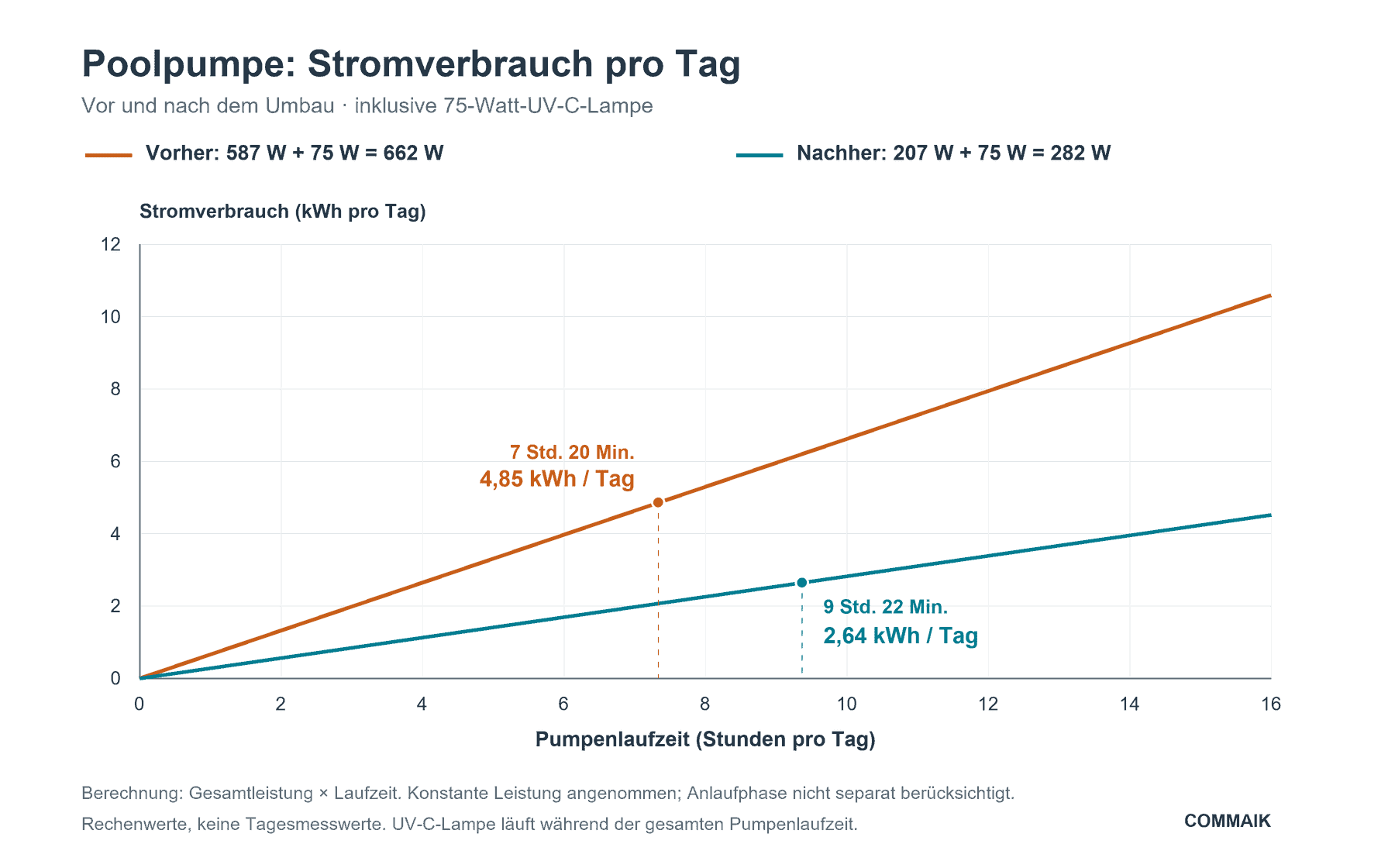
If the operating time remained unchanged, this calculation model shows that, at 2,000 rpm, only about 41.3 m³ would be processed by the plant each day. Due to the extended operating time, this figure rises to about 52.8 m³. The additional operating time thus largely, but not completely, compensates for the lower hourly throughput.
Based on my 27-m³ pool, this corresponds mathematically to approximately 2.17 times the pool’s volume before the renovation and 1.96 times the pool’s volume afterward. These figures merely describe the ratio of the volume of water pumped to the tank volume. They do not prove that water flows evenly through every area of the pool or that the entire volume of water has been completely filtered twice.
Practical observations were therefore also crucial to my decision: The skimmer had to effectively draw in surface debris, the inlet jets had to create adequate pool circulation, and the connected pool equipment had to continue operating reliably.
How often should the pool water be circulated each day?
As a general guideline, a private pool should be circulated two to three times its total volume per day. In cases of high water temperatures, heavy use, or significant contamination, a longer filtration cycle may be necessary.
For my 24-m³ pool, this results in the following water volumes:
Daily Circulation Amount of water required by the filtration system Twice 48 m³ per day Triple 72 m³ per day The appropriate pump runtime depends on the actual water flow rate:
Operating time in hours = daily water volume in m³ ÷ flow rate in m³/h
Assuming a flow rate of 5.63 m³/h, two complete circulations would take about 8 hours and 32 minutes, and three complete circulations would take approximately 12 hours and 47 minutes. In this calculation example, my runtime of 9 hours and 22 minutes corresponds to about 2.2 tank volumes per day.
Electricity Costs and Payback Period
Based on the daily consumption figures used, total consumption fell from 4.73 to 2.70 kWh. This corresponds to a savings of approximately 2.03 kWh, or 43 percent, per operating day, including the UV-C lamp.
Although the longer operating time increases the daily energy consumption of the 75-watt UV-C lamp from about 0.55 to 0.70 kWh, the savings on the pump are significantly greater.
At an electricity price of 0.30 euros per kWh, this results in savings of about 0.61 euros per day of operation. The variable-frequency drive cost about 300 euros when I bought it. Based on these unrounded calculations, the payback period is approximately 493 operating days. With a pool season lasting about six months, that roughly corresponds to two and a half to three years.
For my pool, therefore, the combination of reduced speed and longer runtime was crucial. The electricity consumption figures show the savings; the calculated water volumes are for reference only. I also assess whether the setting works well in everyday use based on surface cleaning, pool circulation, and the operation of my pool equipment.

- Energieverbrauchskontrolle - Analysieren Sie den Echtzeit- und den historischen Stromverbrauch des angeschlossenen Geräts
- Einfache Einrichtung und Verwendung - Schnelle und einfache tägliche Einrichtung und Verwaltung über kostenlose App (kostenfrei für IOs und Android)
- Sprachsteuerung - Aktivieren Sie Ihre smarte Steckdose mit Sprachbefehlen über Amazon Alexa oder den Google Assistant
- Zugriff auch von unterwegs - Steuern Sie alle Geräte bequem über das Smartphone, überall und zu jeder Zeit
- Erstellen von Zeitplänen - Schalten Sie Ihre Geräte automatisch zu verschiedenen Zeiten an und aus
- Abwesenheitsmodus - Schalten Sie Ihre Lichter zu unterschiedlichsten Zeiten an und aus um die Anwesenheit einer Person zu simulieren
- Lieferumfang: Tapo P110 * 4 (nur auf 2.4GHz), Schnellinstallationsanleitung
What has changed in terms of noise level, pressure, filter performance, and PV storage
Lower electricity consumption was the main reason I undertook the pool project. But the reduced noise level is just as nice. The system now operates at about 60 dB instead of the previous 72 dB. That makes a noticeable difference, especially in the summer.
The pressure on the system is also lower. The filter housing and filter basket are no longer under as much pressure as they were during previous operation. I assume that, in the long run, this may be gentler on the pump, filter, and piping. Of course, this doesn’t guarantee a longer service life, but the reduced strain makes sense to me.
A minor side effect: With the reduced flow, the skimmer mat isn’t quite as easy to remove from the basket. Fine particles tend to settle more loosely in the skimmer. But for me, that’s really just a luxury problem when I consider the significantly lower energy consumption.
This setup also has a positive effect on my solar power system. The pool system draws on the battery storage more slowly, leaving more solar power available for household use. Especially when multiple appliances are running at the same time, the pump’s lower power consumption makes a difference.
Video: Field Test of the Variable Frequency Drive on My Badu Speck Pool Pump
In the video, I demonstrate the plug-and-play installation, the initial measurements, the adjustment from 1,750 to 2,000 rpm, and a comparison of noise levels and power consumption.
You can find more videos about my pool technology, water maintenance, and the renovations we’ve made to our pool in my YouTube playlist dedicated to the pool. I also regularly post new projects and practical experiences on my YouTube channel, COMMAIK.
Zuletzt aktualisiert am 4. November 2026 um 11:00 . Ich weise darauf hin, dass sich hier angezeigte Preise inzwischen geändert haben können. Alle Angaben ohne Gewähr. (*) Bei den verwendeten Produktlinks handelt es sich um Affiliate Links. Ich bin nicht der Verkäufer des Produktes. Als Amazon-Partner verdiene ich an qualifizierten Verkäufen. Dein Preis ändert sich jedoch nicht.


My experiences after installation
The upgrade was worth it for my system. The pool pump runs more quietly, power consumption has been significantly reduced, and the water circulation remains sufficient at 2,000 rpm. It was especially important to me not to simply choose the lowest possible speed, but to adjust the setting to match the skimmer, flow rate, and existing pool equipment.
The pump doesn’t need to run 24 hours a day just to save electricity. It makes more sense to run it for a sufficiently long period at an appropriate speed. For me, about nine and a half hours a day was a good balance between energy consumption, water circulation, and filter performance.
If you need a new pump anyway, you can also opt for a pool pump with built-in speed control right away. For me, retrofitting was more cost-effective because my BADU pump was still working perfectly from a technical standpoint.
View pool pump with built-in speed control on Amazon*
The existing dosing and measurement system continues to operate reliably in my setup. The BAYROL Automatic CL-pH still receives sufficient flow for the paddle switch. I described the installation of this control system in detail in the post “Installing the BAYROL Automatic CL-pH and Retrofitting a Temperature Sensor.”
Products Used
- View the AquaForte Vario+ II Frequency Converter on Amazon*
- View the smart outlet for measuring energy consumption on Amazon*
- View pool pumps on Amazon*
- View pool pumps with speed control on Amazon*
- View BAYROL Automatic CL-pH on Amazon*
Note: All links marked with an * are affiliate links. If you make a purchase through these links, I’ll receive a small commission at no additional cost to you. Thank you for your support!
Conclusion: Is a variable-frequency drive worth it for a pool pump?
For my pool, the answer is a clear yes. The AquaForte Vario+ II has turned an existing, traditional pool pump into a significantly more efficient solution. The pump runs more quietly, energy consumption has been reduced, and water quality remains stable when properly adjusted.
It is crucial to check the motor’s compatibility before purchasing and, after installation, not to focus solely on the wattage. Skimmers, filters, solar heating systems, and dosing systems must continue to operate with sufficient flow. If these requirements are met, a variable-frequency drive is a very attractive option for retrofitting existing pool pumps and achieving long-term energy savings.
Summary
I retrofitted my existing SPECK BADU Magic II 8 with a variable-frequency drive for my pool pump and significantly reduced its energy consumption. In this post, I’ll show you how I installed, connected, and configured the AquaForte Vario+ II, and what requirements the pump must meet for this.
When adjusting the pool pump’s speed, 2,000 rpm proved to be a good compromise: Power consumption dropped from about 587 to about 207 watts, the system became significantly quieter, and the skimmer, solar heater, and dosing system continued to operate reliably. Despite the longer runtime, daily electricity consumption—including the UV-C lamp—decreased by about 43 percent. My experience shows what’s important when retrofitting a variable-frequency drive to a pool pump: the right motor technology, sufficient water circulation, and settings tailored to the system.
Frequently Asked Questions About the Variable-Frequency Drive on the Pool Pump
How much electricity does a variable-frequency drive save when used with a pool pump?
The savings depend on the speed, runtime, and system configuration. With my SPECK BADU Magic II 8, the power consumption dropped from an average of 587 to about 207 watts. Despite a longer runtime, the pump’s daily energy consumption was reduced by about 52 percent. Including the UV-C lamp operating in parallel, the savings amounted to about 43 percent.
Can I retrofit any pool pump with a variable-frequency drive?
No. The AquaForte Vario+ II is designed for compatible single-phase permanent split-capacitor motors—that is, motors with a permanently connected operating capacitor. The specification “230 volts” alone is not sufficient proof of compatibility. For example, motors with centrifugal switches or start relays are not compatible. Before retrofitting, the motor type and manufacturer’s specifications must be checked.
How do you connect a variable-frequency drive to a pool pump?
In my setup, the AquaForte Vario+ II is connected between the existing power supply and the pool pump. The pump plug is connected to the designated device outlet. Only the appropriate pump may be operated there; the UV-C lamp and dosing system do not belong on this outlet. According to the instructions, an RCD with a maximum rated residual current of 30 mA is also required. Electrical work and any unclear safety measures must be assessed by a licensed electrician.
What speed should I set on the variable-frequency drive for the pool pump?
There is no one-size-fits-all speed setting. With my system, 1,750 rpm was particularly energy-efficient, but the surface cleaning and pool circulation were insufficient. At 2,000 rpm, the skimmers, inlet jets, solar heater, and dosing system worked reliably again. I therefore chose the setting based on practical operation and not solely on the lowest wattage.
Why does the pool pump have to run longer at a reduced speed?
As the speed decreases, the hourly water flow rate usually decreases as well. A longer operating time can partially offset this decrease. I increased the daily operating time from 7 hours and 20 minutes to 9 hours and 22 minutes. Since I haven’t installed a flow meter, the figures for the daily water volume pumped are merely model calculations. The actual circulation in my system has therefore not been verified.
What are the potential drawbacks of a pump speed that is too low?
In my first test, the skimmer drew in surface debris too slowly, and the inlet jets generated too little flow. As a result, debris remained in the pool longer. Even with solar heating and a dosing system, the required flow rate must be maintained. The fact that the pump is running or that a flow switch is activated does not, by itself, guarantee sufficient water movement throughout the entire pool.
How do I set the speed and time programs on the AquaForte Vario+ II?
First, press and hold the Lock/M button for about three seconds to disable the key lock. You can then select the operating mode and speed. Press the Clock button to open the timer menu. The Vario+ II offers up to four time slots with individual speeds; the set times must not overlap. I continue to use my Theben timer and a fixed operating speed.
Can I still backwash the filter system using a variable-frequency drive?
The AquaForte Vario+ II features a high-speed mode called “Backwash.” However, for backwashing to occur, the flow rate specified by the filter manufacturer must be achieved. The energy-saving setting for normal filter operation is not automatically sufficient for this purpose. Therefore, a specific speed alone does not guarantee effective backwashing.
When is a variable-frequency drive for a pool pump a good financial investment?
Based on my purchase price of about 300 euros and a daily savings of 2.03 kWh, at 0.30 euros per kWh, this amounts to savings of about 0.61 euros per day of operation. Mathematically, the purchase pays for itself after about 493 days of operation. With a pool season lasting about six months, this corresponds to roughly two and a half to three years. Different operating periods, electricity prices, and consumption rates will alter this result.
Is a pool pump with built-in speed control better than a retrofit?
Both options allow for operation at an adjusted speed: either via the integrated control system of a new pump or via a suitable external variable-frequency drive. For me, the retrofit made sense because my BADU pump was still operating reliably. If I ever had to replace the pump anyway, I would compare the purchase cost, appropriate flow rate, and operating options of a pump with built-in speed control to those of the retrofit solution.
Dieser Beitrag ist auch verfügbar auf:
 English
 Deutsch


Ähnliche Beiträge

5 diesel parking heaters compared: which one is right for you?
6 Hunter pop-up sprinklers for optimum lawn irrigation in the test