Installing Air Conditioning Yourself in an Older Building – Heating and Cooling in Practice
Installing a split-system air conditioner yourself in an older building—does that really work? It was precisely this question that I explored in an Art Nouveau villa dating from 1900. In this field report, I document the entire installation process for a split-system air conditioner, explain the technology behind the air-to-air heat pump, and demonstrate why modern air conditioners today— —can not only cool but also heat efficiently. I’ll also discuss planning, proper sizing, Quick Connect, R32 or R290, the legal framework, and my experiences after the first few weeks of operation. The goal is not to provide a theoretical guide, but rather a well-founded decision-making tool with many practical tips drawn from a real-world project.
At a glance
- Why a split-system air conditioner is a good choice for cooling and heating in older buildings
- How an air-to-air heat pump works and why modern air conditioners are so efficient
- The Differences Between Single-Split and Multi-Split Air Conditioning Systems
- The Right Size—9,000, 12,000, or 18,000 BTU?
- Planning for the Indoor Unit, Outdoor Unit, and Piping Layout
- Step-by-Step Guide to Installing a Split Air Conditioning System in an Older Apartment
- The Advantages and Limitations of a Quick-Connect System
- The Differences Between the Refrigerants R32 and R290
- The Key Legal Framework for Installation and Commissioning
- My personal practical experiences and everyday tips
When an Old Building Turns into a Sauna in the Summer
Old buildings have a charm all their own. High ceilings, solid brick walls, and large windows create a pleasant living environment and an atmosphere that modern buildings often fail to provide. At the same time, however, they also present some challenges. Especially during the summer months, rooms can get very hot over the course of many hours. Even when outdoor temperatures drop again at night, the stored heat often remains in the building for a long time.
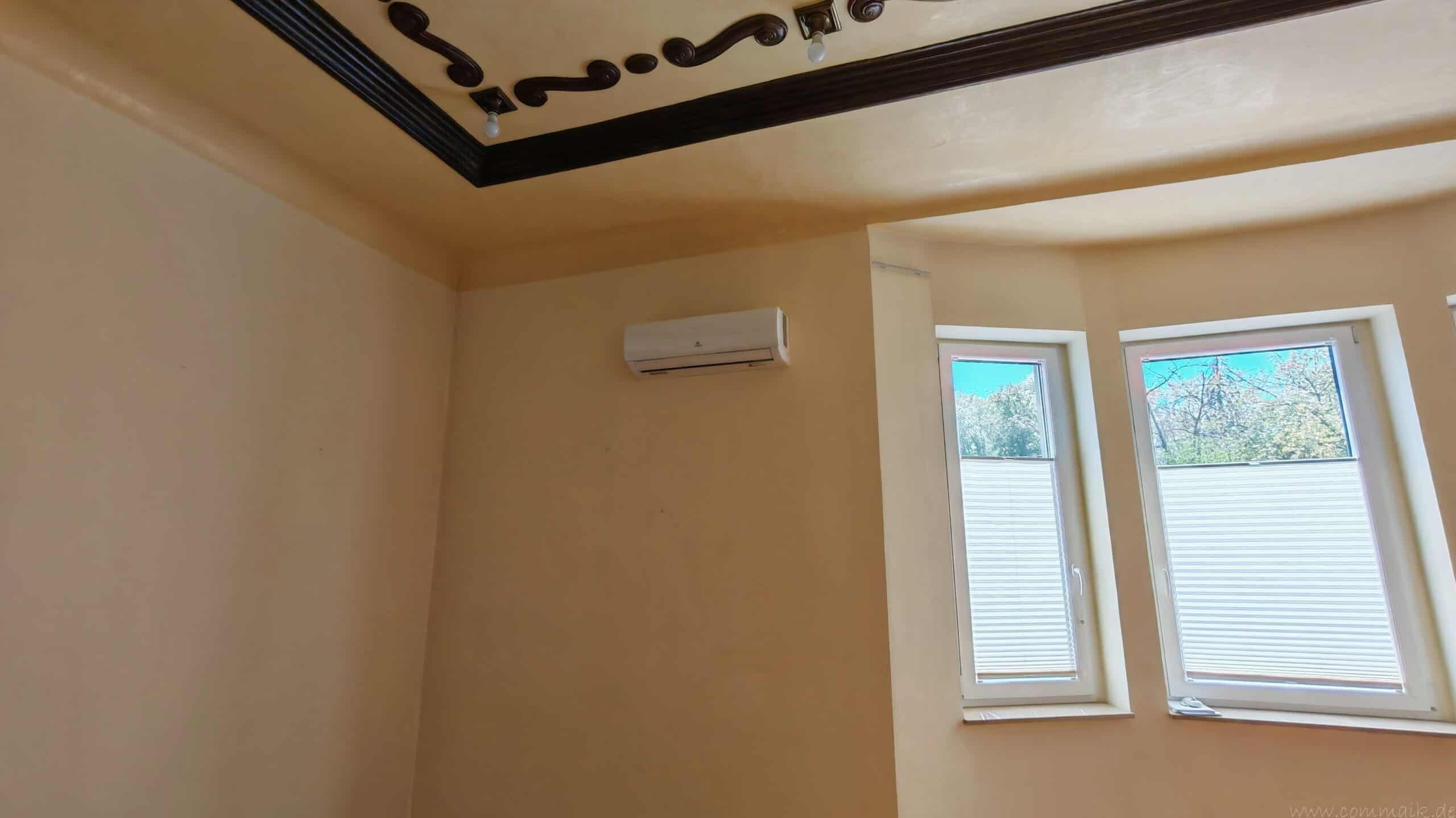
That was exactly the situation I found myself in, in an apartment in our Art Nouveau villa built in 1900. The exterior walls consist of brick masonry approximately 36 centimeters thick. While this type of construction certainly has its advantages in the winter, it can quickly become uncomfortably hot on hot summer days. In addition, there are large windows and high ceilings, which significantly increase the interior volume compared to modern apartments.
The original idea was therefore quite simple: An air conditioner should ensure comfortable temperatures in the summer. During the planning phase, however, it quickly became clear that modern split-system air conditioners are no longer intended solely for cooling. They operate on the principle of an air-to-air heat pump and can heat rooms just as efficiently. This opens up entirely new possibilities, especially during the transition period or in conjunction with a photovoltaic system.
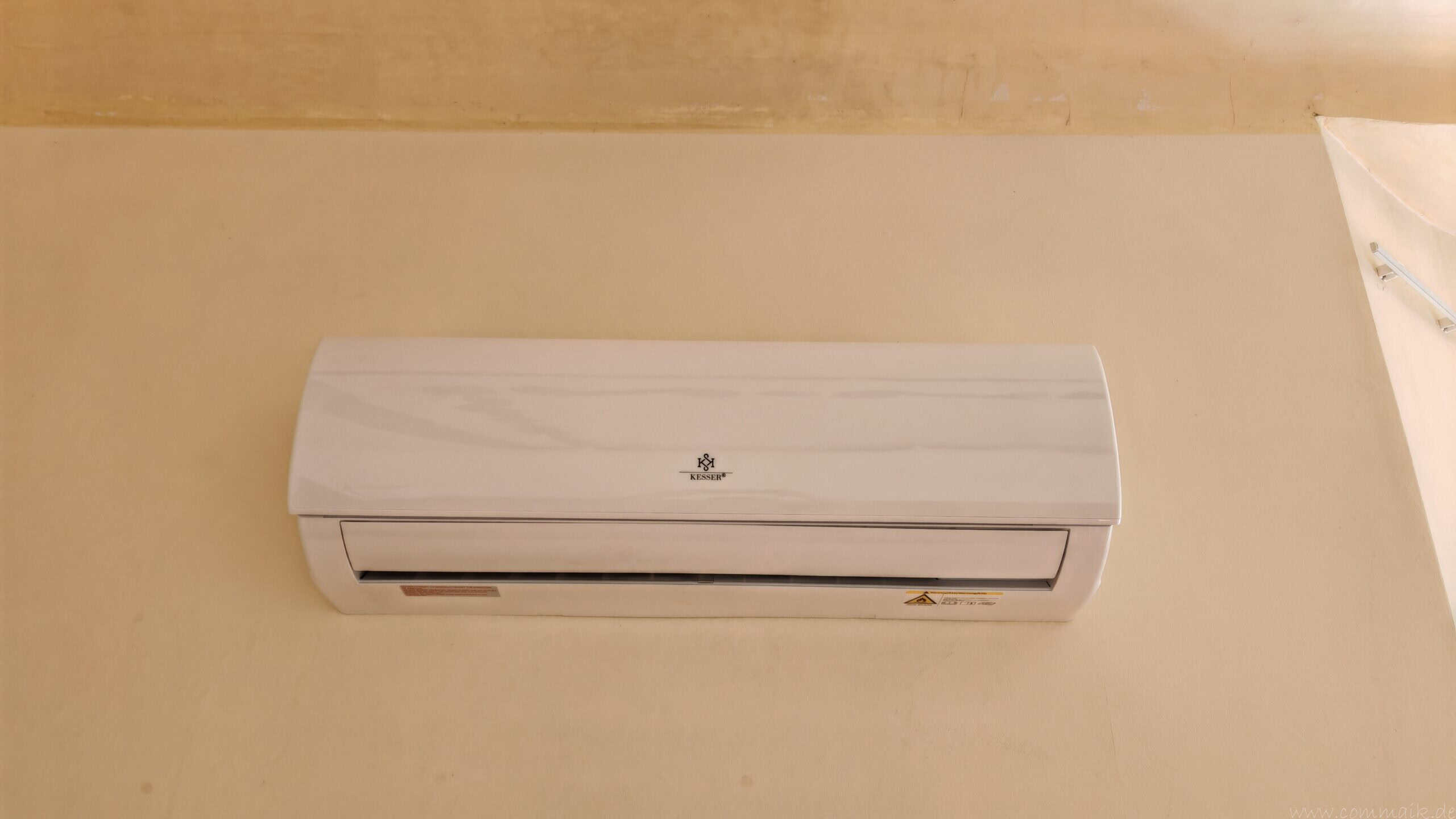
After doing some research, we decided on a 12,000 BTU split-system air conditioner with a Quick-Connect system. The deciding factors were not only the relatively low purchase price of around 500 euros, but above all the opportunity to perform most of the mechanical work myself. At the same time, the Quick-Connect system promised a significantly simpler installation process than traditional split-system air conditioners, making retrofitting easier.
However, this article is intended to be much more than just a report on the installation process. It explains how a modern split-system air conditioner works, what to consider during the planning phase, what differences exist between various systems, and what legal requirements currently apply. At the same time, I’m documenting the entire installation process in a building that’s over 120 years old and sharing my experiences from day-to-day operations.

- : Steuern Sie die KESSER Klimaanlage bequem per App ganz einfach von berall aus, egal ob Sie sich im Haus oder unterwegs befinden. Passen Sie die Temperatur individuell an und whlen Sie flexibel zwischen 5 Modi (Khlen, Trocknen, Lften, Eco, Heizen). Genieen Sie jederzeit ein perfekt abgestimmtes Raumklima, ob zu Hause oder im Bro, und profitieren Sie von der modernen WLAN-Technologie fr maximale Flexibilitt, einfache Bedienung und hohen Komfort im Alltag.
- & : Die KESSER Klimaanlage ist mit einer Leistung von 9000 BTU (2600 W) oder 12000 BTU (3400 W) ausgestattet und bietet einen starken Luftdurchsatz von 420 m/h bzw. 550 m/h. Diese hohe Leistung sorgt fr eine besonders schnelle und gleichmige Khlung sowie effizientes Heizen und ermglicht eine zuverlssige Klimaregulierung. Dadurch eignet sich das Gert ideal fr unterschiedliche Raumgren und verschiedenste Einsatzbereiche im privaten und gewerblichen Umfeld.
- : Dank der praktischen Quick-Connect-Technologie lsst sich die KESSER Klimaanlage schnell, sicher und unkompliziert installieren. Ein aufwendiges Entlften oder der Einsatz einer Vakuumpumpe ist nicht erforderlich, wodurch zustzliche Arbeitsschritte entfallen. Mit dem mitgelieferten Montagezubehr knnen Sie das Gert direkt in Betrieb nehmen und sparen wertvolle Zeit bei der Installation sowie bei der Vorbereitung.
- : Die KESSER Klimaanlage ist die ideale Lsung fr verschiedenste Umgebungen von Wohnzimmern und Schlafzimmern bis hin zu Bros, Werksttten oder Hobbyrumen. Sie bietet nicht nur eine zuverlssige Khlfunktion, sondern auch effizientes Heizen und eine gezielte Luftentfeuchtung. Durch die integrierte Oszillationsfunktion wird die Luft gleichmig im Raum verteilt, sodass ein durchgehend angenehmes und ausgeglichenes Raumklima entsteht.
- & : Die KESSER Klimaanlage ist mit einer hochwertigen Fin-Gold-Beschichtung ausgestattet, die das Gert effektiv vor Korrosion schtzt und gleichzeitig die Reinigung deutlich erleichtert. Diese langlebige Technologie sorgt dafr, dass die Anlage auch bei intensiver und regelmiger Nutzung zuverlssig arbeitet und eine lange Lebensdauer erreicht, whrend der Wartungsaufwand dauerhaft auf ein Minimum reduziert wird.
Why a split-system air conditioner is a good choice, especially in older buildings
Many older buildings were constructed at a time when summer heat protection was hardly a consideration. Back then, no one imagined outdoor temperatures of over 35 degrees or several consecutive weeks of heat. Although massive exterior walls, high ceilings, and large windows created a pleasant indoor climate, they were unable to counteract extreme summers.
In addition, many older buildings have undergone energy-efficiency upgrades in recent years. New windows and improved insulation significantly reduce heat loss in the winter. At the same time, however, they also hinder natural air circulation. The heat absorbed during the day remains in the building longer, and the rooms cool down much more slowly at night.
This is exactly where a modern split-system air conditioner really shines. Unlike portable air conditioners, it operates much more quietly, efficiently, and comfortably. While the outdoor unit transfers the absorbed heat outside, the indoor unit distributes the cooled air evenly throughout the room. At the same time, the system can be used as an air-to-air heat pump in the winter, thereby supplementing the existing heating system.
This offers several advantages, especially in older buildings:
- comfortable indoor temperatures, even on hot summer days
- Efficient Heating During the Transition Season
- Dehumidification of Indoor Air
- more even air circulation
- significantly greater living comfort
- Lower heating costs with an existing photovoltaic system
Of course, a split-system air conditioner does not automatically replace the central heating system. However, it can effectively supplement this system and regulate the temperature in individual rooms independently of the rest of the heating system. This makes it much easier to use home offices, bedrooms, and living areas in a variety of ways.
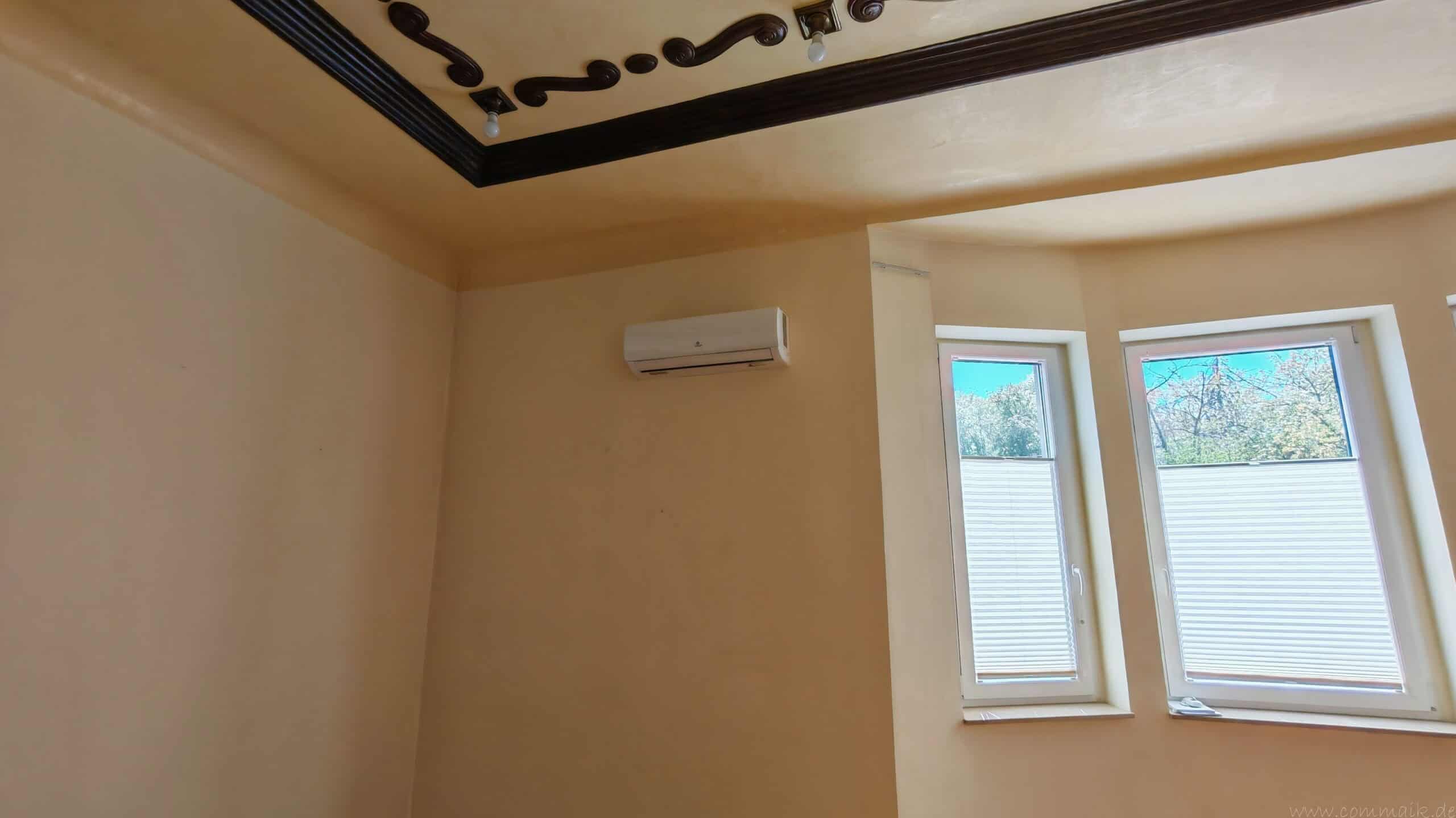
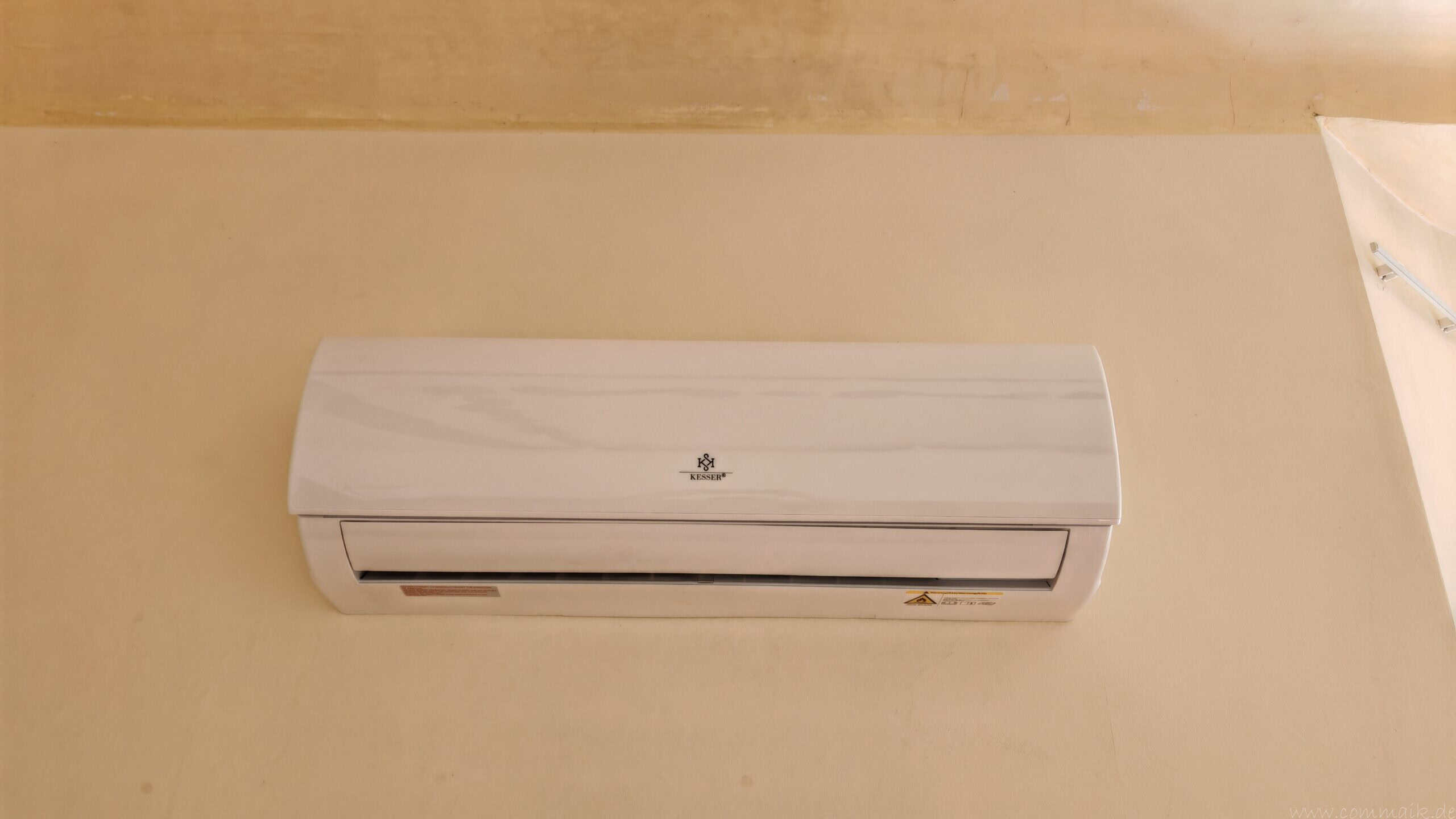
Why I Chose a Split Air Conditioner
Before making the purchase, I compared various options. Portable air conditioners were ruled out relatively quickly. Although they are less expensive to purchase and can be used without any structural modifications, they are significantly noisier and usually achieve only a fraction of the efficiency of a permanently installed split-system air conditioner. In addition, the exhaust hose must be routed permanently through an open or specially sealed window. However, this is precisely what allows warm outside air to enter the room again.
A traditional single-split air conditioner therefore seemed like a much better option. It isolates the noisy compressor from the living space, operates much more efficiently, and can also be used as a heat pump.
After doing some research, we finally settled on a model with 12,000 BTU of cooling capacity. There were several decisive factors. For one thing, the apartment has the typical ceiling heights of an older building, which means that significantly more air volume needs to be cooled than in a modern new construction. On the other hand, the system should also provide sufficient reserves later on when used for heating.
Another point was the Quick-Connect system that was offered. The refrigerant lines, which are pre-assembled at the factory, greatly simplify assembly and significantly reduce the amount of work required for installation. That was a major advantage, especially for a DIY project.
Nevertheless, it was clear from the outset that mechanical assembly, electrical installation, and work on the refrigeration system entail different requirements and legal regulations. I will discuss these differences in detail later in this article.
An Investment for Summer and Winter
While many people think of air conditioning only in connection with hot summer days, I now see it as an integral part of my energy strategy.
By combining a split-system air conditioner with a photovoltaic system, the solar power generated during the day can be used directly for cooling. At the same time, the system can provide some of the heating in the spring and fall. Especially at this time of year, the central heating system often does not yet need to meet the entire heating demand. Instead of turning on the entire heating system for just a few rooms, the air conditioner is often sufficient.
This not only improves living comfort but also often enhances the energy efficiency of the entire heating system.
The next section begins by explaining how a split-system air conditioner works from a technical standpoint. Although the design appears relatively simple at first glance, it is based on a surprisingly efficient heat pump principle that transforms modern air conditioning systems into high-performance heating systems.

- - : Mit dem praktischen QC -System wird die Installation der TCL BreezeIN zum Kinderspiel. Die vormontierten, vorgefllten Kltemittelleitungen mit selbstdichtenden Schnellkupplungen ermglichen eine sichere und saubere Verbindung zwischen Innen- und Auengert ganz ohne Vakuumieren oder Fachwerkzeug.
- : Dank dem integrierten Turbo-Modus werden Rume doppelt so schnell gekhlt / beheizt wie bei herkmmlichen Gerten. Zudem gibt es einen 8C Frostschutzmodus, welcher Ihre Rume bei eingeschalteter Funktion im Winter konstant auf 8C hlt, damit Wnde und Leitungen geschtzt bleiben. Ideal im Urlaub oder fr Ferienhuser.
- : Ein leistungsstarker Luftfilter im oberen Gertebereich beseitigt effektiv Staubpartikel, Allergene und andere luftgetragene Verunreinigungen. Ideal fr Allergiker und Gesundheitsbewusste. Auch im Hochsommer bei Auentemperaturen bis 50C luft das Gert zuverlssig.
- - : Behalten Sie Ihr Raumklima immer im Griff egal ob von der Couch oder unterwegs. Steuern Sie smtliche Funktionen klassisch per Fernbedienung oder bequem ber die TCL Home App direkt vom Smartphone oder Tablet aus. Es besteht eine Kompatibilitt mit den Sprachassistenten von Alexa und Google.
- : Luftumwlzung, Luftentfeuchtung, Heizen, Khlen. Sie treffen die Entscheidung. Auch ein Schlafmodus mit der automatischen Verhinderung von einer Unterkhlung sind integriert. In diesem Modus ist das Gert nicht lauter als ein flstern.
- : Die TCL BreezeIN wurde mit einem besonders reinigungsfreundlichen Aufbau entwickelt. Filter, Luftleitlamellen und Gehuseteile lassen sich ohne Werkzeug ffnen und reinigen fr schnellen Zugang und einfache Pflege.
How a Split Air Conditioner Works
People who are looking into split-system air conditioners for the first time usually think of them primarily as a traditional cooling solution for the summer. In fact, however, there is much more to this technology than meets the eye. Modern split-system air conditioners operate on the same principle as an air-to-air heat pump and can not only cool rooms but also heat them just as efficiently.
That was exactly the point that really surprised me during the planning phase. Originally, the system was intended simply to make the high summer temperatures more bearable. However, the more I looked into the technology, the clearer it became that modern air conditioning systems have long since become full-fledged heating systems—at least for individual rooms or during the transitional season.
An air conditioner doesn’t actually produce cold air
Strictly speaking, a split-system air conditioner produces neither cold nor heat. It simply transfers existing thermal energy from one place to another.
That may sound unusual at first, but it also explains the high efficiency of modern systems.
At its core is a closed refrigerant circuit between the indoor and outdoor units. A refrigerant circulates within this cycle, constantly changing its state of matter. This change allows it to absorb heat, transport it, and release it elsewhere.
In simple terms, here’s what happens in the summer:
- The indoor unit draws in the warm air from the room.
- The refrigerant absorbs heat and evaporates.
- The gaseous refrigerant flows through the refrigerant lines to the outdoor unit.
- There, a compressor compresses the gas, thereby raising its temperature.
- The heat absorbed is transferred to the outside air via the heat exchanger.
- Then the cycle begins again.
As a result, heat is continuously removed from the room. So the actual cooling occurs when heat is transferred to the outside.
In winter, the air conditioner works exactly the opposite way
The main difference from older air conditioners is that modern split-system air conditioners can reverse the entire process.
In heating mode, the outdoor unit extracts heat from the ambient air and transfers it indoors. Even if the temperature outside is just a few degrees above or even below freezing, there is still enough energy in the outside air to heat the building or supplement gas or oil heating.
Many modern devices continue to operate without any problems even when the outside temperature is around -5 °C. High-end models can even reach significantly lower operating limits.
That is exactly why people often refer to it today as an air-to-air heat pump. Unlike conventional heat pumps, however, the heat generated is not transferred to the heating water but directly to the air in the room.
💡 COMMAIK Tip
If you already own a solar power system, you can make excellent use of the solar power generated during the day to run your air conditioner. In the summer, in particular, peak PV output occurs precisely when the demand for cooling is at its highest.

- : Steuern Sie die KESSER Klimaanlage bequem per App ganz einfach von berall aus, egal ob Sie sich im Haus oder unterwegs befinden. Passen Sie die Temperatur individuell an und whlen Sie flexibel zwischen 5 Modi (Khlen, Trocknen, Lften, Eco, Heizen). Genieen Sie jederzeit ein perfekt abgestimmtes Raumklima, ob zu Hause oder im Bro, und profitieren Sie von der modernen WLAN-Technologie fr maximale Flexibilitt, einfache Bedienung und hohen Komfort im Alltag.
- & : Die KESSER Klimaanlage ist mit einer Leistung von 9000 BTU (2600 W) oder 12000 BTU (3400 W) ausgestattet und bietet einen starken Luftdurchsatz von 420 m/h bzw. 550 m/h. Diese hohe Leistung sorgt fr eine besonders schnelle und gleichmige Khlung sowie effizientes Heizen und ermglicht eine zuverlssige Klimaregulierung. Dadurch eignet sich das Gert ideal fr unterschiedliche Raumgren und verschiedenste Einsatzbereiche im privaten und gewerblichen Umfeld.
- : Dank der praktischen Quick-Connect-Technologie lsst sich die KESSER Klimaanlage schnell, sicher und unkompliziert installieren. Ein aufwendiges Entlften oder der Einsatz einer Vakuumpumpe ist nicht erforderlich, wodurch zustzliche Arbeitsschritte entfallen. Mit dem mitgelieferten Montagezubehr knnen Sie das Gert direkt in Betrieb nehmen und sparen wertvolle Zeit bei der Installation sowie bei der Vorbereitung.
- : Die KESSER Klimaanlage ist die ideale Lsung fr verschiedenste Umgebungen von Wohnzimmern und Schlafzimmern bis hin zu Bros, Werksttten oder Hobbyrumen. Sie bietet nicht nur eine zuverlssige Khlfunktion, sondern auch effizientes Heizen und eine gezielte Luftentfeuchtung. Durch die integrierte Oszillationsfunktion wird die Luft gleichmig im Raum verteilt, sodass ein durchgehend angenehmes und ausgeglichenes Raumklima entsteht.
- & : Die KESSER Klimaanlage ist mit einer hochwertigen Fin-Gold-Beschichtung ausgestattet, die das Gert effektiv vor Korrosion schtzt und gleichzeitig die Reinigung deutlich erleichtert. Diese langlebige Technologie sorgt dafr, dass die Anlage auch bei intensiver und regelmiger Nutzung zuverlssig arbeitet und eine lange Lebensdauer erreicht, whrend der Wartungsaufwand dauerhaft auf ein Minimum reduziert wird.
Why Modern Split-System Air Conditioners Are So Efficient
Many people wonder how one kilowatt-hour of electricity can suddenly be converted into four or even five kilowatt-hours of heating power.
The answer is simple:
The air conditioner does not generate the heat itself.
It simply transfers heat that is already present in the environment.
The electricity is mainly needed to power the compressor and circulate the refrigerant.
As a result, modern devices achieve an astonishingly high level of efficiency.
Under favorable conditions, 1 kWh of electricity often yields 3 to 5 kWh of heating power.
This makes heating a cost-effective option, especially when combined with a solar power system or low-cost electricity rates.
COP, SCOP, and EER Explained Simply
Anyone comparing different split-system air conditioners will sooner or later come across terms like COP, SCOP, EER, or SEER.
At first glance, these metrics seem quite complicated. In fact, however, they merely describe how efficiently an air conditioner operates.
COP – Coefficient of Performance
The COP indicates the efficiency in heating mode under strictly defined laboratory conditions.
For example, a COP of 4 means:
- 1 kWh of electricity
- produces about 4 kWh of heating power.
This metric is useful for comparing different devices, but it says very little about how they will perform in everyday use.
SCOP – Seasonal Coefficient of Performance
The SCOP is therefore a more meaningful metric.
It evaluates the average efficiency over an entire heating season and takes varying outdoor temperatures into account.
For practical operation, this value is much more relevant than the COP alone.
EER and SEER
The EER (Energy Efficiency Ratio) and SEER (Seasonal Energy Efficiency Ratio) metrics are used for cooling operation.
They describe how efficiently the air conditioner operates when cooling.
The same applies here:
The higher the value, the lower the power consumption for the same cooling capacity, which is particularly advantageous when heating and cooling with split-system air conditioners.
👍 My experience
Before the project, I had hardly given COP or SCOP any thought. It wasn’t until we began selecting the right system that it became clear just how significant the differences between individual devices can be. Anyone who wants to use an air conditioner not only for cooling but also for heating should therefore focus less on the maximum cooling capacity and instead compare the SCOP.
That’s why it’s worth taking a closer look at how heat pumps work
At first, a split-system air conditioner sounded like a comfortable solution for hot summer days.
Today, I see them more as part of a modern energy strategy.
The combination of efficient cooling, a heating function, and photovoltaics makes this technology much more versatile than I had originally expected. That is exactly why it’s worth taking a closer look during the planning phase and not choosing the system based solely on its cooling capacity.
Video: Installing a Split Air Conditioner in an Older Building – Step by Step
The planning, the complete installation of the split-system air conditioner, and the initial tests in cooling and heating modes are documented in a detailed video on my YouTube channel. In this guide, I’ll walk you through the installation step by step in an older apartment built in 1900 —from securing the wall mount to core drilling through a 36-centimeter-thick brick wall, all the way to installing the indoor and outdoor units, connecting the Quick-Connect lines, and commissioning the system.
The video complements this article with numerous practical insights, shows the individual steps in real time, and provides a realistic sense of the noise level, the effort required for installation, and the initial practical experiences during heating and cooling operation.
The video is part of my playlist Product Tests, Experiences & Conclusion on my YouTube channel and shows the entire process from planning to the successful test run.
You can find another overview of my videos on smart homes and tech reviews in the ” Smart Home” blog category.
If you’d like to see more from me and my projects, feel free to check out my YouTube channel.
Zuletzt aktualisiert am 23. October 2026 um 15:30 . Ich weise darauf hin, dass sich hier angezeigte Preise inzwischen geändert haben können. Alle Angaben ohne Gewähr. (*) Bei den verwendeten Produktlinks handelt es sich um Affiliate Links. Ich bin nicht der Verkäufer des Produktes. Als Amazon-Partner verdiene ich an qualifizierten Verkäufen. Dein Preis ändert sich jedoch nicht.


Choosing the Right Split Air Conditioner and Planning the Installation
Even before the first hole is drilled, it is often already determined how satisfied you will be with the air conditioning system later on. Choosing the right capacity, the location of the indoor and outdoor units, and the subsequent piping layout have a much greater impact on comfort and efficiency than many people initially realize.
I, too, gave these questions a lot of thought before making the purchase. In addition to the cooling capacity itself, the structural conditions of the older apartment played a particularly decisive role. High ceilings, solid brick walls, and the location of the exterior wall had to be taken into account as early as the planning stage.
I would expand the table a bit. Many readers are interested in the electrical power rating, but it is often confused with the cooling capacity. At the same time, you can explain the difference between cooling capacity (BTU/kW) and power consumption.
Choosing the Right Power Rating
One of the most common questions is: How big does an air conditioner actually need to be?
Unfortunately, there is no one-size-fits-all answer to that.
Many manufacturers start by considering the floor area of a room. In older buildings, however, this approach is often insufficient. Because of the higher ceilings, the volume of air that needs to be conditioned is significantly greater than in modern buildings. Other factors include window area, sunlight exposure, the quality of the insulation, and the number of people and electrical appliances in the room.
The following service areas can serve as a general guide:
| Room size | Cooling capacity | Cooling Capacity (approx.) | Electrical Power Consumption* |
|---|---|---|---|
| up to about 25 m² | 9,000 BTU | 2.6 kW | approx. 700–900 W |
| approx. 25–45 m² | 12,000 BTU | 3.5 kW | approx. 900–1,200 W |
| approx. 45–65 m² | 18,000 BTU | 5.2 kW | approx. 1,400–1,800 W |
*Actual power consumption depends on the unit, its efficiency (COP/SCOP or SEER), the outdoor temperature, and the current operating conditions.
These values are provided for guidance only and are not a substitute for individualized planning. In addition to the floor area, the most important factors are the actual volume of the room, the ceiling height, the insulation, solar radiation, and the future use of the air conditioning system for cooling and, if necessary, heating as well.
💡 COMMAIK Tip
Especially in older buildings, it’s worth taking a look at the ceiling height. Two rooms, each with a floor area of 30 m², can have completely different air volumes due to differences in ceiling height. Therefore, the square meterage is not the only factor that determines the size.
Why I Chose 12,000 BTU
In my project, various performance metrics were considered. At first, I had also considered a smaller 9,000-BTU unit.
In the end, however, the decision was made to go with 12,000 BTU.
Several factors were decisive:
- the high ceilings in the old buildings,
- the larger volume,
- use as a heating source during the transitional season,
- as well as some power reserve for particularly hot summer days.
Looking back, I would make the same decision again. The system reaches the desired temperature quickly and does not have to operate continuously at full capacity.
Single-split or multisplit?
Choosing the right system is just as important as performance.
If you only need to cool or heat a single room, a traditional single-split air conditioner is usually sufficient. In this setup, one indoor unit is connected to exactly one outdoor unit.
That’s exactly the option I chose as well.
While it would have been possible in principle to install multiple indoor units, this would have significantly increased the installation effort and simply would not have been necessary for my specific application.
The situation is different when multiple rooms need to be heated or cooled independently of one another. A multi-split system may be a good option here. In this setup, several indoor units are connected to a single outdoor unit. This reduces the number of outdoor units on the facade and often results in a neater overall appearance.
This can be a decisive advantage, especially for apartment buildings or historic buildings.
👍 My assessment
If I were to furnish an entire apartment or a single-family home from scratch today, I would consider whether a multisplit system is worth it as early as the planning phase. However, for individual rooms, I still consider a traditional single-split system to be the simpler and more economical solution.
The Right Installation Location
Once you’ve found the right investment, the next important decision is right around the corner.
Where should the indoor and outdoor units be installed?
When selecting an indoor unit, it is important to consider more than just the subsequent air distribution. Equally important are sufficient space for maintenance work, the shortest possible routing of pipes to the exterior wall, and safe drainage of any condensation that accumulates. It should be determined during the planning phase whether the condensate can be drained using natural gravity or whether a condensate pump will be required later.
The outdoor unit also requires some planning.
Ideally, it is located:
- easily accessible,
- with adequate air circulation,
- the shortest possible cable runs,
- on a sturdy mounting,
- and near a suitable location for condensate drainage.
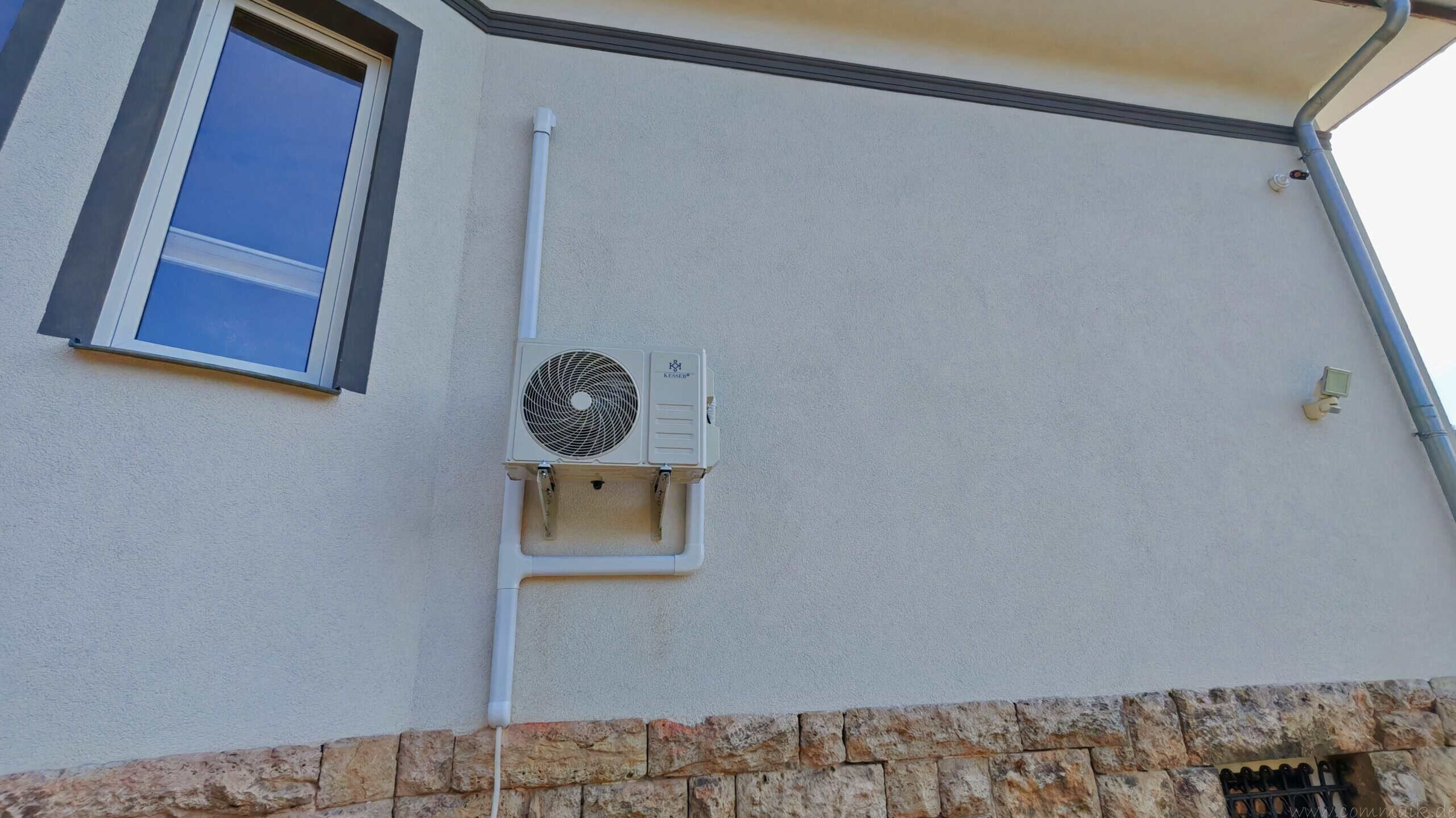
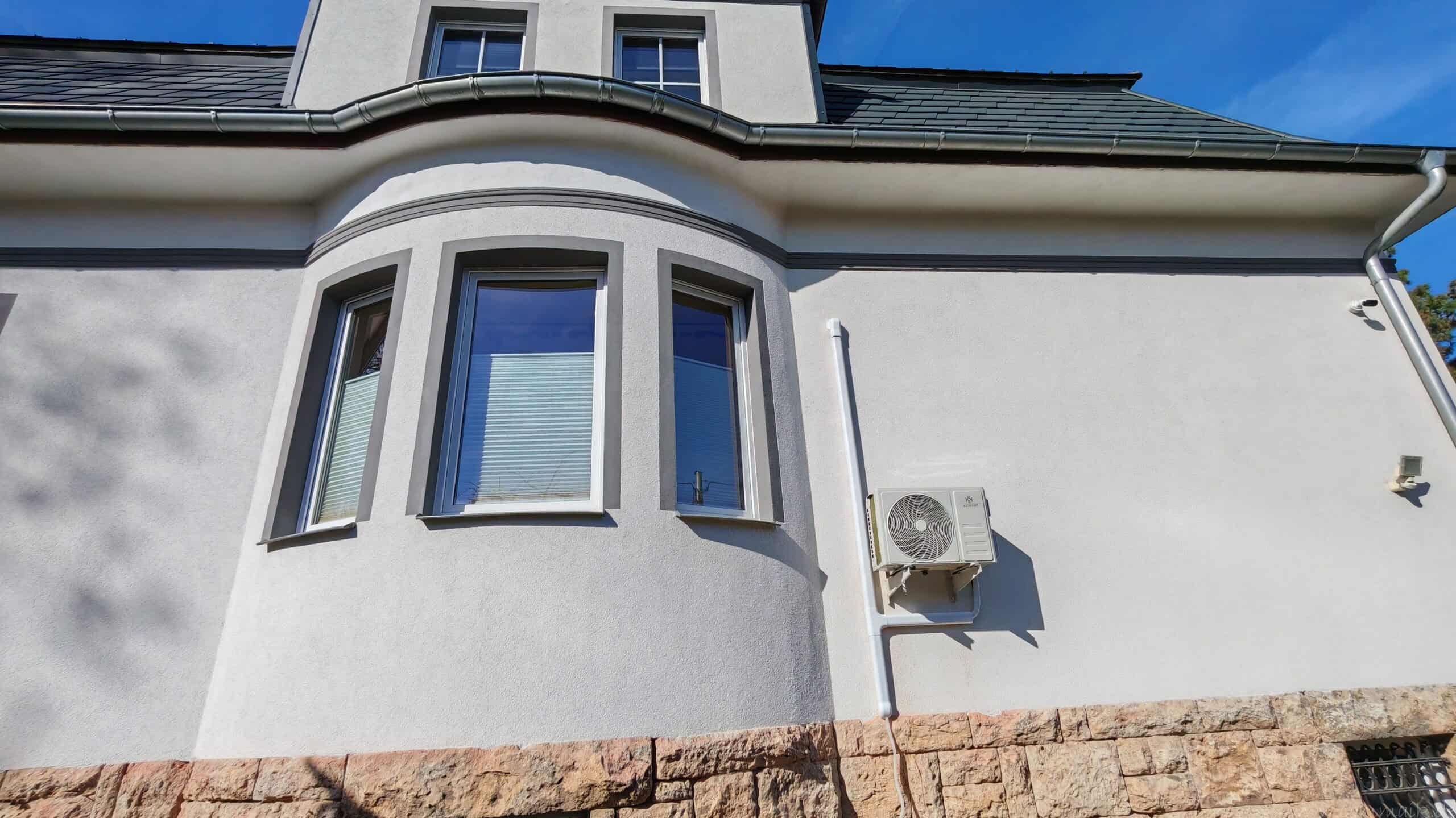
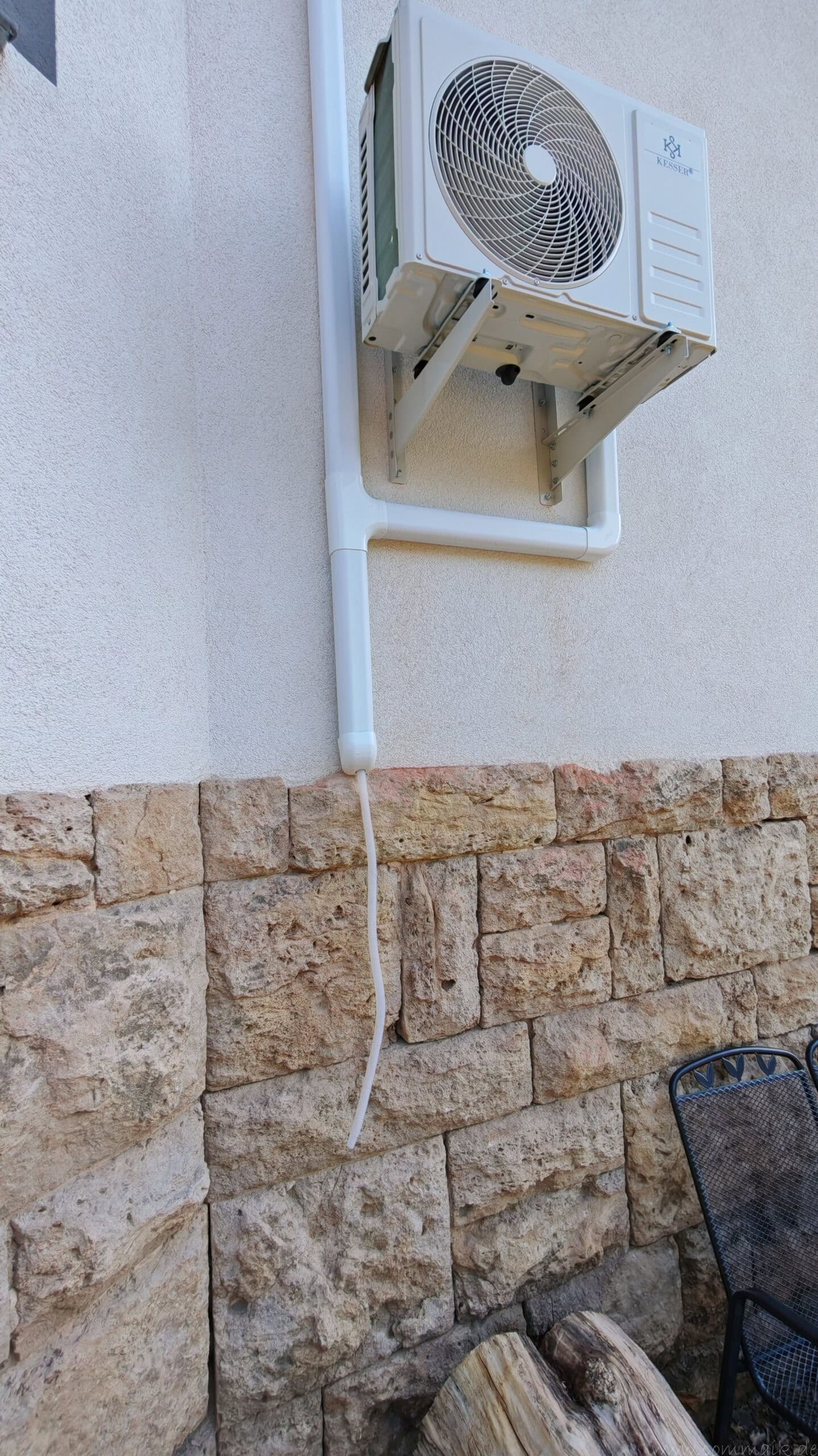
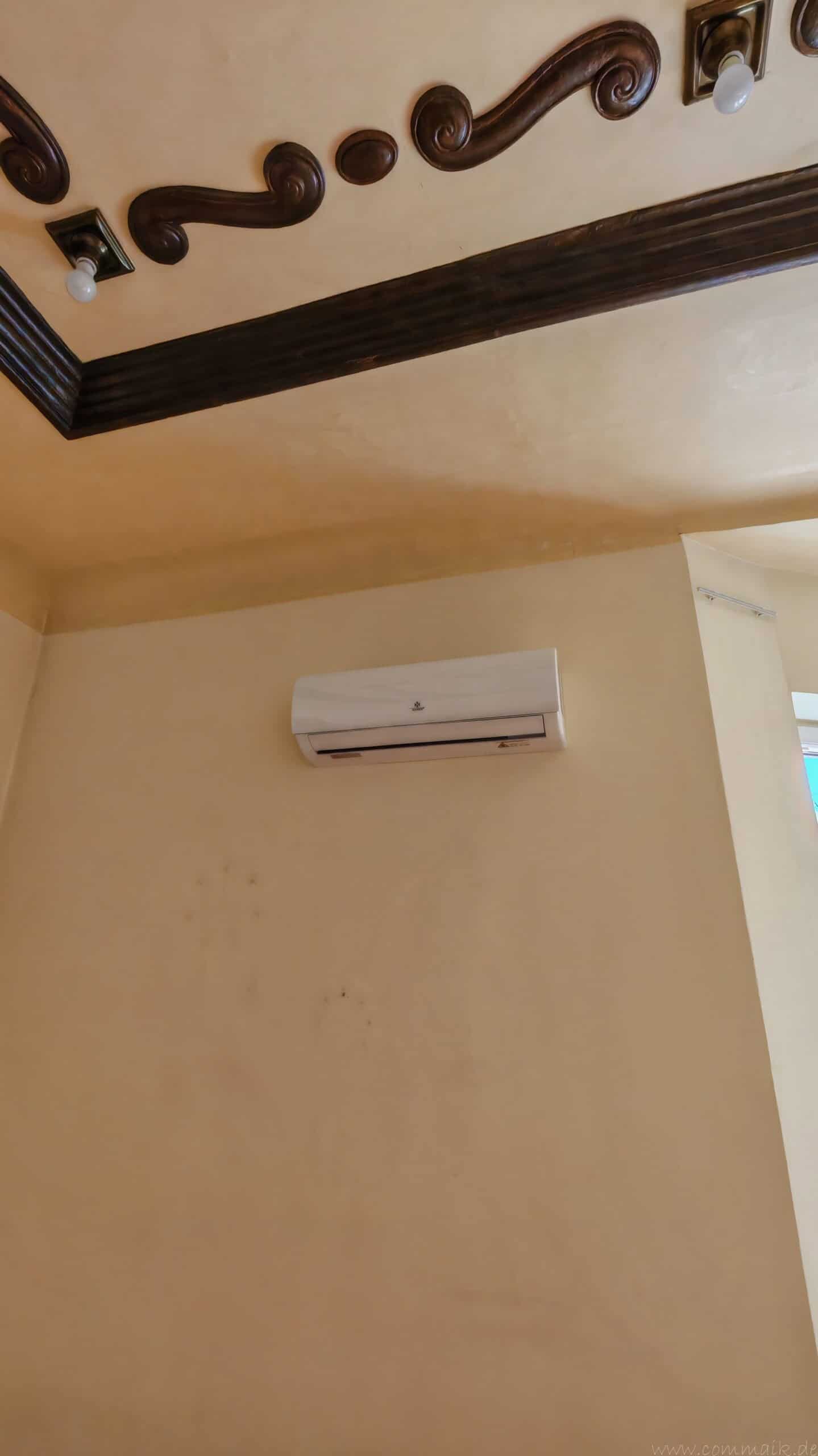
In my case, the exterior wall directly below the opening in the wall was the obvious choice. This made it possible to keep the refrigerant lines very short, and the condensate hose could also be routed to the outside with a sufficient slope. This gives the installation a neat and tidy appearance overall, and any condensation that forms can be safely drained away later.
I like this version better because it doesn’t treat the condensate drain as a minor issue. This point is often overlooked, especially in DIY projects, even though a lack of slope or an unsuitable drain can lead to moisture damage later on.
Cable routing is often underestimated
While a great deal of attention is usually paid to selecting the air conditioning system, the subsequent routing of the ductwork is often not planned until installation begins.
I would do it the exact opposite way.
Even before the first drilling operation begins, it should be clear that,
- where the hole in the wall is,
- how the wires run,
- where the condensation is drained,
- and how to integrate cable channels as inconspicuously as possible.
This helps prevent the need for changes later on, especially in older buildings.
For my project, I deliberately chose to use external cable channels. Not only do they make installation easier, but they also allow for future maintenance work without having to open up the facade again.
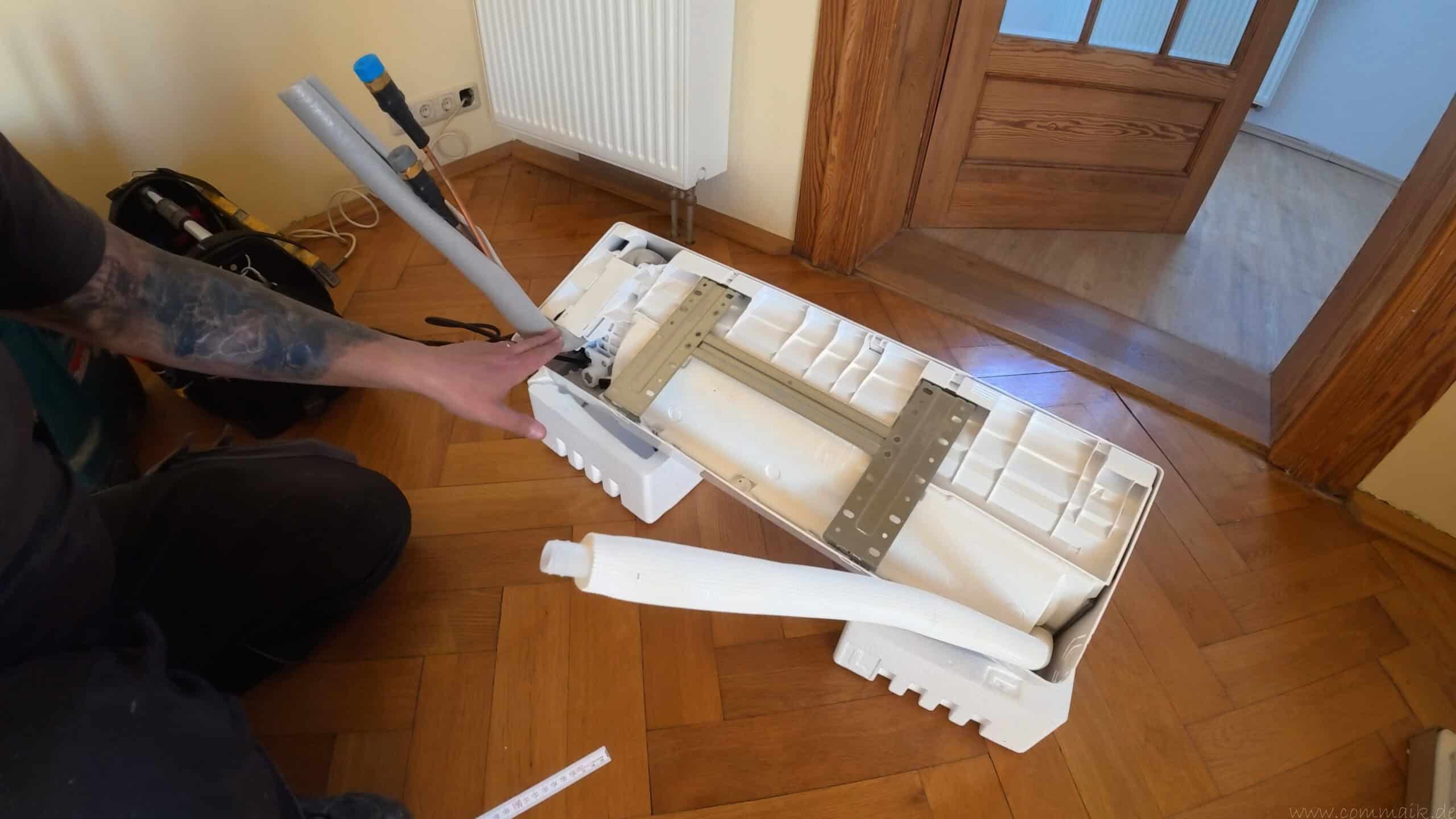
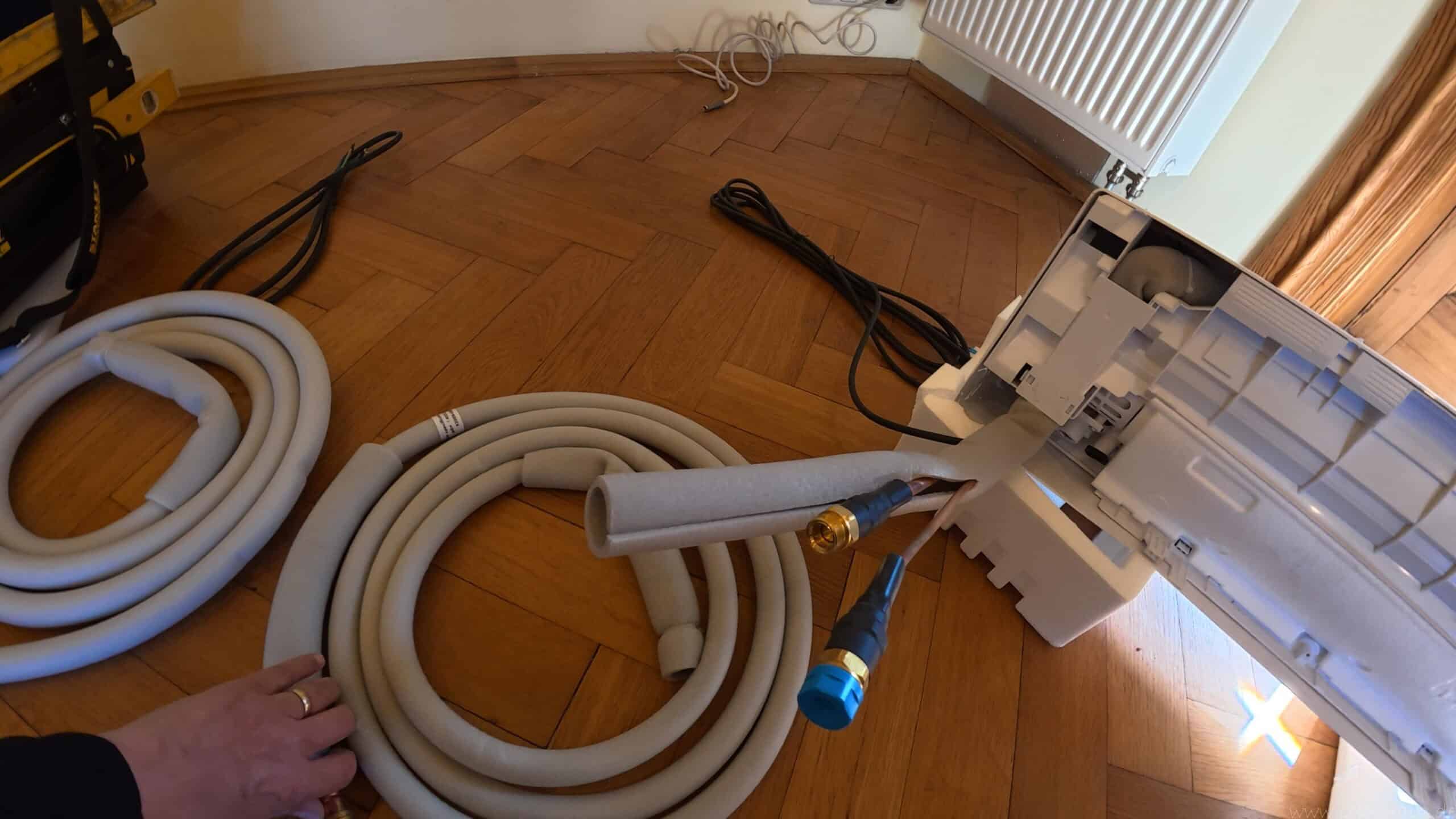
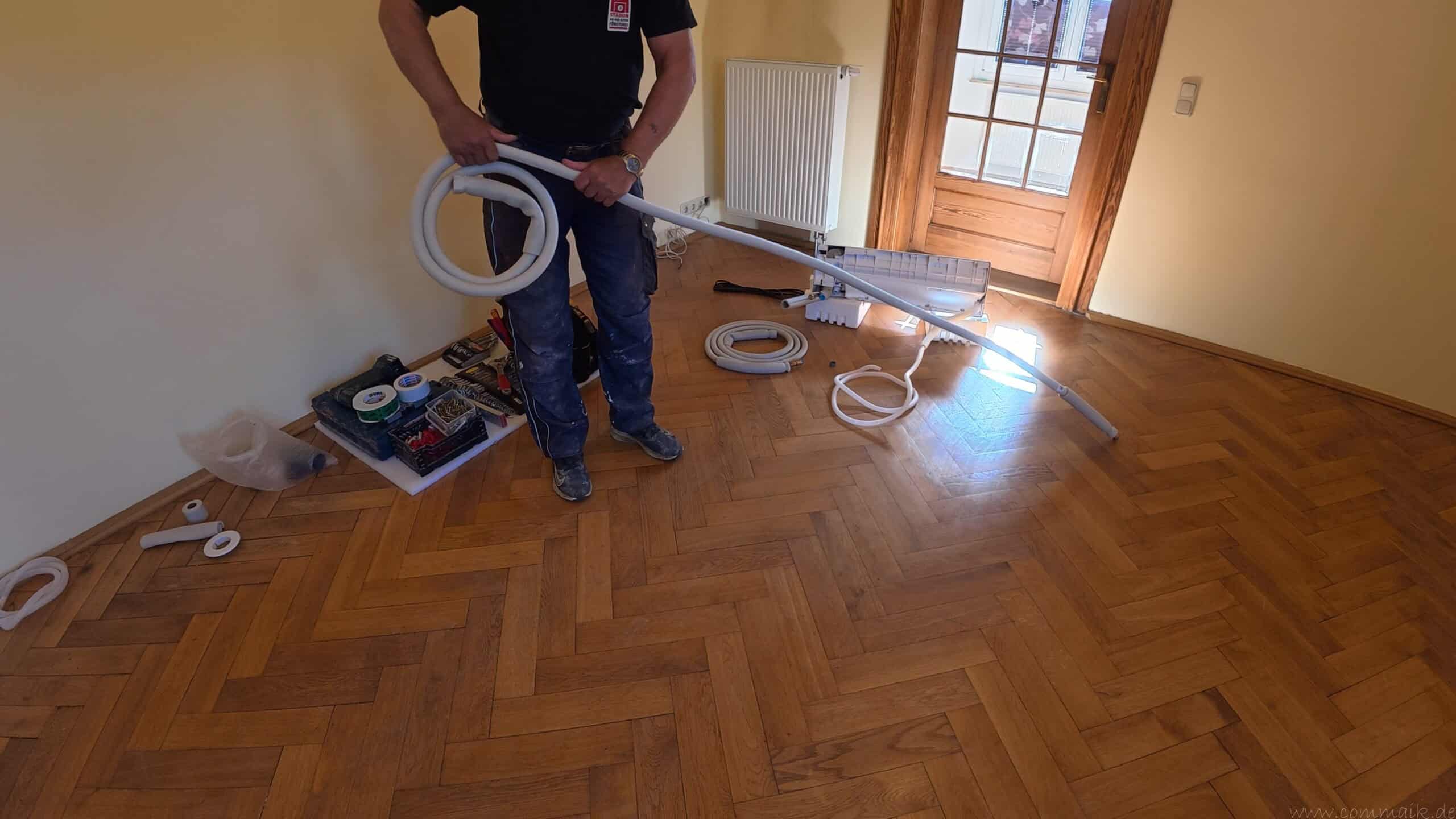
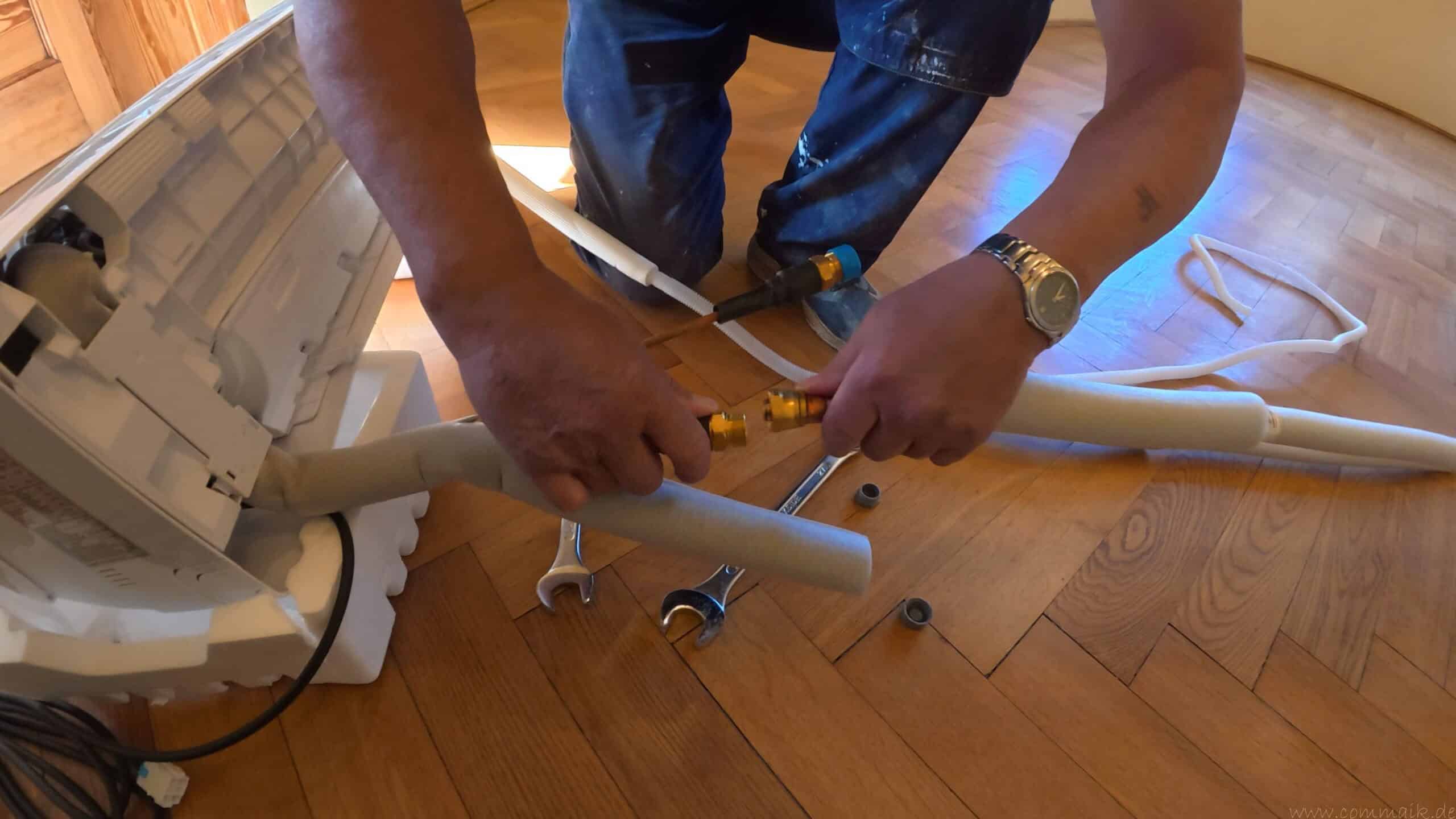
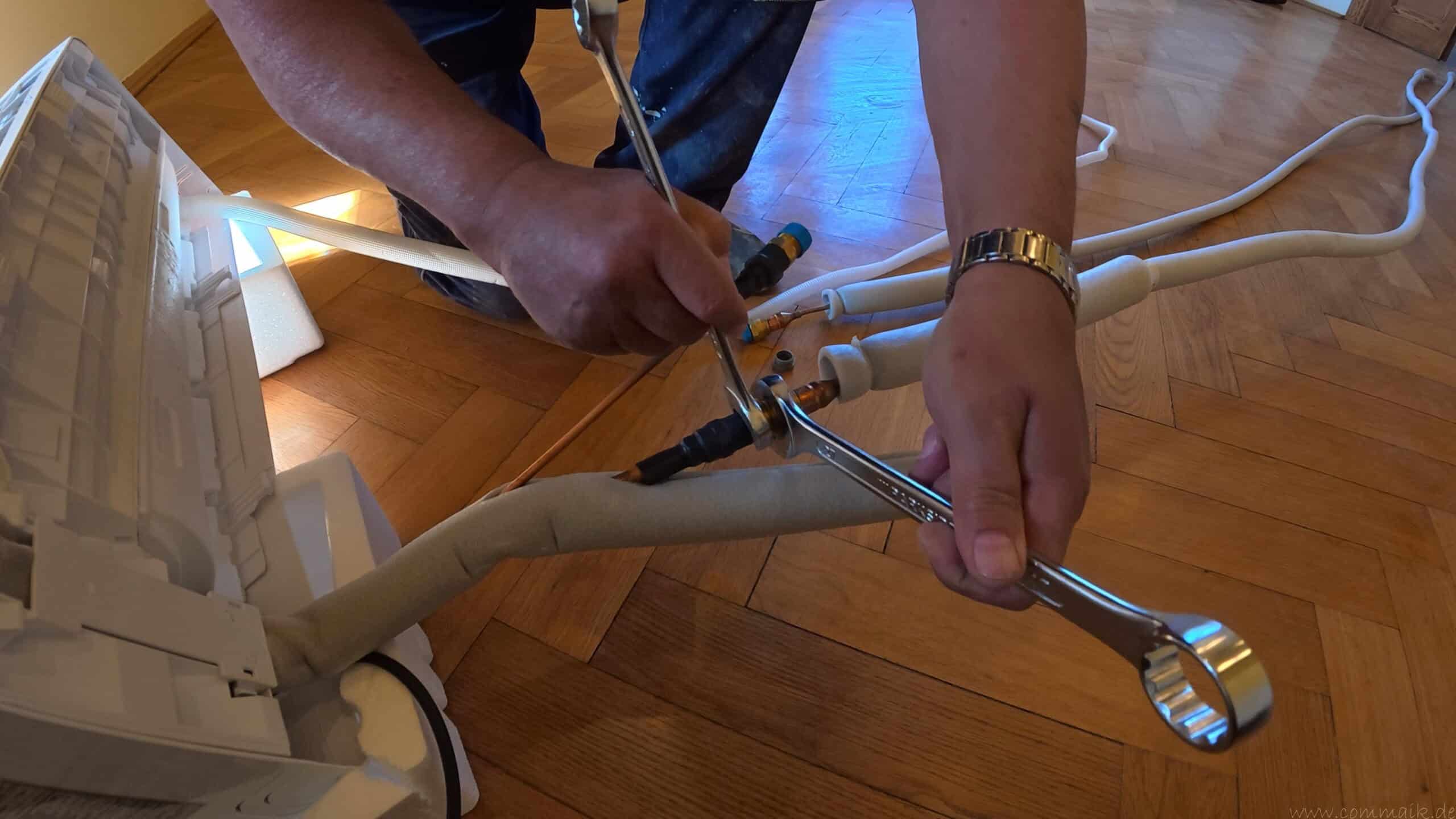


⚠️ That’s something I’d pay special attention to today
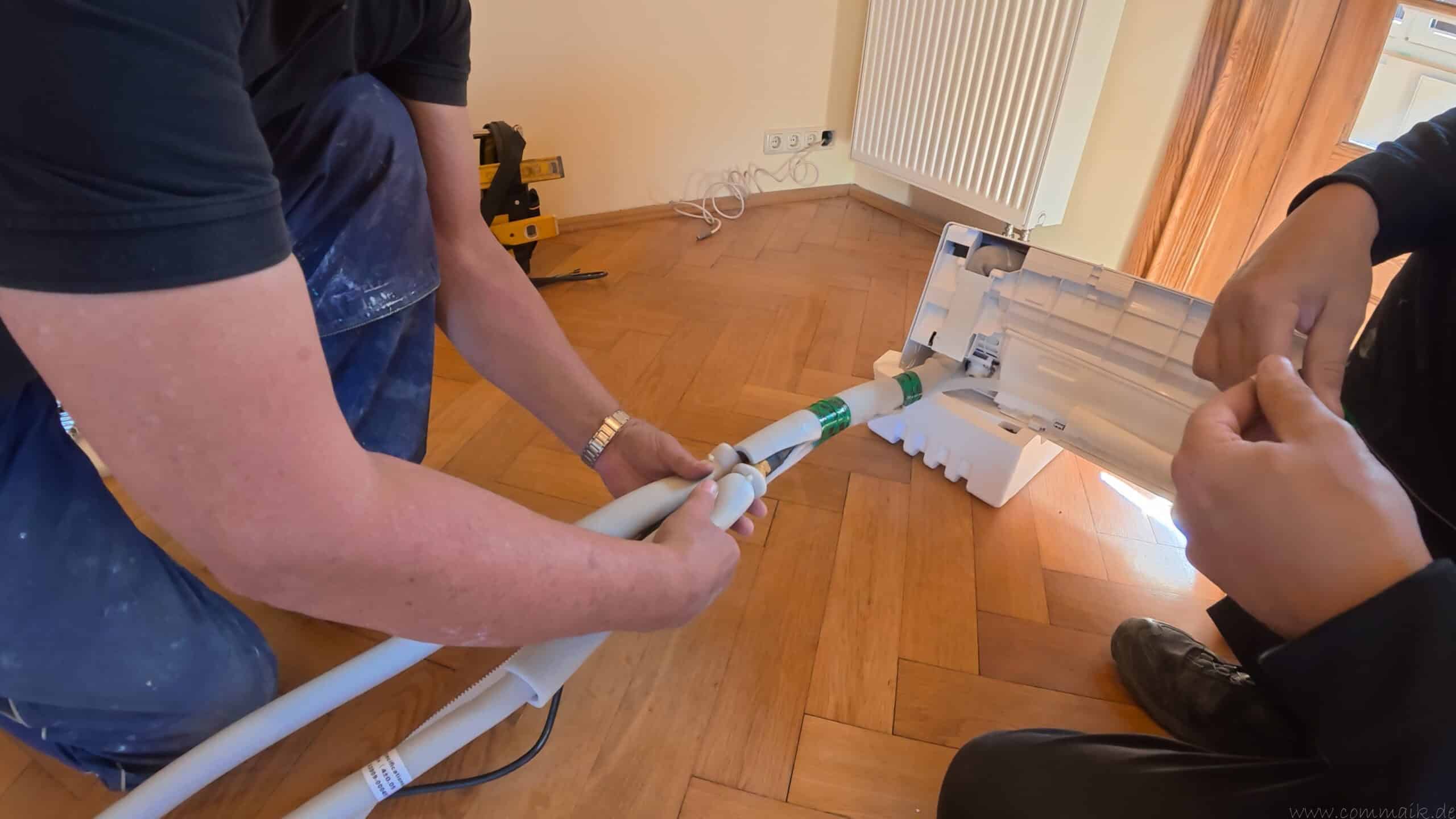
Make sure to allow enough space for bends in the refrigerant lines during the planning phase. Bending radii that are too tight make installation much more difficult and can damage the lines. A few centimeters more space will make the installation much easier later on.

- S&R Hammer-Hohlbohrkrone mit Karbid-Hartmetallzähnen in Profiqualität für den beruflichen Dauereinsatz
- Anwendung: für Mauerwerk, Natursteine, Sandsteine, Kunststeine, Beton, Marmor; Nicht geeignet für Materialien mit abrasiven Eigenschaften, wie z.B. Kalksandstein
- Vorteile: Hammerschlagfest, schnelles Anbohren, erhöhte Effizienz beim Bohren. Handliche, leichte Bauart, einfach und schnell zu montierende Konstruktion
- Set: Hohlbohrkrone - Durchmesser 68 mm, Arbeitslänge 60 mm, Gesamtlänge 72 mm, SDS plus Adapter 110mm (Gewinde M22), Zentrierbohrer 8x110mm
- Maschinen: Bohrhämmer von 2 bis 4 kg mit SDS plus Aufnahme
Installing a Split Air Conditioner in an Older Building – My Step-by-Step Installation Guide
Once the appropriate air conditioning unit had been selected and the ductwork planned, the actual installation could begin. Compared to a new building, an older building has a few unique characteristics. Solid brick walls, thick layers of plaster, and facades that are uneven in places require careful planning and, in some areas, a bit of improvisation.
The biggest challenge was not installing the air conditioning unit itself, but rather positioning all the components so that they would be as unobtrusive as possible while remaining easily accessible. Especially in older buildings, it’s a good idea to mentally walk through each step of the process before drilling the first hole.
The installation location determines the amount of work involved
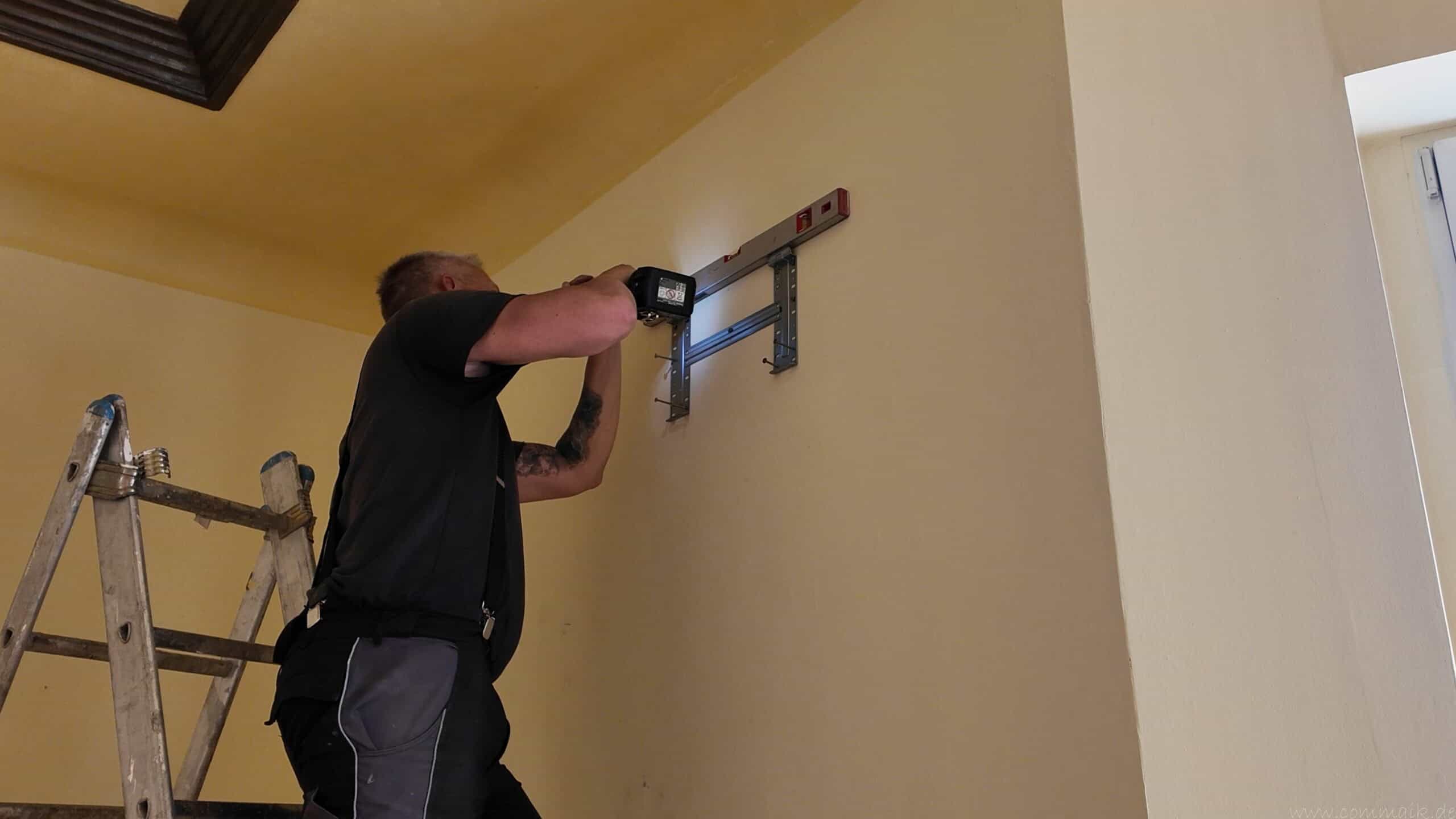
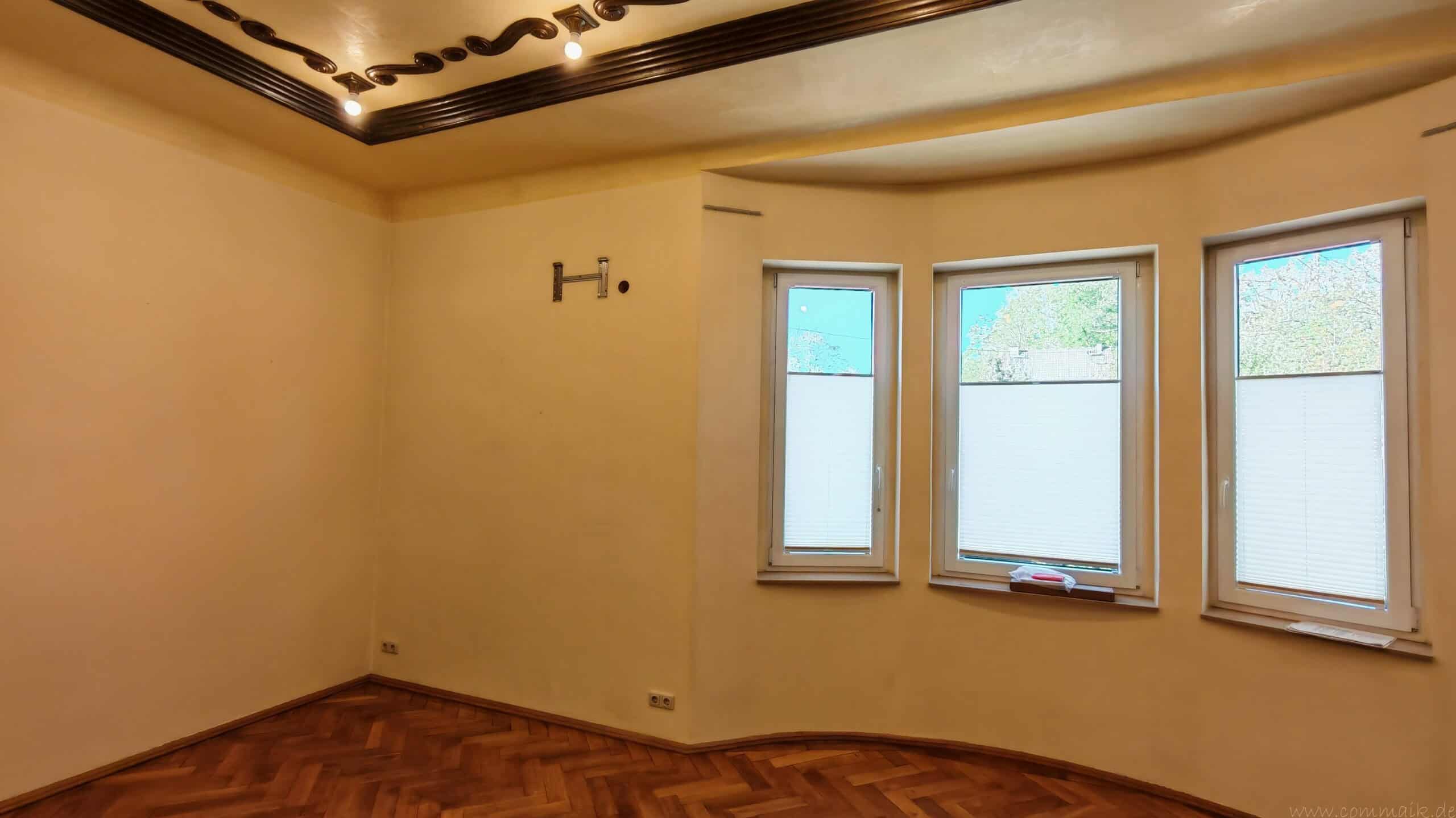
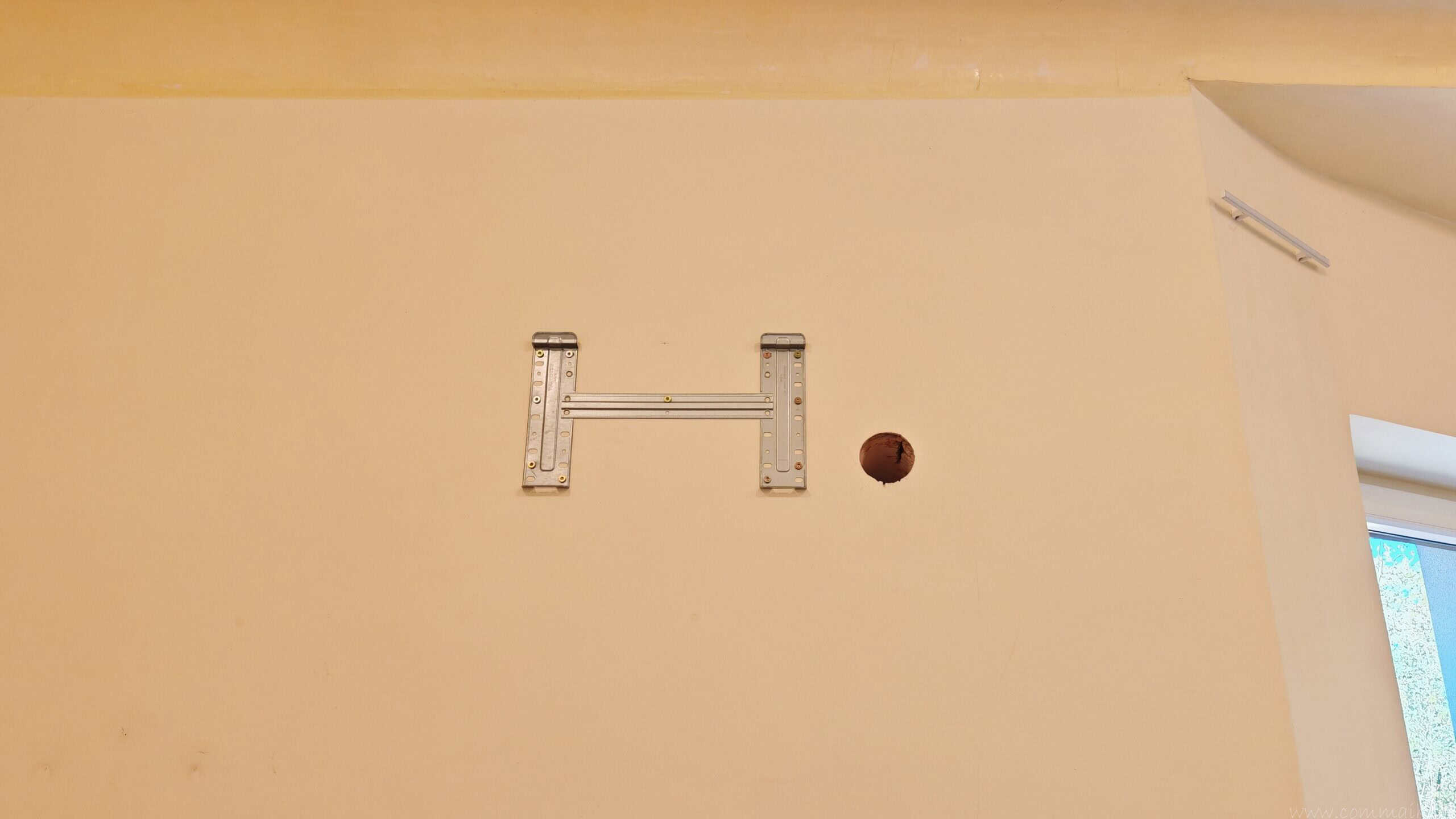
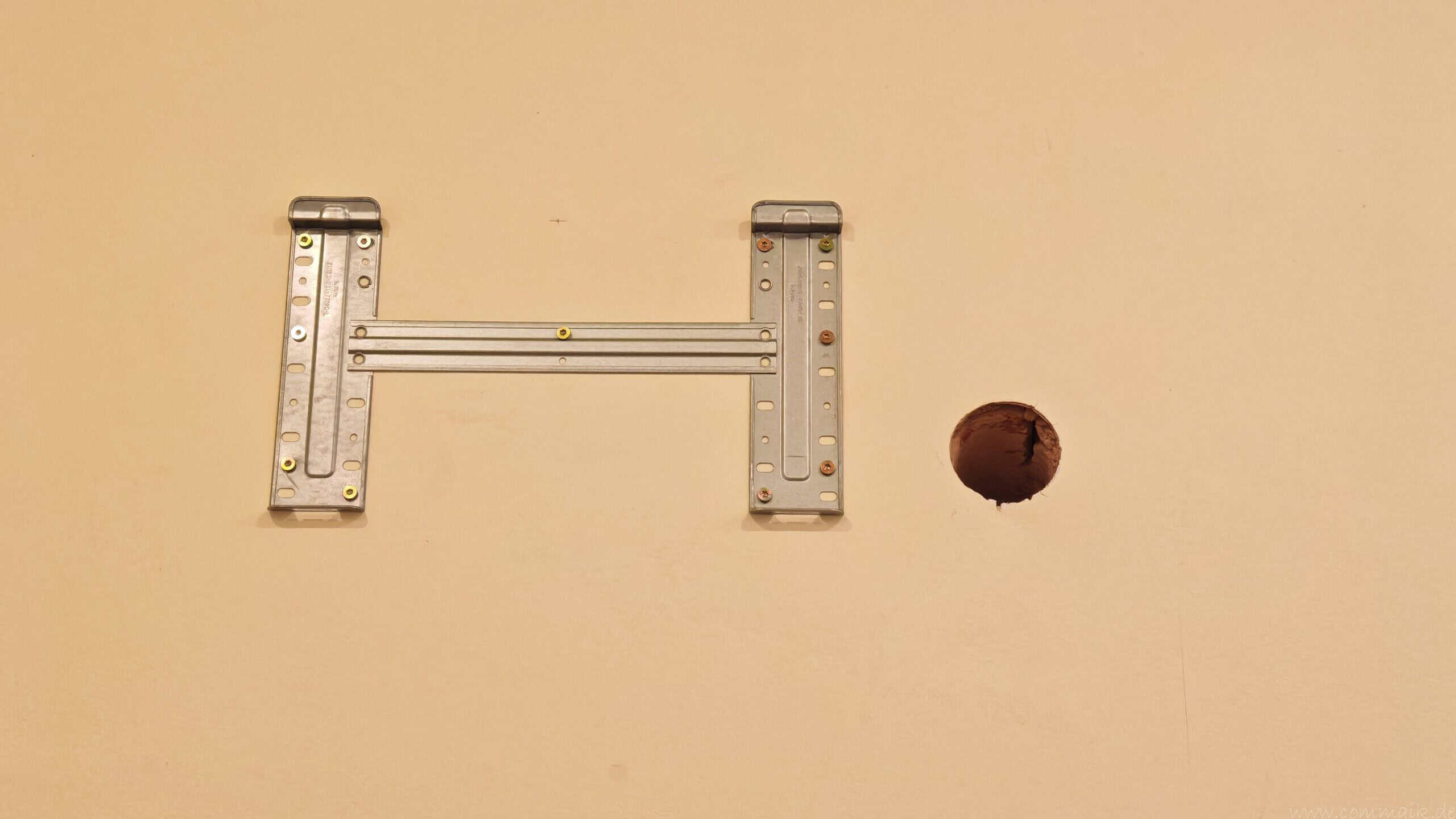
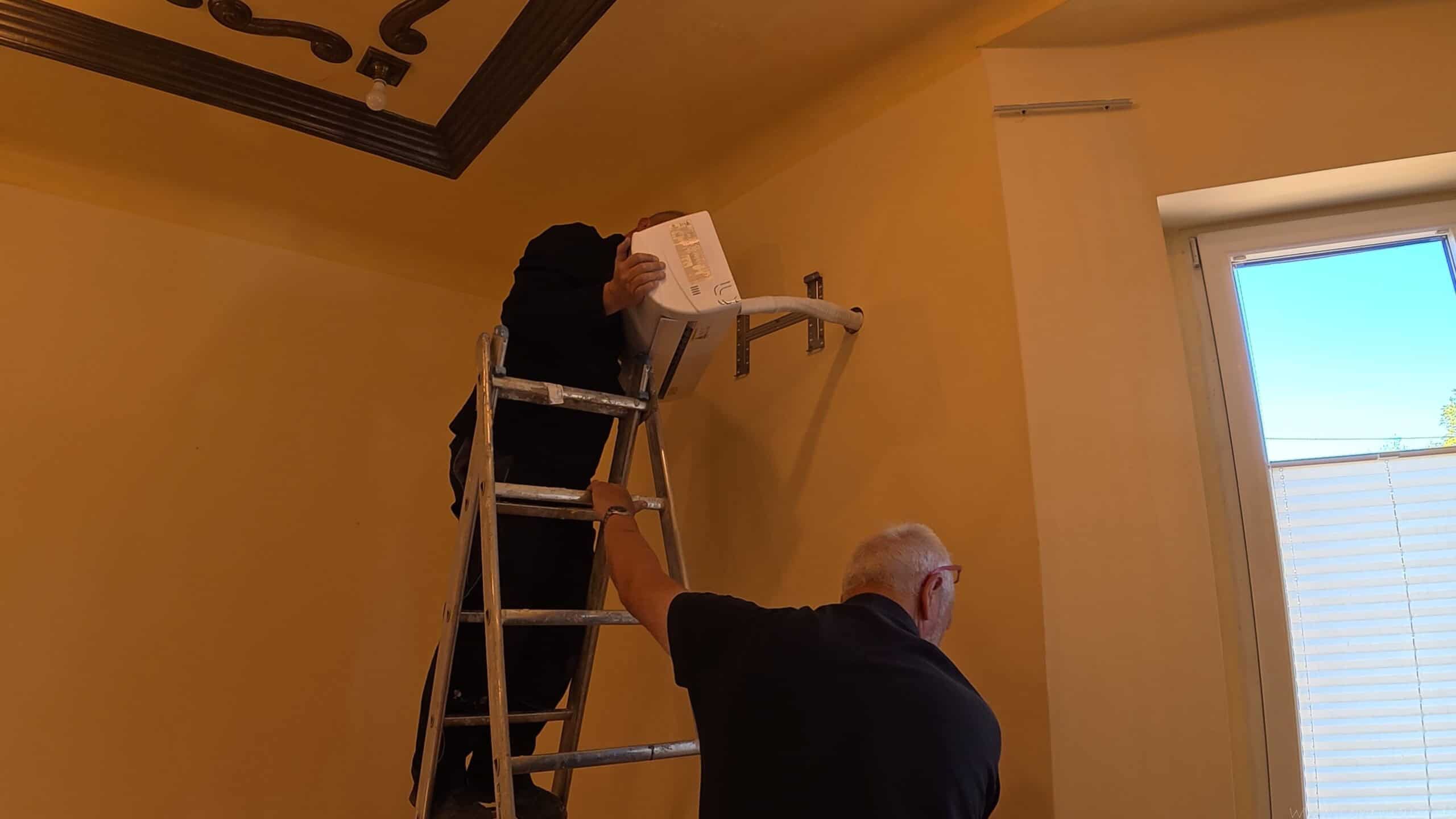
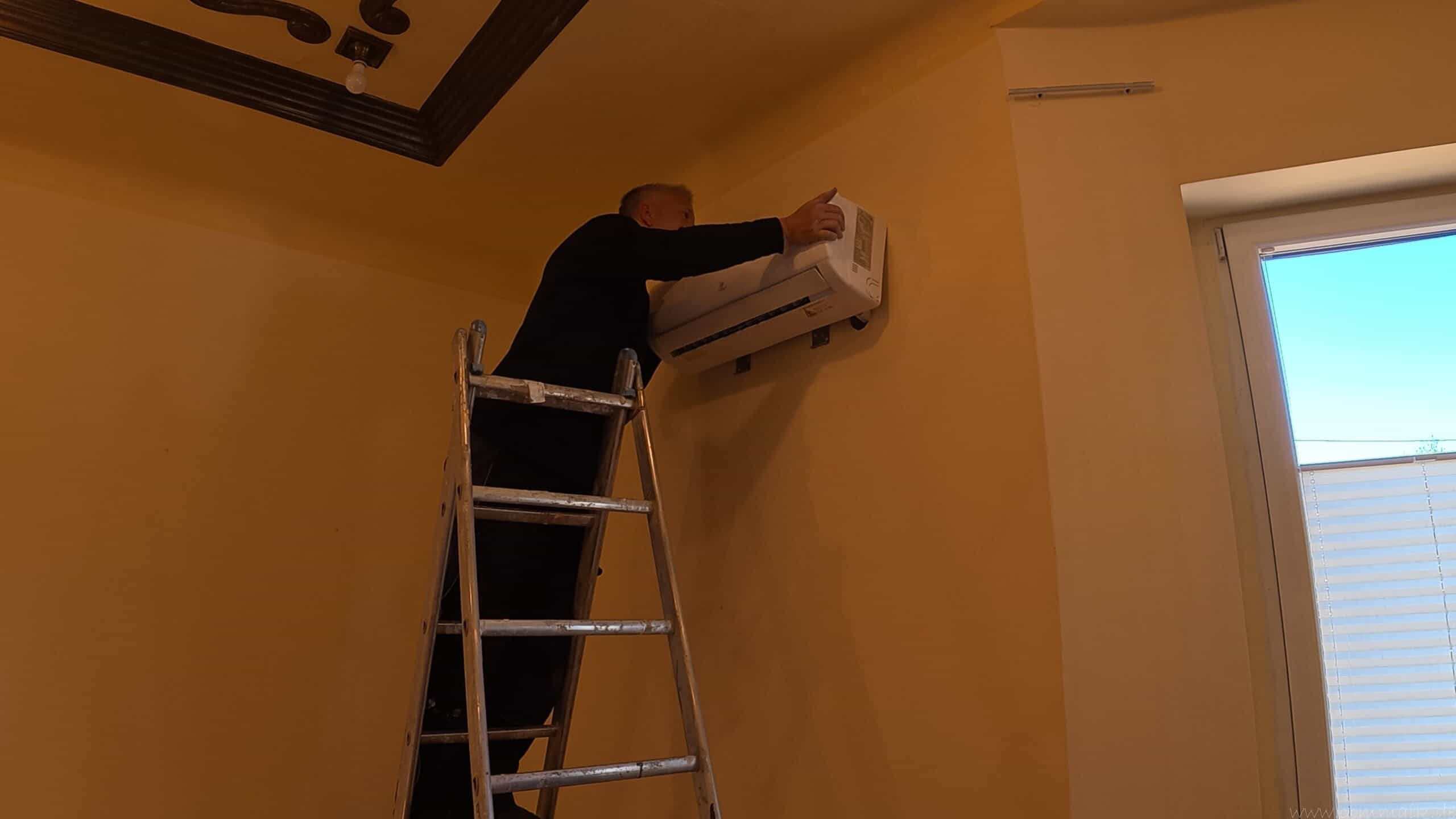
Before installing the wall mount, I first determined the position of the indoor unit. It wasn’t just a matter of ensuring even air distribution throughout the room. Equally important were the eventual routing of the lines, the location of the outdoor unit, and the ability to keep the hole in the wall as small as possible.
Only after these points had been determined could the wall mount be finally aligned and secured.
I noticed that while the included mounting bracket appears to be sufficiently sturdy, it is subjected to considerable force when the indoor unit is later installed. For this reason, I deliberately used more mounting points than the manufacturer intended.
👍 My experience
Especially in older buildings, I’d rather use two extra anchors than one too few. The extra work takes only a few minutes and makes you feel much better later on.
The core drilling was less spectacular than expected
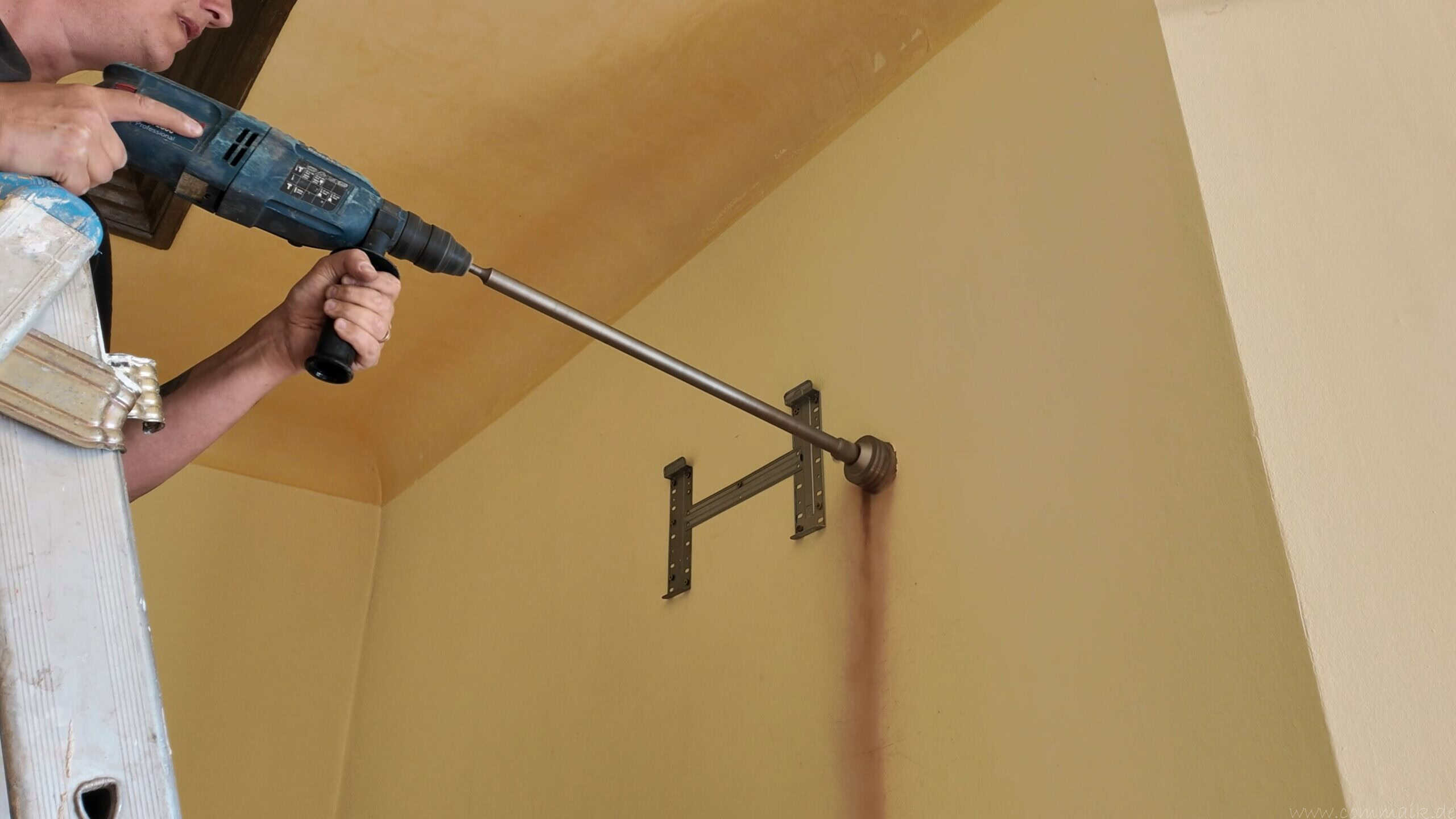
To be honest, I was really in awe of the core drilling process. After all, they had to cut a hole about 70 millimeters wide through a brick wall that was about 36 centimeters thick.
In retrospect, however, the drilling itself was less problematic than expected.
Careful preparation was far more important.
First, I drilled all the way through the wall using a long masonry drill bit. This made it possible to determine the position precisely on both sides. Next, the actual core drilling was performed from both the inside and the outside, down to the center of the wall.
This approach has two advantages:
- clean drill edges,
- significantly lower risk of plaster spalling.
In addition, the borehole has already been given a slight outward slope. This ensures that any condensation that forms later can drain away reliably.




💡 COMMAIK Tip
The slope should be created during drilling and not compensated for later by laying the pipes at an angle. This ensures that condensation is reliably drained to the outside at all times.
More than just two refrigerant lines
When viewed from the outside, a split-system air conditioner often seems surprisingly simple.
In fact, however, several lines run through the breach in the wall at the same time:
- the two refrigerant lines,
- the control cable between the indoor and outdoor units,
- the condensate hose,
- as well as the electrical connection.
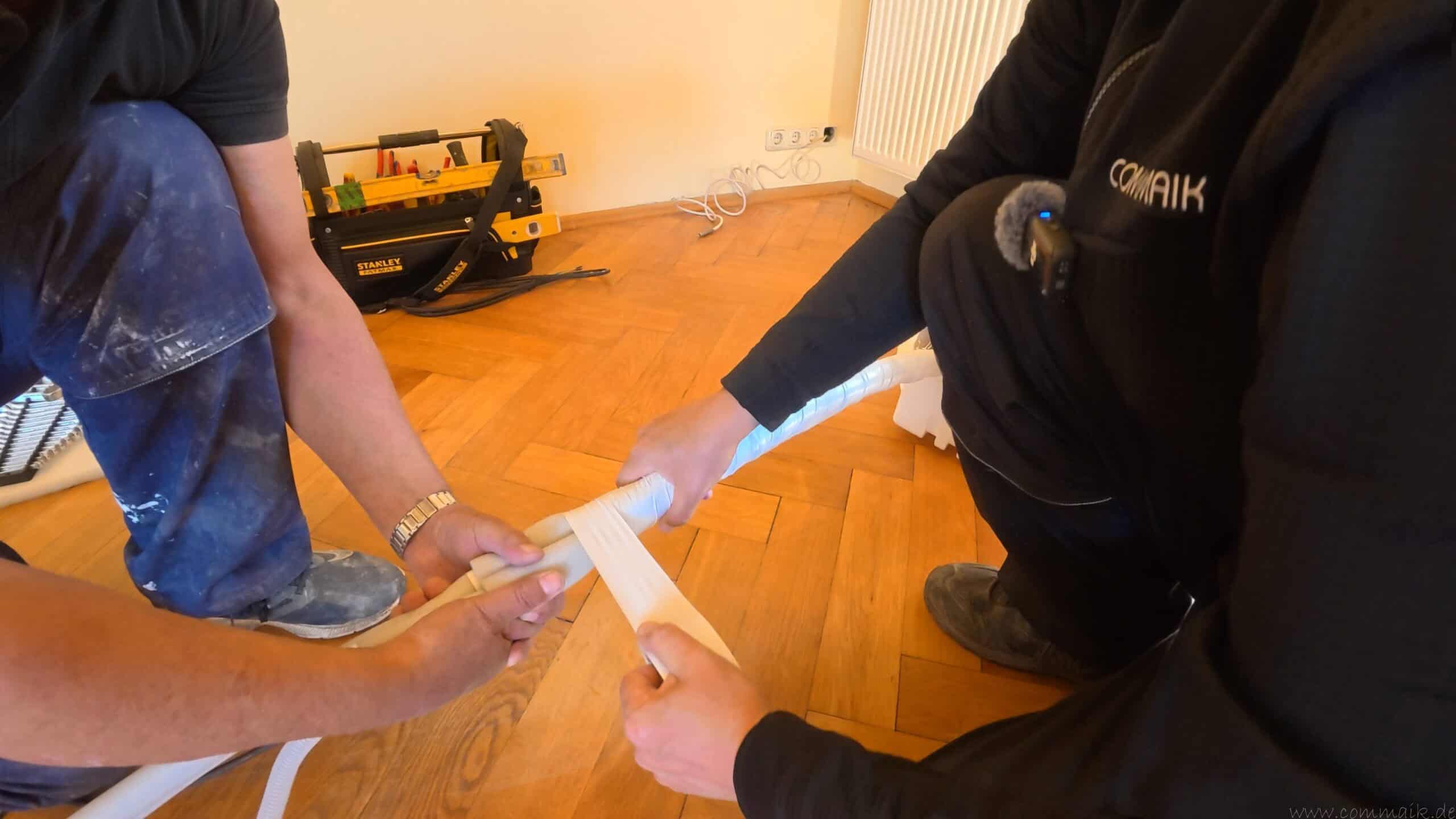
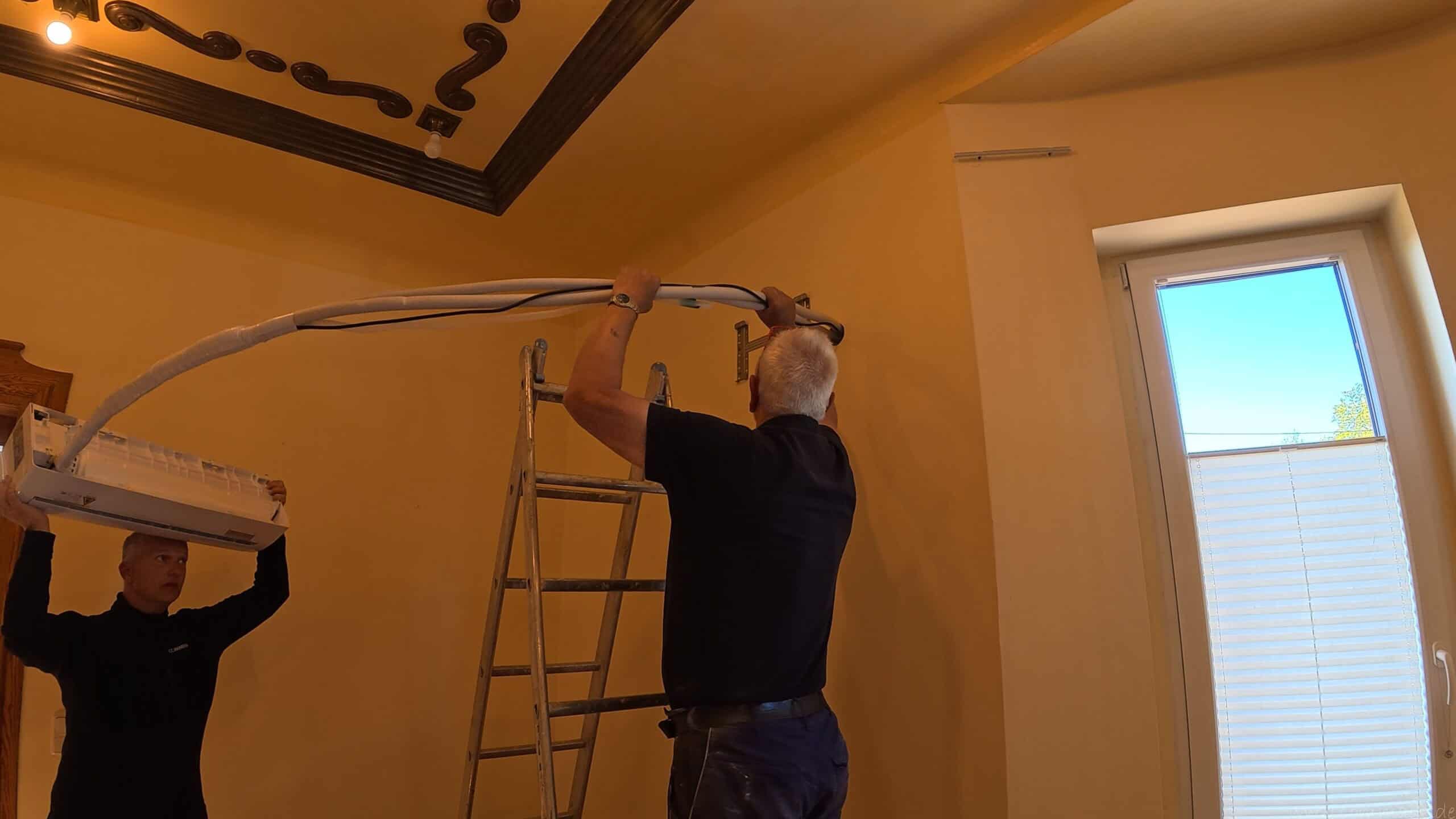
To make sure everything fits through the hole in the wall without any problems later on, I bundled the wires together and wrapped them in tape before moving in.
The refrigerant lines, in particular, required a bit of patience. They should be unrolled as evenly as possible and not creased. Bending radii that are too tight not only make installation more difficult, but can also cause permanent damage to the lines.
💡 COMMAIK Tip:
When bending the two copper pipes, the thicker copper pipe should always be on the outside of the bend and the thinner copper pipe on the inside. If, on the other hand, the pipes are bent side by side or in reverse order, there is a risk that the thinner pipe will kink or be crushed. With the right setup, even tighter radii can be produced much more cleanly and safely.

- 5m QuickConnect Kältemittelleitungen Für 18000BTU Quick Connect Klimaanlagen mit komplettem Zubehör
- 99,9 % reines Kupfer. KEINE Kupfer/Alu sontwas Legierung!
- Für Multisplit Geräte einfach mehrere Sets bestellen.
- Sehr hochwertig isoliert, montagefertig evakuiert und an beiden Enden mit QuickConnect Ventilen versehen.
- Ausserdem im Lieferumfang: 5,5m 5 adriges Signalkabel, Drainagerohr, UV-beständiges Montagetape, Lochdurchführungs-Kit und Isolierpaste für den Wanddurchgang.
Why I Chose Quick Connect
One of the main reasons I chose this air conditioner was the Quick-Connect system.
With traditional split-system air conditioners, the refrigerant lines must first be evacuated using a vacuum pump after installation. Only then can the refrigeration circuit be charged and the system put into operation. This requires, among other things, a vacuum pump, an installation aid, and the necessary expertise.
On my system, the refrigerant lines had already been prepared and pre-evacuated at the factory. After tightening the connections, all that was left to do was open the service valve on the outdoor unit. It was only at that moment that the refrigerant, which was already in the outdoor unit, flowed into the piping and the indoor unit.
As a result, getting started seems surprisingly easy at first. That is precisely one of the greatest advantages of a quick-connect system, as it eliminates some of the traditional installation steps.
Regardless of this, the legal requirements regarding the handling of refrigerant circuits and electrical connections also apply to such systems. For this reason, the final commissioning of my system was carried out in accordance with applicable regulations. I will discuss the legal framework and the differences between mechanical installation and refrigeration commissioning in greater detail later in this article.
Regardless of legal requirements, this step should always be carried out with the utmost care. Clean bolted connections, adherence to the torque specifications provided by the manufacturer, and a thorough leak test are crucial for ensuring that the refrigeration circuit remains leak-free and operates reliably over the long term.
Integrate the outdoor unit as discreetly as possible
I also gave some thought to the outdoor unit beforehand.
It should allow for the shortest possible cable runs, but at the same time not be too visually dominant.
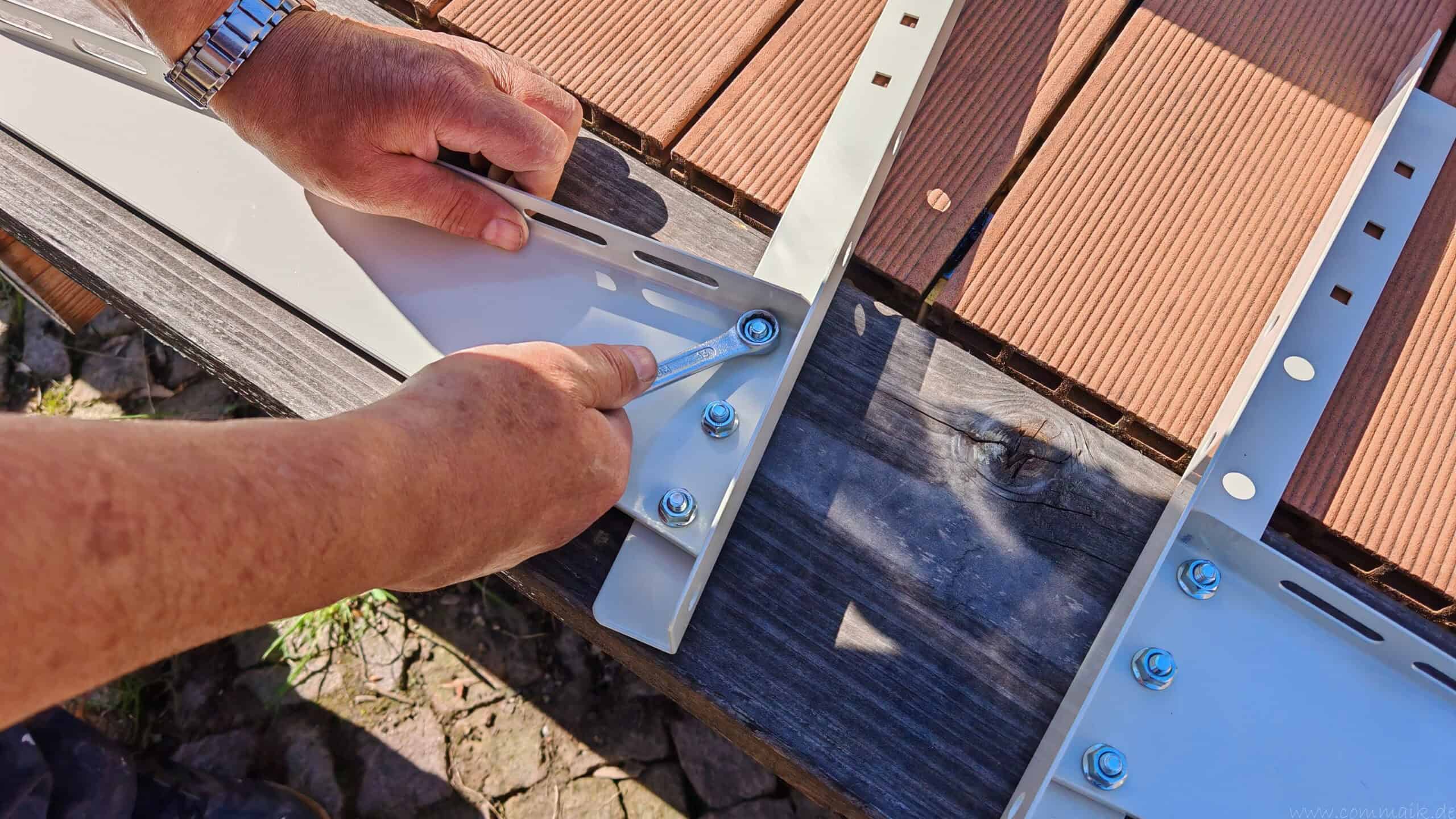
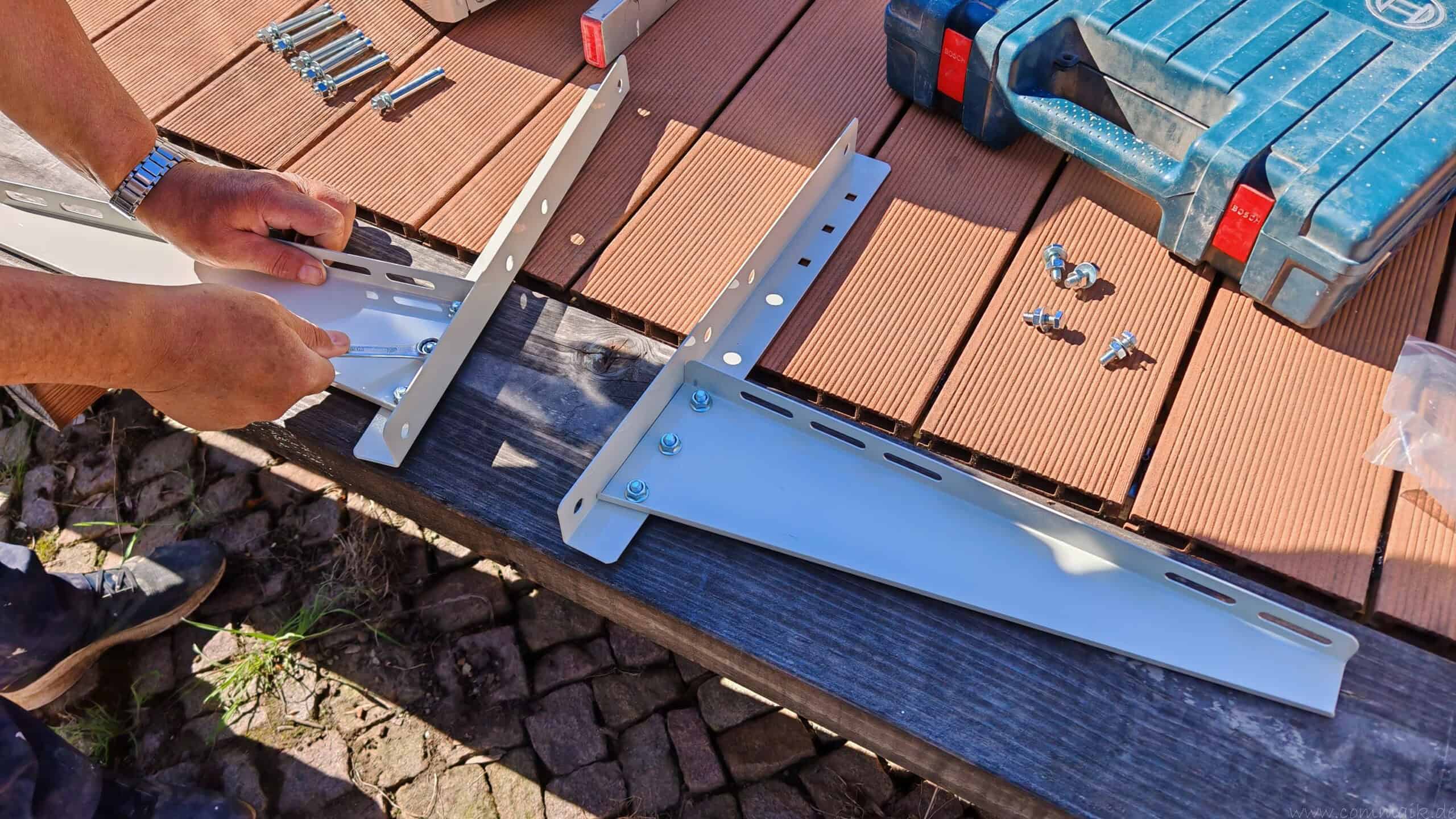
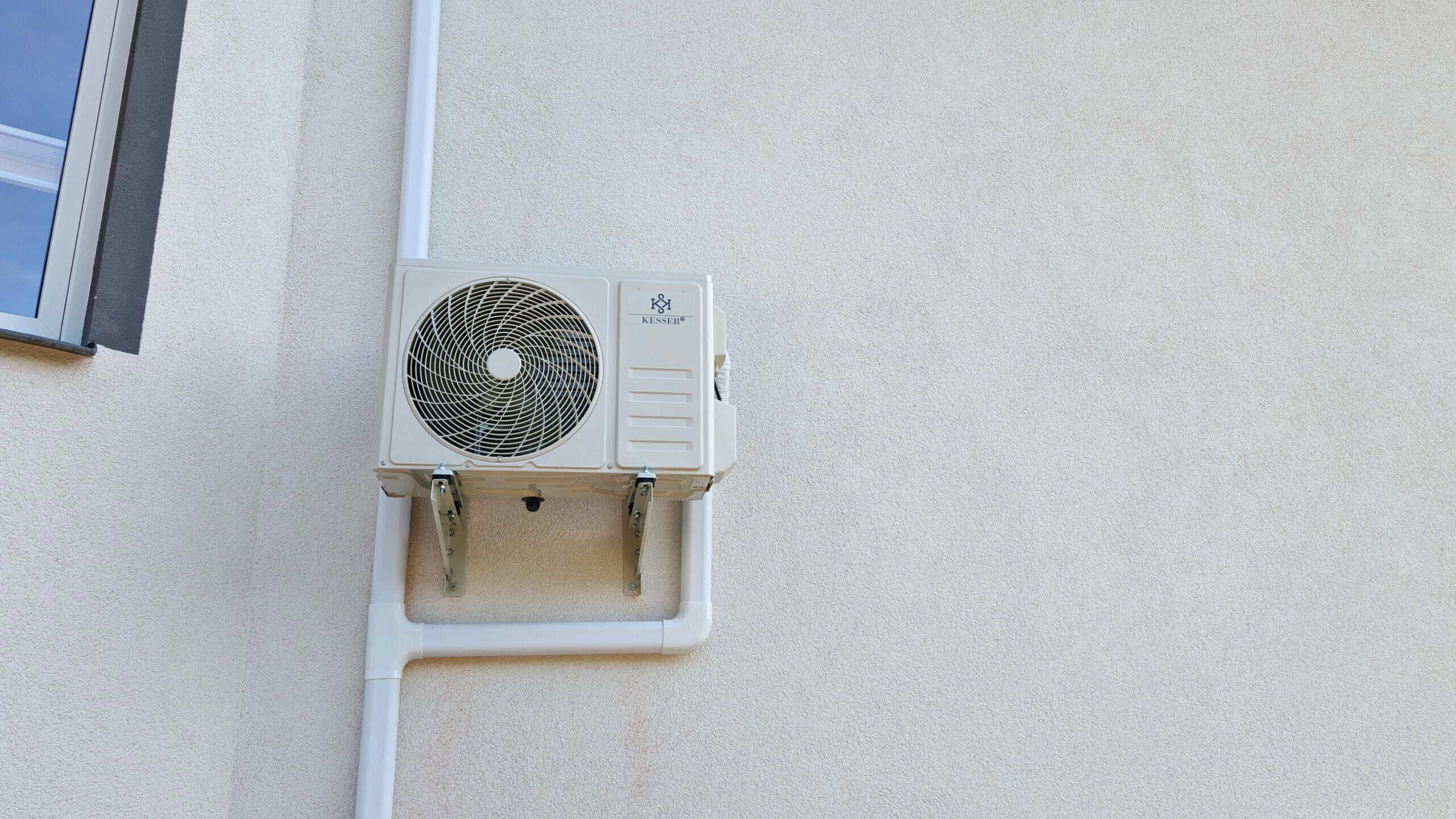
In the end, we decided on a wall bracket directly below the opening in the wall. This made it possible to connect the refrigerant lines with virtually no detours.
In addition, vibration dampers were installed to ensure that as little vibration as possible is transmitted to the masonry.
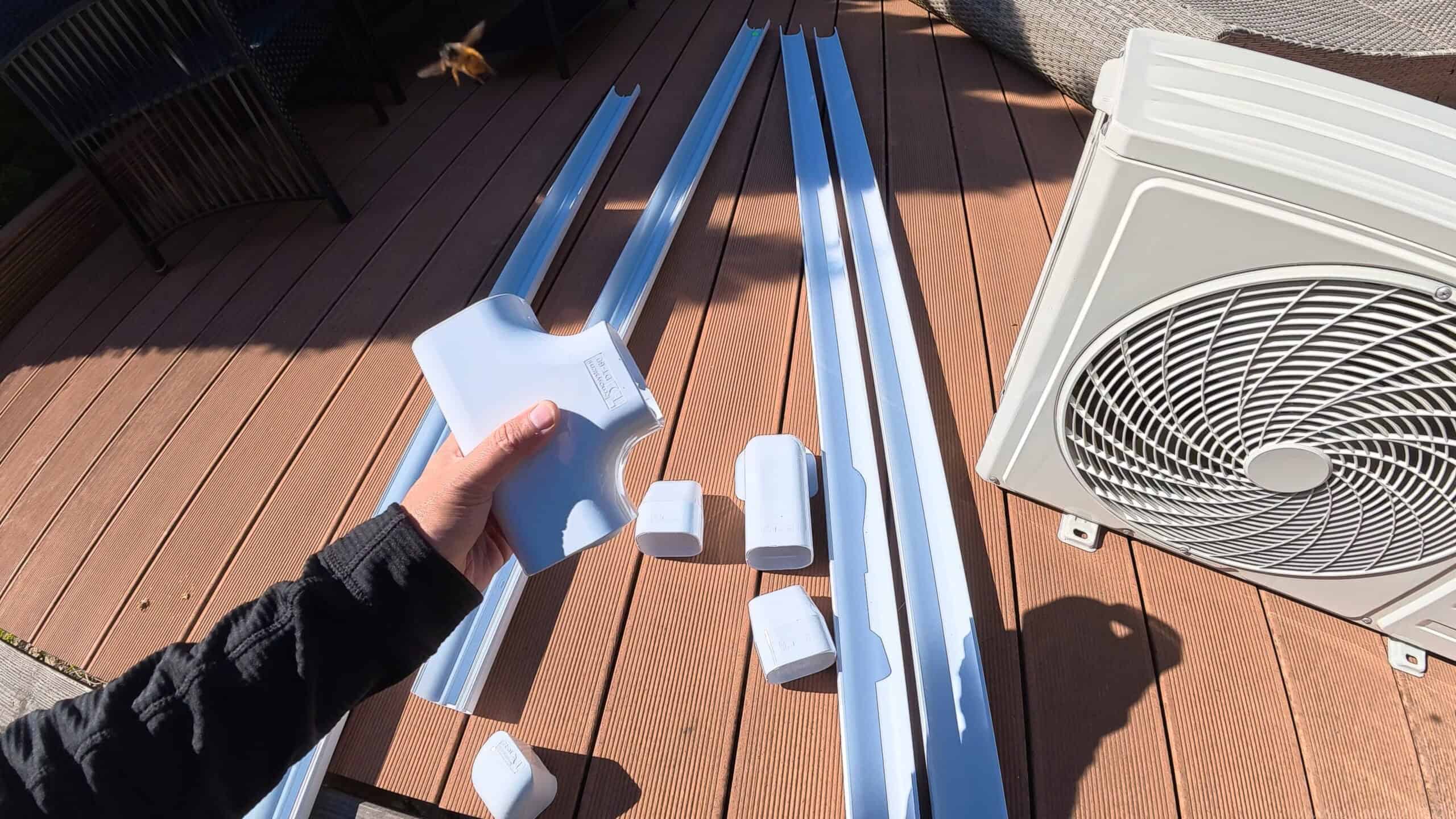
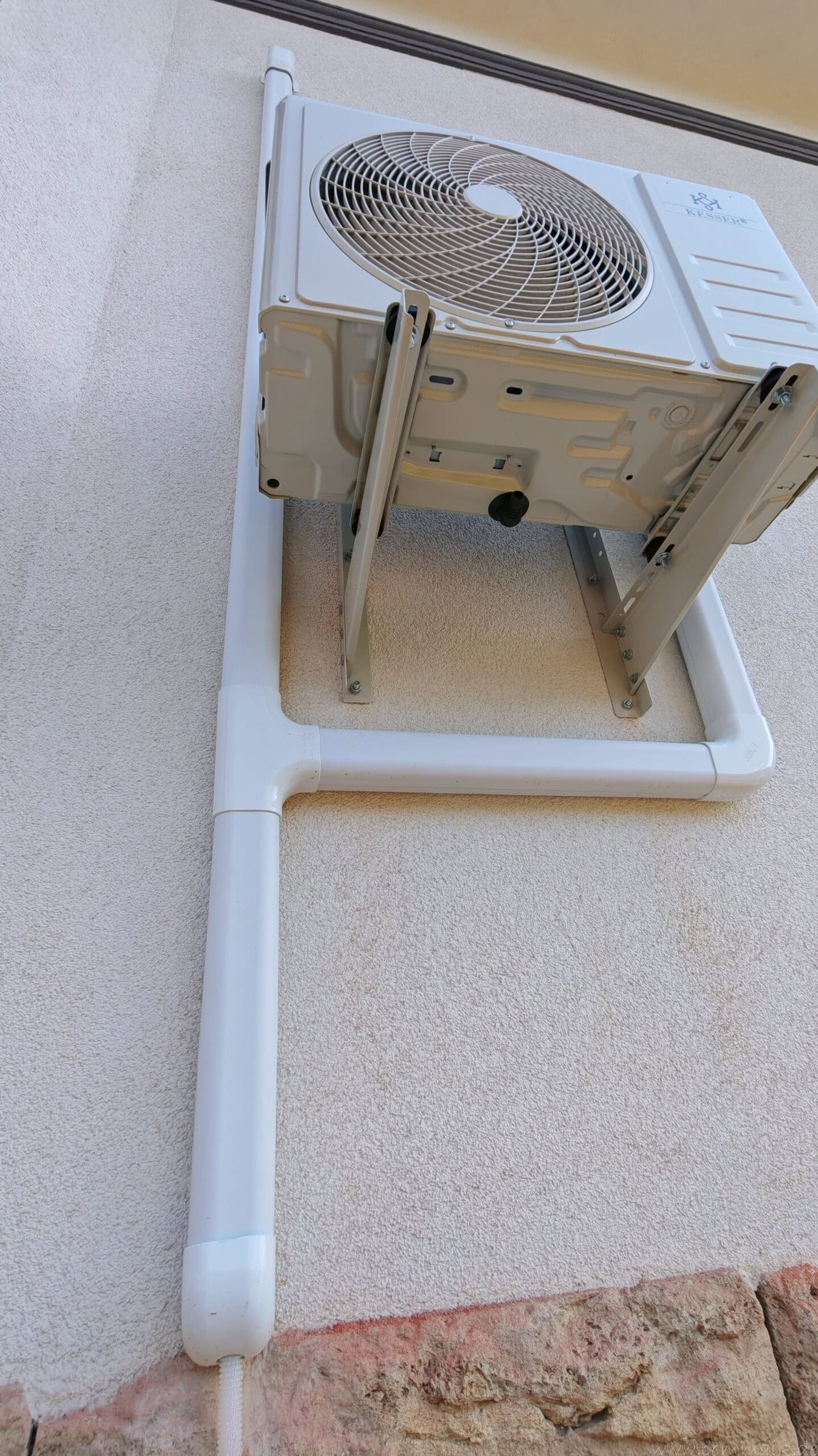
After that, I ran the wires through a cable conduit. Some molded parts were still missing at the time of assembly and were added later. That is exactly why you can see in the video footage that the installation was gradually optimized further.
The First Test Run
The most exciting moment came after all the work was finished.
It became clear after just a few minutes that the planning had paid off.
In cooling mode, the room temperature dropped significantly within a short time. I then switched directly to heating mode to test that function as well. Both operating modes worked without any problems right away.
I was particularly impressed by the volume. Even in power mode, the indoor unit runs much more quietly than I was used to with portable air conditioners. In normal automatic mode, the system is barely audible.


⚠️ What I might do differently today
In hindsight, I would plan the cable routing along the facade in even greater detail before ordering the cable channels. During installation, it became apparent that a few additional brackets and fittings would make the final result look much more harmonious. Technically, it doesn’t matter, but visually, it makes a noticeable difference.

- Umweltfreundliches Stoß- und UVA-Beständiges selbstverlöschendem Hart-PVC
- hohe Feuerbeständigkeit nach dem UL 341/0 Standard
- sanfte Kurven, eine leicht runde Form für eine ansprechende Ästhetik
- Der Kanal ist in der Mitte teilbar (Ober-/Unterteil) und hat vorgegeben Befestigungspunkte für eine schnelle Montage
R32 or R290—Which refrigerant is the better choice?
Anyone currently considering the purchase of a split-system air conditioner will sooner or later come across two terms: R32 and R290. Both refrigerants are used in modern air conditioning systems, but they differ in terms of their environmental impact, technical properties, and future regulatory requirements.
This issue has been gaining increasing importance, at least since the new EU F-Gas Regulation took effect. Many manufacturers are gradually switching their product lines to new refrigerants, which raises the question of whether it’s even worth buying an R32 air conditioner today.
Why My Air Conditioner Uses R32
The split-system air conditioner installed in my project uses R32. For several years now, this refrigerant has been one of the most widely used solutions in the residential sector and has largely replaced older refrigerants such as R410A.
R32 offers impressive energy efficiency, good heating and cooling performance, and comparatively low refrigerant charge levels. From a technical standpoint, it is a mature and proven system, which is why many manufacturers still rely on this refrigerant today.
The refrigerant is already in the outdoor unit when it leaves the factory. In Quick-Connect systems, it is released only after installation through the service valves into the pre-evacuated lines and then into the indoor unit.
Why R290 Is Being Used More and More Often
At the same time, R290 is becoming increasingly important. This term refers to high-purity propane, which is considered a particularly environmentally friendly refrigerant.
The biggest advantage is its very low global warming potential (GWP). While R32 is already significantly more climate-friendly than older refrigerants, R290 falls well below that level. For this reason, more and more manufacturers are turning to propane for their new product lines.
The R290 also offers outstanding technical features. Modern systems achieve high efficiency levels and operate extremely efficiently in both cooling and heating modes.
Are there any drawbacks?
However, there are some differences between the two refrigerants.
R32 is classified as slightly flammable (safety class A2L). R290, on the other hand, belongs to safety class A3 and is more flammable.
This difference is of little consequence during normal operation, since modern air conditioning systems are already designed to accommodate these specific characteristics. However, different requirements apply to development, manufacturing, and installation, which is why the two systems cannot be easily compared.
For the end user, however, there is hardly any difference between the two systems in everyday use. Both R32 and R290 air conditioning systems operate efficiently, quietly, and reliably.
Is an R32 air conditioning system still worth it today?
This question comes up regularly these days.
In my view, the answer is quite clearly: Yes.
R32 is by no means outdated. Quite the contrary. The technology is considered mature, spare parts and service are available over the long term, and modern devices achieve outstanding efficiency.
From a technical standpoint, anyone installing a new split-system air conditioner today can’t go wrong with a high-quality R32 unit.
At the same time, there are many indications that R290 will continue to gain importance in the coming years. New product lines will increasingly rely on this refrigerant, and this trend is being further accelerated by European environmental regulations.
👍 My assessment
If I were to buy an air conditioner again today and had to choose between only two technically comparable models, I would take a close look at both options. For me, however, the deciding factor wouldn’t be just the refrigerant, but the overall package of quality, efficiency, noise level, features, and price. A high-quality R32 unit is still a very good choice today.
Refrigerants and Legal Requirements
With the new EU F-Gas Regulation, the European Union aims to phase out fluorinated greenhouse gases and promote more climate-friendly alternatives. That is why more and more manufacturers are turning to R290 for their new product lines, while R32 remains one of the most commonly used refrigerants. This does not impose any restrictions on systems that are already installed—they may, of course, continue to be operated and maintained.
When installing a split-system air conditioner, a distinction is generally made between mechanical installation, commissioning of the refrigerant circuit, and electrical connection. Tasks such as installing the wall mounts, core drilling, running the lines, and securing the indoor and outdoor units can be easily prepared with the appropriate technical skills.
However, the commissioning of the refrigerant circuit is subject to the requirements of the EU F-Gas Regulation as well as the applicable national legal provisions. Although a quick-connect system also simplifies installation considerably and eliminates the need to evacuate the lines, it does not replace these legal requirements. The release of the refrigerant and the commissioning of the system must therefore be carried out in accordance with applicable regulations. The same applies to the electrical connection, which must be installed properly in accordance with the applicable VDE regulations. The final commissioning of my system was, of course, carried out in accordance with legal requirements.
Since installing a split-system air conditioner involves making permanent changes to the building structure, you should always discuss the installation in a rental apartment with the landlord beforehand. Depending on the building, additional requirements under historic preservation or building codes may need to be observed.
Even though R290 is expected to continue gaining importance in the coming years, a modern R32 split-system air conditioner remains a technically mature and future-proof solution. Ultimately, what matters most is not so much the refrigerant used as the quality of the unit, its energy efficiency, proper installation, and suitability for the intended application.
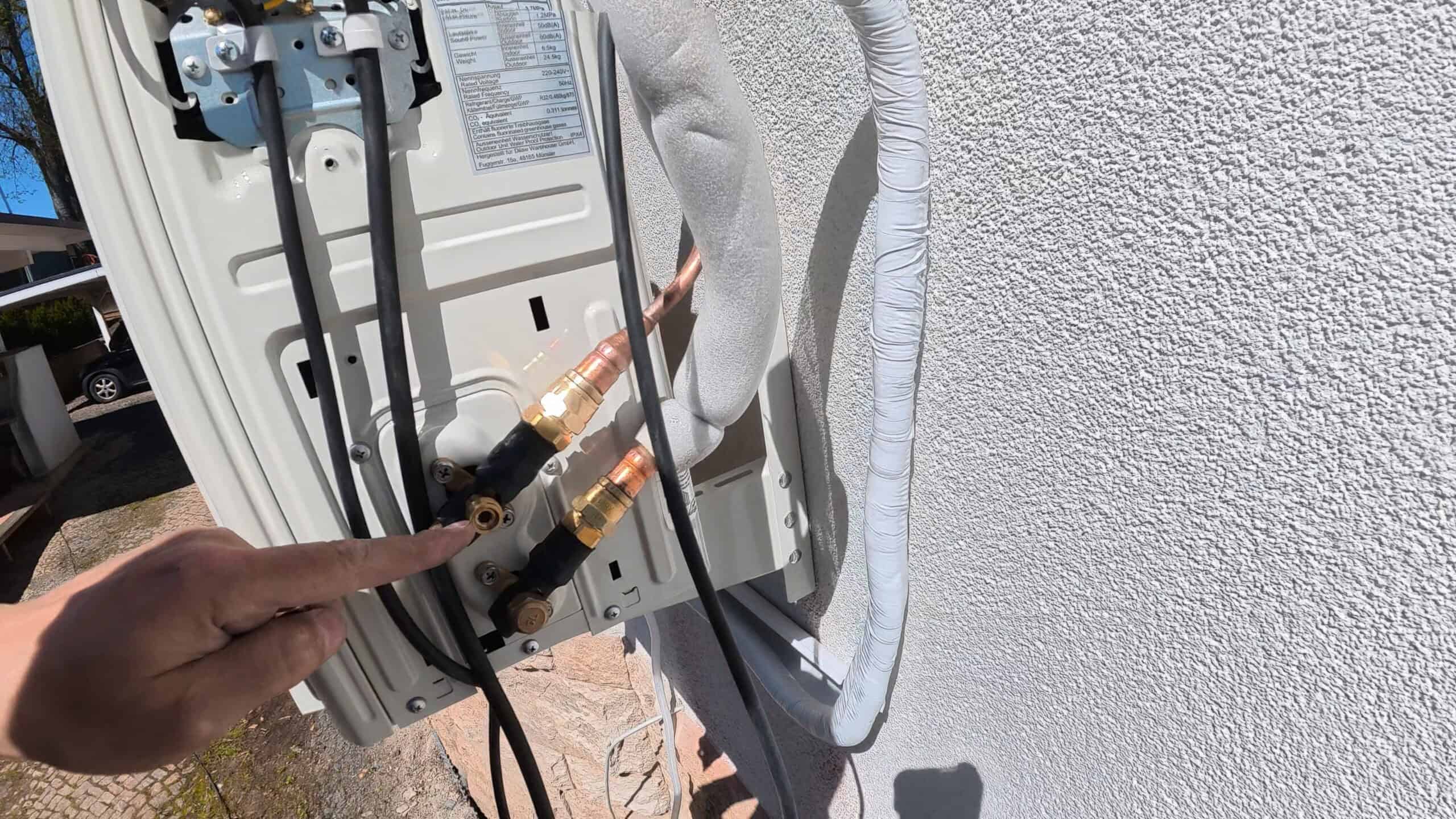
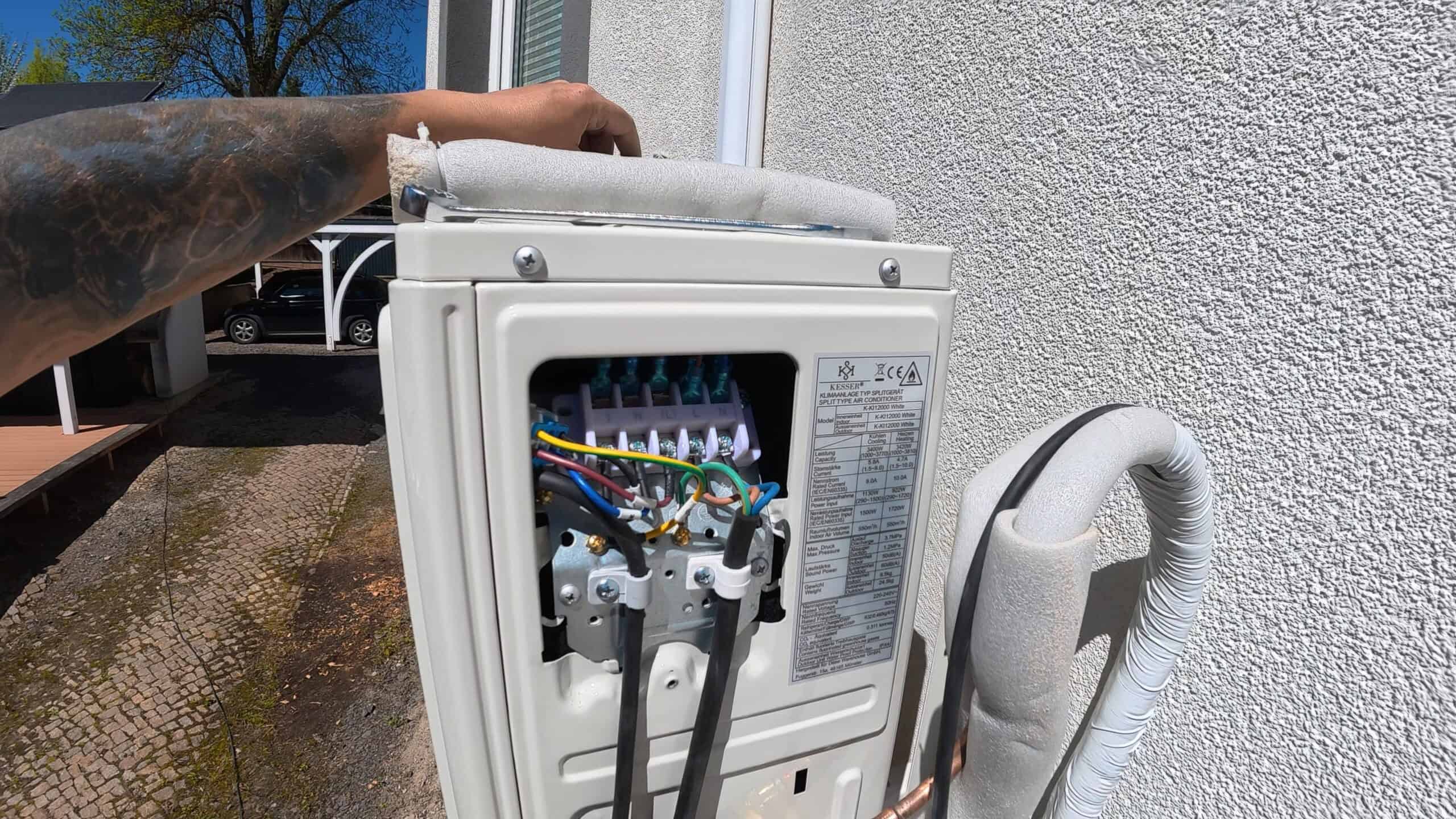
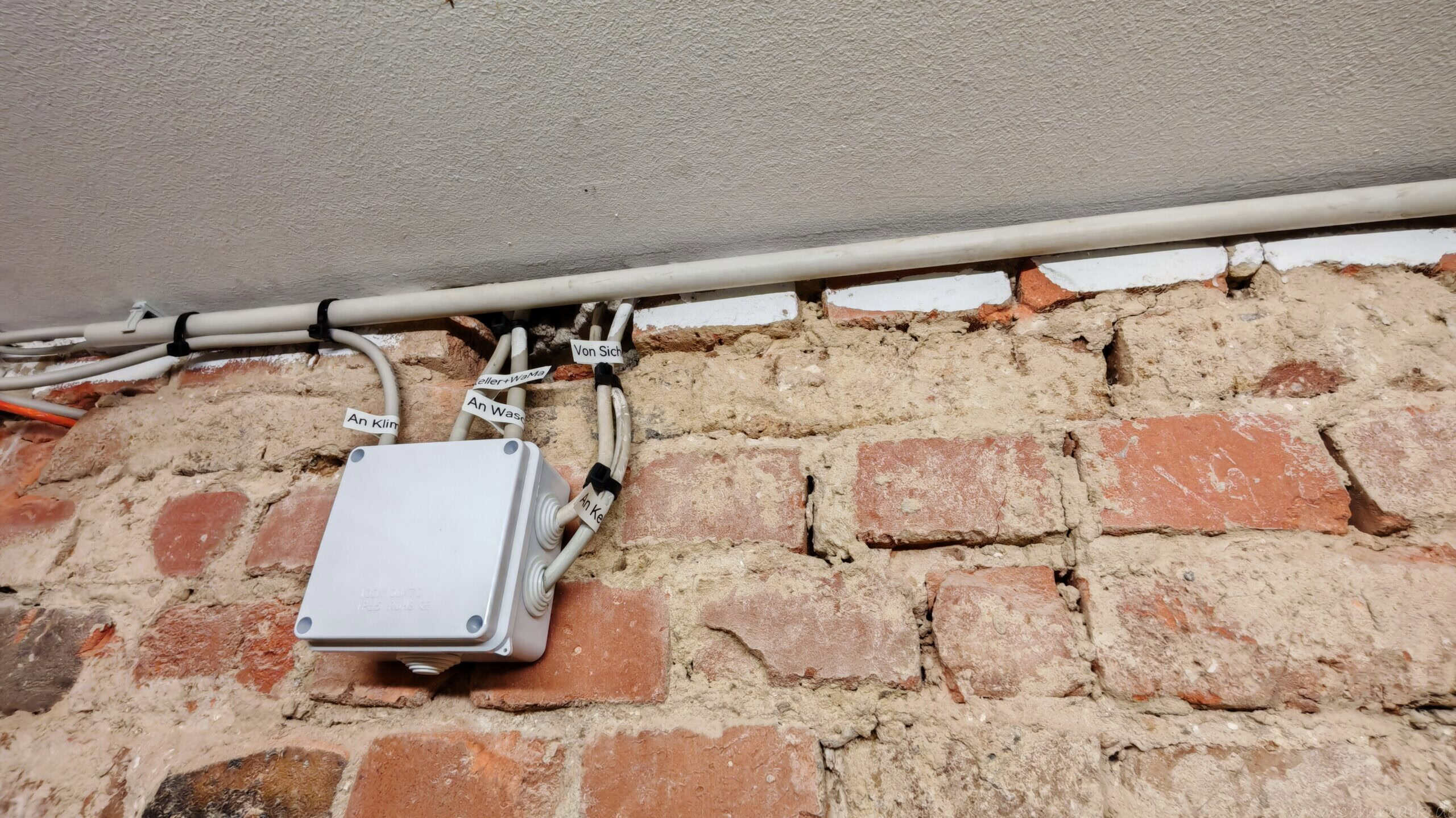
💡 COMMAIK Tip: If you want to do as much of the work yourself as possible, you can prepare the entire mechanical assembly. As a result, the effort required for the final commissioning by a specialized contractor is often significantly reduced.

- 【Effizientes Kit】 Komplettes Diagnose und Service Gauge-Set für das MINI/ HVAC/ AUTO AC-System, ist ideal zum Testen, Befüllen und Evakuieren von Fahrzeugklimaanlagen.
- 【Leistungsstarke Vakuumpumpe】 Sie besteht den A2L-Explosionsschutztest für zuverlässige Leistung und effizienten Betrieb und hält die Klimaanlage aufrecht. Hohe Effizienz, wenig Lärm, Gehäuse aus Aluminium, Einfach zu transportieren durch den praktischen Handgriff. Höhere Förderrate und besseres absolutes Vakuum als vergleichbare Produkte.
- 【Manifold-Messgerät】 Körper aus anodisiertem Aluminiumvollkörper, übergroßem Sichtglas für einfache Kontrolle des Kühlmittelflusses, hochwertiger druckanzeige und hochgenauer Anzeige.
- 【Dreifarbiger Schlauch】 3 x extra langem 150cm kältemittelschlauch, 3-farbig zur einfachen Erkennung, rot für Hochdruck, blau für Niederdruck, gelb für Vakuumpumpe
- 【Paket Beinhaltet】 1 x Vakuumpumpe (mit 250ml Vakuumöl), 1 x Manometer, 3 x Refrigrant Schlauch, 2 x Auto-Schnellkupplungen, 2x 5/16"-1/4" SAE-Adapter, 2 x R1234yf-Adapter, 3x Flaschenöffner, 1x Bedienungsanleitung, 1x Toolkit
My practical experience after installation
After the first few weeks of use, my initial impression has been confirmed: Choosing a split-system air conditioner was exactly the right decision. I was particularly surprised by how quickly the room temperature can be adjusted. Just a few minutes after turning it on, you can already feel a noticeable difference—both in cooling and heating mode.
In everyday use, the system runs in automatic mode most of the time. This keeps it pleasantly quiet and automatically adjusts the temperature to the desired level. In Power mode, the indoor unit is audible, but the noise is mainly limited to the airflow and is significantly less noticeable than with portable air conditioners.
The outdoor unit also operates relatively quietly. Of course, you can hear the fan right next to it, but at a normal distance, I find the noise level to be completely unobtrusive. The vibration dampers on the wall bracket are particularly effective here, as they ensure that virtually no vibrations are transmitted to the masonry.
Cooling and Heating in Everyday Life
At first, my main concern was keeping the apartment cool. These days, though, I enjoy using the system for heating just as much.
A split-system air conditioner really shows its strengths during the transitional season. Instead of turning on the entire heating system for just a few rooms, you can quickly bring the living area to a comfortable temperature. This not only increases comfort but can also—especially when combined with a solar power system—reduce energy costs.
For me, this has transformed the air conditioner from a solution used only in the summer into an integral part of my energy strategy.
Would I buy a 12,000-BTU unit again?
Yes, definitely.
The power rating I chose is a very good fit for the layout of my older apartment. Given the high ceilings and the larger room volume, I still think the decision to go with 12,000 BTU was the right one.
A smaller system would likely have cooled the room as well, but it would have had to run longer under a heavier load to do so. With a little power reserve, the system reaches the desired temperature more quickly and can then continue to run at a lower power setting.
What would I do differently today?
I wouldn’t make any major changes to the installation. In hindsight, however, I would plan the cable routing along the facade in a bit more detail and assemble all the necessary cable ducts and fittings before starting the installation.
Technically, this hardly matters, but from a visual standpoint, well-planned cable routing creates a much more harmonious overall look.
I would also recommend that everyone think about a possible upgrade before making a purchase. If you plan to add air conditioning to additional rooms in the future, you should determine early on whether a multi-split system might be the better long-term solution.
👍 My takeaway after the first few weeks
I would choose a split-system air conditioner again in a heartbeat. Not only because of the pleasant cooling it provides in the summer, but above all because of its additional heating function. Especially when combined with my solar power system, it’s much more than just an air conditioner to me—it has become a valuable addition to my overall energy strategy.

- 5-in1 FUNKTION: Die leistungsstarke Split Klimaanlage 27000 BTU / 7,9 kW bietet Kühlen, Heizen, Entfeuchten, Ventilator und Luftreinigung. Ideal für Räume bis je 59m². Blitzschnelles Kühlen auf bis zu 16°C und eine leistungsstarke Heizfunktion bis 31°C
- LEISER KOMFORT: Perfektes Raumklima mit unserer leisen Splitanlage. Gleichmäßige Verteilung durch smarten Luftstrom, schnelle Kühlung durch Turbo-Lüfterstufen. Ruhige Nächte mit dem Schlafmodus (ab 19dB) und dabei Energie sparen.
- EFFIZIENT UND LANGLEBIG: Effizienzklasse A++ (Kühlen A++, Heizen A+), Anti-Schimmel und Luftfilter sorgen für saubere Luft. Die langlebige Titangold-Beschichtung erhöht die Haltbarkeit der Inverter Wandklimaanlage.
- SMART-HOME: Volle Kontrolle über Ihr Wandklimagerät mit der Smart App, Sprachsteuerung oder Fernbedienung. Kompatibel mit Alexa und Google, verfügt es über einen 24-Stunden-Timer und ermöglicht Ihnen eine bequeme Steuerung von überall.
- FACHGERECHTE INSTALLATION: Im Set sind das Außengerät und 3 Innengeräte enthalten. Das Klima Splitgerät wird fest eingebaut und das Aussengerät ist bereits mit R32 Kältemittel (GWP 675) bis 5m je Kreislauf vorgefüllt. Bei Fragen hilft unser Support oder Ihr Fachbetrieb weiter.
Summary
Installing a split-system air conditioner in an older building is much easier today than it was just a few years ago and offers far more benefits than just comfortable cooling in the summer. In this field report, I document the entire installation of a 12,000 BTU split-system air conditioner in an Art Nouveau villa built in 1900—from planning and core drilling to commissioning and my initial practical experiences.
This article clearly explains how a split-system air conditioner works as an air-to-air heat pump, why it can be used not only for cooling but also for efficient heating, and the significance of metrics such as COP, SCOP, EER, and SEER for energy efficiency. I’ll also discuss how to select the right capacity, the differences between single-split and multi-split systems, the advantages of a quick-connect system, and how to plan the routing of pipes and the installation.
In addition, the differences between the refrigerants R32 and R290, the current legal framework, and the specific considerations involved in installing an air conditioning system in an older building are explained. The article is rounded out with numerous practical tips, personal experiences, and an honest assessment after the first few weeks on the job.
If you’re looking to retrofit a split-system air conditioner in an older building and need some solid guidance to help you make a decision, this article provides both technical background information and practical insights from a real-life DIY project.
FAQs About Split Air Conditioning Systems in Older Buildings
Is it possible to retrofit an air conditioning system in an older building?
Yes, air conditioning can be retrofitted even in older buildings. It is important to have a thorough plan, the right capacity, a suitable installation location for the indoor and outdoor units, and a well-thought-out wiring layout. Thick walls and high ceilings, in particular, should be taken into account when making a selection.
Is a split-system air conditioner worth it in an older building?
A split-system air conditioner can be particularly worthwhile in older buildings if rooms get very hot in the summer or if certain areas need additional heating. Modern systems operate efficiently and quietly and can significantly enhance living comfort.
Can a split-system air conditioner also provide heat?
Yes, many modern split-system air conditioners function as air-to-air heat pumps. They can cool in the summer and heat in the winter or during the transitional seasons. In this process, heat is not generated but is transferred from the outside to the inside.
What capacity should an air conditioner have in an older building?
The appropriate output depends on the room size, ceiling height, insulation, window area, and sunlight exposure. As a general guideline, 9,000 BTU is recommended for smaller rooms, 12,000 BTU for medium-sized rooms, and 18,000 BTU for larger areas.
Is a 12,000 BTU air conditioner sufficient for an older building?
For many medium-sized rooms, a 12,000 BTU split-system air conditioner may be a good fit. In older buildings, however, it is important to take into account not only the floor area but also the larger interior volume created by high ceilings.
What is the difference between a single-split and a multi-split?
In a single-split air conditioning system, one indoor unit is connected to one outdoor unit. In a multi-split system, multiple indoor units can be connected to a single outdoor unit. This makes sense when you want to air-condition multiple rooms.
What does “Quick Connect” mean in the context of an air conditioner?
“Quick Connect” means that the refrigerant lines are factory-prepared and, in most cases, pre-evacuated. This eliminates some of the traditional steps involved in assembly. The legal requirements for the refrigeration cycle and electrical connection still apply.
Can you install a split-system air conditioner yourself?
Mechanical work such as wall mounting, core drilling, or installing cable channels can be prepared. However, statutory and technical regulations apply to the commissioning of the refrigeration system and the electrical connection.
Which is better: R32 or R290?
R32 is currently widely used, efficient, and technically mature. R290 is considered particularly environmentally friendly and is becoming increasingly important in new systems. However, it is not just the refrigerant that matters, but the overall package of performance, efficiency, noise level, quality, and price.
How loud is a split-system air conditioner when it’s running?
The indoor unit of modern split-system air conditioners usually operates very quietly and mainly produces the sound of air flowing. The outdoor unit is audible, but should not be a nuisance if it is properly installed and vibration-isolated.
- : Sparen Sie sich die Suche nach passendem Zubehr. Unser Set enthlt neben dem Innen- und Auengert bereits 3m vorkonfektionierte Kupferleitungen, Kommunikationskabel und eine robuste Wandhalterung. Auspacken, vom Fachbetrieb installieren lassen, fertig.
- -- : Dieses Gert ist weit mehr als eine Klimaanlage. Mit den Modi Khlen, Heizen, Ventilieren und Entfeuchten sind Sie fr jede Jahreszeit gerstet. Besonders die separate Entfeuchtungsfunktion sorgt fr ein gesundes Wohnklima und beugt effektiv Schimmelbildung vor.
- ++: Dank modernster Inverter-Technologie passt sich die Leistung stufenweise an. Das sorgt fr konstante Temperaturen ohne stndiges An- und Ausschalten, was den Stromverbrauch massiv senkt (SEER 6,1 / SCOP 4,0). Dank der modernen Luft-Luft-Wrmepumpentechnik sorgt das Gert im Sommer fr erfrischende Khle und dient im Winter als kosteneffiziente Zusatzheizung. Dank der Energieeffizienzklasse A++ behalten Sie Ihre Stromrechnung dabei fest im Griff.
- : Sorgenfreie Abwesenheit im Winter. Die intelligente 8C-Heizfunktion (Frostschutz) hlt die Raumtemperatur konstant ber dem Gefrierpunkt. Das ist der perfekte Schutz fr Ferienimmobilien oder selten genutzte Rume, um das Einfrieren von Leitungen bei minimalem Energieverbrauch zu verhindern.Dank der Auto-Restart-Funktion nimmt das Gert nach einem Stromausfall sofort den Betrieb mit Ihren gewhlten Einstellungen wieder auf.
- & : Maximale Freiheit bei der Bedienung. Steuern Sie Ihr Raumklima nicht nur per App von unterwegs, sondern auch ganz bequem per Sprachbefehl ber Amazon Alexa oder Google Home. Die Steuerung ber die beiligende Fernbedienung ist vollumfnglich mglich. Ein 24h-Timer hilft zudem bei der perfekten Temperierung ihrer Rume, indem er den Betrieb automatisch an Ihren Alltag anpasst.
- & : Passen Sie das Gert Ihrem Lebensrhythmus an, nicht umgekehrt. Mit dem programmierbaren 24-Stunden-Timer startet oder stoppt die Anlage genau dann, wenn Sie es wnschen. Im Schlafmodus arbeitet das System flsterleise und passt die Temperatur sanft an, damit Sie ohne strende Gerusche erholt aufwachen.
- - & - : Erleben Sie Komfort ohne kalte Zugluft. Dank der 3D-Swing-Funktion verteilt das Gert die Luft sowohl vertikal als auch horizontal gleichmig im gesamten Raum. Die "I-Feel"-Technologie nutzt einen Sensor in der Fernbedienung, um die Temperatur genau dort zu messen, wo Sie sich gerade aufhalten, statt nur oben am Gert.
- - : Setzen Sie auf langlebige Spitzenleistung. Die exklusive Nano-Titaniumoxid-Legierung auf dem Verdampfer wirkt aktiv selbstreinigend und bakterienhemmend. Sie baut organische Schadstoffe ab und neutralisiert unangenehme Gerche, noch bevor sie entstehen.
- : Bitte beachten Sie die rechtlichen Bestimmungen gem der der EU Verordnung Nr. 2024/573 i.V.m 9 Abs. 3 der ChemKlimaSchutzV. Weitere Informationen und Sicherheitshinweise finden Sie im Benutzerhandbuch (siehe Sicherheits- und Produktressourcen).
Dieser Beitrag ist auch verfügbar auf:
 English
  Deutsch


Ähnliche Beiträge

Update Reolink firmware quickly and safely: Step-by-step guide for cameras and NVRs
TerraMow V1000, V600, and Mini 500 Review: Robotic Lawn Mowers Without RTK and Lidar?