Robot lawn mower without boundary wire in test: LiDAR vs RTK in comparison (ANTHBOT M5 vs M9)
Robot mowers without boundary wires are currently one of the most exciting developments in the gardening sector. In my test, I directly compared two different concepts: the ANTHBOT M5 as a LiDAR robotic lawnmower and the ANTHBOT M9 as an RTK robotic lawnmower with GPS navigation. Both models manage completely without a perimeter wire and show in the practical test how well cordless robotic lawn mowers really work today. In this comparison, I share my experiences from my own garden, discuss navigation, obstacle detection, edge cutting and set-up and clarify which robotic lawnmower without a wire is the best choice for which area of application.
What you can expect in this blog post
- Practical test of two robotic lawnmowers without boundary wire in your own garden
- Direct comparison of LiDAR vs. RTK navigation
- Setup and commissioning without boundary wire in detail
- Evaluation of navigation, mapping and area coverage
- Obstacle detection test with hedgehog and garden chair
- Analysis of internal corners and valve boxes as typical problem areas
- Mowing result, cutting pattern and edge cut in comparison
- Tips for optimizing mapping and lawn edges
- Overview of app functions, zone management and schedules
- Maintenance, cleaning and care in everyday life
- Practical conclusion with clear classification of the areas of application
- Decision-making aid: Which cordless robotic lawnmower suits which garden
Manufacturer portrait: ANTHBOT and modern robotic lawn mowers without boundary wire
ANTHBOT is one of the manufacturers that have specialized in robotic lawn mowers without boundary wires. While many traditional robotic lawnmowers continue to work with boundary wires, ANTHBOT consistently relies on modern technologies such as LiDAR, RTK and camera-based navigation. This clearly positions the manufacturer in the segment of new, cordless robotic lawn mowers.
The company pursues a technology-driven approach: the aim is to develop wire-free robotic lawnmowers that do not require any wires at all, but still enable precise and reliable navigation in the garden. Compared to traditional systems with boundary wires in particular, this is a clear improvement – both in terms of installation and daily operation.
Development, positioning and target group
ANTHBOT is still a comparatively young supplier on the market, but has quickly made a name for itself in the field of cordless robotic lawn mowers. What is particularly striking is the focus on innovative navigation technologies, which are usually found in much more expensive devices.
In terms of price and quality, ANTHBOT is positioned in the mid to upper segment. The devices offer many functions that are otherwise more familiar from premium manufacturers, but remain below the price of classic high-end models such as a Husqvarna Automower.
The target group is primarily users who:
- looking for a robotic lawnmower without a boundary wire
- No need for complex installation with wire
- want to use modern navigation such as LiDAR or RTK
- want to maintain their garden efficiently and as automatically as possible
The devices are particularly interesting for owners of complex or winding gardens, where classic robotic lawn mowers with boundary wires quickly reach their limits.
ANTHBOT in practical use – my experiences so far
In my detailed review of the ANTHBOT Genie robotic lawnmower, I already took a close look at the concept of “no boundary wire at all”. In this article, I will show you in detail how well such a robotic lawnmower works in everyday life, how it is set up and where its strengths and weaknesses lie.
It was particularly exciting to see how reliably the navigation works in the real garden, even without a perimeter wire, and how well the robot mower recognizes and avoids obstacles.
This experience also forms the basis for comparing the current models. With the M5 and M9, ANTHBOT consistently develops the concept further and shows how modern robotic lawn mowers without boundary wires perform in a direct comparison.
Overall, it is clear that ANTHBOT stands for a new generation of robotic lawn mowers that clearly stand out from classic wired solutions and focus above all on convenience, flexibility and modern navigation.
Design & scope of delivery of the robotic lawnmowers in the test
First impression and processing
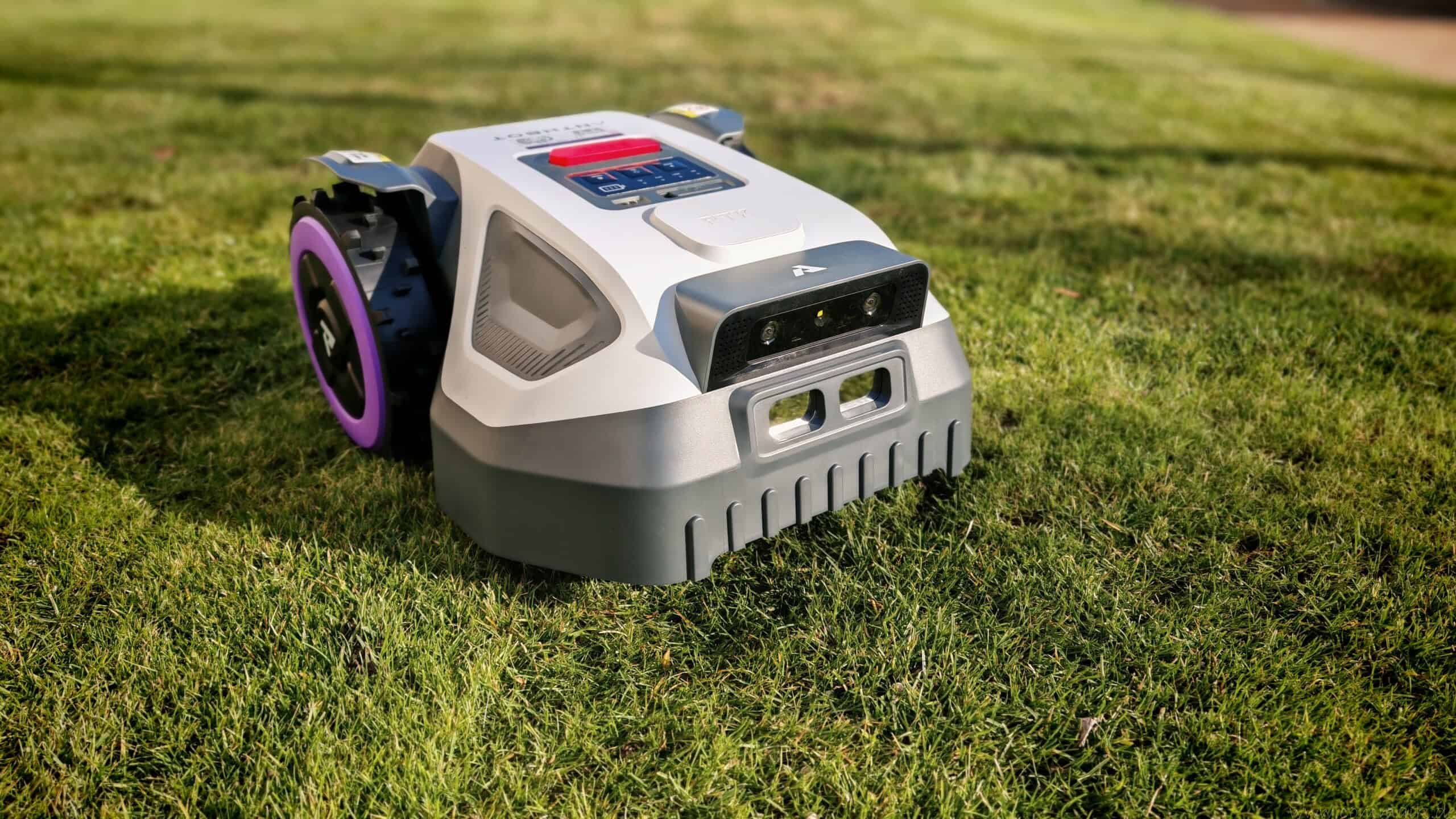
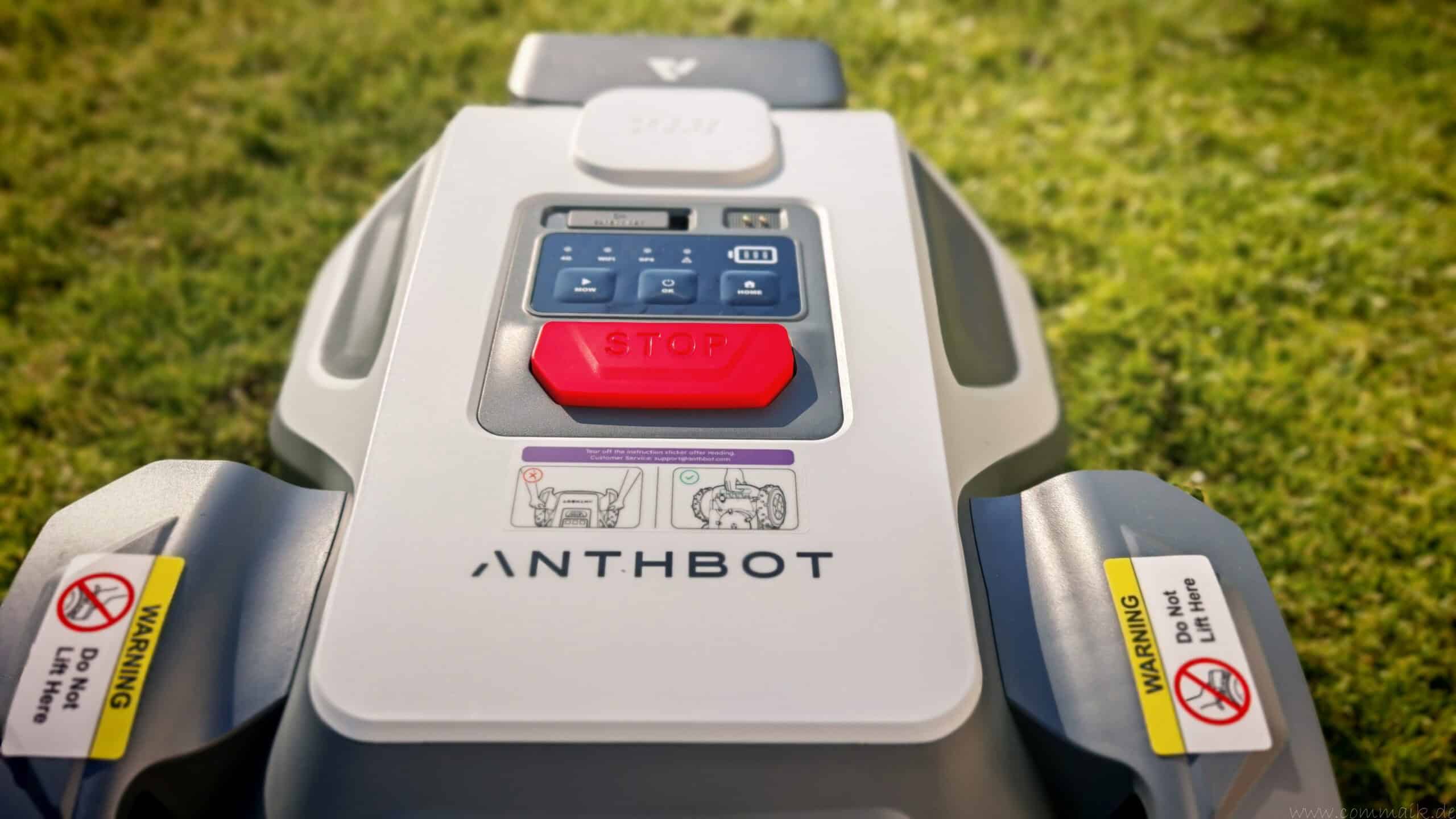
Both models leave a high-quality and well thought-out impression in the test. Both the ANTHBOT M5 and the M9 are clearly designed for long-term use in the garden and have a correspondingly robust construction.
The M5 is more compact and is well suited for smaller and winding lawns. The M9 is slightly larger and is designed for larger m² areas, which is also reflected in the design.
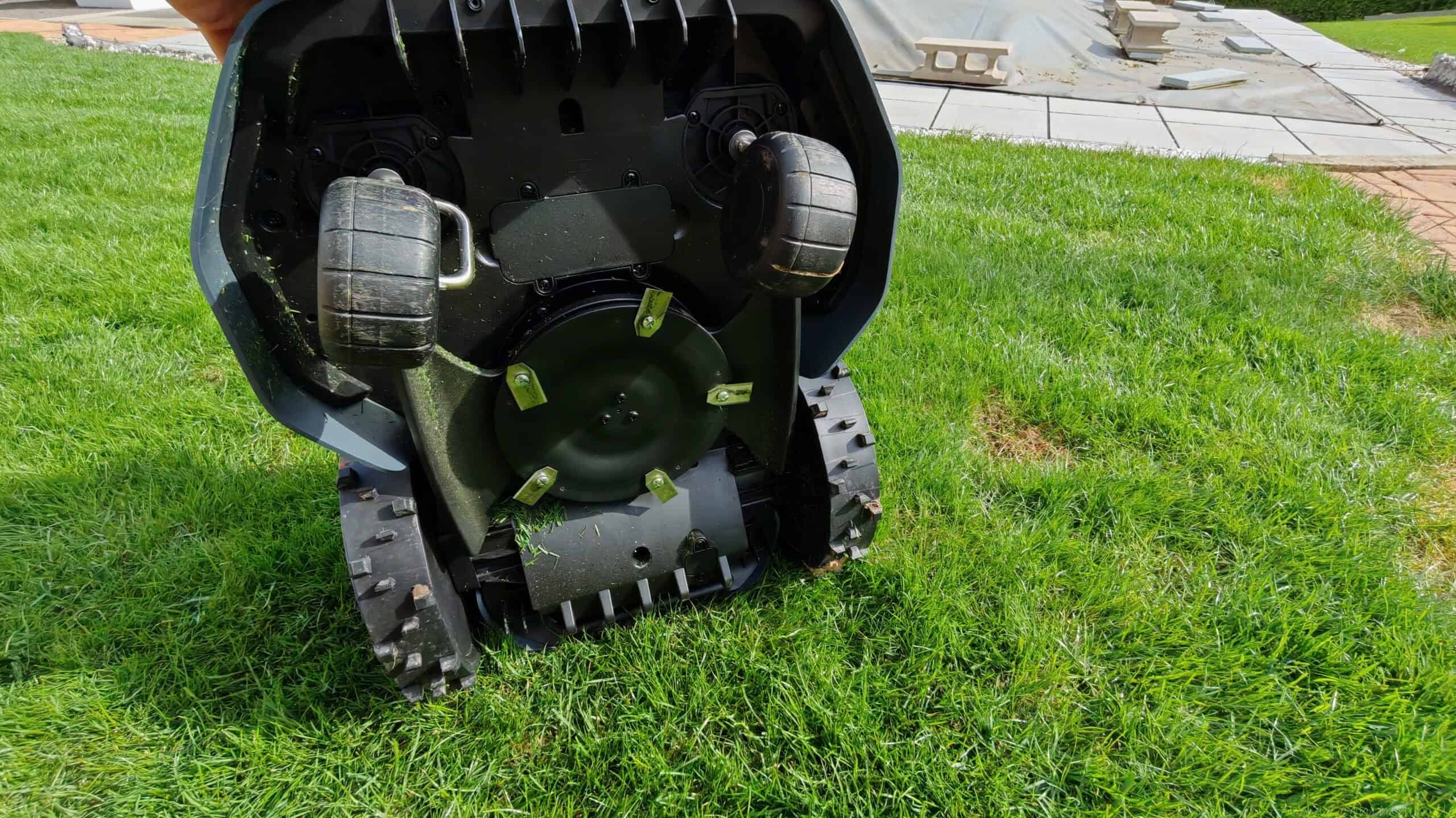
The workmanship of both robotic lawnmowers is good and designed for everyday use. The housing, wheels and mechanics appear stable, which is particularly important as the robot is regularly out and about in the garden and is exposed to different conditions.
Scope of delivery at a glance and classification
The scope of delivery for both models is functionally designed and contains everything you need for commissioning. The differences are mainly due to the respective navigation technology.
ANTHBOT M5 (LiDAR model)
- Robot mower
The central device takes care of mowing, navigation and obstacle detection in the garden. - Charging station
The charging station is the starting and return point. This is where the mapping starts and where the robotic lawnmower automatically docks again after mowing. Correct positioning is important for reliable navigation. - Power supply unit
Supplies the charging station with power. The placement should be as protected as possible to ensure stable operation in the long term. - Spare blades
The 5-blade disc ensures a clean cut. Replacement blades are necessary to maintain good cutting performance. - Operating instructions
Contains the most important steps for setting up, mapping and using the robotic lawnmower without a boundary wire.
The M5 does not require any additional hardware such as RTK antennas or boundary wires. This makes installation particularly easy and underlines the focus on a wire-free system.
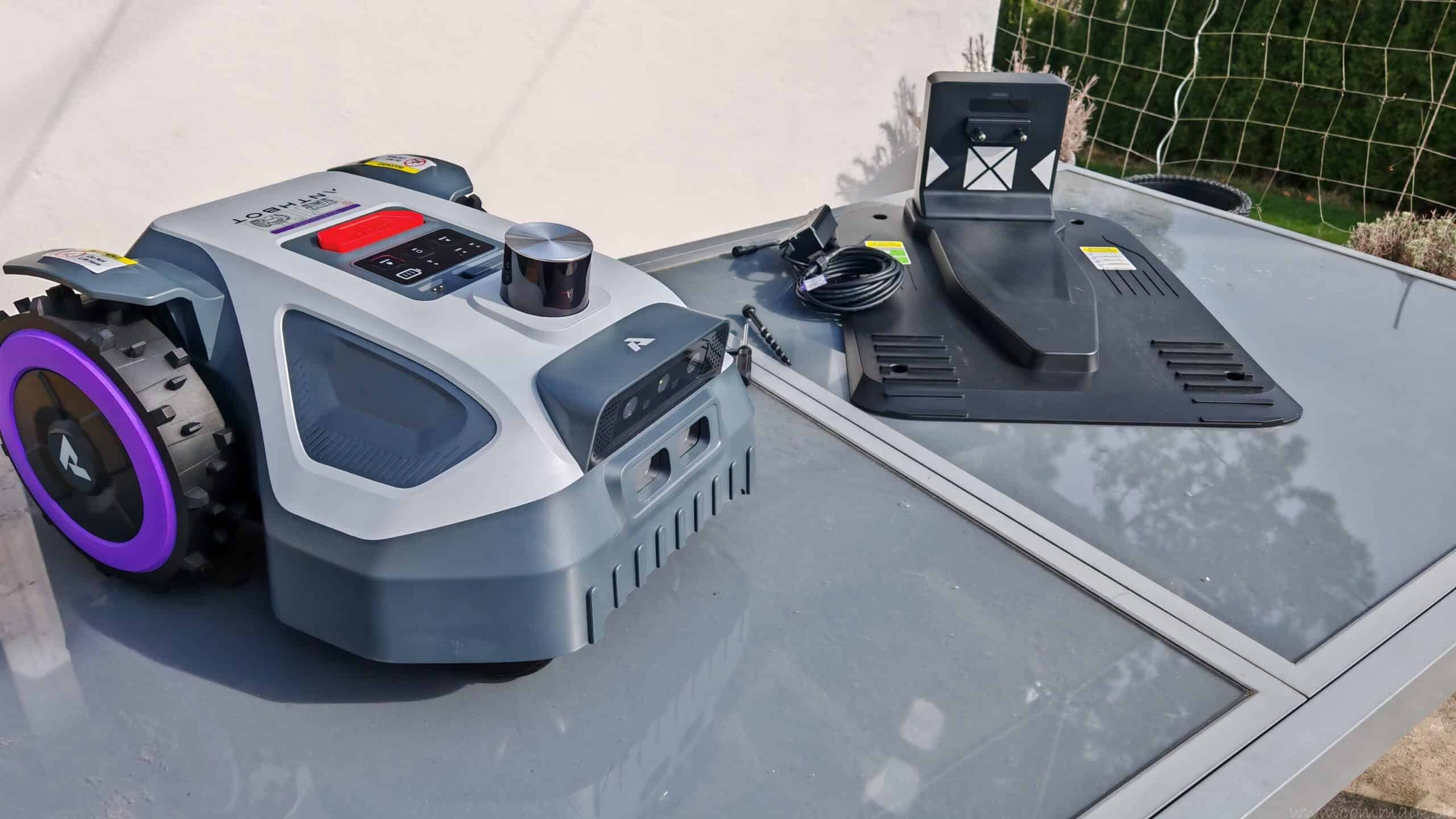
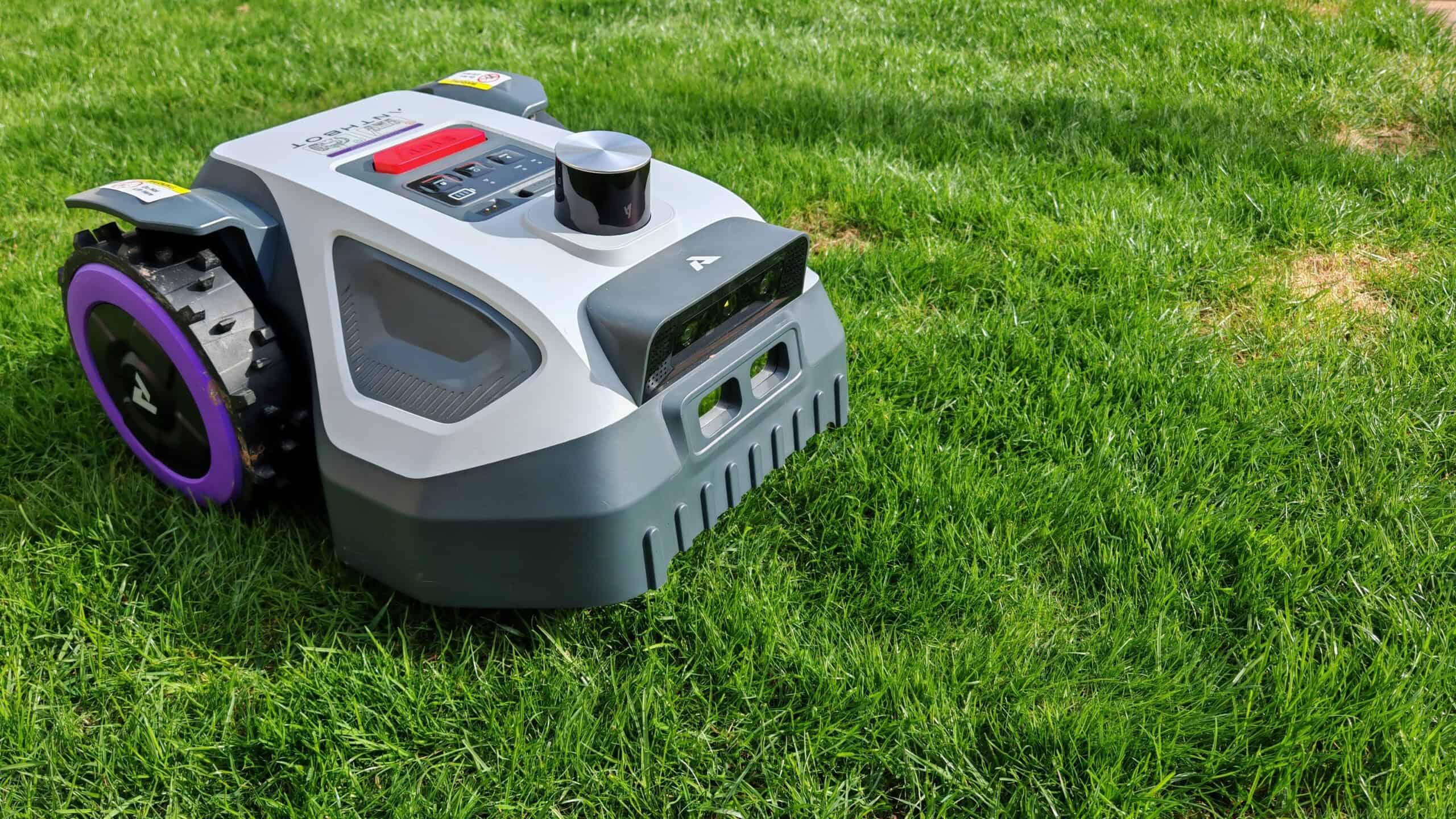
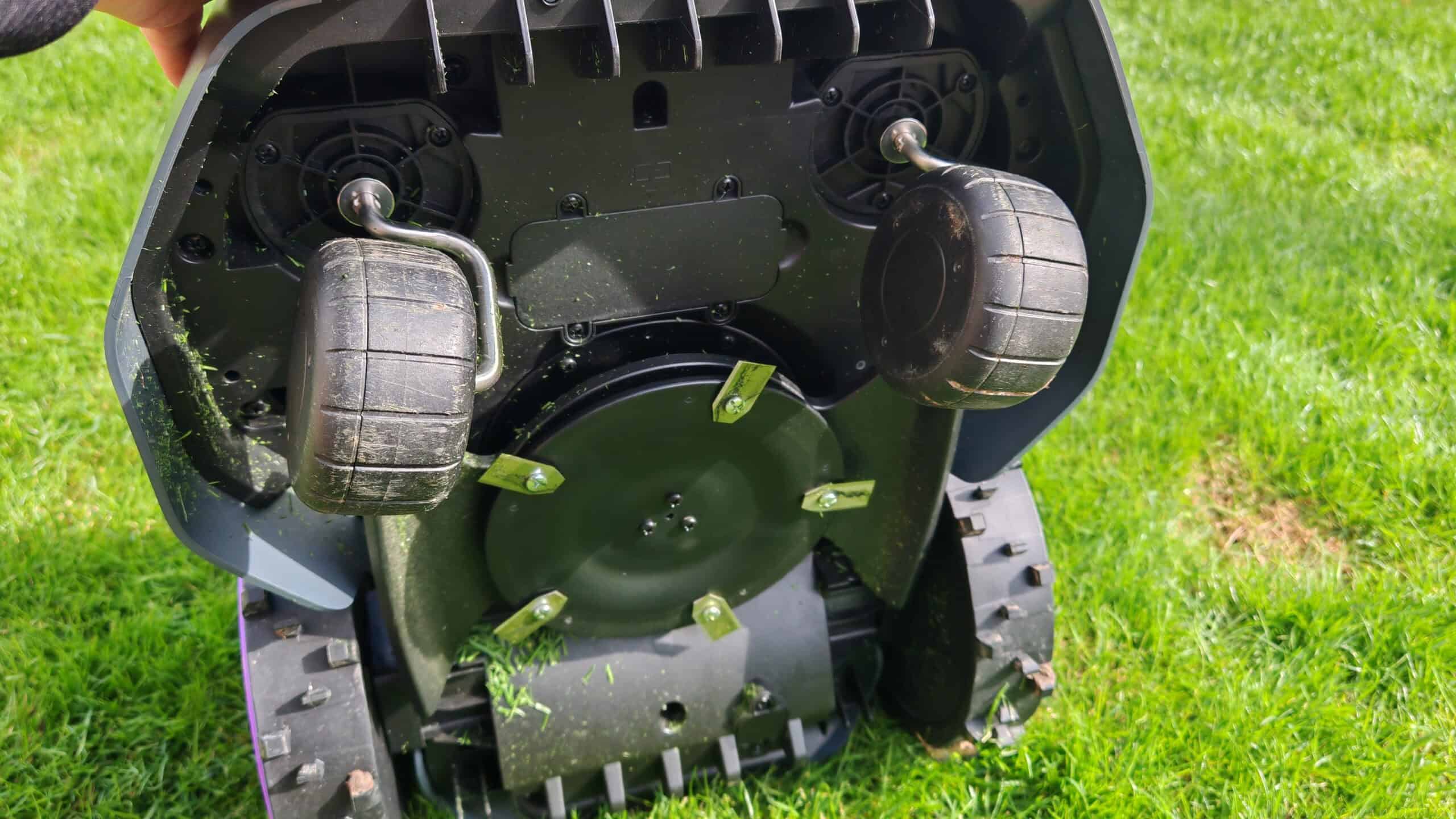
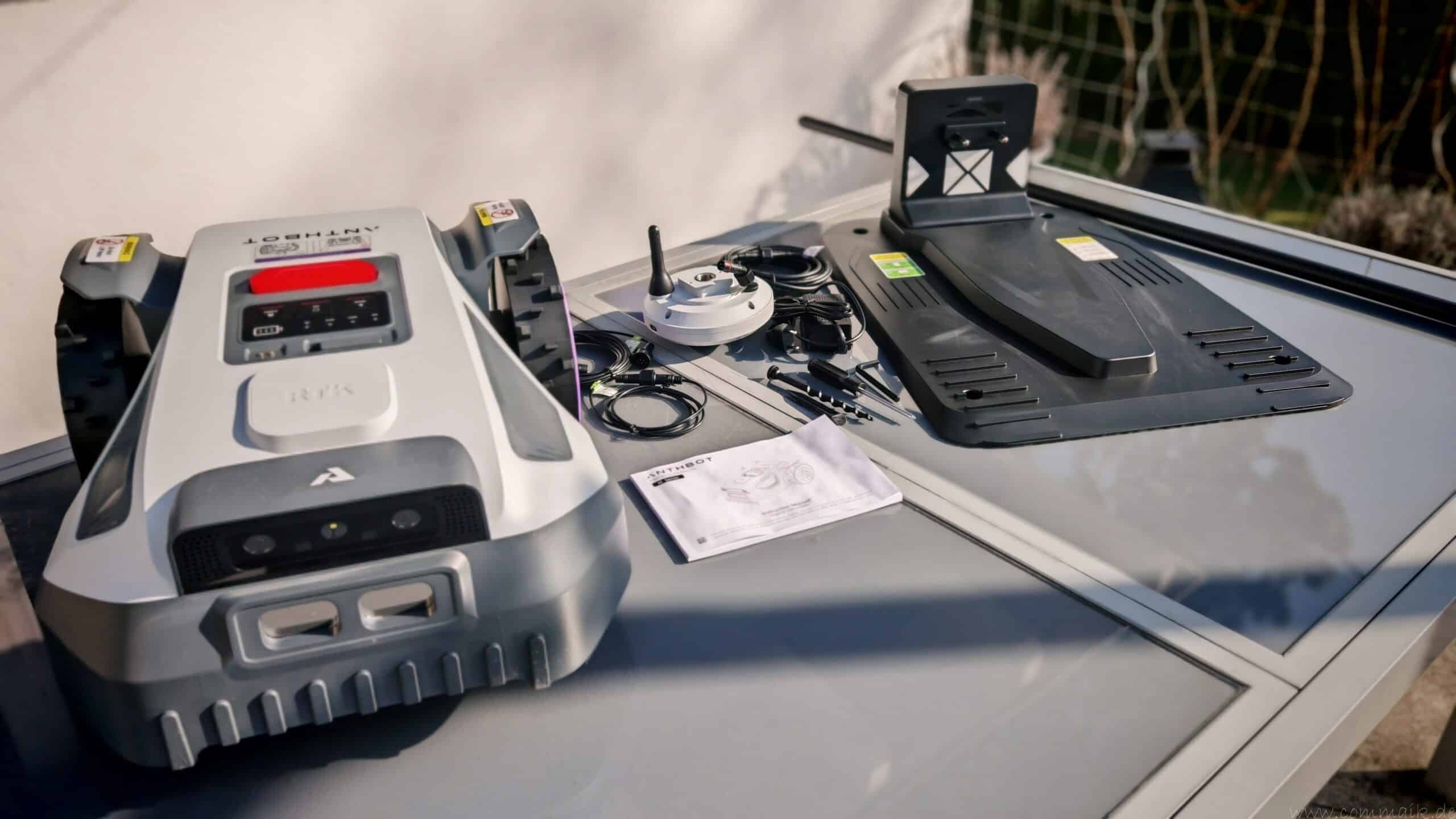
ANTHBOT M9 (RTK model)
- Robot mower
The device mows larger lawns and uses RTK and GPS for navigation. - Charging station
Here too, the charging station is the central point for starting, returning and mapping. It is important to have a clear area in front of the station so that the robotic lawnmower can work reliably. - RTK antenna
The RTK antenna is crucial for navigation, especially on the new models without boundary wire. It receives satellite signals and enables very precise positioning. Correct positioning with a clear view of the sky is particularly important here. - Mounting material
Is required to securely fasten the RTK antenna. Depending on the garden, installation can be flexible. - Power supply unit
Supplies the components with power and ensures continuous operation.
The biggest difference to the M5 is the additional RTK hardware. This makes the setup somewhat more complex, but offers advantages when navigating large, open areas.
Classification in comparison
A direct comparison reveals a clear difference in the concept:
The M5 relies on a simple setup without wires and additional components.
The M9 has more technology and is designed for maximum precision.
Both approaches work well, but differ significantly in terms of installation and area of application.
Technical data of the models in comparison
The technical data already shows very clearly the area of application for which the respective robotic lawnmowers are designed. The decisive factor here is not just the individual value, but how the area, navigation and equipment affect your own garden.
ANTHBOT M5 (LiDAR model)
- Recommended mowing area: up to 500 m²
- Navigation: 360° LiDAR + camera
- Multi-zones: up to 20 zones
- Gradient: up to 45 %
- Battery: 2.5 Ah / 45 Wh
The ANTHBOT M5 is designed for small to medium-sized lawns. The maximum area of 500 m² is well suited to classic domestic gardens, where there are often obstacles such as flower beds, paths or garden furniture.
LiDAR-based navigation ensures that the robotic lawnmower actively scans its surroundings and orients itself to fixed structures. In practice, this means very reliable navigation even in shadows, trees or buildings.
With up to 20 zones, the garden can be flexibly structured, which is particularly advantageous for new robotic lawnmowers without a boundary wire. This is particularly helpful for separate lawns or when specific areas need to be mowed.
The gradient of up to 45% shows that the mower can also cope well with more challenging terrain. The battery is dimensioned to match the size of the area and ensures efficient operation.
ANTHBOT M5 in test – LiDAR robotic lawnmower without boundary wire (video)
In the following video I show the ANTHBOT M5 in a detailed practical test. This covers the entire process from setting up to the first mowing in the garden.
I show how quickly the robotic lawnmower is ready to go without a boundary wire, how the LiDAR navigation works and how well the model performs in a winding garden with obstacles. I also discuss obstacle detection with the camera, mapping and the sectional view in everyday life.
The video complements this article perfectly, as it shows all the functions of the M5 in real use.

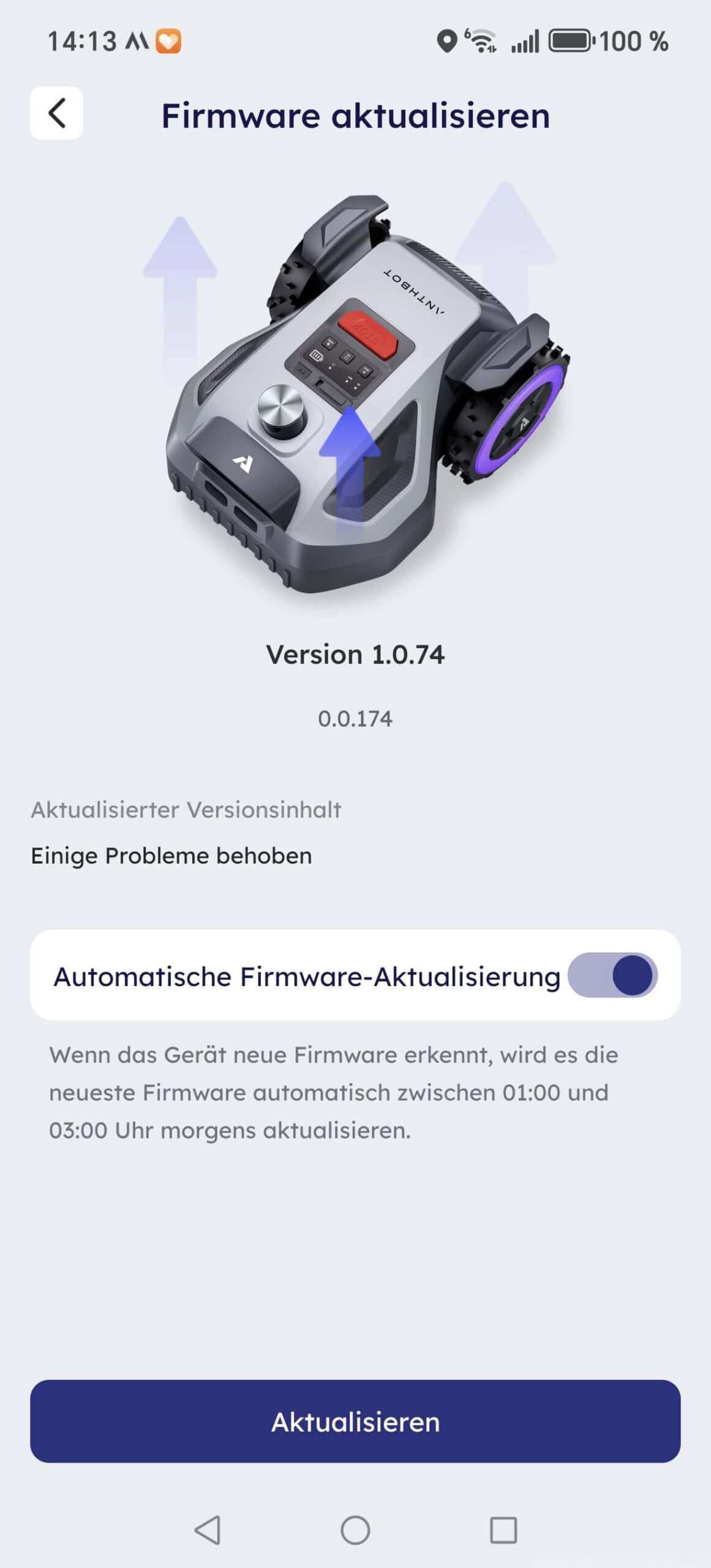
- [Präzise NetRTK & Dual-Kamera-Navigation] 155 Satelliten und HDR-Dual-Vision garantieren maximale Signalstabilität. Als kabelloser Mähroboter ohne Begrenzungsdraht bietet der M5 eine 5x schnellere Verbindung und 1,5x höhere Stabilität. Bei schwachem GPS-Signal (z. B. unter Bäumen) übernimmt die Dual-Vision die Zentimeterpräzision. NetRTK-Unterstützung inklusive, mit 3 Monaten 4G-Service.
- [Installation ohne Kabel in 10 Minuten] Schluss mit mühsamer Drahtverlegung und Erdarbeiten: Der ANTHBOT M5 ist in nur ca. 10 Minuten startklar. Dieser mähroboter mit gps bietet zwei flexible Kartierungsmodi direkt über die App: Wählen Sie die volle Automatik oder steuern Sie den Mäher im RC-Modus präzise wie ein ferngesteuertes Auto. So erledigen Sie das Setup intuitiv und gewinnen wertvolle Freizeit.
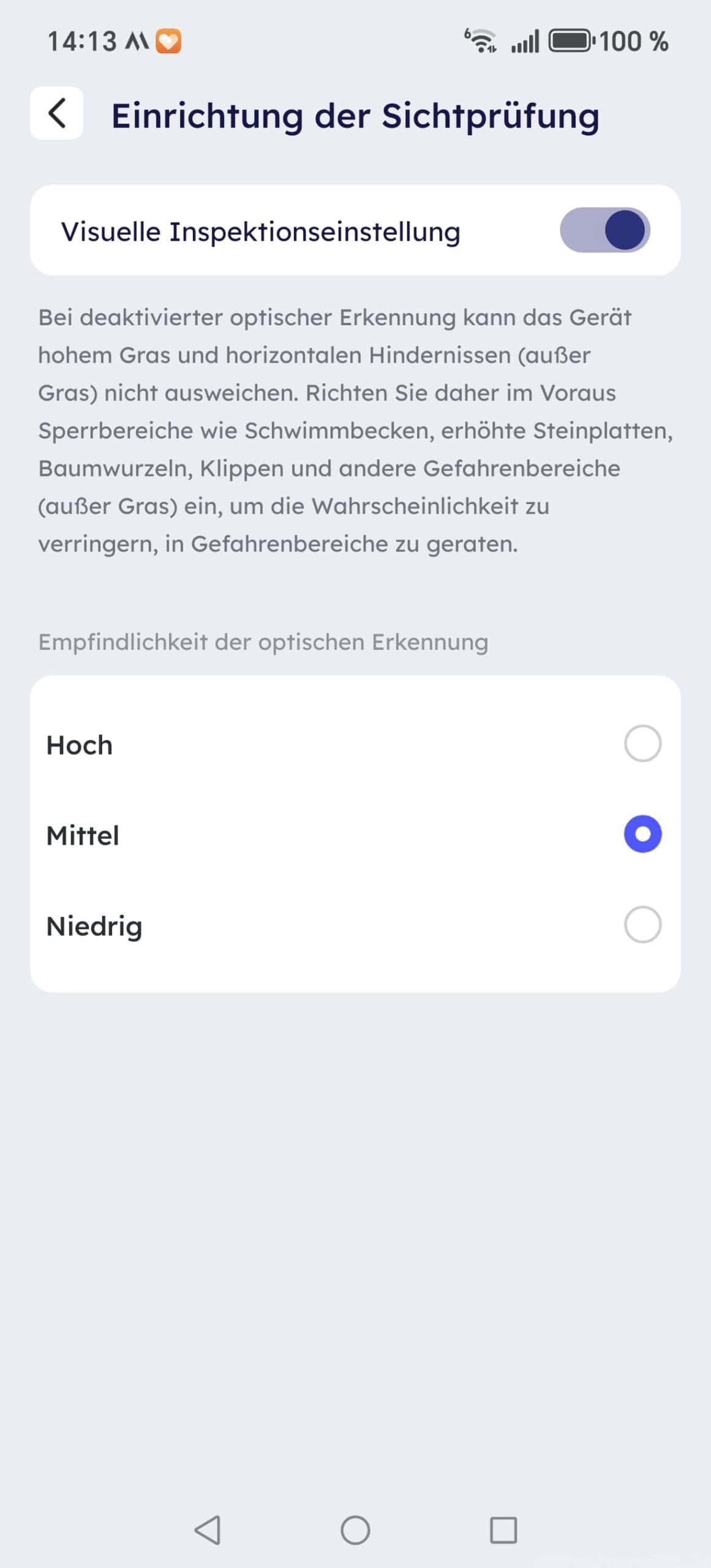
- [KI-Hinderniserkennung & Tierschutz] Sicherheit an erster Stelle: Dank 150° Ultraweitwinkel-KI erkennt der M5 über 1.000 Objekttypen. Dieser intelligente rasenmähroboter schützt nicht nur Gartenmöbel, sondern erkennt durch Algorithmen auch Haustiere und Igel. Dies garantiert ein tierfreundliches Mähen und bietet maximalen Schutz für Ihre Familie und die lokale Fauna.
- [Starke Performance & 45% Steigfähigkeit] Der ANTHBOT M5 vereint eine 20 cm Schnittbreite mit einem kraftvollen bürstenlosen Motor (80-150 m²/h). Dieser mähroboter ohne begrenzungskabel bewältigt Steigungen bis 45% (24°) souverän. Die intelligente Kombination aus U-Pfad-Planung und Kantenmähfunktion sorgt für saubere Rasenkanten und ein lückenloses Ergebnis. Schnitthöhe (3-7 cm) per App einstellbar.
- [Kompakt gebaut – Flexibel in Ihrem Garten] Mit nur ca. 50 x 39 cm ist der ANTHBOT M5 ein echtes Raumwunder, ideal für Grundstücke um die 600 m². Dieser rasenroboter ohne begrenzungskabel navigiert mühelos durch 65 cm schmale Passagen und erreicht jede verwinkelte Ecke. 1Nach der Arbeit lässt er sich platzsparend verstauen – die perfekte Lösung für Ihren Garten.
- [Intelligente Planung & Wettersensoren] Der M5 agiert als smarter Garten-Manager: Er optimiert Mähpläne automatisch basierend auf Sonnenaufgang, Sonnenuntergang und Regensensordaten. Dieser rasenroboter ohne begrenzungskabel arbeitet völlig autonom und sorgt dafür, dass Ihr Rasen nur bei idealem Wetter gepflegt wird – für ein perfektes Ergebnis ganz ohne Ihr Zutun.
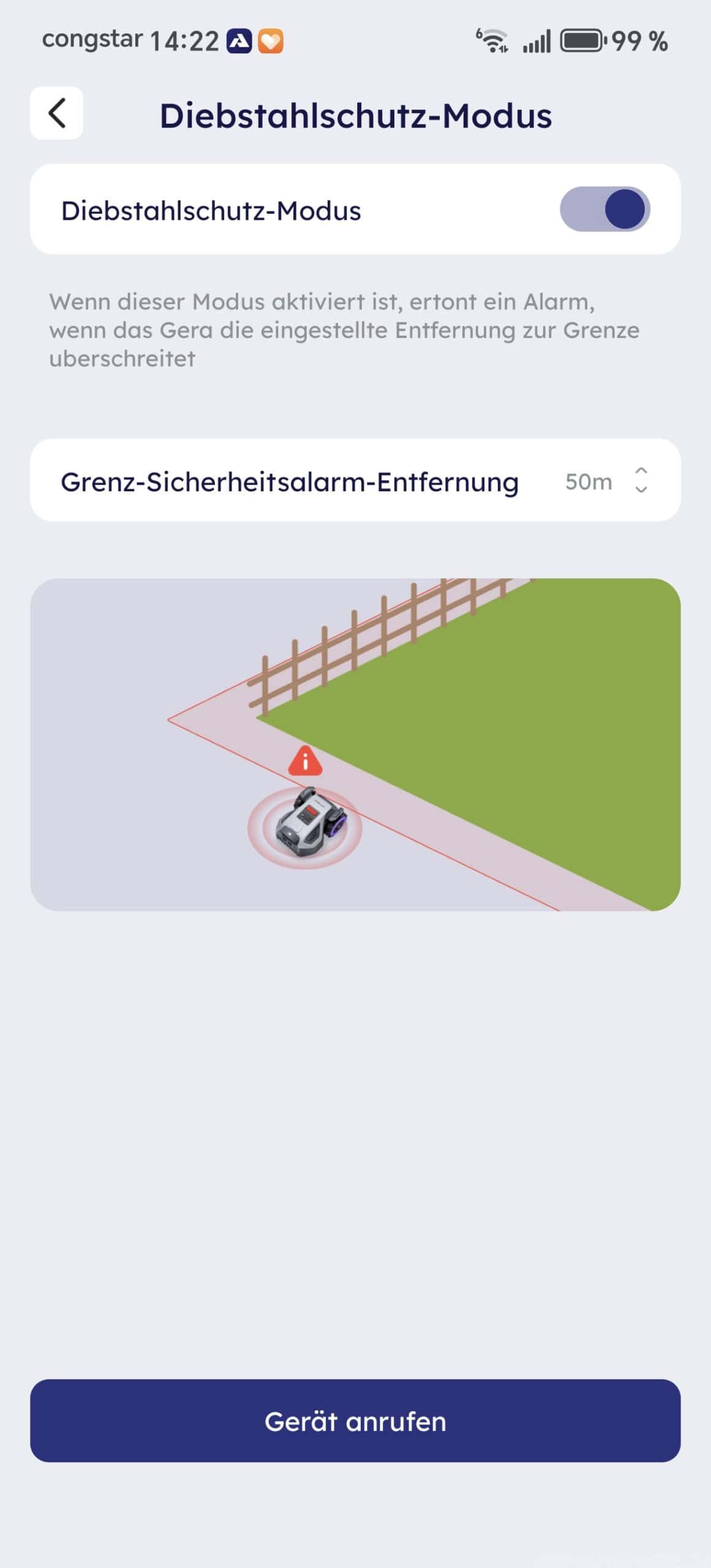
- [IPX6 Wasserfest, Leise & Sicher] Genießen Sie Ihre Freizeit: Der mähroboter ohne begrenzungskabel arbeitet mit unter 58 dB dezent im Hintergrund. Der M5 ist IPX6 wasserfest, gegen Diebstahl gesichert und per Knopfdruck sofort stoppbar. Durch OTA-Updates erhält Ihr Roboter regelmäßig neue Software-Features für ein erstklassiges Mäherlebnis.
ANTHBOT M9 (RTK model)
- Recommended mowing area: up to 1000 m²
- Navigation: RTK + GPS + camera
- Multi-zones: up to 30 zones
- Gradient: up to 45 %
- Battery: 5 Ah / 90 Wh
The ANTHBOT M9 is designed for larger lawns. With up to 1000 m², this model is aimed at gardens with a large area and the best possible visibility.
RTK- and GPS-based navigation enables very precise positioning. This results in clean, even mowing paths and high efficiency when mowing large areas.
With up to 30 zones, detailed control is also possible for more complex properties. This is a clear advantage, especially for larger gardens with several areas.
The larger battery ensures longer running times and is necessary to reliably cover the larger area.
Common technical basis
- Cutting width: 20 cm
- Cutting height: 30-70 mm
- Mowing system: 5-blade disk
- Protection class: IPX6
- Noise: ≤ 58 dB
Both models use the same basic mowing technique. The cutting width of 20 cm offers a good balance between area coverage and maneuverability, so that even narrower areas can be reached easily.
The adjustable cutting height allows flexible adaptation to different lawn conditions. This ensures an even and neat cut.
The 5-blade system cuts the lawn cleanly and finely so that the clippings can remain in the garden as mulch.
The IPX6 protection class enables easy cleaning with water, which is very practical in everyday life. The low noise level ensures that both robotic lawnmowers are pleasantly quiet even in residential areas.
ANTHBOT M9 in test – RTK robot mower with GPS and NetRTK (Video)
The second video focuses on the ANTHBOT M9. Here I show the setup including charging station and RTK antenna as well as the special features of RTK and GPS-based navigation.
An important component is the practical test in the garden. This makes it clear how the robotic lawnmower behaves on larger lawns and what influence factors such as trees or buildings have on the signal. The combination of dual RTK and NetRTK is particularly exciting, ensuring stable navigation even in difficult conditions.
The video provides a detailed insight into how it works and shows how the M9 performs in everyday use.

- 24° Steigung, mühelos durch Hanglagen: Der ANTHBOT M9 bewältigt Steigungen und ebene Flächen souverän. Der Doppelantrieb sorgt für zuverlässige Traktion – ideal für kleine und mittelgroße Gärten mit unterschiedlichen Geländeformen. So bleibt Ihnen das mühsame manuelle Rasenmähen an heißen Sommertagen erspart und mehr Zeit für entspannte Wochenenden.
- NetRTK + KI Vision für präzises Mähen und sichere Navigation: Die Dual-Kamera kombiniert sich mit NetRTK für zentimetergenaue Positionierung. 22 Frequenzbänder und bis zu 155 Satelliten ermöglichen präzise Mähbahnen mit weniger Auslassungen und Doppelmähen – auch unter Bäumen oder entlang von Wänden. Der mitgelieferte RTK-Signalverstärker unterstützt den Mähroboter und sichert auch in komplexen Szenarien starke Leistung.
- Automatisches Weiterfahren, effizient und mühelos:Der Mähroboter kehrt bei niedrigem Akkustand automatisch zur Ladestation zurück und setzt den Mähvorgang nach dem Laden präzise an der letzten Position fort. Dank des 5-Ah-Akkus mäht der Rasenroboter selbstständig weiter – ohne Tragen, manuellen Neustart oder Eingreifen. Einmal starten und entspannt zurücklehnen – für einen gepflegten Rasen ohne Aufwand.
- Schluss mit dem Schieben – leise Rasenpflege mit ≤58 dB: Der Mähroboter ohne Begrenzungskabel arbeitet angenehm leise und ermöglicht die Rasenpflege am frühen Morgen oder Abend, ohne Nachbarn oder Haustiere unnötig zu stören. Kein Tanken, kein Seilzugstart und kein Benzingeruch. So sparen Sie Zeit und Aufwand bei der Rasenpflege und genießen mit dem intelligenten Rasenroboter einen gepflegten Rasen – ganz entspannt.
- Smarte App-Steuerung für den gesamten Rasen: Der Mähroboter erstellt beim ersten Einsatz automatisch eine Karte – ohne Ausmessen oder Begrenzungskabel. Per App lassen sich No-Go-Zonen, mehrere Mähbereiche und individuelle Mähzeiten festlegen. Die Schnitthöhe ist in 9 Stufen von 3–7 cm werkzeuglos einstellbar. Bluetooth, WLAN und 4G ermöglichen die Fernsteuerung. OTA-Updates halten das System aktuell.
- Breite Schnittfläche, effizientes Mähen, saubere Kanten: 5 scharfe Messer und eine 200 mm breite Schnittfläche sorgen für eine effiziente Rasenpflege. Die U-förmige Routenplanung optimiert die Mähbahnen, deckt pro Durchgang mehr Fläche ab und reduziert unnötige Wiederholungen. Der leistungsstarke bürstenlose Motor liefert eine konstante Kraft für einen gleichmäßigen Schnitt und schont den Rasen – für ein sauberes Ergebnis ohne ausgefranste Halme.
- Von Millionen Familien weltweit vertraut – vielfach ausgezeichnet: Über 100.000 verkaufte Einheiten in 50+ Ländern stehen für bewährte Qualität. Auf der CES 2026 erhielt ANTHBOT Empfehlungen renommierter Medien und den ADGE21 Innovation Award. Unterstützt von Europameister und Fußballstar Marc ter Stegen – vier starke Vertrauensbeweise für ANTHBOT.
- Lieferumfang & Support: Im Lieferumfang enthalten sind 1× ANTHBOT M9 Mähroboter, 1× Ladestation, 1× 5er-Set Ersatzmesser und 1× RTK-Signalverstärker.
Robot mowers in the test – differences in detail (video)
In my video, I show both models in direct comparison in my own garden. This clearly shows how the differences in navigation, obstacle detection and mowing results affect everyday life.
The video ideally complements the technical data, as all functions can be seen here in real use.
Zuletzt aktualisiert am 15. October 2026 um 05:21 . Ich weise darauf hin, dass sich hier angezeigte Preise inzwischen geändert haben können. Alle Angaben ohne Gewähr. (*) Bei den verwendeten Produktlinks handelt es sich um Affiliate Links. Ich bin nicht der Verkäufer des Produktes. Als Amazon-Partner verdiene ich an qualifizierten Verkäufen. Dein Preis ändert sich jedoch nicht.


Comparison table: ANTHBOT M5 vs M9
| ANTHBOT M5 (LiDAR) | ANTHBOT M9 (RTK) |
|---|---|
| Designed for lawns up to approx. 500 m² | Designed for larger areas up to approx. 1000 m² |
| 360° LiDAR navigation with camera | RTK + GPS navigation with camera |
| Works independently of satellite signals | Requires stable GPS/RTK connection |
| Particularly suitable for winding gardens | Ideal for open, large areas |
| Up to 20 mowing zones possible | Up to 30 mowing zones possible |
| Compact design for confined areas | Larger model for higher area coverage |
| Quick setup without additional hardware | Setup with RTK antenna required |
| Very good with obstacles and shadows | Very precise navigation with a clear view |
This comparison clearly shows that both robotic lawnmowers without a boundary wire have different strengths. In the end, the decisive factor is always your own garden and your navigation requirements.
Navigation in detail: RTK vs LiDAR for robotic lawnmowers without boundary wire
Navigation is the key difference between the two models. While classic robotic lawn mowers work with boundary wires, modern devices such as the ANTHBOT M5 and M9 rely on completely cordless systems. Two fundamentally different technologies are used: RTK and LiDAR.
RTK navigation – precise positioning via GPS
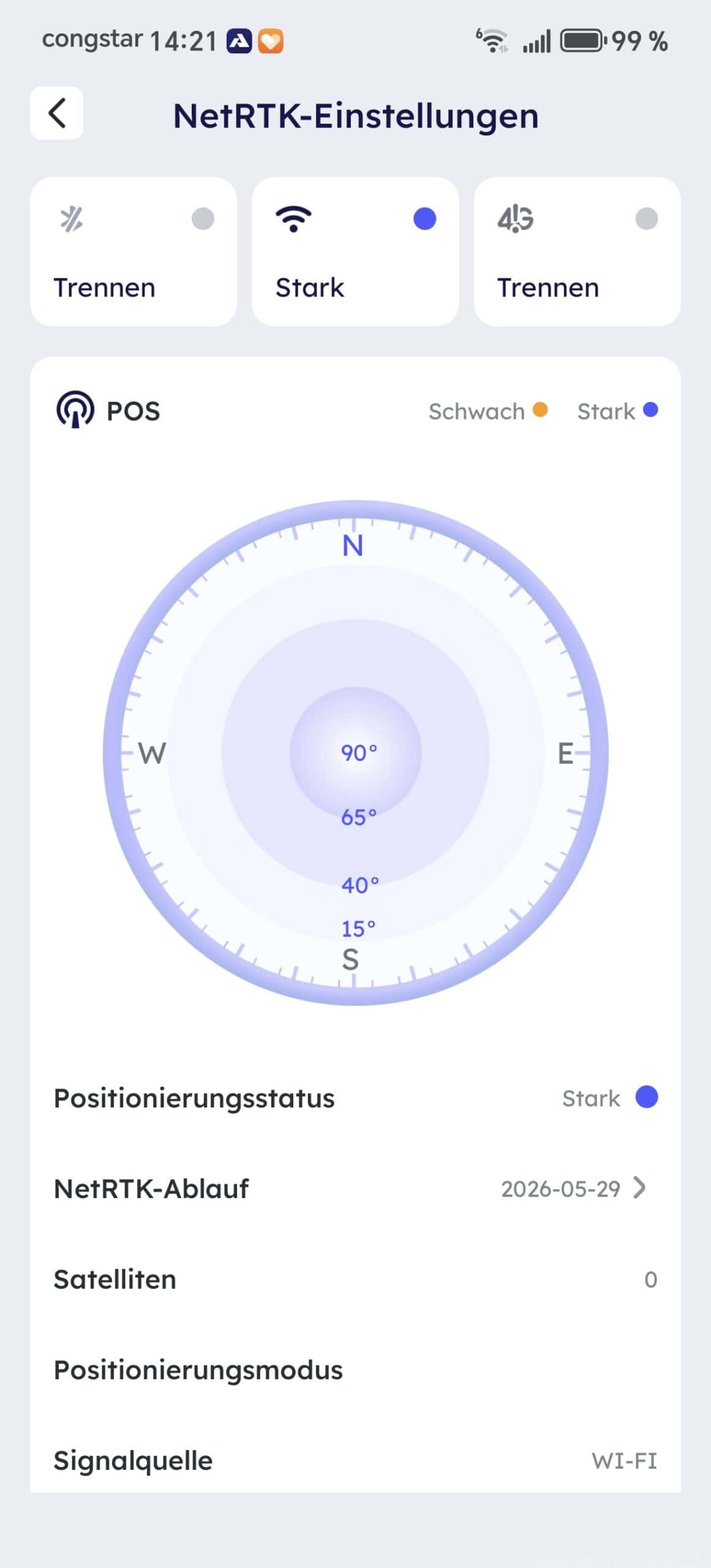
RTK stands for “Real Time Kinematic” and is based on satellite-based navigation. The robotic lawnmower receives signals from satellites and compares them with a reference station. This achieves a very high level of accuracy, ideally in the centimeter range.
In practical use, this means that the robotic lawnmower knows its position very precisely and therefore follows clean, parallel mowing paths. This is a clear advantage, especially on large, open lawns.
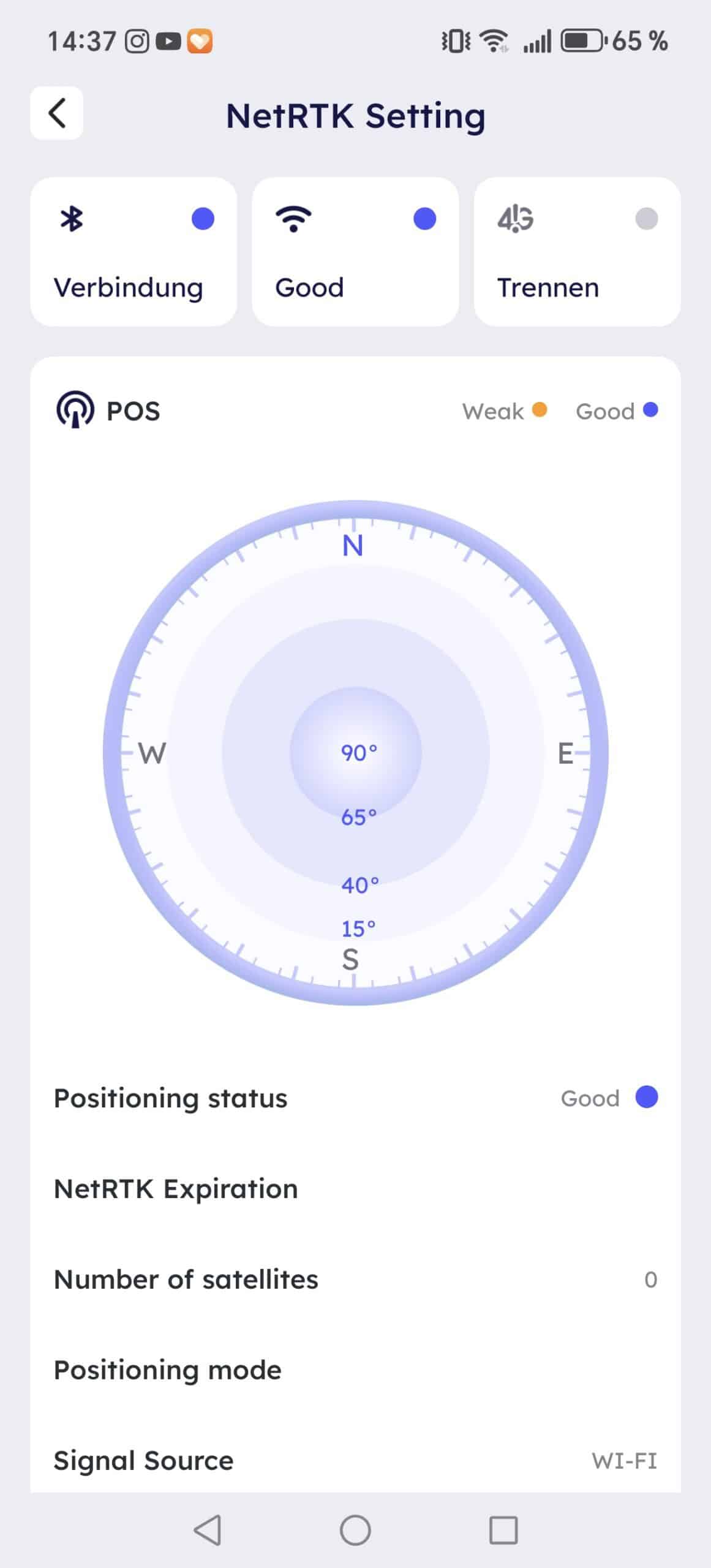
The M9 also uses a combination of dual RTK and NetRTK. This allows the robotic lawnmower to continue working even if the GPS signal is disturbed by trees or buildings. In this case, the correction data is provided via the mobile network.
Advantages of RTK:
- Very precise navigation on large surfaces
- Clean, systematic mowing paths
- High mowing efficiency
- Ideal for open gardens with few obstacles
Disadvantages of RTK:
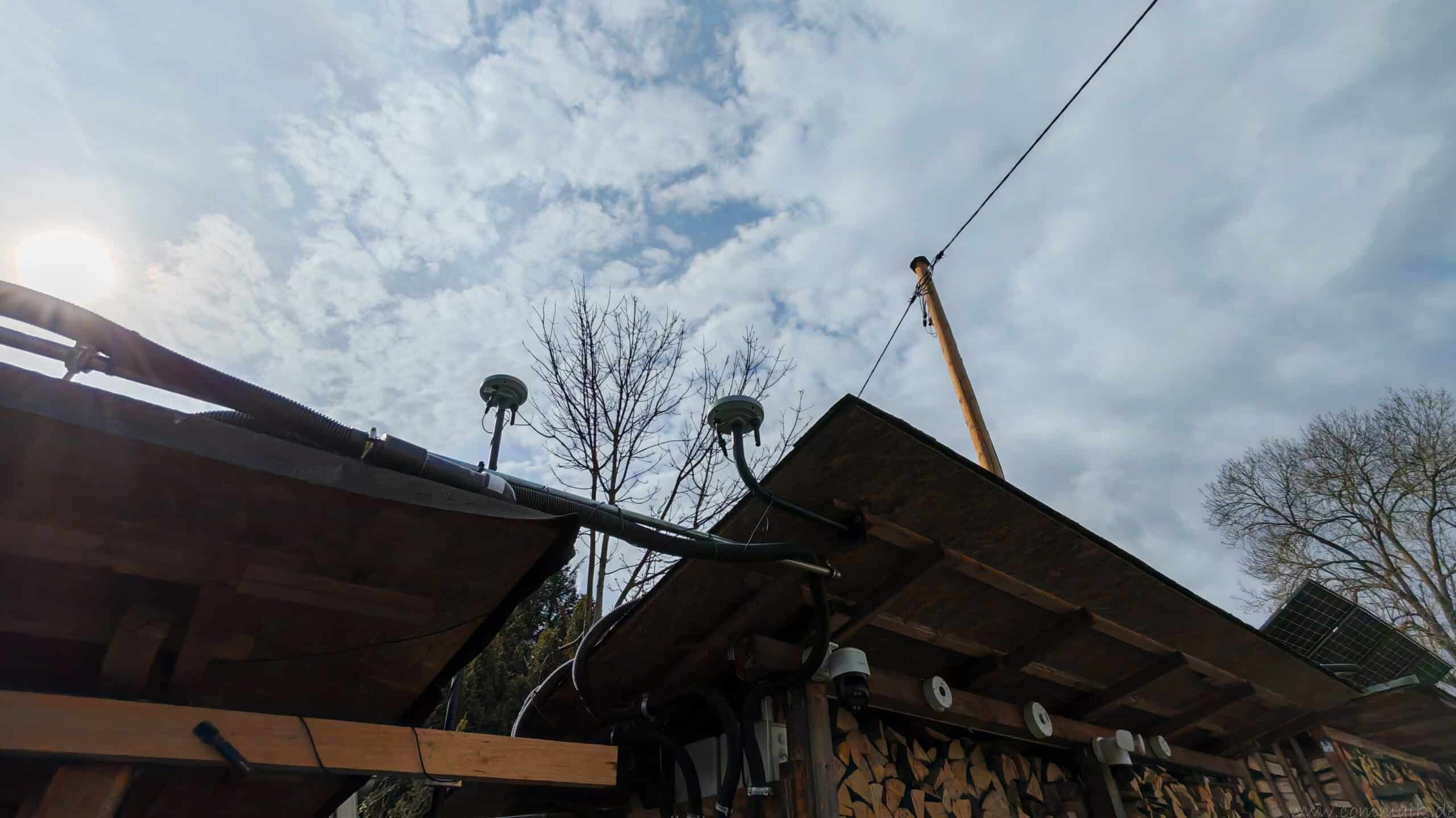
- Dependence on GPS signal and clear view of the sky
- More complex setup due to RTK antenna
- Signal can be influenced by trees or buildings
LiDAR navigation – orientation over the surroundings
The ANTHBOT M5 uses LiDAR. Here, the robotic lawnmower does not work with GPS, but with a rotating laser sensor that constantly scans the surroundings.
The robot creates a map of the garden and orients itself to fixed structures such as walls, beds or paths. The system is supplemented by a camera and sensors for obstacle detection.
In everyday use, this means that the robotic lawnmower works independently of the satellite signal and navigates reliably even in complex gardens.
Advantages of LiDAR:
- Independent of GPS or satellite signal
- Very stable in trees, shade and buildings
- Simple setup without additional hardware
- Well suited for winding gardens
Disadvantages of LiDAR:
- Less structured mowing pattern on large areas
- Orientation dependent on existing structures
- May lose precision with very open, uniform surfaces
Similarities between the two systems
Despite the different approaches, both technologies have clear similarities.
Both robotic lawnmowers:
- work completely without boundary wire
- create a digital map of the garden
- can be controlled via app
- use camera and sensors for obstacle detection
- support several zones in the garden
This shows that modern robotic lawnmowers without a boundary wire are basically similar in design. The main difference lies in the type of navigation.
Differences in direct comparison
The key difference lies in how the robotic lawnmower determines its position.
RTK works position-based via GPS.
LiDAR works environment-based via laser scans.
This results in different areas of application.
RTK shows its strength on large, open lawns where precise lines are important. LiDAR, on the other hand, is convincing in complex gardens with many obstacles where flexibility is crucial.
Classification from the practical test
The test in our own garden shows a clear picture.
The robotic lawnmower with LiDAR works particularly reliably in areas with many obstacles and changing light conditions. The robotic lawnmower recognizes its surroundings well and adapts its route accordingly.
The robot mower with RTK impresses with its high precision in open areas and a very clean cutting pattern. However, a stable GPS connection is required.
In the end, it’s not the technology alone that decides, but the garden. Both systems work well, but under different conditions.
Setup & commissioning without boundary wire
The set-up is one of the biggest differences between classic robotic lawnmowers with boundary wire and modern models without wire. Whereas in the past, a boundary wire had to be laid throughout the garden first, commissioning here is completely digital using an app and mapping.
The test shows clear differences between the two models – both in terms of effort and process.
M5 – quick start without wire
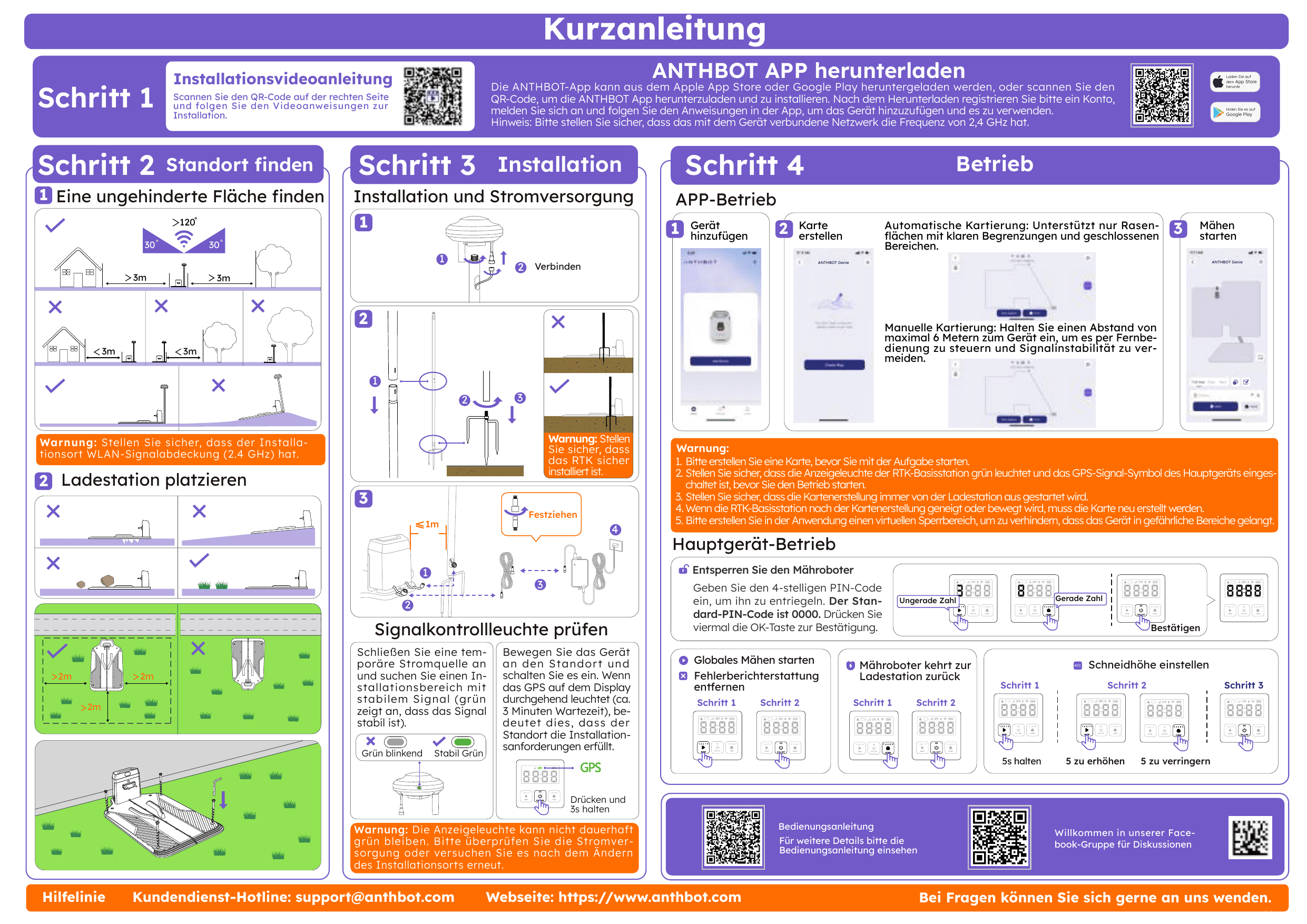
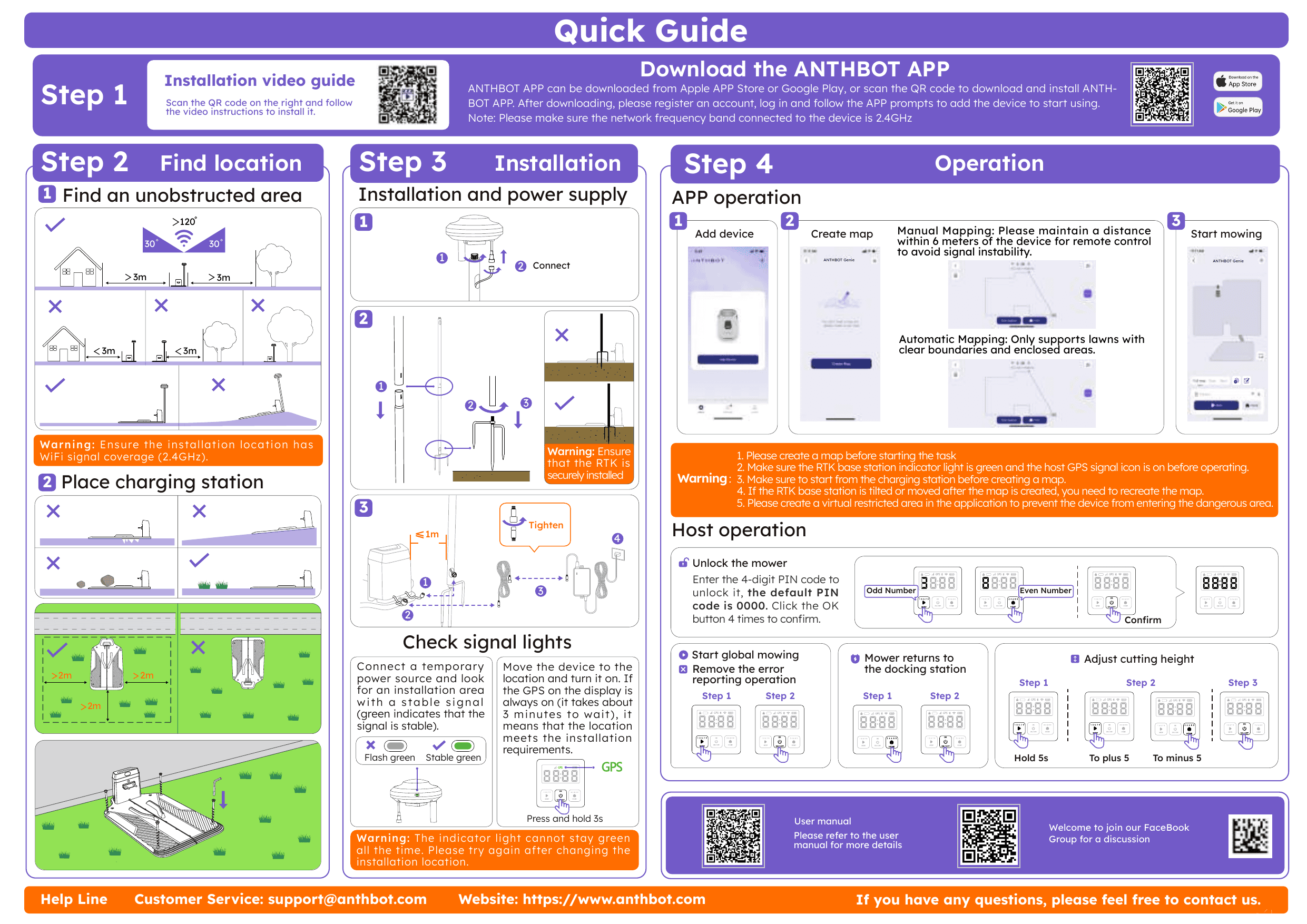
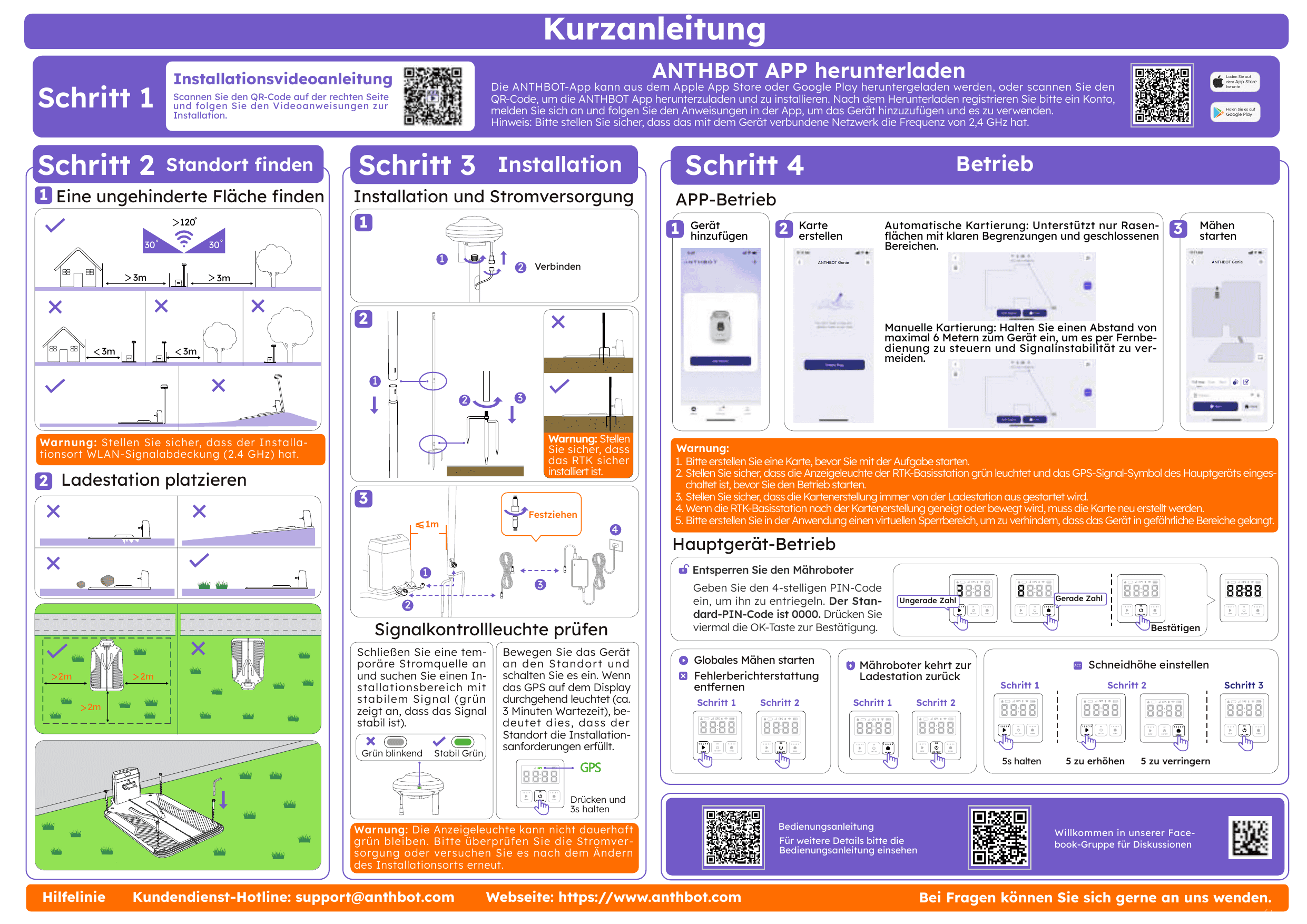
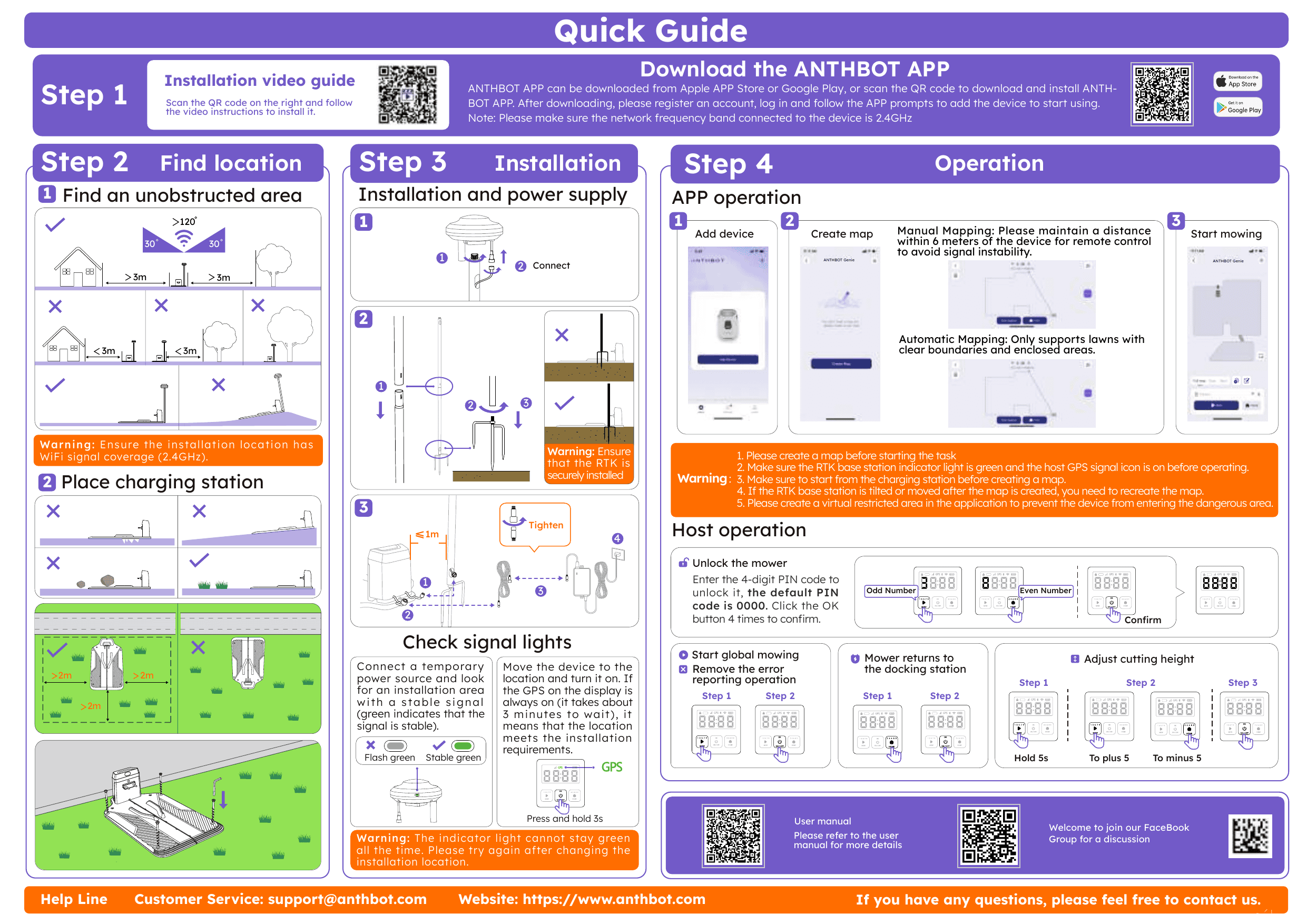
The ANTHBOT M5 is clearly designed to be as quick and easy to set up as possible. Once the charging station has been set up and connected to the power supply, the robotic lawnmower can be set up directly via the app.
It is important to note that the charging station does not necessarily have to be on the lawn. It can also be placed outside the lawn, for example on a patio or against a house wall. The only decisive factor is that the robotic lawnmower has free and unobstructed access to the station.
The next step is to start mapping the garden. The M5 uses its LiDAR navigation to independently detect the surroundings and create a map. Alternatively, the area can also be driven off manually.
In practice, the robotic lawnmower was ready for use after just a few minutes. There is no need for time-consuming preparation, as neither a boundary wire nor additional hardware is required.
Another advantage is evident in everyday life: changes in the garden can be flexibly adapted at any time without having to lay a new boundary wire.
Advantage: No wire, no boundary wire, no additional installation – the focus is clearly on a quick and uncomplicated start.
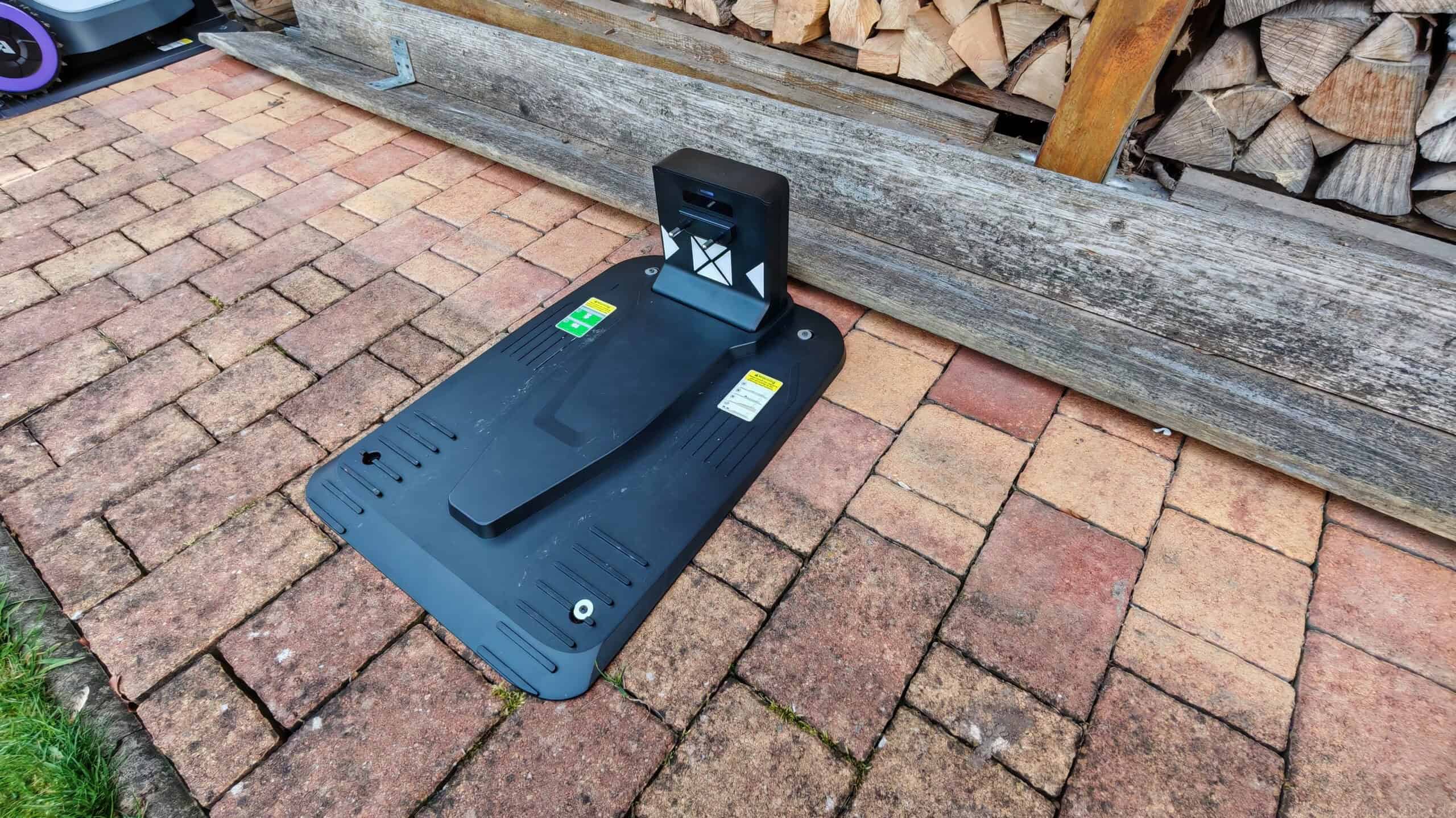
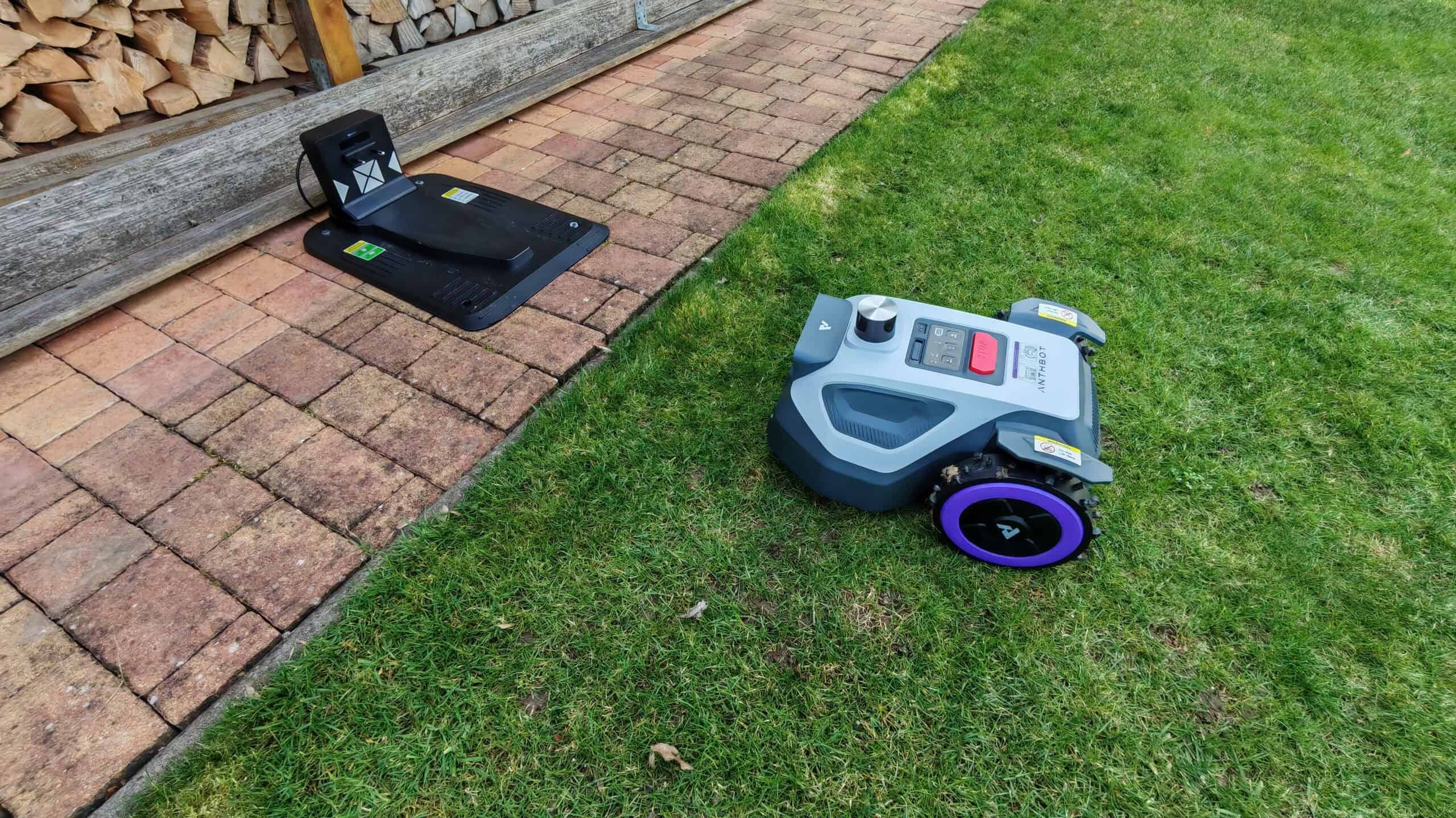
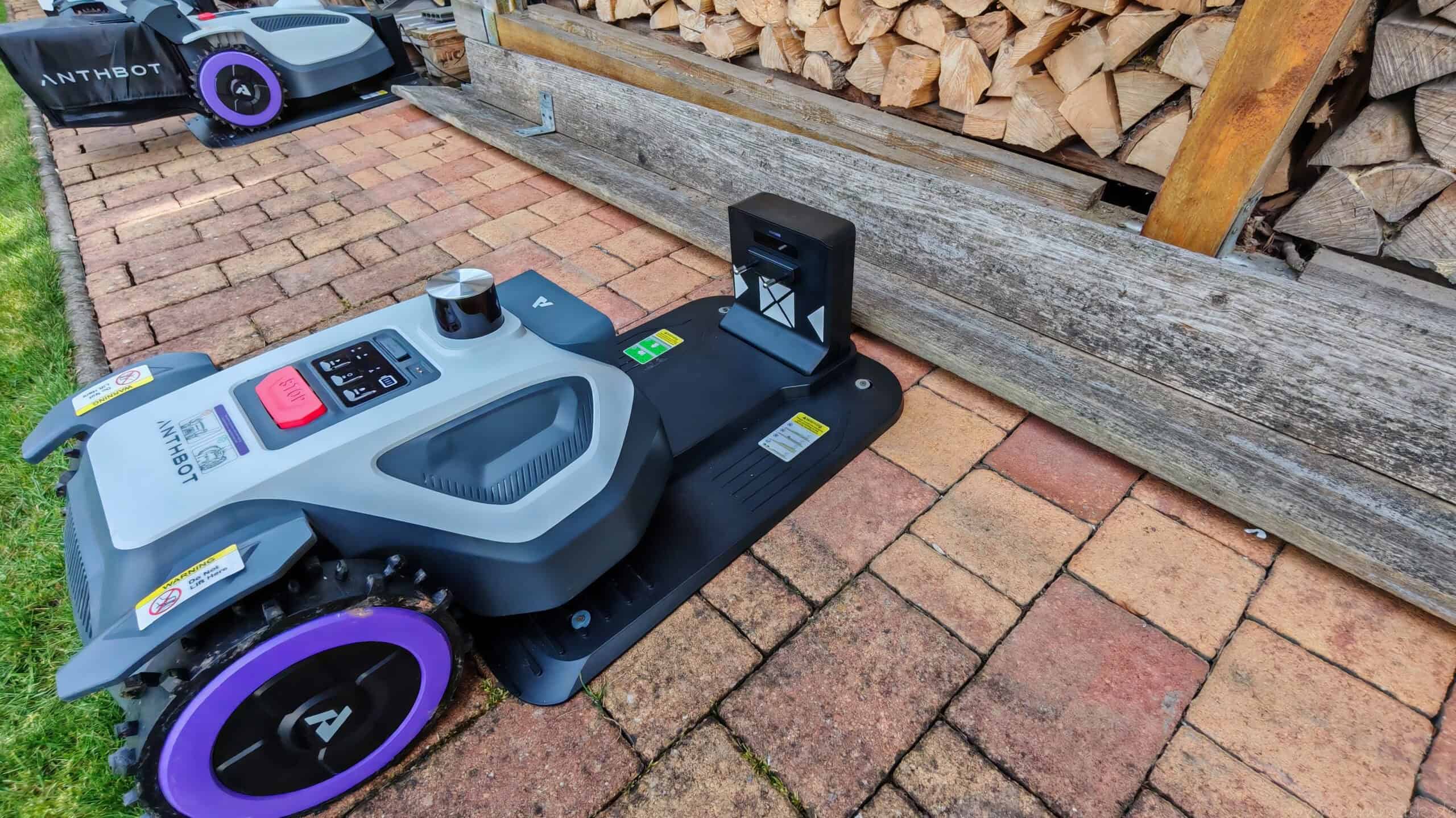
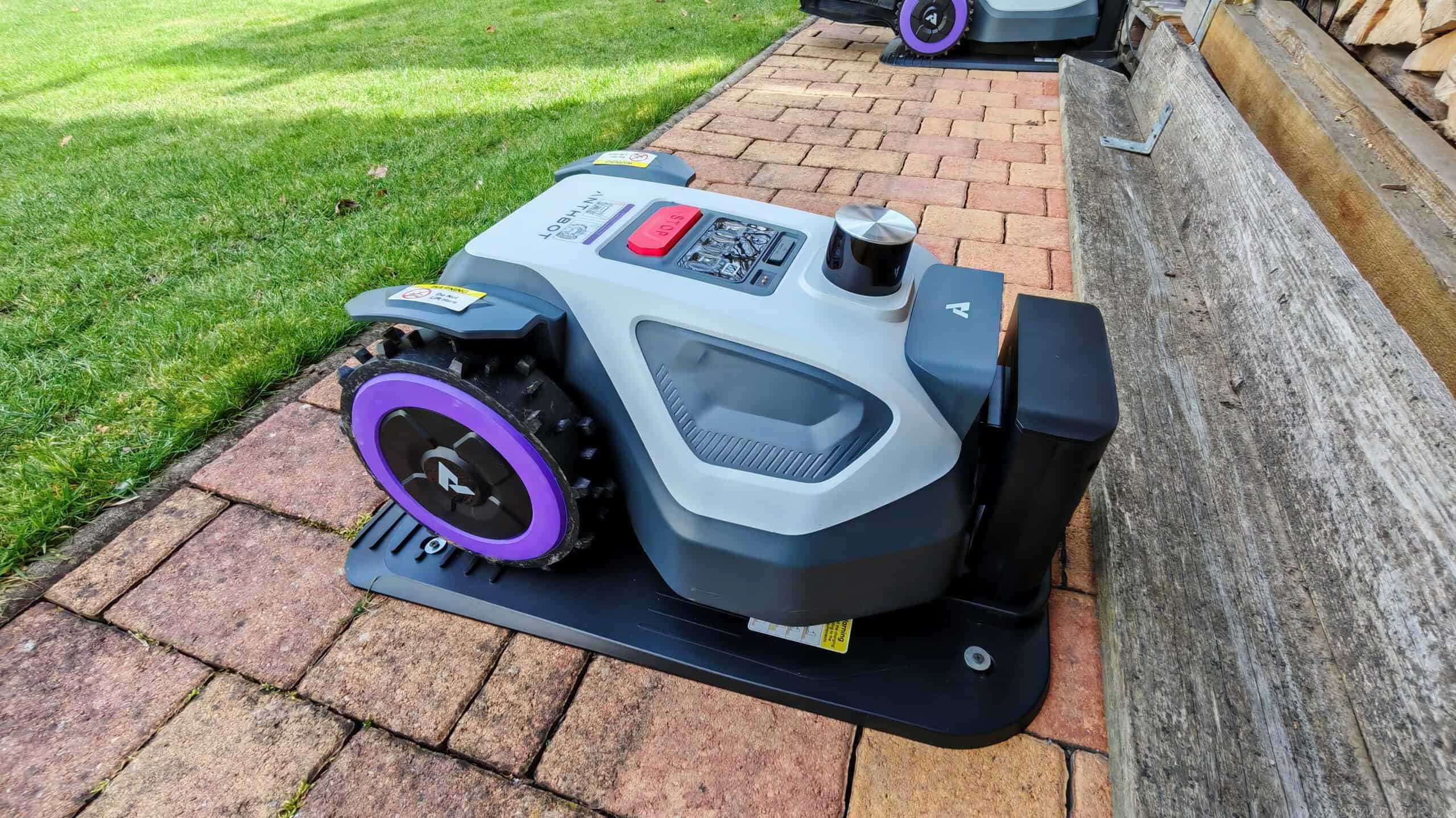
M9 – Setup with RTK and GPS
With the ANTHBOT M9, the setup is somewhat more extensive, as RTK technology is also used here.
First, the charging station is positioned in a suitable place. Here too, the station can easily be installed outside the lawn. All that is important is a clear area in front of the station and a clear access route so that the robotic lawnmower can reliably drive in and out.
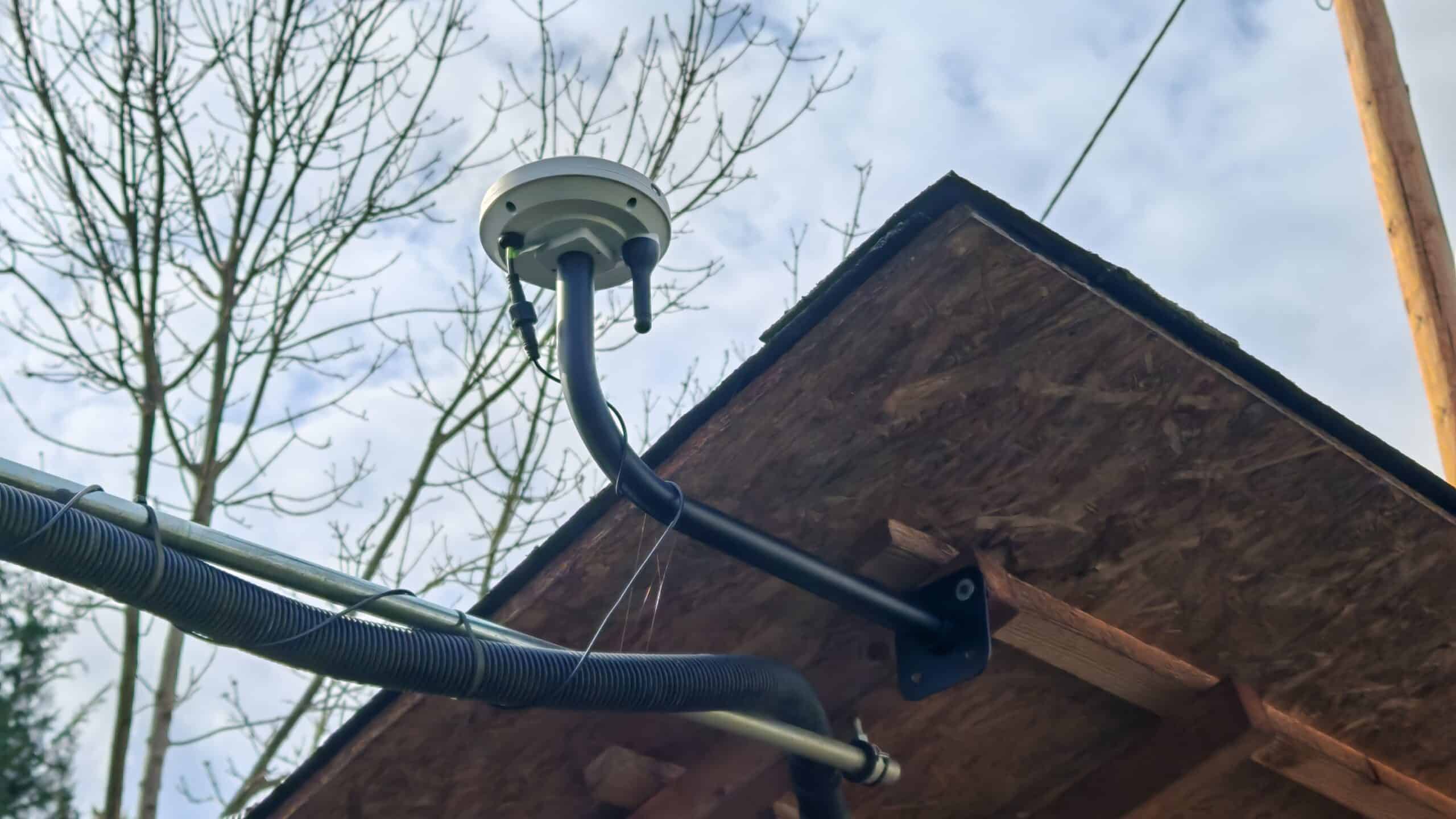
The next step is to mount the RTK antenna. This should be positioned as freely as possible, ideally with an unobstructed view of the sky to ensure a stable GPS connection. The position of the antenna has a direct influence on the accuracy of the navigation.
The setup is then carried out via the app. This is where the connection is established and the mapping of the garden is started. The robotic lawnmower uses the RTK data to create a precise map of the lawn.
Overall, the setup works reliably, but requires a little more time and planning than the M5. The correct positioning of the RTK antenna in particular is crucial for stable and accurate navigation.
However, this effort pays off in everyday use, as the robotic lawnmower works very precisely on larger areas and creates even mowing paths.
Navigation & mapping in comparison: LiDAR vs RTK in a practical test
In addition to the actual navigation technology, it is above all the interaction between the camera, sensors and software that determines how precisely a robotic lawnmower works in everyday use. The test in my garden shows that both the ANTHBOT M5 and the M9 are very reliable and accurate.
LiDAR navigation in the test – precise and stable in everyday life
The ANTHBOT M5 uses LiDAR for mapping and orients itself to its surroundings. Practical tests have shown that the navigation is very stable and that the robotic lawnmower covers the area cleanly and comprehensibly.
The robotic lawnmower reliably recognizes its surroundings and uses them for orientation, especially in the case of structures such as beds, paths or furniture. The combination of LiDAR, camera and sensor technology ensures that the mapping is precise and remains stable during operation.
The mowing result is even and clean. The robotic lawnmower does not work randomly, but follows a clear logic when working the area.
RTK Navigation put to the test – structured and precise surface processing
The ANTHBOT M9 uses RTK in combination with GPS and additional sensors. The test shows very precise navigation with clear, even mowing paths.
The area is worked systematically, which is particularly advantageous on larger lawns. The combination of RTK, camera and sensor technology also ensures stable and traceable navigation here.
In my test, the M9 worked reliably throughout. Navigation remained stable and the area was mowed cleanly.
Obstacle detection put to the test – hedgehog and garden chair as practical examples
Obstacle detection is a particularly important aspect of everyday life. Here I tested both robotic lawnmowers specifically, including with a hedgehog test and with a classic obstacle such as a garden chair.
The hedgehog test showed that both robotic lawnmowers reliably recognized the obstacle and reacted accordingly. The robotic lawnmower stops in front of the obstacle and then makes a controlled turn. This behavior is particularly important with regard to safety in the garden.
The detection also worked reliably when tested with a garden chair. Both models recognize the obstacle early, stop in time and adjust their route without bumping into it.
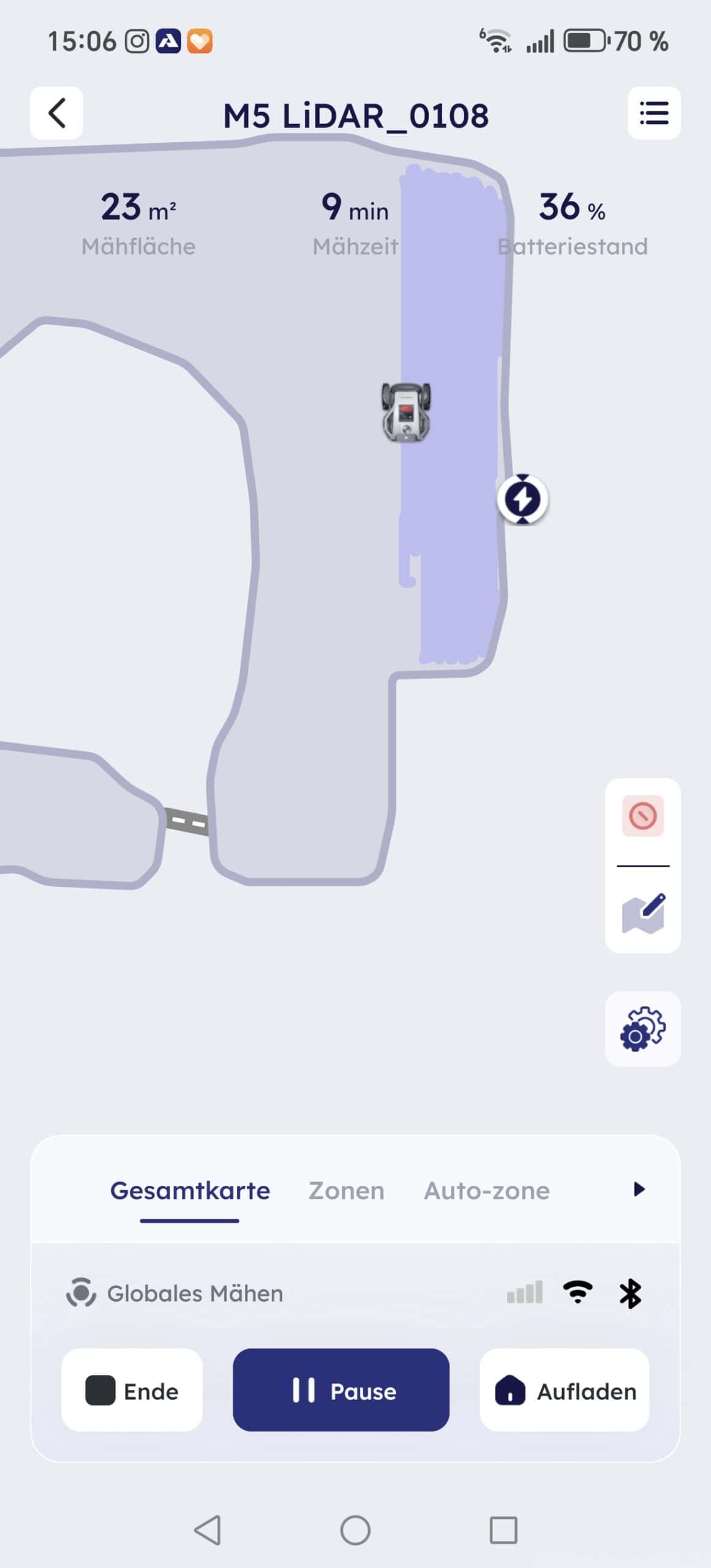
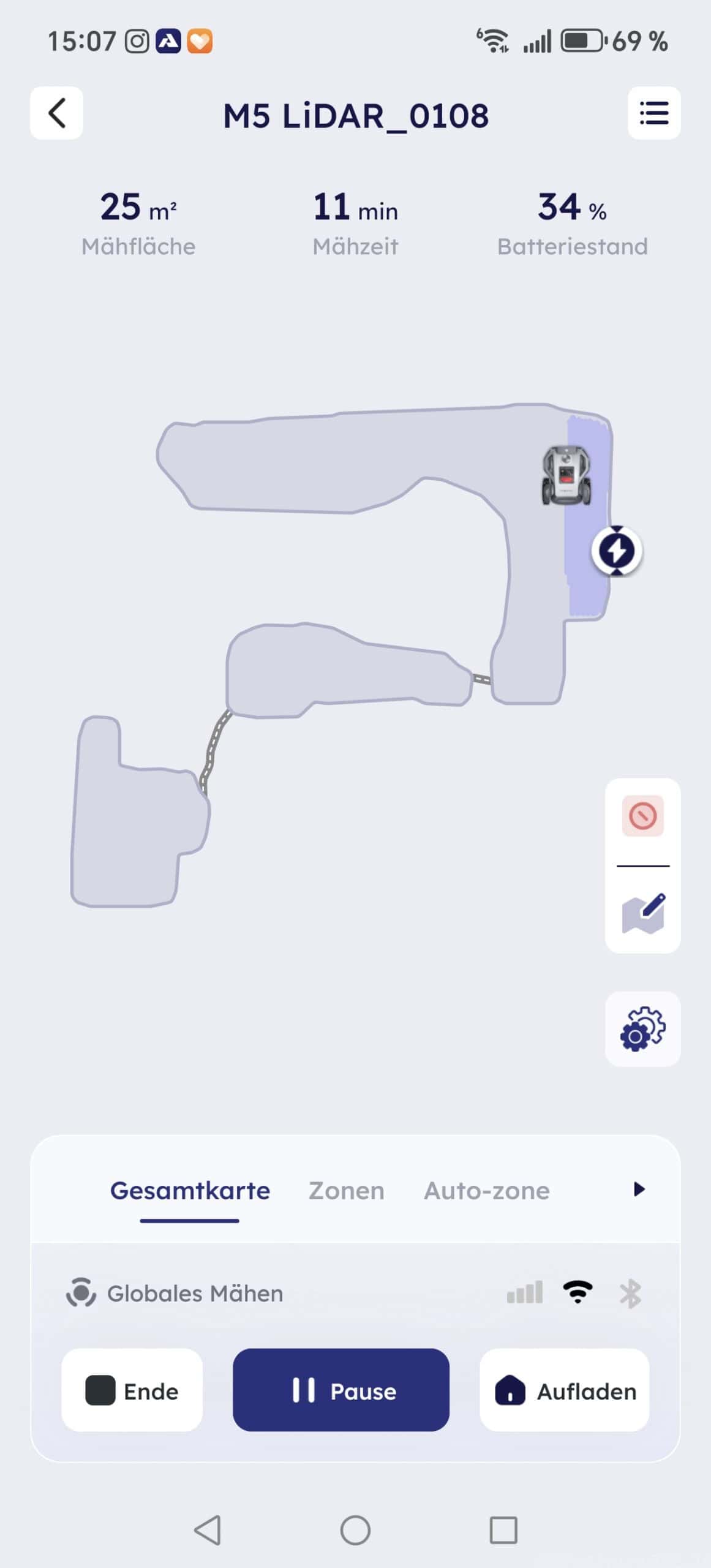
The behavior later on is interesting: The robotic lawnmowers later approach the obstacle again from a different direction. This behavior can also be easily understood in the app, where already processed and still open areas are displayed in color.
If the obstacle is removed, both robotic lawnmowers also react correctly thanks to artificial intelligence. The previously recessed areas are automatically reintegrated into the mowing area and then mowed cleanly.
The combination of camera, sensor technology and software works very well in the test and ensures safe and comprehensible behavior in the event of typical obstacles in the garden.
Practical test of limits – inside corners and valve boxes
Despite the overall very good results, there are also typical situations in the garden where both robotic lawnmowers reach their limits. Two points in particular stood out in the test: Inside corners and soil tanks or valve boxes for lawn irrigation.
A recurring behavior can be seen with sharp 90-degree inside corners. The robotic lawnmower does not extend the corner completely, but describes a semi-circle, leaving a small area. This behavior also occurs when the edges can always be driven over, as is the case in my garden. This is not so much a design-related restriction, but rather a software decision designed for safety and collision avoidance.
The soil tanks of the irrigation system exhibit similar behavior. Although the robotic lawnmower moves easily over solid surfaces such as sidewalks or walkways in the garden, the green and black covers of the valve boxes are recognized as obstacles. The robotic lawnmower avoids these areas and drives around them accordingly, leaving small areas unmown.
The direct comparison with the ANTHBOT Genie from my previous test is interesting. This behavior was already implemented differently there. The robotic lawnmower drove over the ground tanks and mowed the entire area.
The current test shows that obstacle detection works very reliably, but is deliberately cautious in certain cases. This ensures safe behavior in the garden, but can mean that individual areas have to be reworked manually.
Narrow passages and zone connection in the practical test
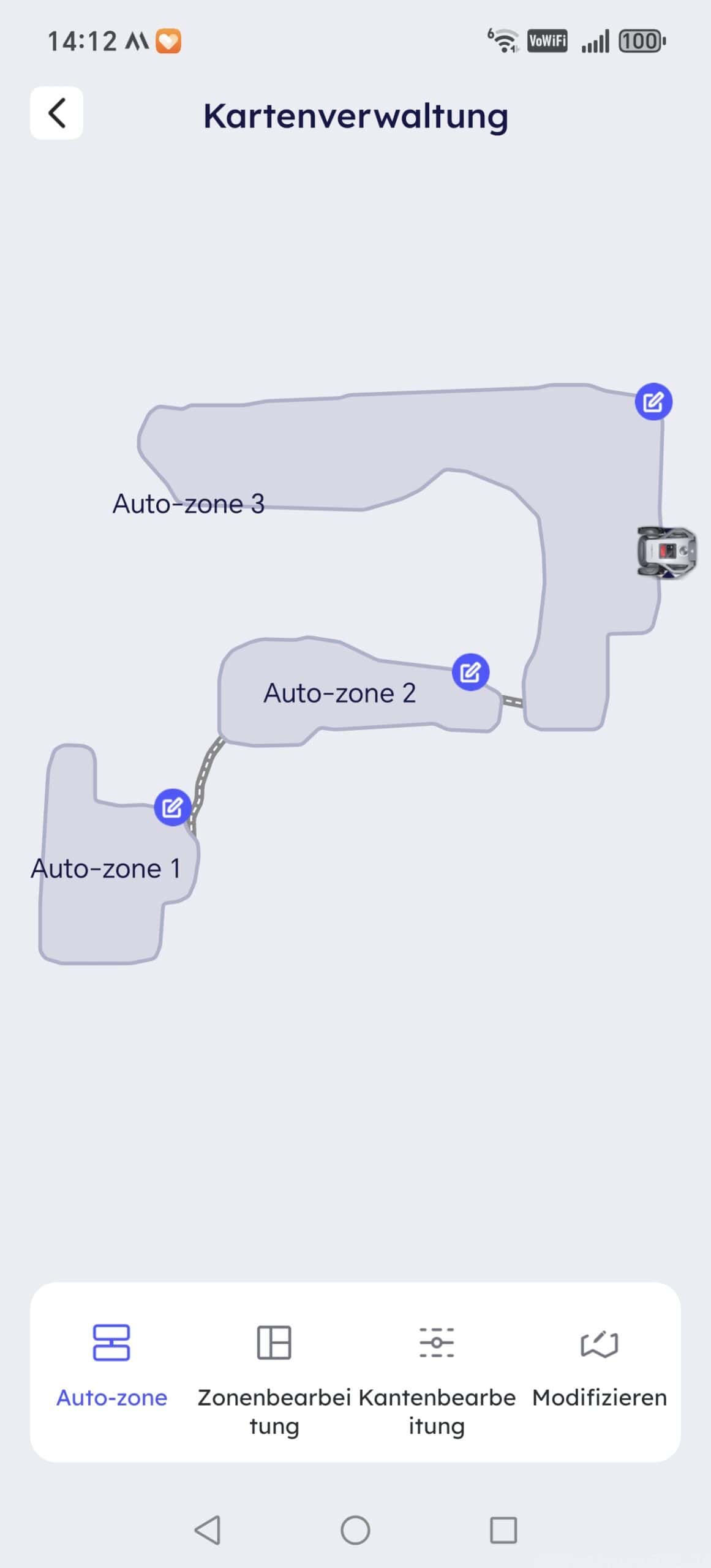
A crucial point in my garden are the connections between several lawn areas. These so-called passages must be actively created in the mapping so that the robotic lawnmower can connect the individual zones with each other.
In practice, this is not done automatically, but deliberately by running the route manually. I drive the robotic lawnmower from one area to the next and define the connection. This step is crucial for subsequent navigation.
The width of the passage is particularly important here. Passages that are too narrow can be problematic because the robotic lawnmower needs sufficient space to navigate. In addition, the passage should be as clean and centered as possible so that the robot has a clear route later.
Tests have shown that both models work very reliably with correctly applied passages. The robotic lawnmower actively uses these connections to switch between zones and mow all areas regularly.
Differences can be seen above all in the type of orientation. The M5 uses its LiDAR navigation and recognizes the surroundings along the passage. This means that the connection remains stable even if the environment is narrower or more structured.
The M9 also orients itself to its RTK position. Here it is important that stable positioning is also possible in the passage. In my test, this worked well overall as long as the passage was laid out cleanly.
The decisive factor in the end is the mapping. Once the passage has been correctly defined, both robotic lawnmowers reliably follow it and connect the individual zones with each other without any problems in everyday use.
Classification from the practical test
As a result, both robotic lawnmowers work very precisely and reliably. Both the M5 and the M9 deliver a clean cutting pattern and are stable in everyday use.
The differences lie less in the accuracy, but rather in the area of application and the type of navigation.
Both models performed well in the test and show that modern robotic lawn mowers without a boundary wire now operate at a very high technical level.
Mowing result & cutting pattern in the practical test
The overall mowing result of both models is at a good to very good level. Both the ANTHBOT M5 and the M9 work the area cleanly and leave an even cutting pattern. In everyday use, both robotic lawnmowers reliably keep the lawn short and also mow larger areas in a structured and precise manner.
In direct comparison, it is not so much the pure cutting quality that stands out, but rather the way in which edges, borders and transitions are handled. In practice, this is exactly where it is often decided how “finished” an area actually looks after mowing.
Uniform cutting pattern on the surface
Both mowers work very well on the actual lawns. The tracks look clean, the surface is processed evenly and the overall cut pattern is neat. The impression remains consistent even after several mowing operations, which speaks for reliable navigation and stable surface cultivation.
This is particularly important during operation, because a robotic lawnmower should not just cut the lawn in some way, but keep the area well maintained in the long term. Both models in the test succeed in doing this convincingly.
Practical edge cutting test – the decisive difference lies in the edge
Edge pruning shows how much the result depends on the structural situation in the garden. The decisive factor here is whether an edge can be driven over or not.
The result is significantly better with edges that can be driven over. If the robotic lawnmower can move slightly over the edge of the lawn with part of the housing or the wheels, the mower will come closer to the edge. This leaves only a very narrow strip or the edge looks almost cleanly mowed. This is exactly where a well-designed lawn edging can achieve a lot in everyday life.
The situation is different for edges that cannot be driven over, such as walls, fences, high kerbs or fixed borders. In such areas, the robotic lawnmower keeps its distance for design and safety reasons to prevent collisions. This leaves a visible edge strip that has to be reworked manually later. This is not a problem specific to these two models, but affects most robotic lawnmowers.
Why a margin remains despite precise navigation
Even if the navigation is very precise, the mower is not positioned on the very outside of the machine. This means that a robotic lawnmower cannot physically drive right up to every boundary and cut completely to the edge at the same time. With fixed boundaries, the safety clearance, housing width and position of the mower are then added together. This results in a residual strip remaining.
The test therefore clearly shows that the quality of the edge cut depends not only on the robot, but also very much on the structure of the lawn edge.
Tips for optimizing the edge cut
The result at the edges can be visibly improved in many cases if the mapping and the boundary conditions in the garden are adjusted.
The first mapping already plays an important role. If the boundary is taught in very carefully, more edge will usually remain later. However, if the area is mapped cleanly and as close as possible to the actual edge of the lawn, the mower can make better use of the area. It is of course important to keep a safe distance from critical obstacles.
The design of the edges themselves also has a major influence. Edges that can be driven over, level transitions or flat boundaries clearly help the robotic lawnmower to get closer to the edge. In many gardens, this significantly reduces the amount of reworking required.
In addition, it is worth critically checking the mapping again after the first mowing operations. Particularly if you notice that there is an unnecessary amount of space in certain places, a small adjustment to the map can already lead to a better result.
Classification from the practical test
As a result, both robotic lawnmowers deliver a clean and even cut. The actual mowing performance is good and absolutely convincing for everyday use. Differences and limits are particularly evident at the edges.
With drive-over edges, the edge cut is significantly better and the lawn looks more finished overall. On the other hand, a narrow edge remains on borders that cannot be driven over, which must be manually reworked if necessary.
If you want to optimize the edge cut, you should therefore not only look at the robotic lawnmower itself, but also at the design of the lawn edges and the cleanest possible mapping. In practice, this is often where the greatest potential lies.
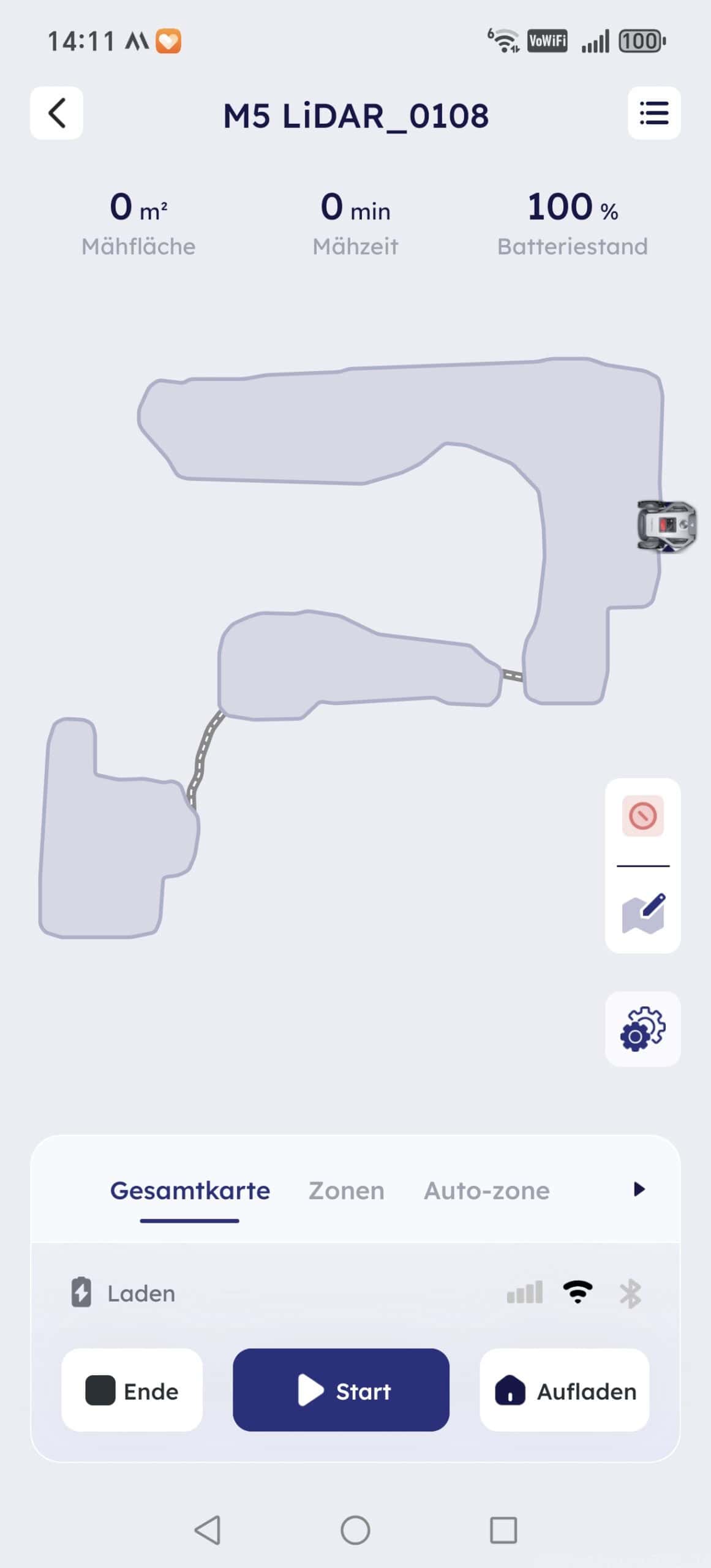
App functions & control via app
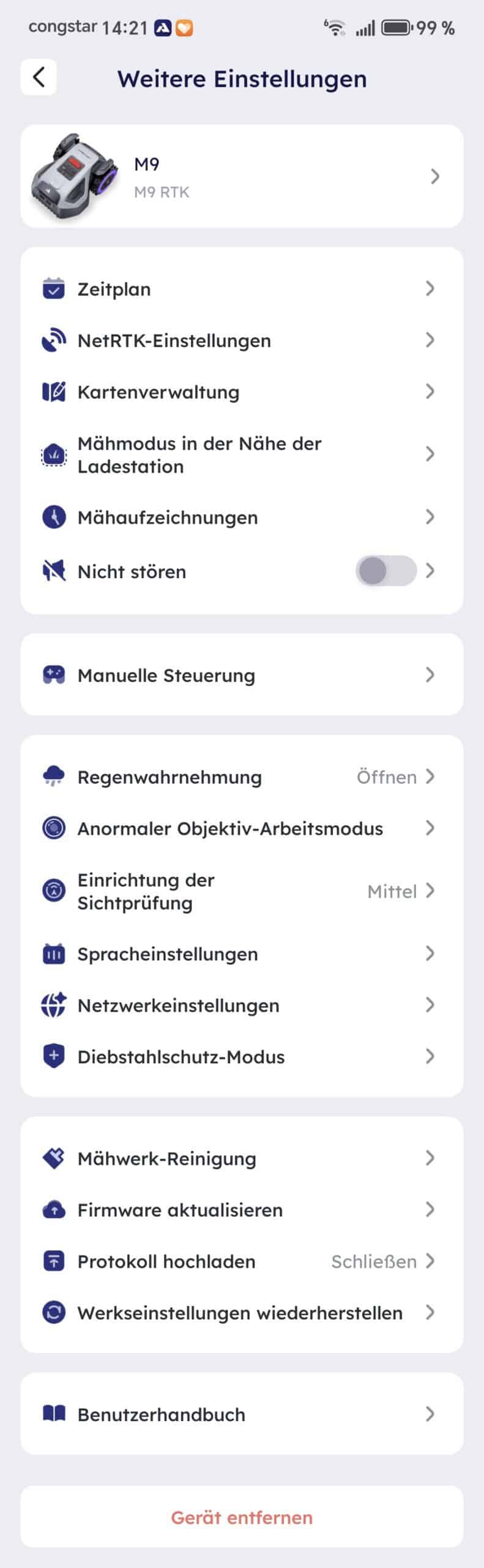
Both models are fully controlled via the ANTHBOT app. The app is the central interface between the robotic lawnmower and the garden, as this is where all settings are made, maps are created and mowing processes are controlled. The test has shown that the operation is well structured and works reliably.
The app can be downloaded directly from the official stores:
🔗 Google Play Store (Android): https://play.google.com/store/apps/details?id=com.anthbot.genie
Apple App Store (iOS): https://apps.apple.com/hr/app/anthbot-genie/id6504674192
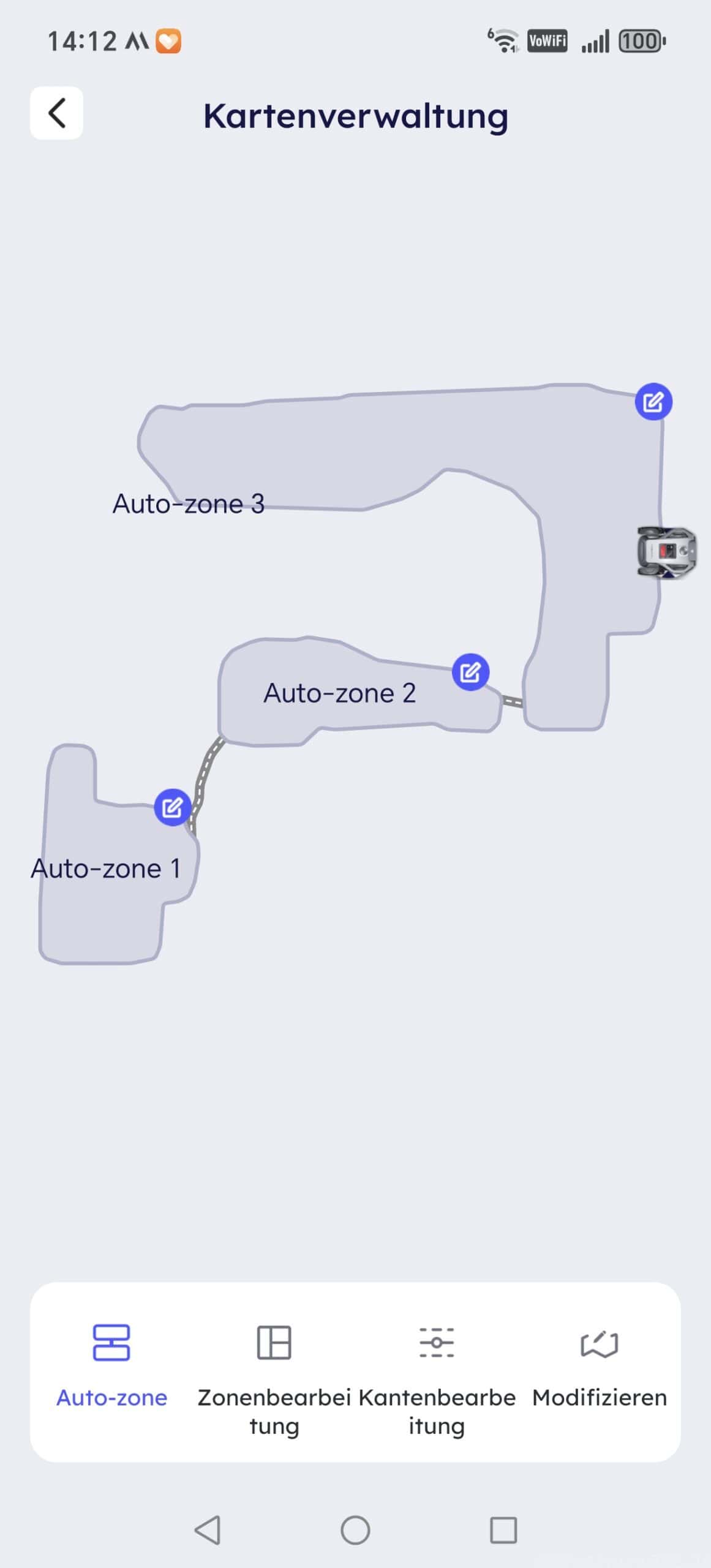
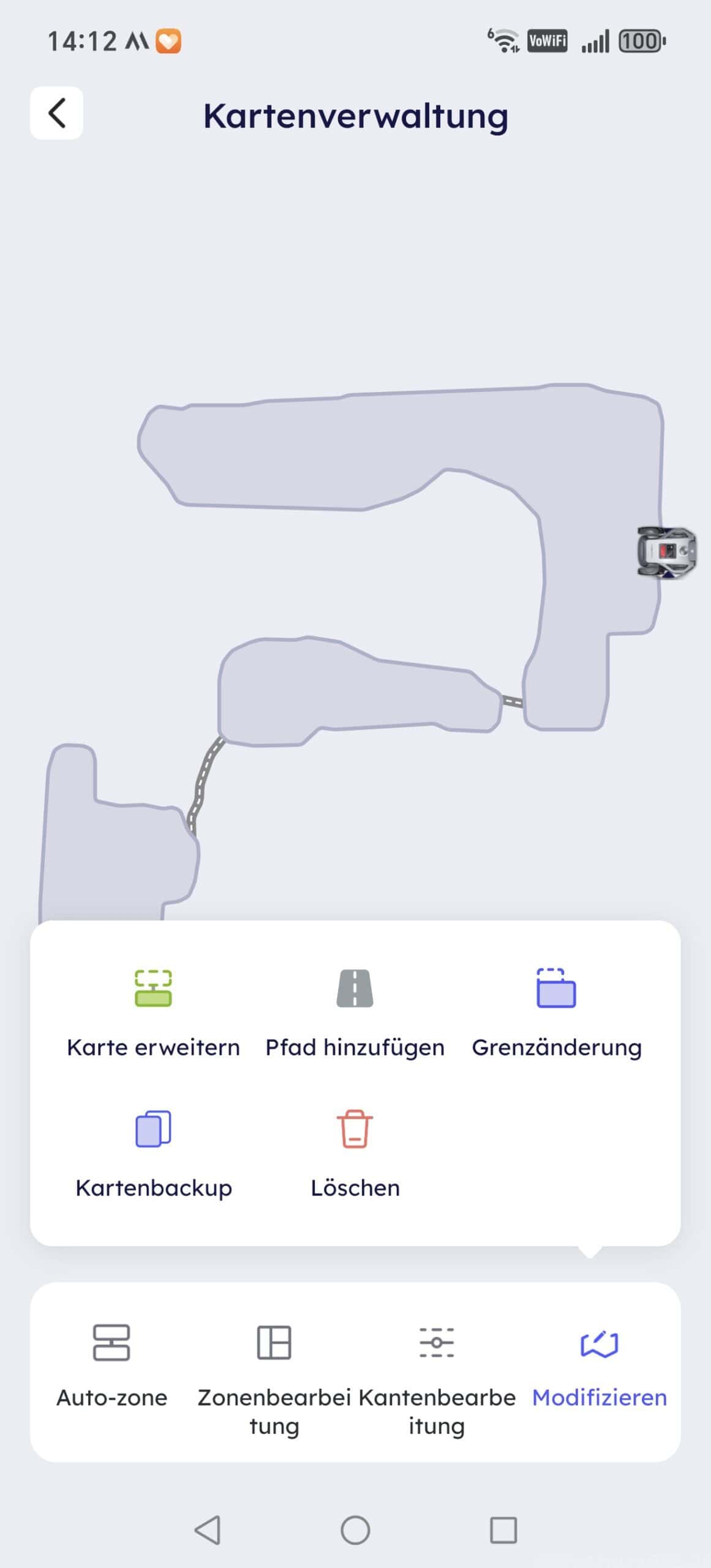
Zone management – flexible control in the garden
Several areas in the garden can be defined using zone management. This is particularly useful if the garden consists of different lawn areas or if individual areas are to be treated differently.
In the test, I was able to create several zones and control them specifically. For example, you can specify which area is mowed when or which areas should be maintained more frequently.
The zone function significantly increases flexibility and enables individual adaptation to your own garden.
Schedules – automated lawn care
The schedules can be used to determine exactly when the robotic lawnmower is active. This means that the operation can be optimally adapted to your own daily routine.
In everyday life, this means that the lawn is mowed automatically without the need for manual intervention. At the same time, rest periods can be defined, for example for the night or certain days.
A well-set schedule ensures that the lawn is continuously maintained and grows evenly.
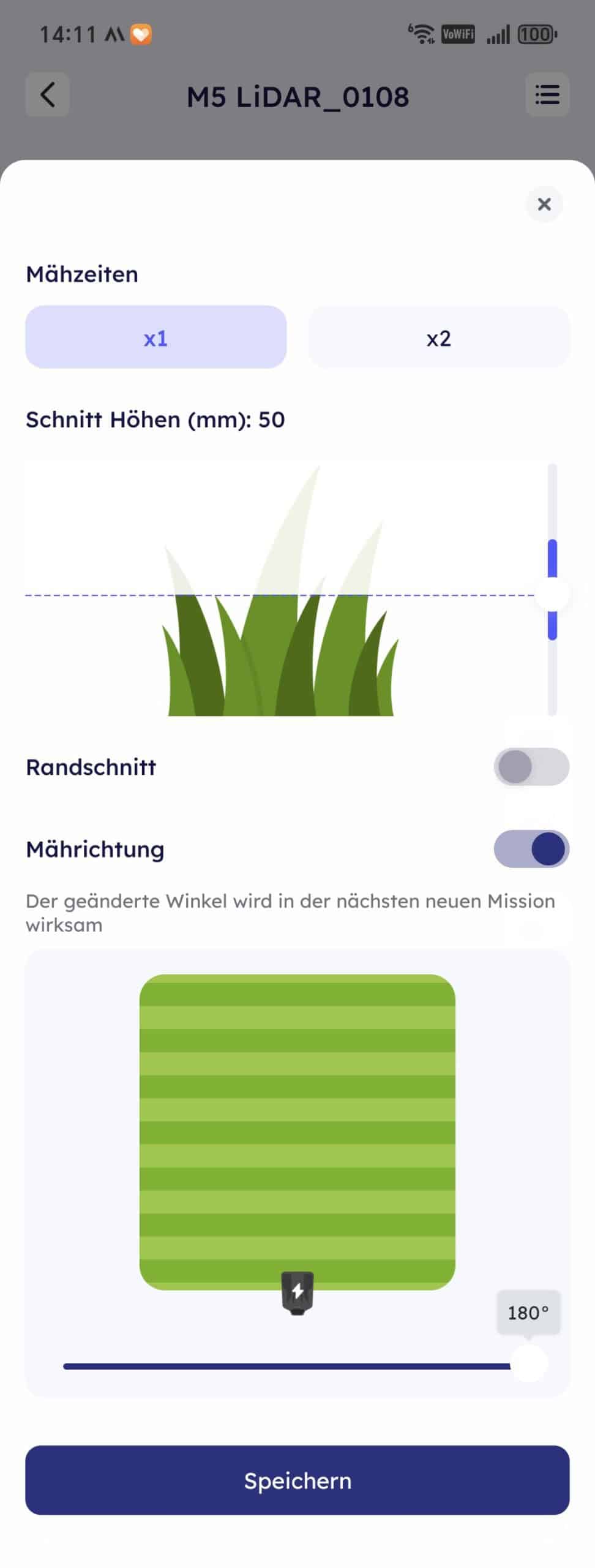
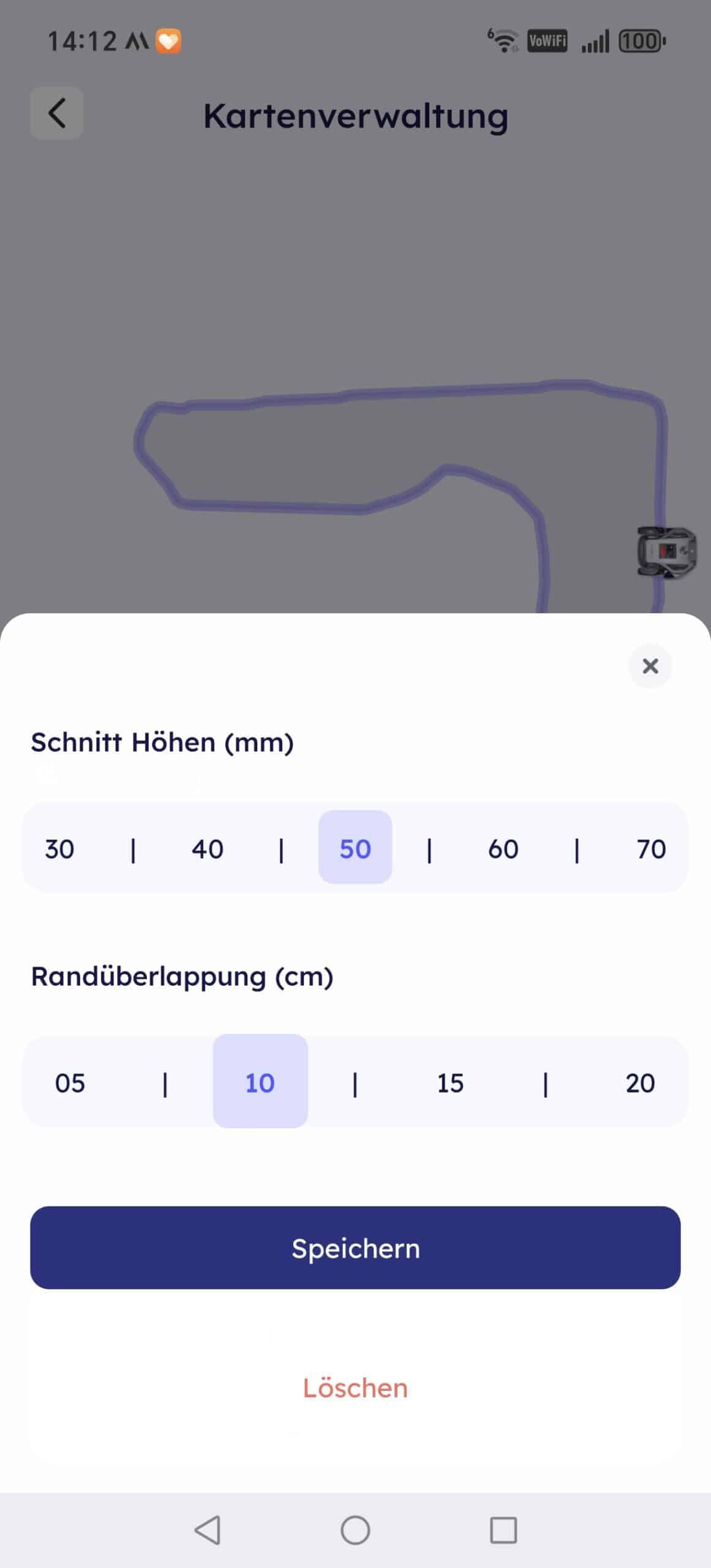
Adjusting the cutting height – adapting to the lawn
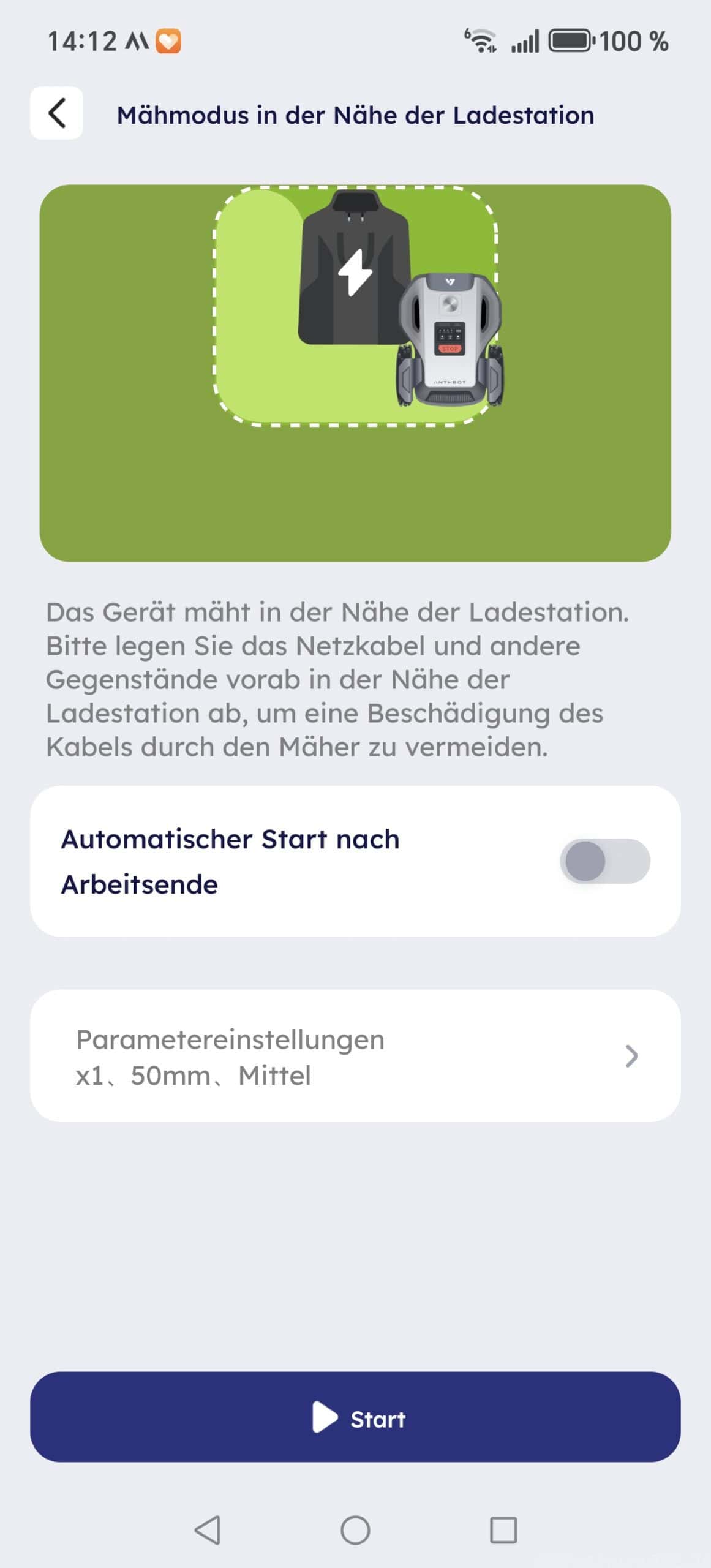
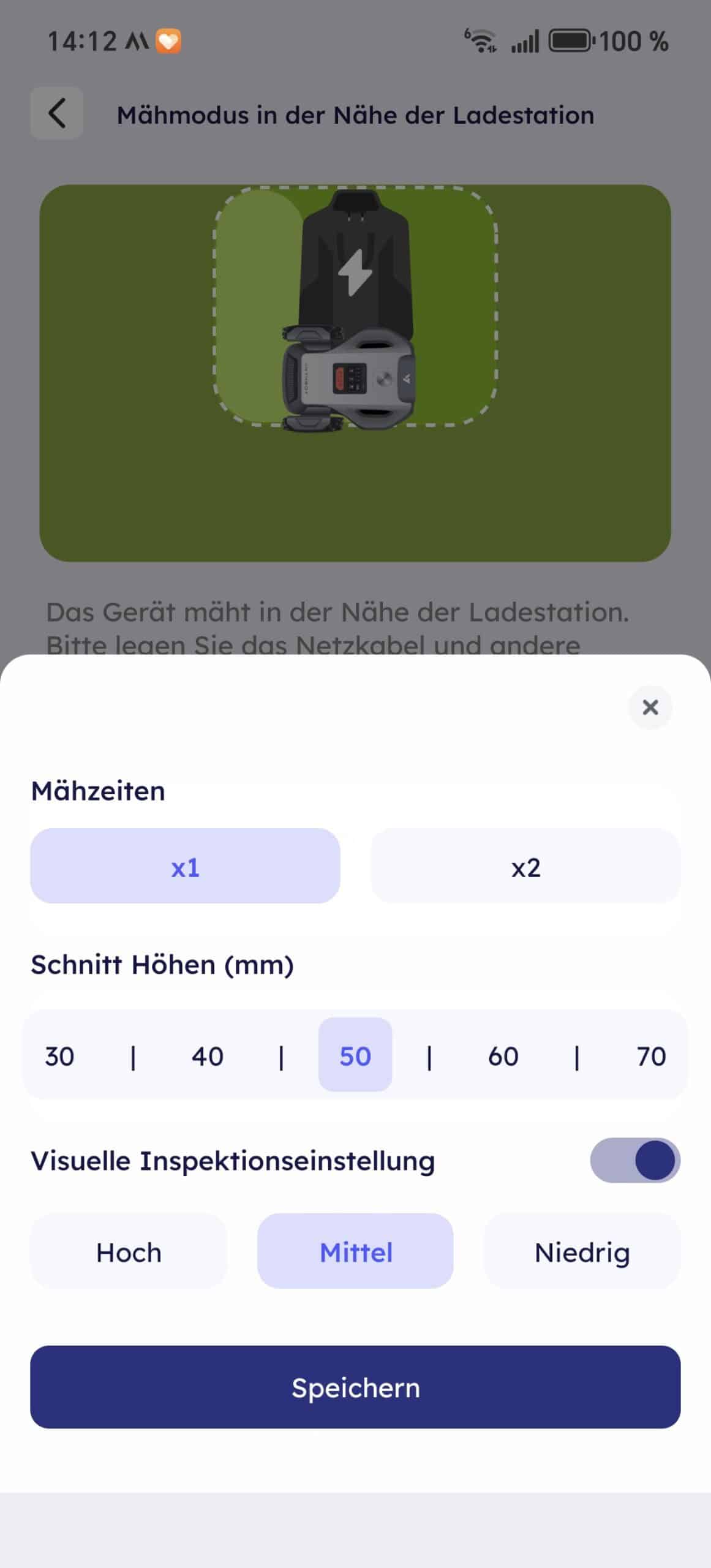
The cutting height can be set directly in the app and ranges from 30 to 70 mm. This allows the height of the lawn to be flexibly adapted to the time of year or the growth phase.
A higher cutting height is advisable in hot or dry conditions, while a lower cut can be selected when growth is stronger. This setting has a direct influence on the appearance and health of the lawn.
Further functions at a glance
The app also offers other helpful functions:
- Starting and stopping the robotic lawnmower
- Display of the current status and position
- Adjustment of mowing parameters
- Management and adaptation of mapping
The test has shown that the app control works reliably and all important functions are easily accessible.
Classification from the practical test
The app is a central component of modern robotic lawnmowers without a boundary wire. It replaces the classic setup via boundary wire or perimeter wire and enables flexible control of the entire system.
In everyday use, the combination of mapping, zone management and scheduling ensures that the robotic lawnmower works efficiently and can be easily adapted to the conditions in the garden.

Zuletzt aktualisiert am 15. October 2026 um 04:45 . Ich weise darauf hin, dass sich hier angezeigte Preise inzwischen geändert haben können. Alle Angaben ohne Gewähr. (*) Bei den verwendeten Produktlinks handelt es sich um Affiliate Links. Ich bin nicht der Verkäufer des Produktes. Als Amazon-Partner verdiene ich an qualifizierten Verkäufen. Dein Preis ändert sich jedoch nicht.
Maintenance, cleaning & care of the robotic lawnmower
The overall maintenance effort for both models is low and is limited to a few regularly recurring tasks. This primarily includes cleaning the sensors, replacing the blades and checking the charging station.
Cleaning and IPX6 protection in everyday life
Both robotic lawnmowers have protection class IPX6. This means that the devices are protected against strong water jets. In practice, this is a clear advantage, as cleaning can easily be done with a garden hose. Grass clippings, dirt and moisture collect under the appliance, especially after several mowing sessions. Thanks to IPX6 certification, these residues can be removed quickly and easily without damaging the electronics. This saves time and ensures that the robotic lawnmower remains clean and functional at all times.
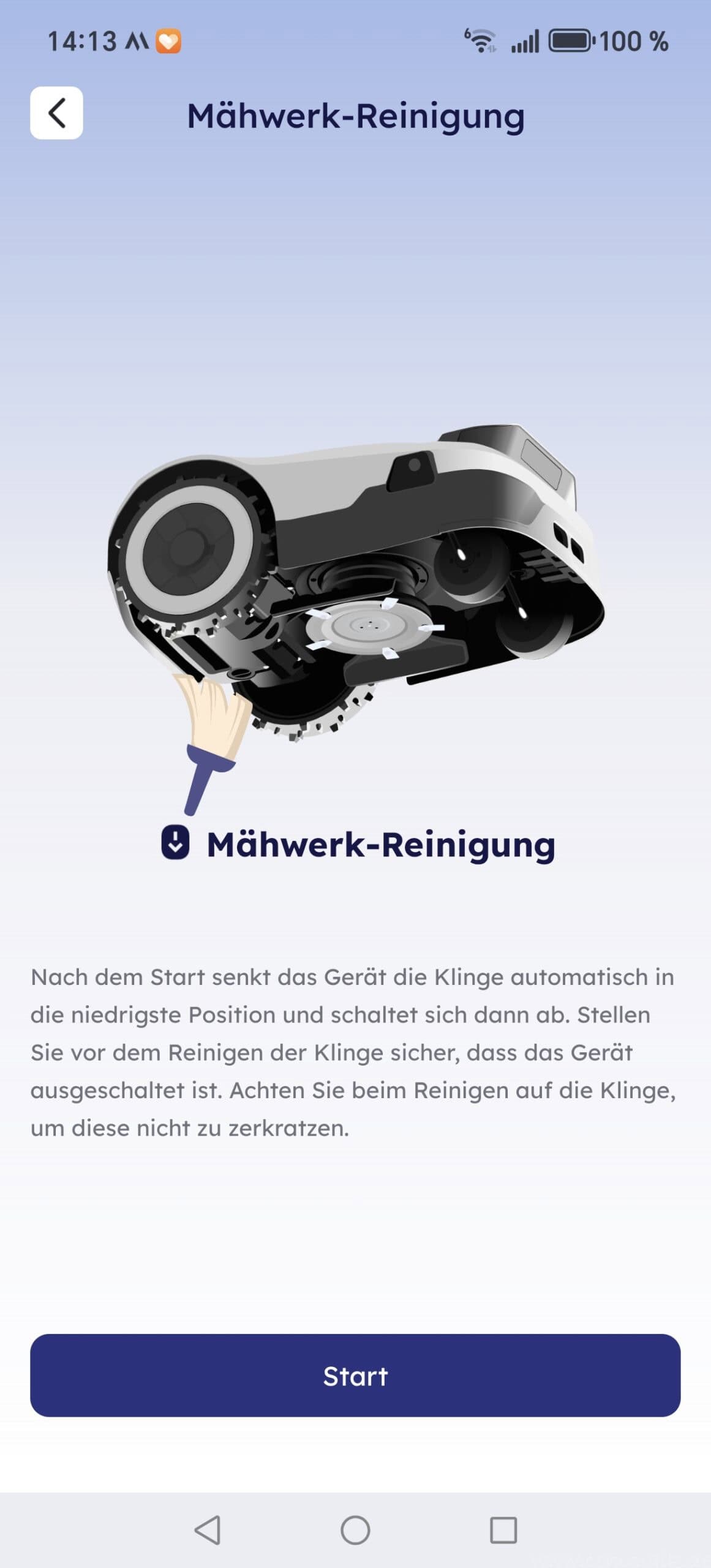
Cleaning function for the cutting area
One practical function that both models offer is the integrated cleaning function in the app. When this is activated, the robotic lawnmower lowers the cutting disc in a targeted manner. This makes the area under the appliance more accessible and grass clippings can be removed much more easily. Cutting debris often collects in the mower deck area in particular, which can impair performance in the long term. This function allows the cutting area to be cleaned thoroughly and in a targeted manner without having to tilt or lift the robotic lawnmower.
Cleaning sensors – important for navigation
One point that is often underestimated is the regular cleaning of the sensors. Both the camera and distance sensors can be affected by dust, grass clippings or moisture. Dirty sensors can lead to poorer detection of obstacles or less accurate navigation. In everyday use, it is usually sufficient to clean the sensor surfaces regularly with a soft cloth.
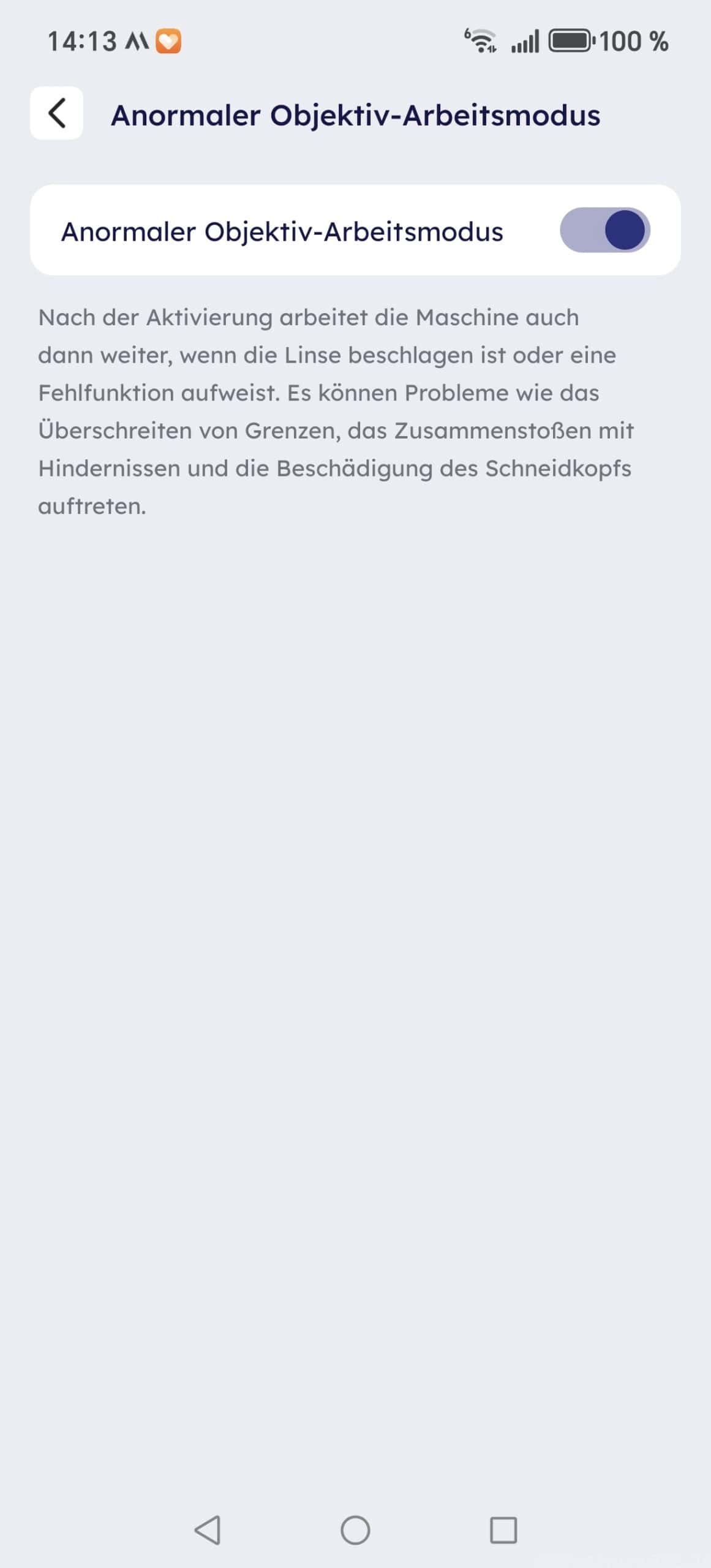
With the M5, the LiDAR tower also comes into play. This should also be checked regularly and cleaned if necessary. My test has shown that dust or fine deposits can collect here over time. If the sensor becomes dirty, this can affect the detection of the surroundings. A quick clean with a soft cloth is sufficient to keep the function permanently stable. The sensor system is crucial for navigation, especially for robotic lawnmowers without a boundary wire, which is why this point should not be neglected.
Keep an eye on blades and charging station
In addition to cleaning, the blades should also be checked regularly. Blunt blades lead to an unclean cut and can put additional strain on the lawn. Regular replacement ensures an even and well-maintained result. The charging station should also be kept clean. Dirt in the contact area can impair the charging function. A brief check at regular intervals is usually sufficient.
Classification from the practical test
The test shows that both robotic lawnmowers are easy to maintain and can be easily integrated into everyday life. The combination of IPX6 protection, cleaning function and simple maintenance ensures that the outlay remains manageable. By observing the basic points and carrying out regular cleaning, you can ensure that the robotic lawnmower works reliably over the long term and delivers consistently good mowing results.
Practical experience & test results in comparison
After several uses in our own garden, the picture is very clear. Both robotic lawnmowers without boundary wire operate at a high technical level and deliver a clean and reliable result in everyday use. The differences lie less in the basic quality, but rather in the area of application and the type of navigation.
ANTHBOT M5 – Strengths and area of application
The ANTHBOT M5 proved to be a very uncomplicated yet powerful robotic lawnmower in the test. The quick set-up is a particularly positive feature. Without a boundary wire and without additional hardware, the mower is ready for use within a few minutes.
In practice, the greatest advantage can be seen in complex gardens. LiDAR navigation comes into its own as soon as there are many obstacles, angled areas or different structures. The robotic lawnmower works stably, reliably detects obstacles and adapts its route flexibly.
The M5 is therefore particularly suitable for:
- Small to medium-sized gardens
- winding plots
- Gardens with many obstacles
- Areas with shadows or limited GPS visibility
The model is less suitable for very large, open lawns where the focus is on absolute linearity and maximum area efficiency.
ANTHBOT M9 – Strengths and area of application
The ANTHBOT M9 shows its strengths above all in larger areas. RTK- and GPS-based navigation ensures very precise and structured surface processing.
In the test, the robotic lawnmower worked very evenly and efficiently. The mowing paths are clean and the area is worked systematically. The strength of this technology is particularly evident on open lawns.
The setup is somewhat more complex than with the M5, mainly due to the RTK antenna. However, this extra effort pays off during operation.
The M9 is therefore particularly suitable for:
- Larger gardens up to around 1000 m²
- open lawns
- Properties with clear structures
- Users who value precise mowing paths
The model is less suitable for heavily angled gardens with many obstacles or areas with permanently limited GPS availability.
Comparison with classic robotic lawn mowers with boundary wire
In direct comparison to classic robotic lawn mowers with boundary wire, both models have clear advantages. The biggest difference is the elimination of the boundary wire.
There is no need to lay wire, adjustments in the garden can be made flexibly in the app at any time and the overall maintenance effort is also lower.
Especially in comparison to my previous wired systems such as the Husqvarna Automower or the Gardena Sileno, it becomes clear how much modern robotic lawn mowers without boundary wires have developed. The increase in comfort in everyday life is noticeable.
Summary & conclusion: Which robotic lawnmower is the best?
Both models deliver a good result in the test and work reliably. There is no general “best robotic lawnmower” in this case, as both devices were developed for different requirements.
The ANTHBOT M5 is the right choice for gardens with many obstacles and complex structures. The simple setup and stable navigation without GPS make it particularly flexible for everyday use.
The ANTHBOT M9 is the better choice for large, open lawns where precise and efficient surface treatment is paramount. This is where RTK technology really comes into its own.
The result is that modern robotic lawnmowers without boundary wires are now a real alternative to traditional systems. The decisive factor is not the technology alone, but the structure of your own garden. Only if this is taken into account can the right model be selected and the full potential used in everyday life.
Summary: ANTHBOT M5 and M9 in test
The blog post shows how two modern robotic lawnmowers without a boundary wire fare in a direct test. With the ANTHBOT M5 and the ANTHBOT M9, I tested two different models in my own garden, both of which work without a perimeter wire, but rely on different concepts for navigation. While the M5 relies on LiDAR and a camera, the M9 uses RTK, GPS and additional sensors for particularly precise surface processing. In comparison, it quickly becomes clear that both robotic lawnmowers work well, but show their strengths in different garden structures.
The ANTHBOT M5 is particularly suitable for small to medium-sized, complex gardens. Its LiDAR navigation works reliably around obstacles, shadows, flower beds and winding areas. Set-up is particularly quick because neither wire nor RTK hardware is required. The ANTHBOT M9, on the other hand, is aimed at larger, open lawns of up to 1000 m². RTK navigation with GPS, NetRTK and camera ensures very precise mowing paths and high efficiency. Both robotic lawnmowers without boundary wire deliver a clean cut in the test, work reliably via the app and demonstrate safe and comprehensible behavior when detecting obstacles with hedgehogs and garden chairs.
However, the practical test also reveals typical limitations. Inside corners are not completely mowed out due to the software’s driving behavior, and ground tanks or irrigation valve boxes are recognized as obstacles by both robots and avoided. When cutting edges, the result depends heavily on whether the edges can be driven over or not. Overrunning edges significantly improve the cutting pattern, while a narrow edge remains at fixed boundaries. However, the result can be visibly optimized with clean mapping and suitable edges in the garden.
The bottom line is that the comparison confirms that modern robotic lawn mowers without wires and without boundary wires are a real alternative to classic systems with wires. The M5 is the better choice for winding gardens with many obstacles, the M9 for large, open areas with a focus on precise navigation. There is therefore no overall test winner. The decisive factor is which robotic lawnmower without boundary wire is best suited to your own garden, the desired navigation and the planned area of use.
FAQ: Robot mower without boundary wire in the test
1. how does a robotic lawnmower work without a boundary wire?
A robotic lawnmower without a boundary wire uses modern navigation technologies such as LiDAR, RTK or GPS to find its way around the garden. Instead of a wire, the robot creates a digital map and recognizes boundaries and obstacles using sensors and cameras.
2. which is better – LiDAR or RTK for robotic lawnmowers?
That depends very much on the garden. LiDAR is better suited for winding gardens with many obstacles, while RTK shows its strengths in large, open areas with a clear view of the sky.
3. how accurate are robotic lawnmowers without a perimeter wire?
Modern models work very precisely. RTK systems achieve accuracy in the centimeter range, while LiDAR systems also navigate very reliably thanks to environmental analysis. Both deliver clean results in the practical test.
4. do robotic lawnmowers without cables also work under trees?
Yes, but with restrictions depending on the system. LiDAR works independently of GPS and is therefore stable under trees. RTK can be affected by strong shadows, but is partially compensated by technologies such as NetRTK.
5. how time-consuming is it to set up a robotic lawnmower without a boundary wire?
Setup is much easier than with wired systems. LiDAR models are usually ready to go in just a few minutes. RTK models require the additional installation of an antenna, but can also be used afterwards.
6 How good is obstacle detection on modern robotic lawnmowers?
Current models reliably detect obstacles in the test. Objects such as garden furniture or animals are detected and the robotic lawnmower stops and drives around them in a controlled manner. After removal, the areas are automatically mowed again.
7. how good is the edge cut on robotic lawnmowers without a boundary wire?
This depends heavily on the edge of the lawn. The result is very good for edges that can be driven over. With fixed borders, a narrow edge remains which must be reworked manually.
8. can robotic lawnmowers manage multiple zones without a boundary wire?
Yes, modern models support multi-zones. Different areas can be defined and individually controlled via the app, which is a great advantage, especially for complex gardens.
9 What are typical problems with robotic lawnmowers without wire?
Typical challenges are inside corners that are not completely mowed and flat obstacles such as valve boxes that are recognized and avoided. These points can be partially optimized by making adjustments in the garden.
10 For whom is a robotic lawnmower without a boundary wire worthwhile?
A robotic lawnmower without a boundary wire is worthwhile for anyone who does not want a complex installation with wire and values flexible adjustment. These models offer clear advantages, especially in complex or changing gardens.
Dieser Beitrag ist auch verfügbar auf:
 English
  Deutsch


Ähnliche Beiträge
Building a BPC and WPC terrace on a slope – My new pool terrace with recycled boards
Repairing broken wires: Finding and repairing the boundary wire for robotic lawnmowers