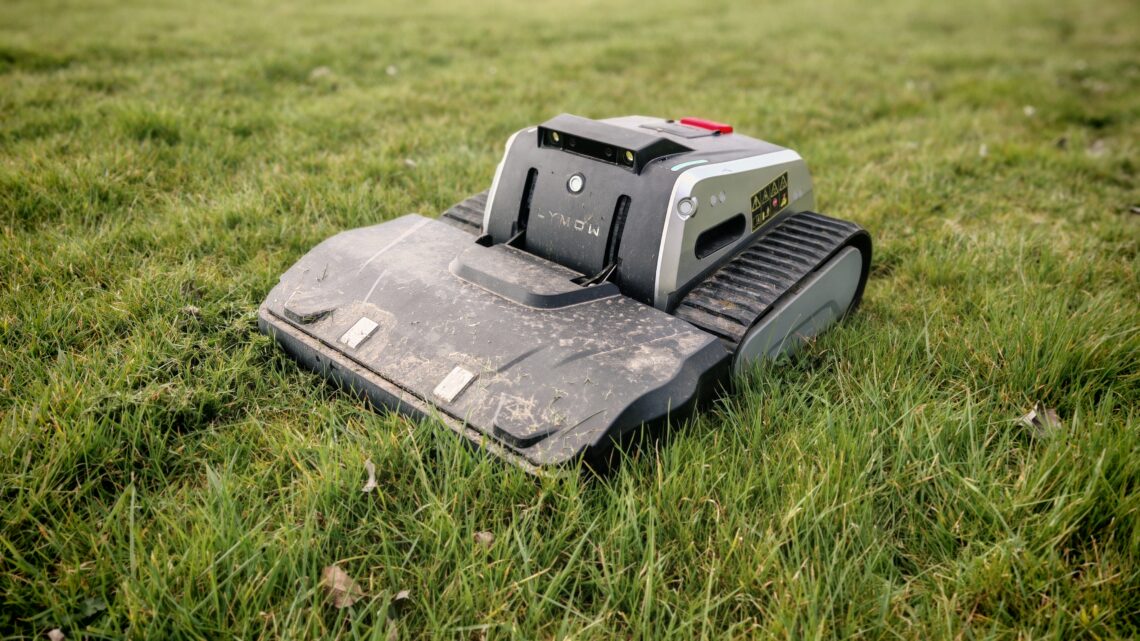
Lymow One Plus in test: RTK robot mower for large areas & difficult terrain
In the Lymow One Plus test, I show how this robotic lawnmower performs in practice without a boundary wire on a large and demanding area. With RTK navigation, chain drive, 45° incline and a cutting width of 40 cm, the Lymow takes a significantly different approach to classic robotic mowers. I tested the new Lymow One Plus extensively and compared it directly with the Lymow One. The focus is on performance, navigation, off-road capability and the question of whether this system is really worthwhile for large plots of land. The article provides a detailed insight into the technology, set-up, practical test and my experiences – including strengths, weaknesses and a clear classification in the current segment of robotic lawn mowers.
What you can expect in this blog post
– Overview of the Lymow One Plus in the test and classification in the robotic lawnmower segment
– Direct comparison of the differences between Lymow One and Lymow One Plus
– Technical data such as battery, cutting width (40 cm), speed and area coverage
– Areas of application: large plots, slopes and challenging areas
– Chain drive and off-road mobility on inclines of up to 45°
– Navigation without boundary wire with RTK, VSLAM and sensors
– Setup, installation and mapping via app in detail
– LYCUT 2.0 mower: How it works, advantages and possible weaknesses
– Practical test of obstacle detection with AI camera and ultrasonic sensors
– Control, cutting height and mowing parameters directly via the app
– Maintenance, cleaning and suitability for everyday use on large surfaces
– My personal experience of testing on a large meadow
– For whom the Lymow One Plus is really worthwhile – and for whom not
– Sources of supply, accessories and current offers at a glance
Lymow One Plus test: Who is this robotic lawnmower for?
The new Lymow One Plus is clearly aimed at large and demanding areas of application. Compared to classic robotic mowers, which are primarily designed for small to medium-sized lawns, Lymow has opted for a much more powerful concept here. The focus is not on comfort in the small garden, but on maximum area performance, robust construction and real off-road capability.
I was able to test the Lymow One extensively last year and therefore have a very good basis for comparison with the new Lymow One Plus. The experience gained from the first model clearly shows the direction in which the system has developed. The new Lymow One Plus consistently builds on these strengths and expands them, particularly in the areas of performance, cutting system and navigation. A detailed insight into the predecessor can be found in the blog entry
Lymow One in test: Robot mower without boundary wire with RTK navigation and chain drive
Large areas, no boundary wire and maximum power
According to the manufacturer, the Lymow One Plus is designed for areas of up to 7,000 m² per day. The robotic lawnmower is therefore clearly outside the classic robotic lawnmower segment. RTK navigation completely eliminates the need for the usual boundary wire, especially on large plots of land.
A direct comparison with many other systems reveals a clear difference here: while many robotic mowers are designed for easy navigation and the quietest possible operation, the Lymow One focuses on throughput and efficiency. I have also investigated this approach with other models. The Dreame A1 Pro, for example, focused heavily on wireless navigation and simple setup, while the Ecovacs GOAT A1600 RTK impressed above all with its precise RTK control. The Anthbot Genie, on the other hand, relies on very flexible and camera-based navigation without boundary wires.
The Lymow One Plus takes a different approach here: it combines these technologies with a significantly more powerful overall system and is thus clearly positioned for large areas and demanding conditions.
Gradients of up to 45° and difficult terrain
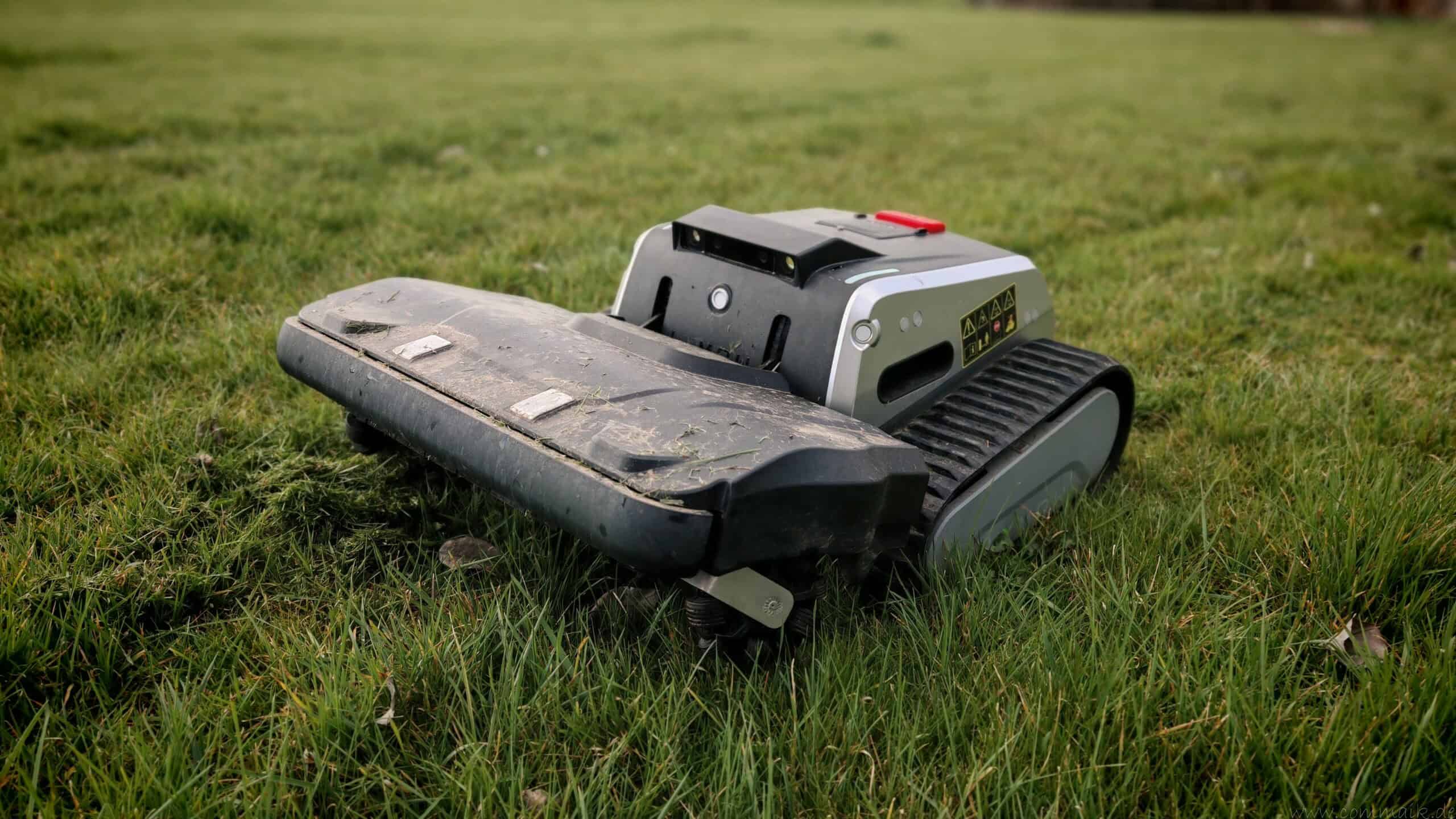
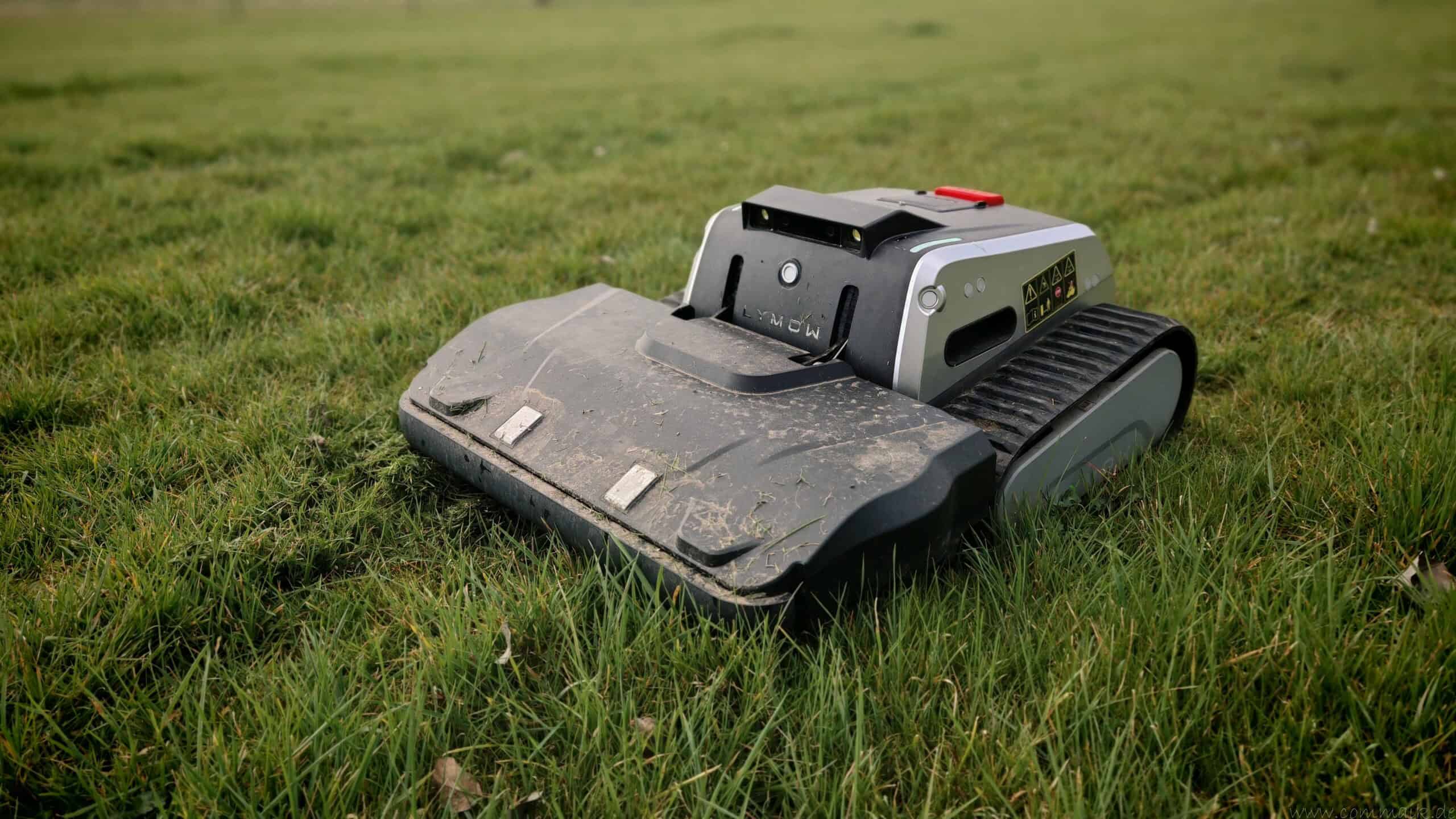
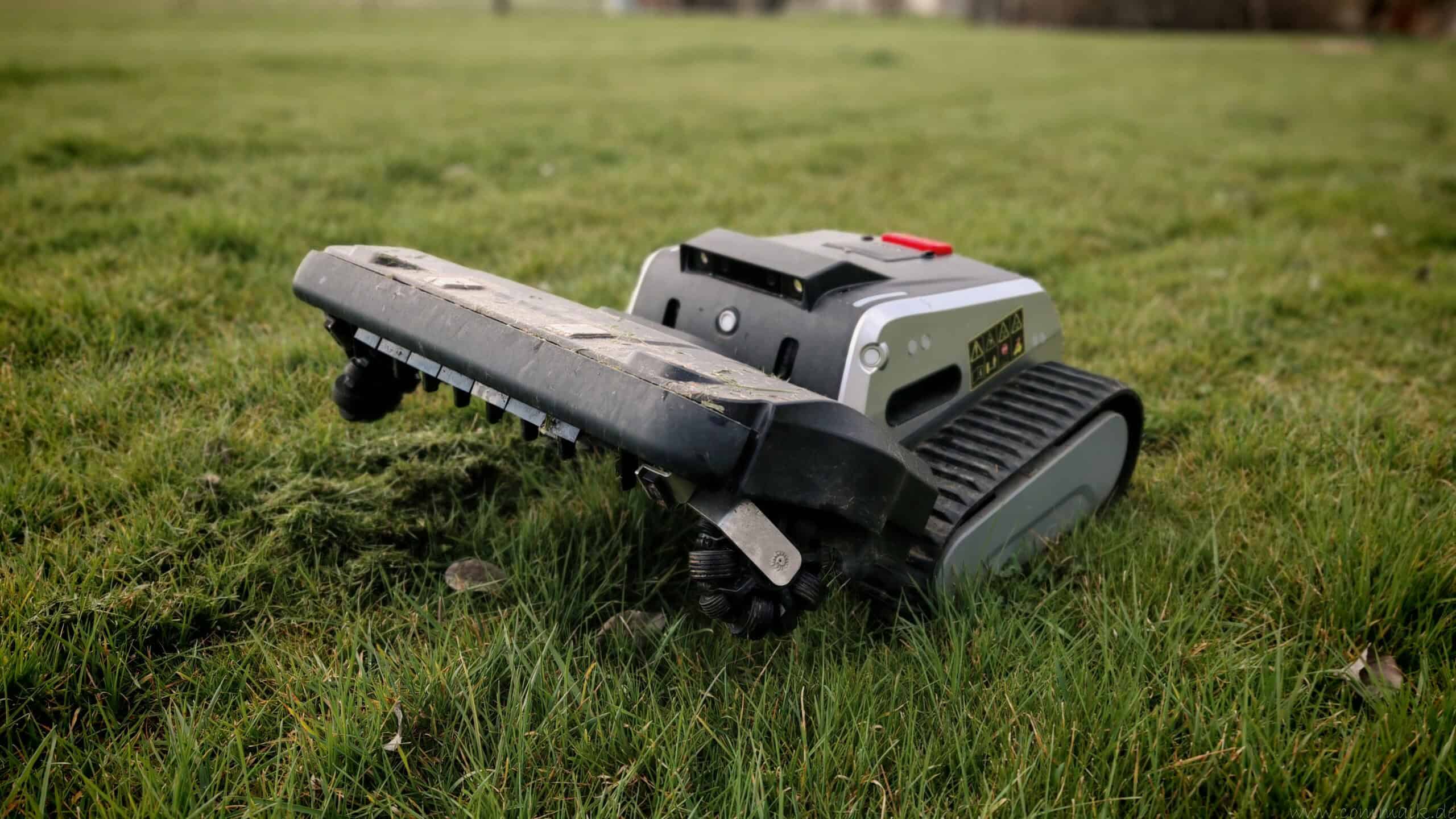
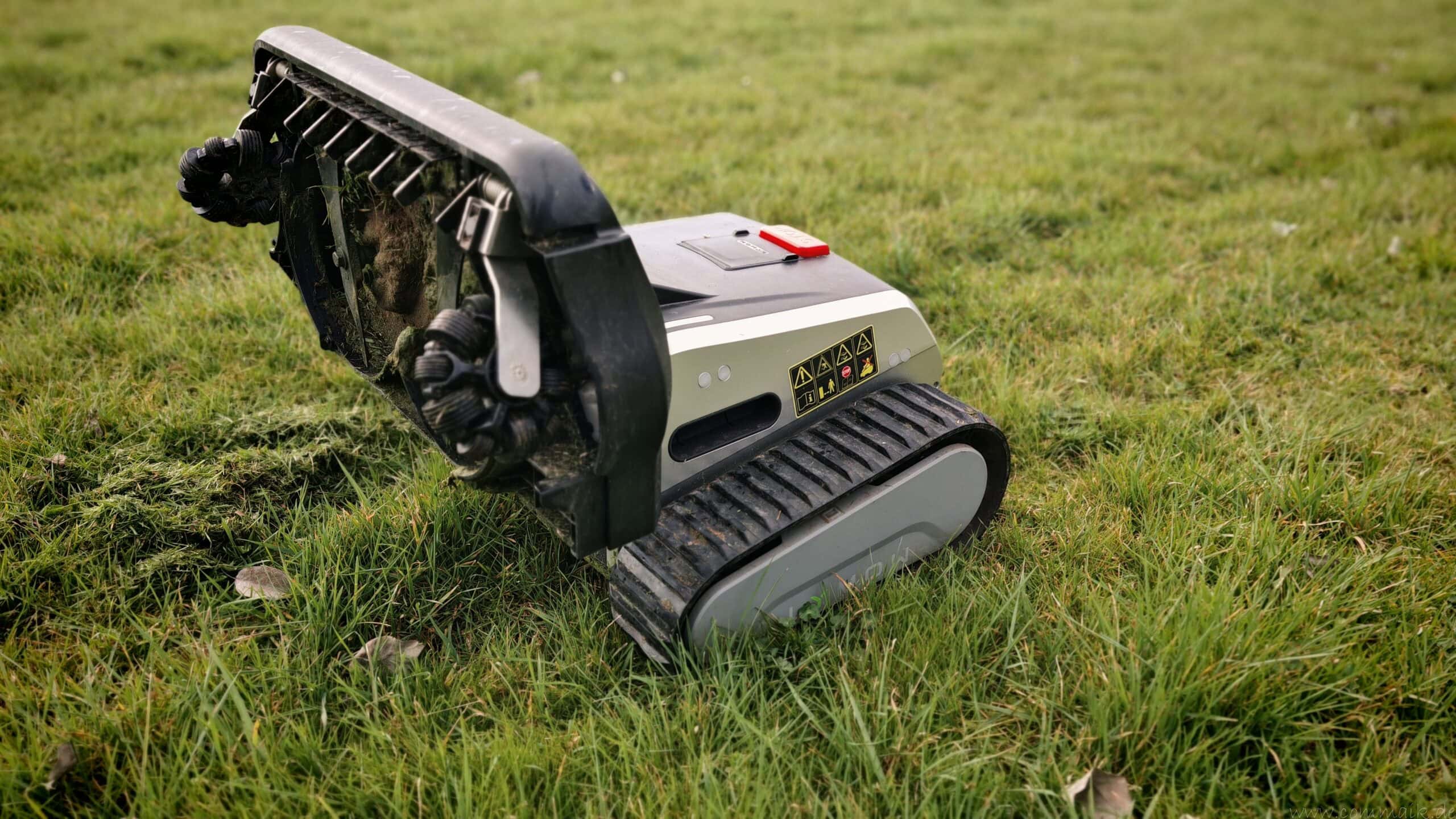
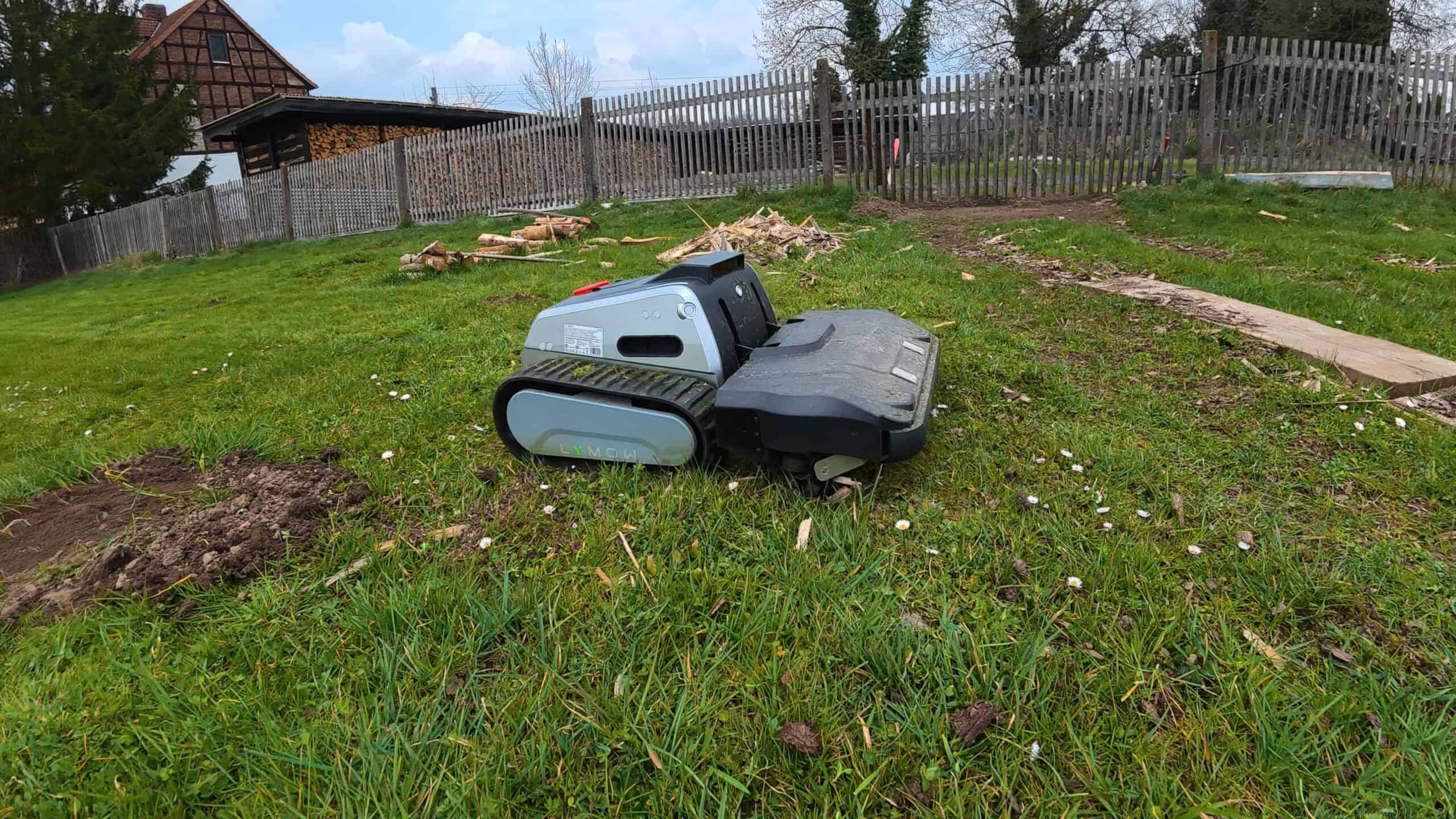
A key feature is the chain drive. The mower is a genuine chain-driven robotic mower and therefore differs significantly from classic wheeled devices. The wide tracks ensure even weight distribution and significantly more traction on uneven terrain.
According to the manufacturer, inclines of up to 45° (100 %) are possible. The strength of this concept is particularly evident on slopes or uneven ground. While many classic robotic mowers reach their limits in such conditions, the Lymow One Plus remains stable and controllable.
This is where the difference becomes clear: the Lymow One is not a typical robotic mower for well-tended lawns, but a robust tool for large and demanding areas.
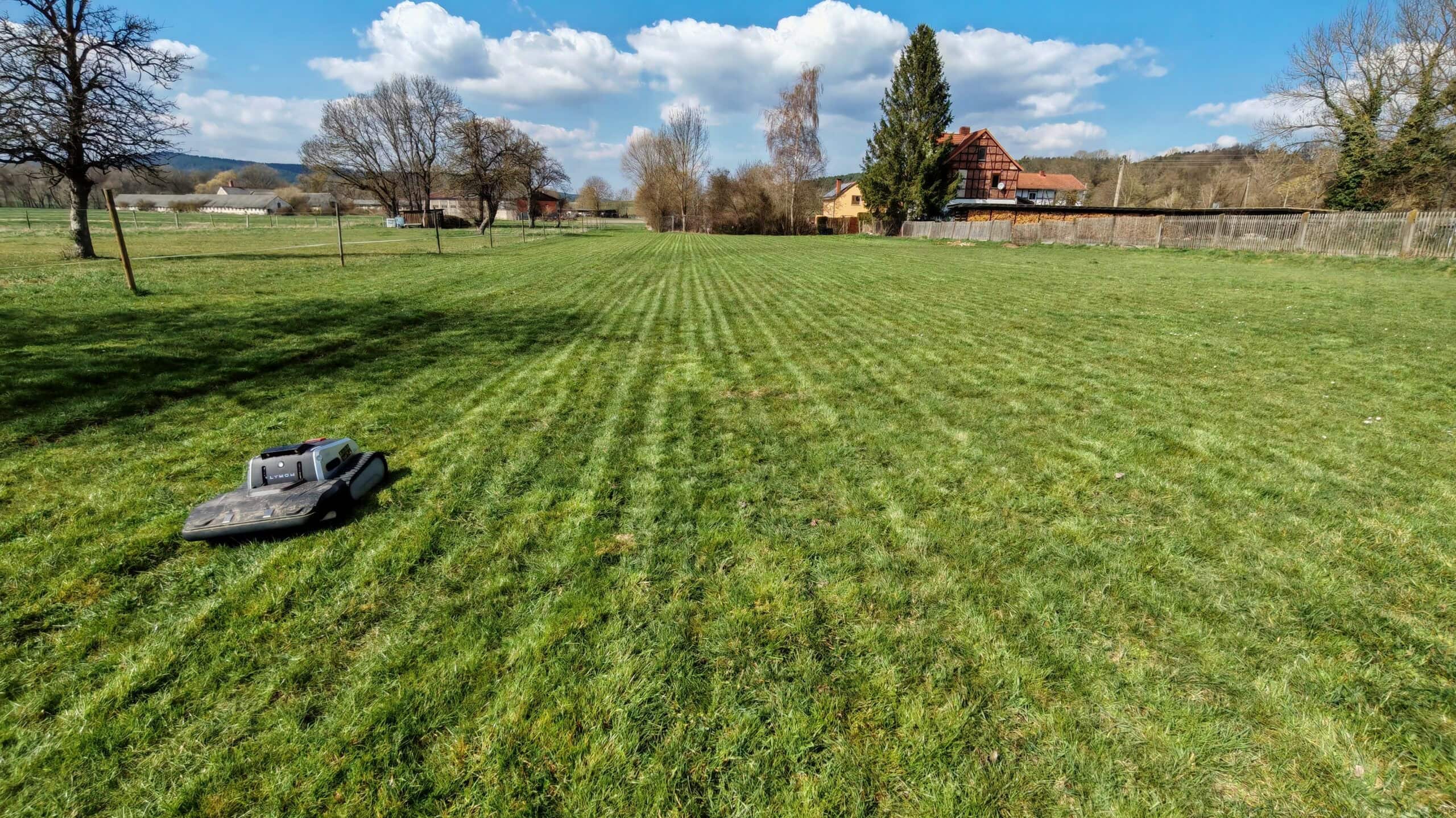
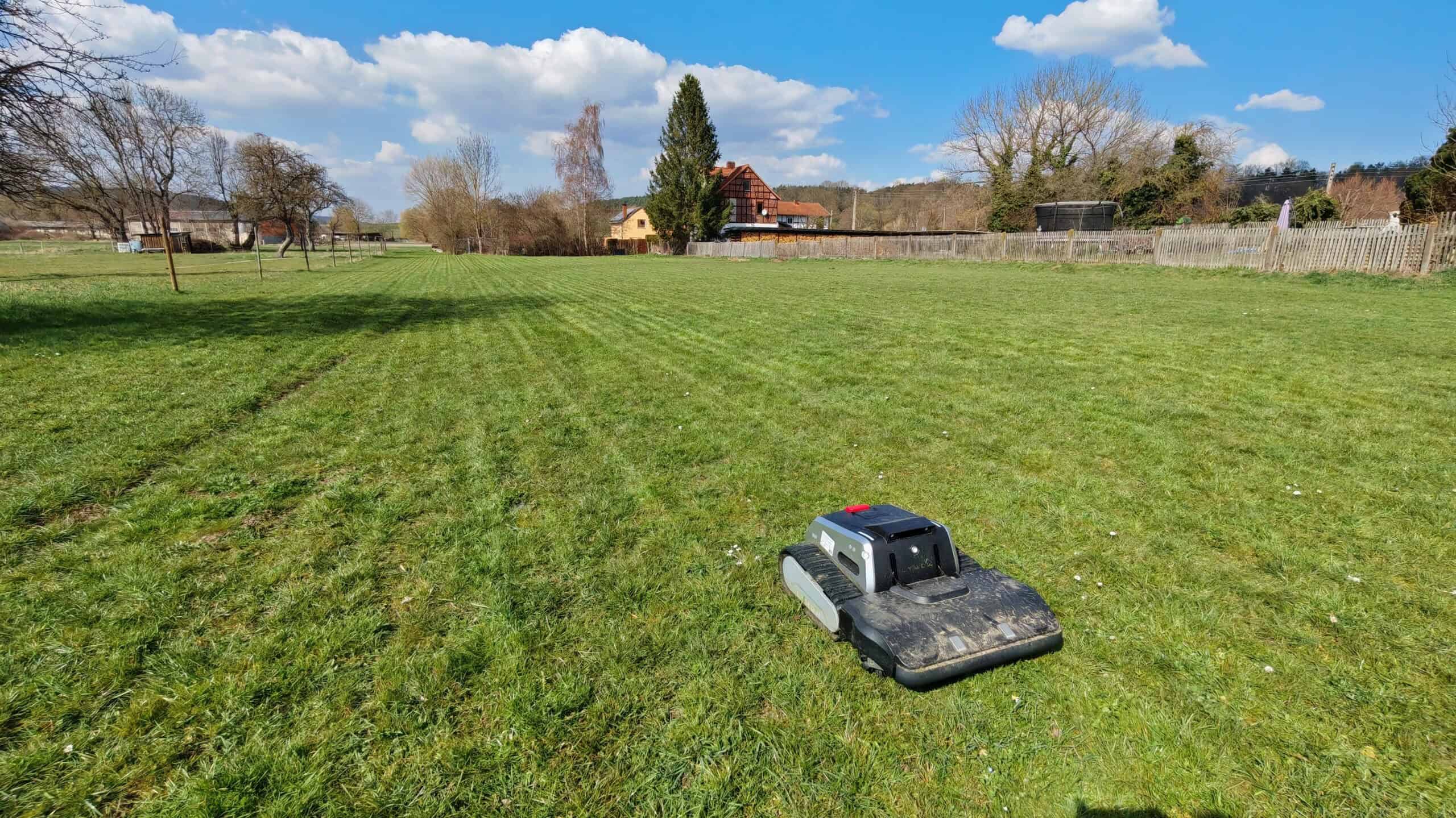
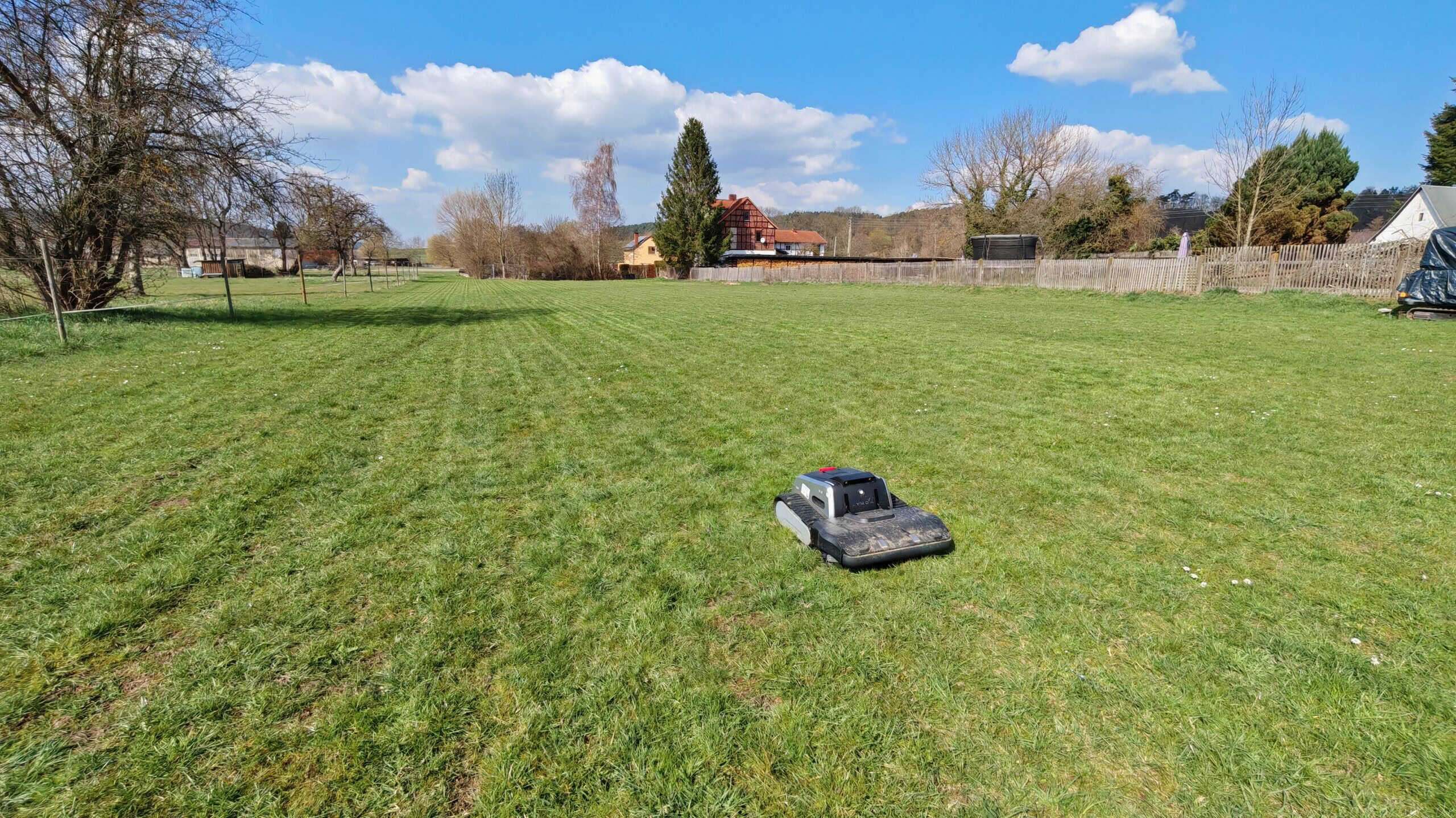
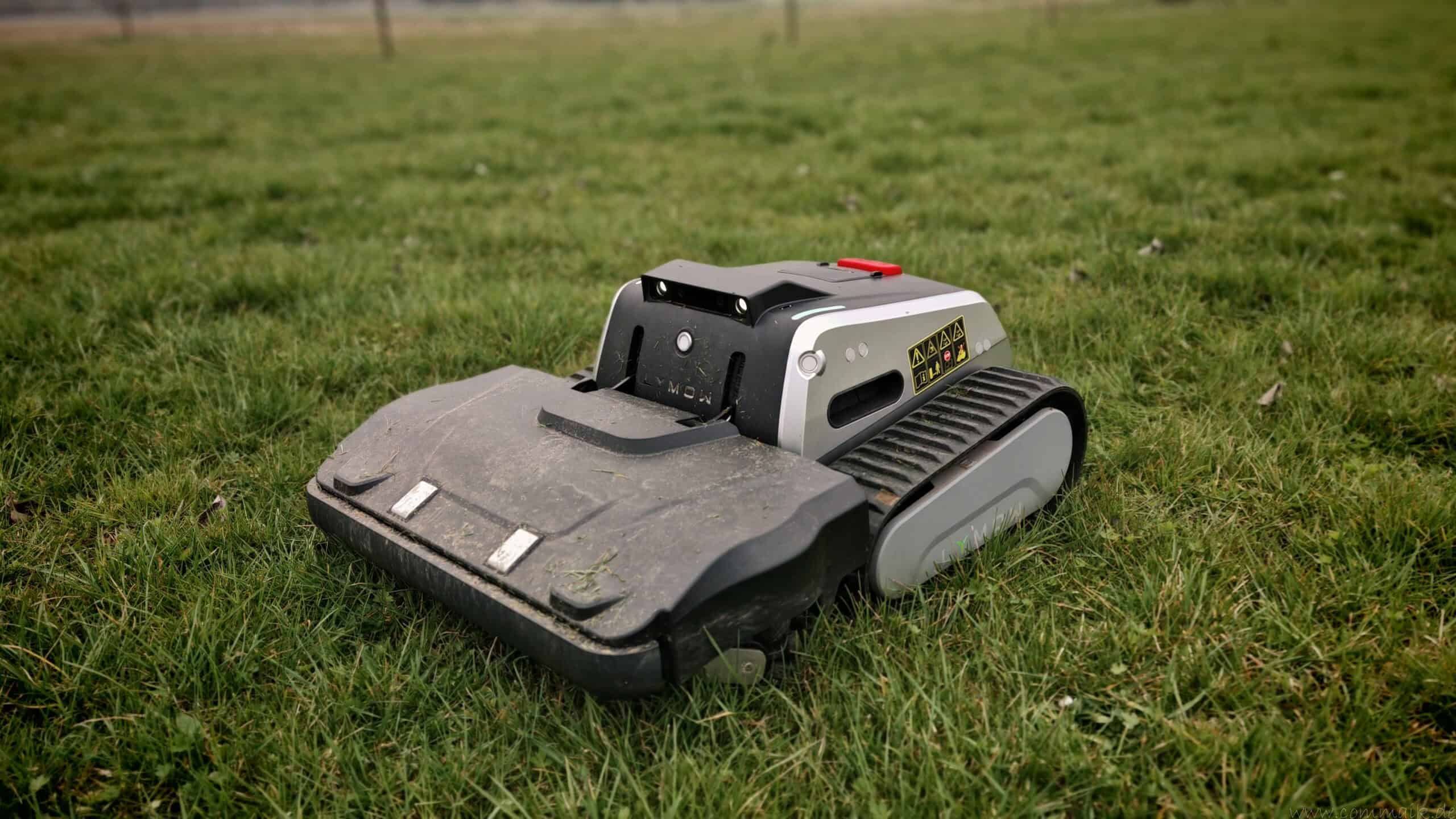
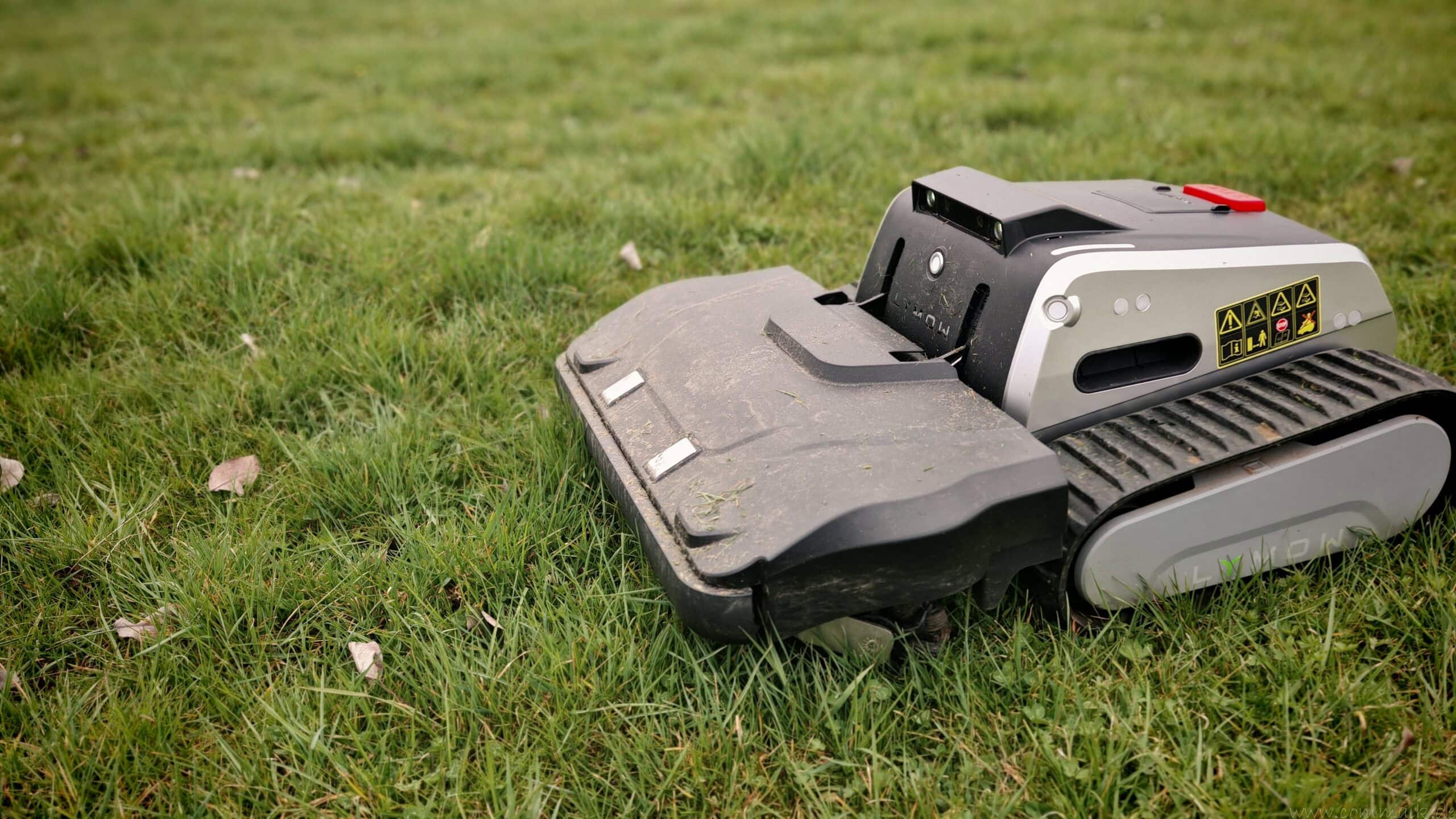
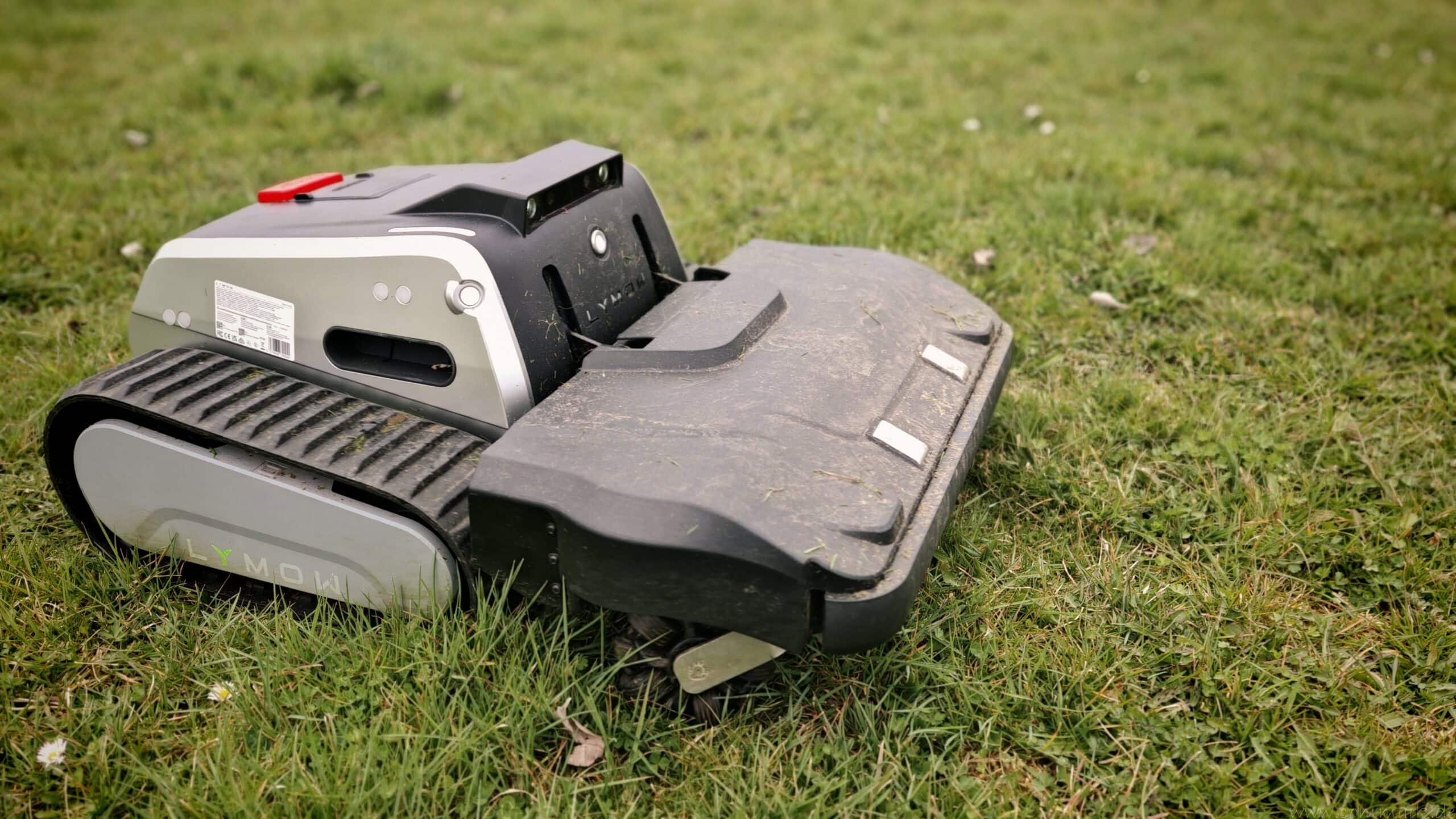
Design, chain drive and scope of delivery of the Lymow One Plus
Robust housing and caterpillar drive
The housing of the Lymow One Plus is solid and clearly designed for use in demanding conditions. At around 35 kg, this robotic lawnmower is not one of the lighter representatives in the robotic lawnmower segment – but this has a direct positive effect on stability and traction.
The chain drive with wide caterpillar tracks ensures even weight distribution on the surface. The off-road capability is particularly evident on uneven terrain, on damp ground or on slopes. While many robotic lawnmowers with classic wheels reach their limits in such conditions, the Lymow One Plus remains stable and controllable.
Another advantage is the robust design. The housing of the Lymow One is designed so that it can also be used on large and less well-kept lawns without any problems. This is precisely where the Lymow One robot mower differs significantly from classic devices, which tend to be optimized for even and well-maintained areas.
Scope of delivery at a glance and classification
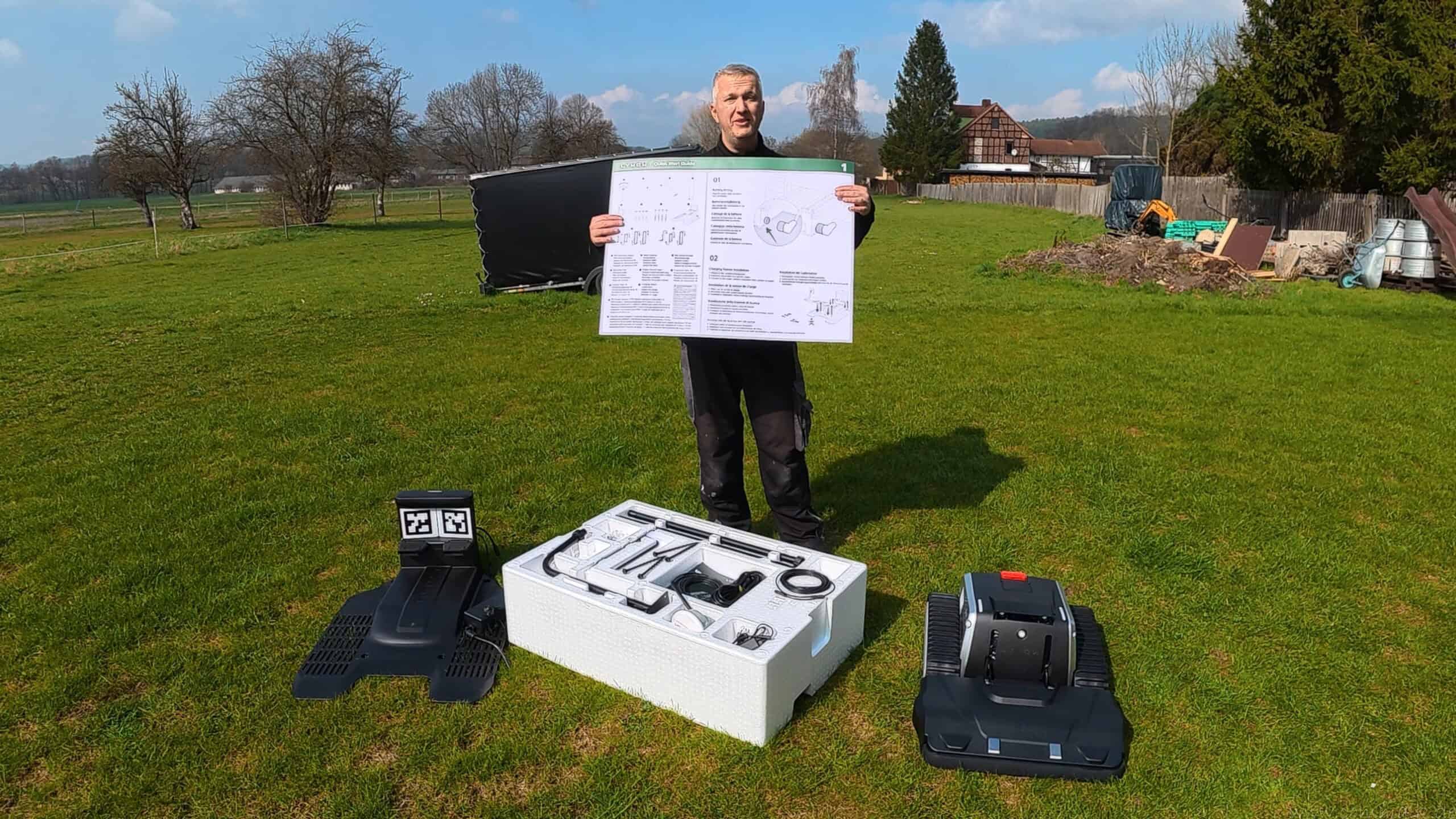
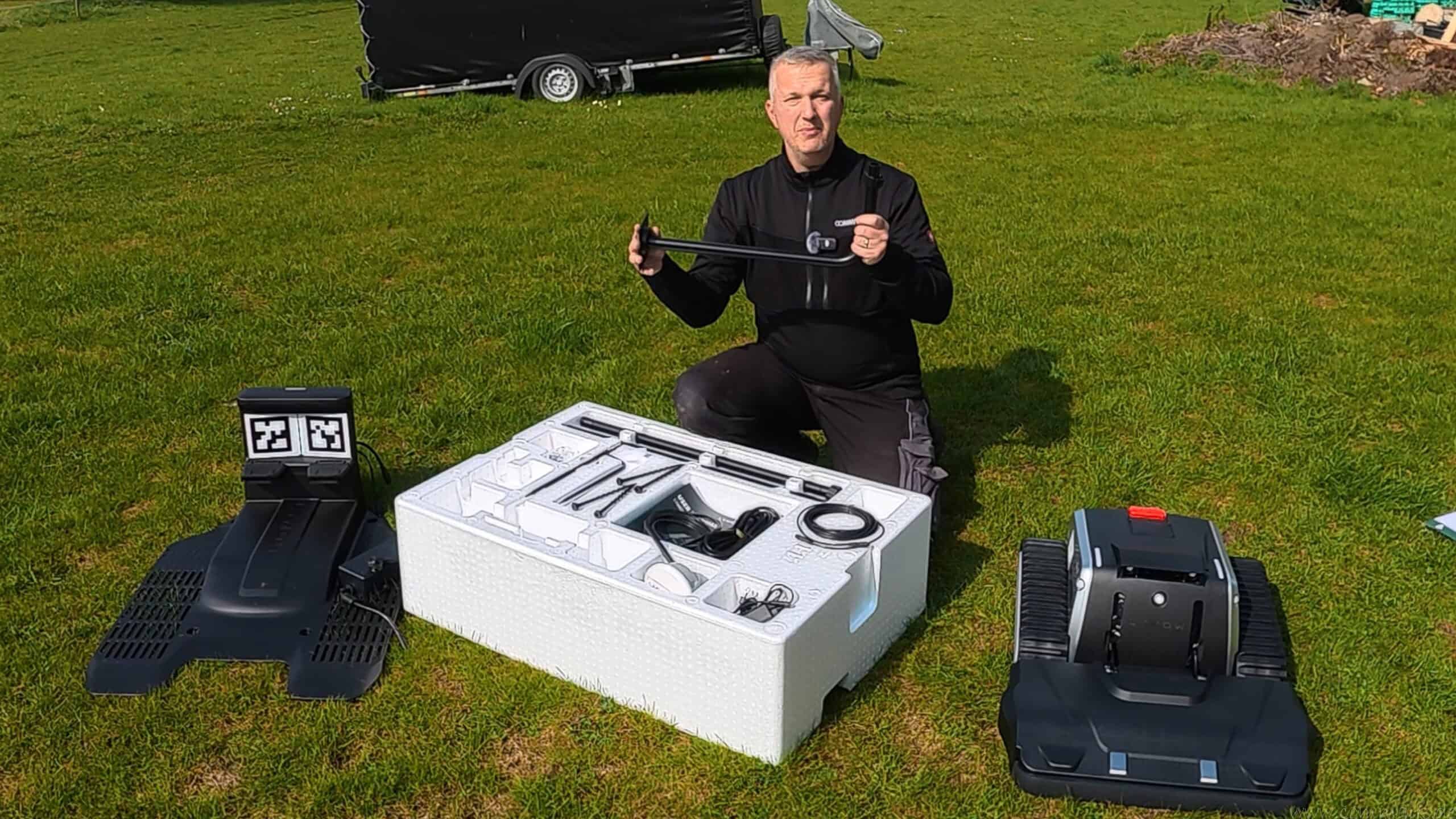
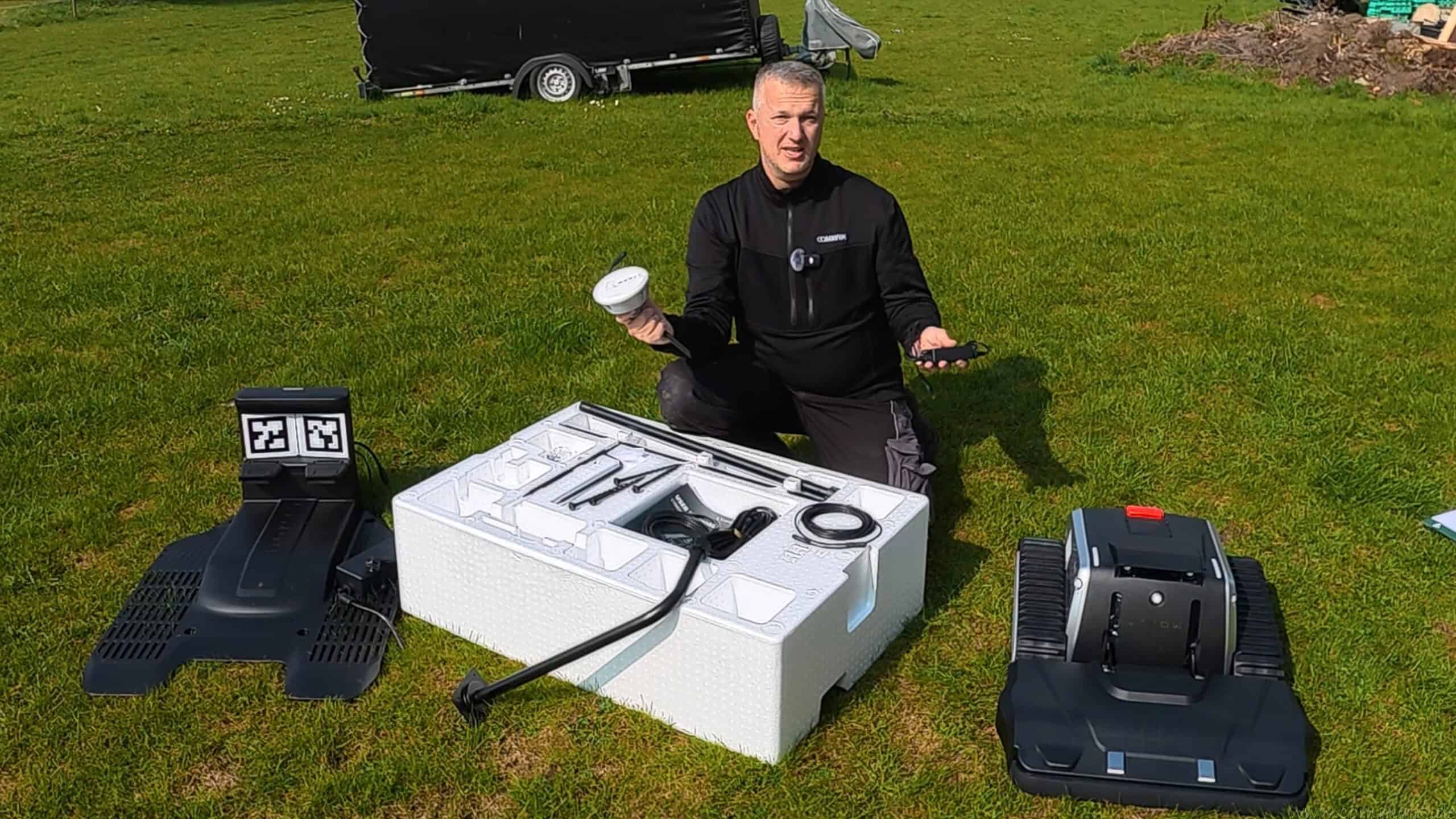
The scope of delivery of the new Lymow One Plus is extensive and clearly designed for installation without a boundary wire:
- Lymow One Plus robotic lawnmower
- Charging station incl. Power supply unit
- RTK antenna with bracket or ground spike
- Cable set for power supply and connection
- Mounting material for flexible installation
- Bluetooth connection for initial configuration
Accessories in detail
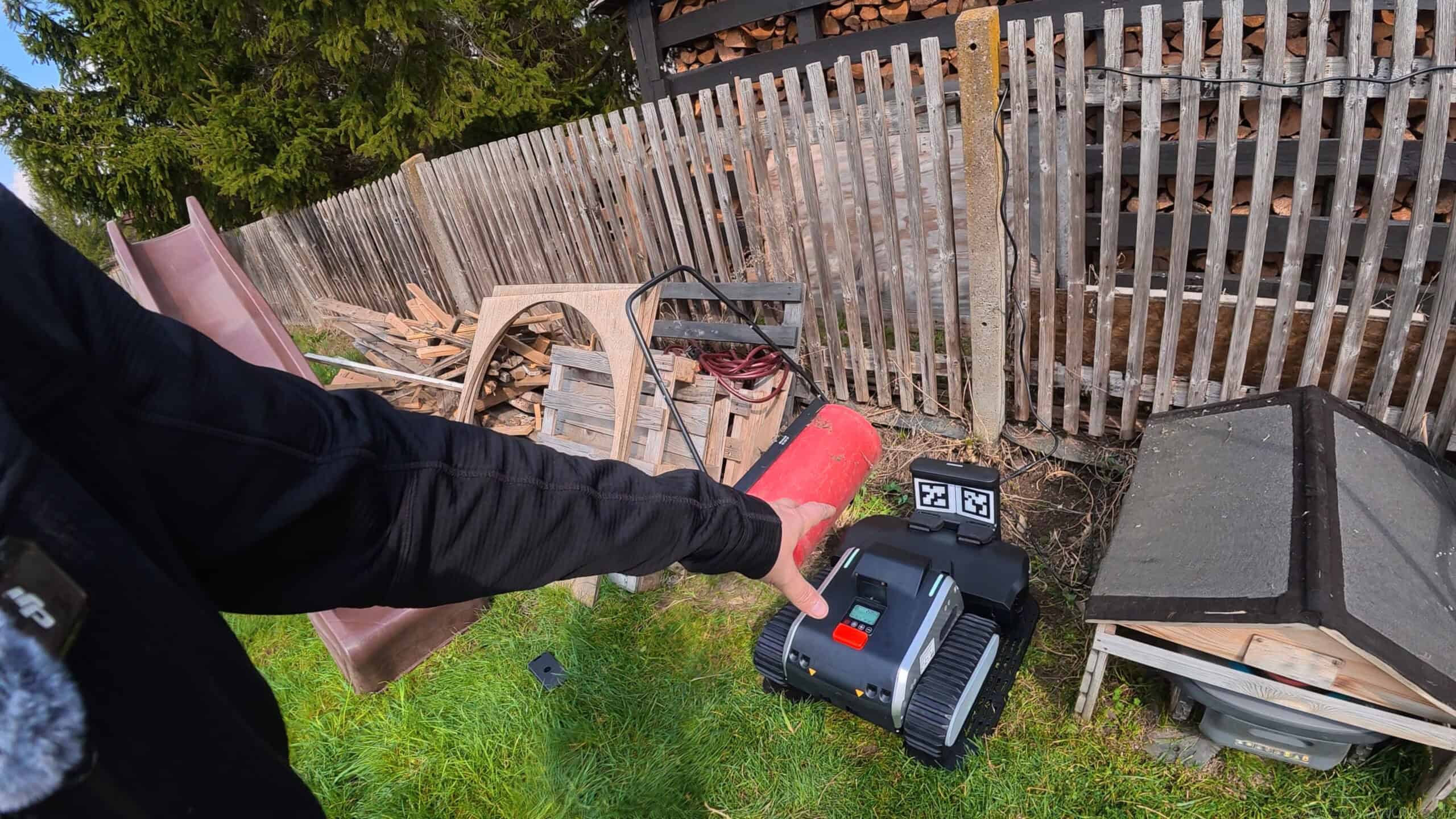
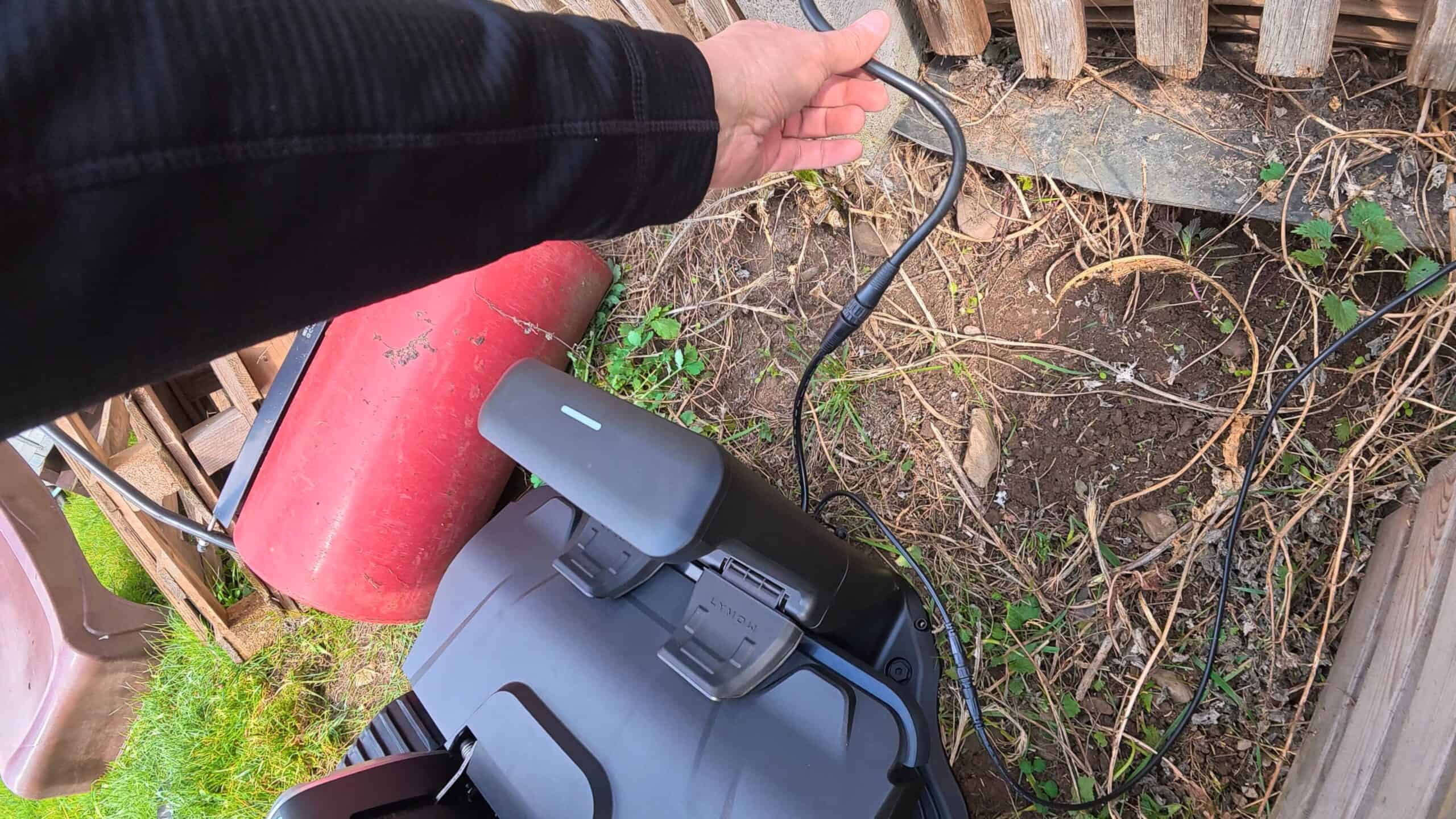
The charging station forms the central basis of the system. After mowing, the robot automatically returns to the charging station and charges the battery there. The supplied power supply unit ensures a stable power supply in continuous operation and is designed for outdoor use.
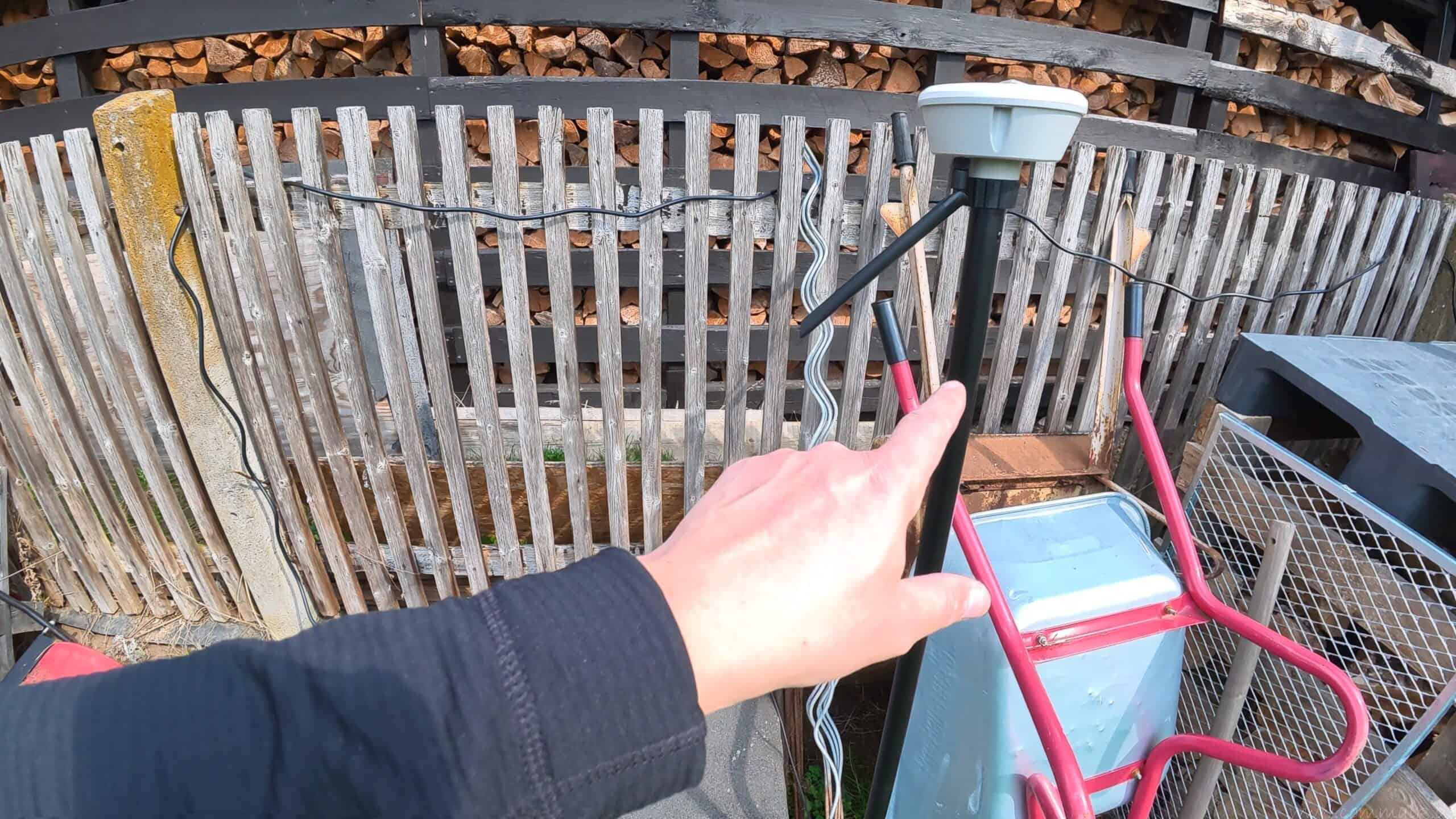
The RTK antenna is a key difference to classic robotic lawnmowers. While many systems rely on a boundary wire, the Lymow One Plus uses satellite-based navigation. The RTK antenna provides a precise reference signal, which is necessary for exact positioning. The Lymow can only map the area cleanly and navigate reliably if the antenna is correctly positioned.
This is a decisive advantage, especially for large properties. The time-consuming laying of a boundary wire is completely eliminated. At the same time, maintenance costs are reduced as typical sources of faults such as cable breaks or interruptions no longer occur.
The supplied cable set and mounting material allow flexible installation. Depending on the conditions on the property, the RTK antenna can be permanently mounted or positioned using a ground spike. This flexibility is particularly relevant for complex or large areas.
The first connection is made via Bluetooth. This is common with many robotic lawnmowers, but is particularly important with the Lymow One Plus, as the initial setup and subsequent mapping are prepared here.
Differentiation from classic robotic lawn mowers
The scope of delivery already shows that the Lymow One Plus has a different concept to classic robotic lawn mowers:
- No boundary wire required
- Focus on RTK-supported navigation
- Significantly more robust design
- Designed for large and demanding surfaces
This combination makes the Lymow One Plus a system that clearly distinguishes itself from the classic robotic mower and can be seen more as a powerful tool for large areas.
Where to buy and availability of the Lymow One Plus
The Lymow One Plus is currently mainly available through official distributors. Availability via large marketplaces such as Amazon is currently limited or not yet available, which is why direct purchase from the manufacturer is the most important source of supply.
The following options are available for the purchase:
Lymow One Plus:
🔗 https://lymowtradecolimited.pxf.io/E0EnyX
🔗 Rotation ring set: https://lymowtradecolimited.pxf.io/6kyaEN
🔗 528 Wh additional battery: https://lymowtradecolimited.pxf.io/NG9dbO
Lymow One (predecessor model):
🔗 https://lymowtradecolimited.pxf.io/2a4gL0
🔗 Mulching blade set: https://lymowtradecolimited.pxf.io/GKLQkn
🔗 Super Swing blade set: https://lymowtradecolimited.pxf.io/YRZjve
🔗 Replacement battery: https://lymowtradecolimited.pxf.io/Z6gmzK
The Lymow One Plus in particular shows that the current focus is clearly on direct sales. Accessories such as blades or an additional battery can be ordered directly to match the system. This is particularly interesting for users with large areas, as spare parts and extensions can be easily retrofitted.
Technical data: Power, battery and cutting width
Performance data of the Lymow One Plus at a glance
When looking at the technical data, it quickly becomes clear that the Lymow One Plus does not compete with classic robotic lawnmowers for small gardens, but is designed for large and demanding areas. This is reflected in several key specifications of the system.
The Lymow One Plus works with a LiFePO₄ battery with a capacity of 15 Ah and a nominal voltage of 35.2 volts. Depending on the power supply unit, the charging time is around 90 minutes with the 10A charger or 150 minutes with the 5A charger. According to the manufacturer, the maximum running time is up to 3 hours. Lymow states an area output of up to 2,300 m² per load and up to 7,000 m² per day.
The LiFePO₄ battery in particular is an important point. Compared to many other battery technologies, it is considered to be more durable, thermally stable and better suited to frequent charging cycles. According to the manufacturer, around 2,000 charging cycles are possible. For an appliance that is designed for large areas and regular use, this is a clear advantage.
Cutting width, speed and mower
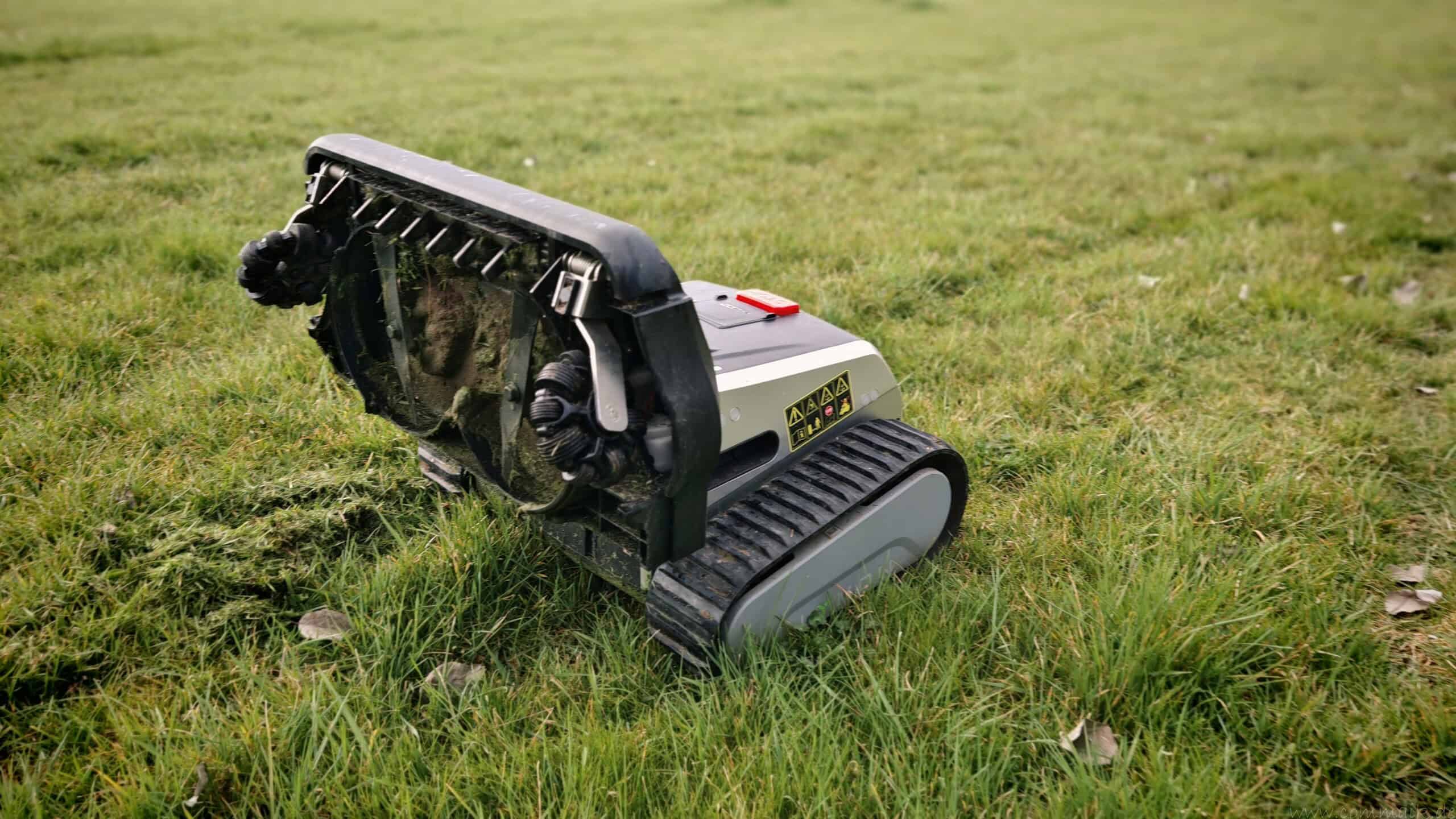
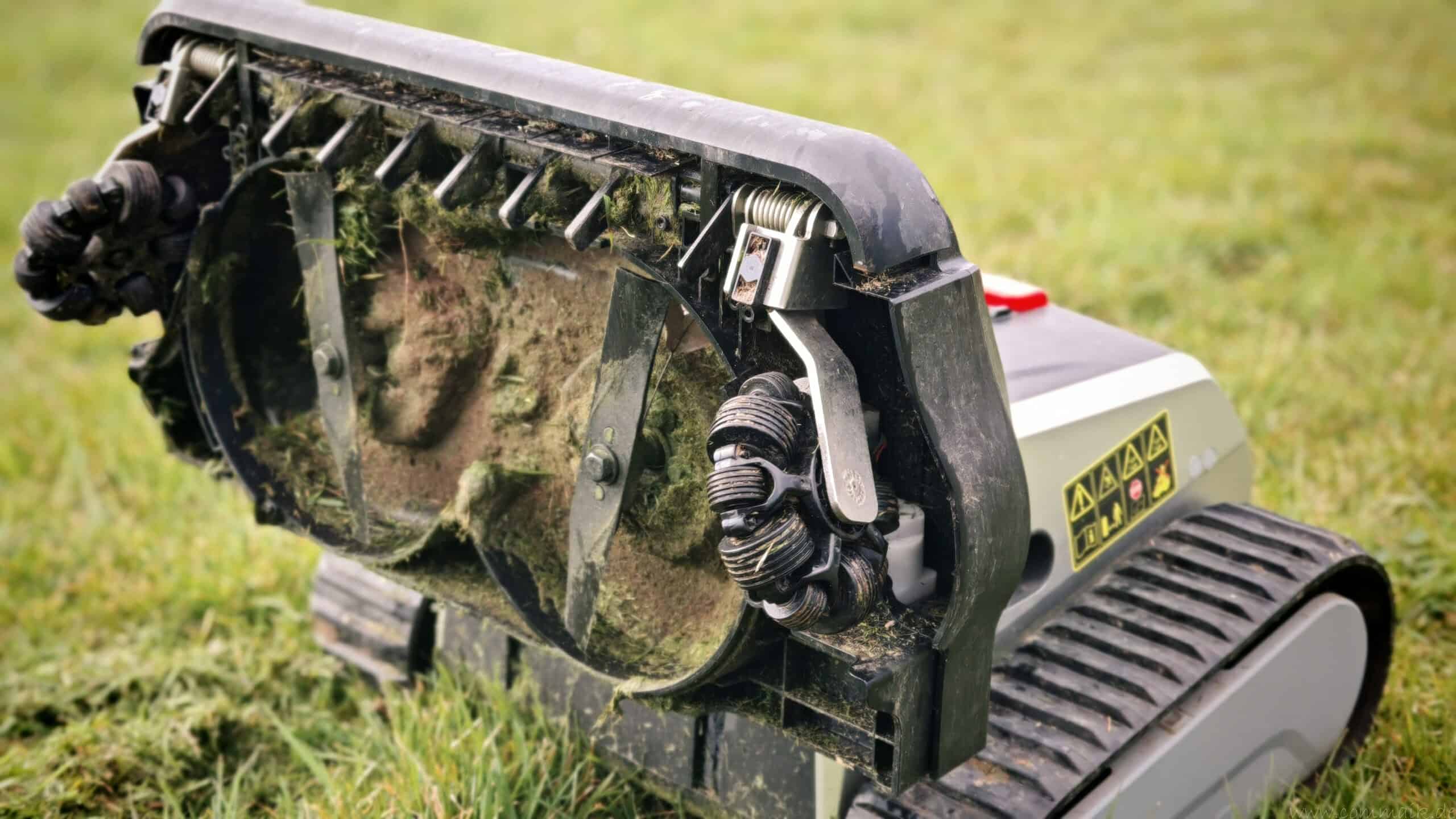
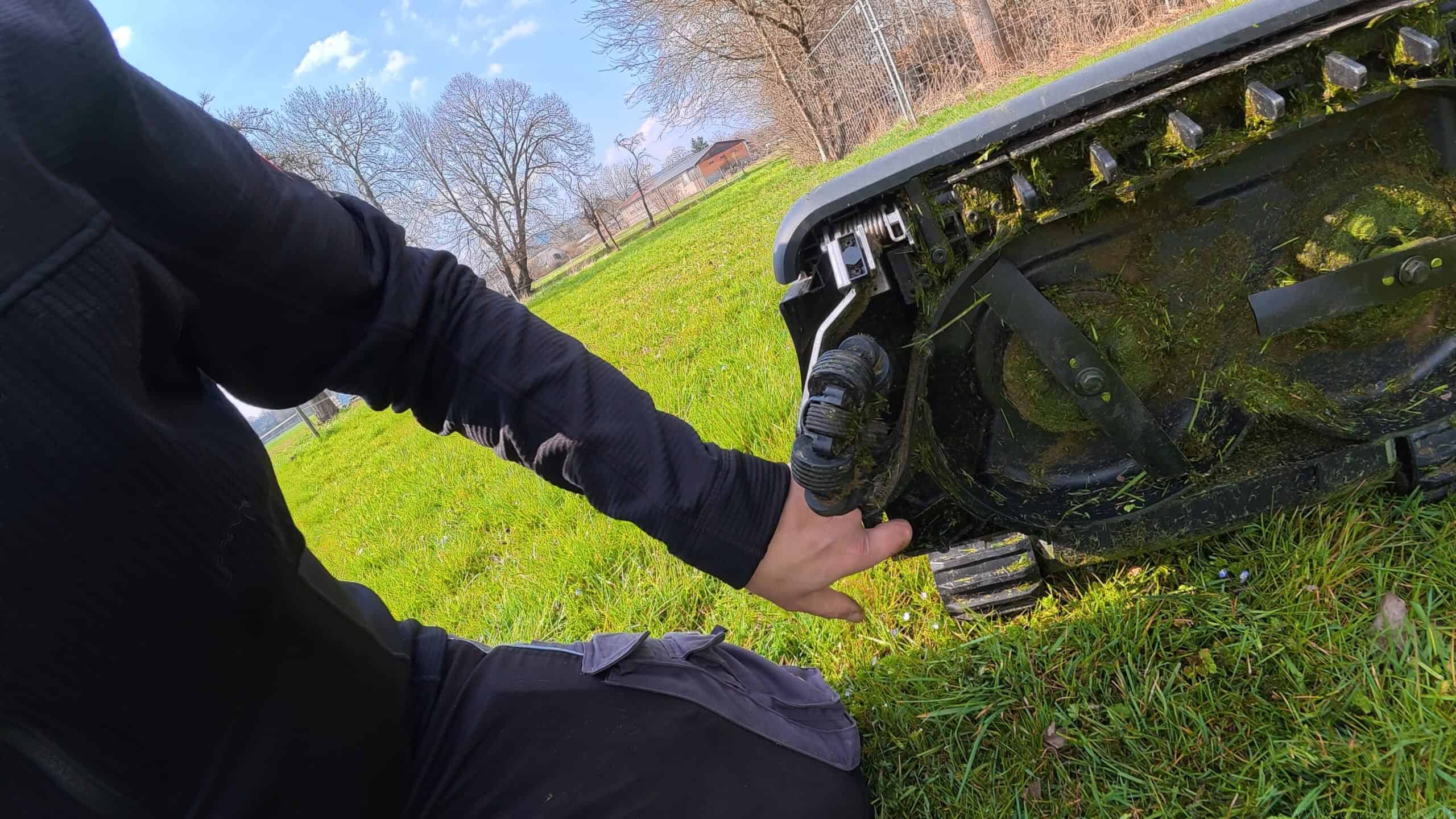
A key feature of the Lymow One Plus is the new LYCUT 2.0 mower deck. It works with two rotating blades made of SK5 tool steel, a cutting width of 400 mm and a blade speed of up to 6,000 revolutions per minute. There is also a movable mowing deck, i.e. a floating deck that can adapt to the ground.
The large cutting width of 40 cm offers a clear advantage in practice: significantly more area is covered per pass than with many smaller robotic lawnmowers. This reduces the number of routes and noticeably increases the area throughput. At the same time, the high speed ensures that the clippings are shredded more cleanly. This makes the mower significantly more powerful, especially with denser or taller vegetation.
The cutting height is also wide. It can be adjusted in the range from 30 to 100 mm. This means that the Lymow One Plus covers short lawns as well as higher and coarser areas. This is particularly interesting for properties that do not have the same level of maintenance everywhere.
Motor power and area efficiency
According to the manufacturer, the nominal power output is 680 watts and the peak output is as high as 1,785 watts. In addition, a maximum area output of 930 m² per hour is specified. These values clearly show that the Lymow One Plus has not been optimized for the smallest, lightest and quietest possible design, but for throughput, traction and mowing performance.
The brushless motor of the Lymow One ensures high and constant performance. This is particularly relevant when the robotic lawnmower is not only used on even ornamental lawns, but also on large and demanding areas. The combination of high speed, large cutting width and powerful drive makes the Lymow One Plus significantly more robust against thicker grass than many classic robotic mowers.
Incline, obstacles and off-road mobility
In addition to the mower deck, the off-road capability is also clearly defined from a technical point of view. The Lymow One Plus is designed for slopes of up to 45° or 100 %. It should also be able to overcome obstacles up to 70 mm high. This is precisely where the strength of the caterpillar or chain drive comes into its own. The wide tracks distribute the weight better on the ground and significantly improve traction.
The advantage of this design is obvious: on uneven terrain, on slopes or on soft ground, the robot remains more stable, controllable and tracks better than many robotic mowers with a classic wheel drive. This makes a significant difference, especially on large plots with varying ground conditions.
Navigation, connectivity and sensor technology
The combination of RTK, VSLAM, AI obstacle detection, 5 ultrasonic sensors and 2 Hall sensors is also technically interesting. Bluetooth, WLAN and 4G are also available as connectivity options. The map storage capacity is up to 60,000 m² and up to 80 zones can be managed. Without RTK, the Lymow One Plus should be able to continue working for around 100 to 150 m² or up to 10 minutes in emergency mode.
The practical advantage of this technical equipment lies above all in its greater self-sufficiency. The Lymow One Plus is therefore not just designed for a single, simple lawn, but for complex area structures with multiple areas, changing conditions and demanding navigation.
Technical classification
All in all, the technical data clearly shows the segment in which the Lymow One Plus operates. Large cutting width, high power throughput, powerful battery, robust off-road capability and sophisticated sensor technology combine to create a system that clearly sets itself apart from classic robotic mowers. It is precisely this combination that makes the Lymow One Plus so interesting for large areas, difficult slopes and demanding operating conditions.
Technical data of the Lymow One Plus at a glance
The technical specifications clearly show the direction in which the Lymow One Plus has been developed. Instead of compact design and minimal noise, Lymow consistently focuses on performance, throughput and off-road capability. Factors such as cutting width, battery capacity, incline and navigation play a decisive role, especially for large and demanding areas.
The following overview summarizes the most important technical data of the Lymow One Plus in compact form and provides a good basis for comparison with classic robotic lawn mowers.
| Feature | Specification |
|---|---|
| Model | Lymow One Plus |
| Field of application | Large and demanding surfaces |
| Area output | Up to 7,000 m² per day |
| Area per load | Up to approx. 2,300 m² |
| Max. Speed | Up to approx. 930 m² per hour |
| Battery | LiFePO₄, approx. 35.2 V / 15 Ah |
| Runtime | Up to 3 hours |
| Loading time | Approx. 90-150 minutes (depending on charger) |
| Cutting width | 400 mm (40 cm) |
| Cutting height | Approx. 30-100 mm |
| Knife system | 2 rotating SK5 steel blades (LYCUT 2.0) |
| Blade speed | Up to 6000 rpm |
| Mowing deck | Floating deck (movably mounted) |
| Drive | Track drive (caterpillar tracks) |
| Max. Gradient | Up to 45° (100 %) |
| Overcoming obstacles | Up to approx. 70 mm |
| Navigation | RTK + VSLAM + AI |
| Sensors | Camera, ultrasonic sensors, lift & rain sensor |
| Connectivity | Bluetooth, WLAN, optional 4G |
| Zone management | Up to 80 zones |
| Card memory | Up to 60,000 m² |
| Weight | Approx. 35 kg |
| Protection class | IPX6 (waterproof) |
Lymow One vs Lymow One Plus – the most important differences at a glance
As I had already tested the Lymow One, the direct comparison is particularly exciting. The new Lymow One Plus is not a completely new development, but a consistent further development of the existing system. The focus is clearly on more power, an improved cutting system and overall greater efficiency on large areas.
The most important change concerns the LYCUT 2.0 mower deck. Thanks to the higher speed and optimized blade geometry, the grass is cut more cleanly and shredded more finely at the same time. In practice, this results in a more even cutting pattern, especially with dense or uneven vegetation.
The engine has also been significantly reinforced. According to the manufacturer, the performance of the new Lymow One Plus is up to 2.6 times higher. This is particularly noticeable in difficult conditions – i.e. high grass, uneven terrain or large areas that need to be worked efficiently.
Another point is the optimized navigation. While the Lymow One already relied on RTK and VSLAM, the interaction of the systems has been further improved in the new model. This ensures more stable navigation, especially in areas with limited satellite reception.
The chain drive has also been revised. The integrated cleaning function ensures that less dirt accumulates and traction remains constant in the long term. This is a noticeable advantage, especially in changing conditions on large plots of land.
The bottom line is clear: the Lymow One Plus is designed more for large and demanding areas and offers more reserves in all relevant areas.
Technical comparison: Lymow One vs Lymow One Plus
| Feature | Lymow One | Lymow One Plus |
|---|---|---|
| Field of application | Large areas | Large and demanding surfaces |
| Area output | Up to approx. 5,000-6,000 m²/day | Up to 7,000 m²/day |
| Motor power | Standard | Up to 2.6 times stronger |
| Cutting system | LYCUT 1.0 | LYCUT 2.0 |
| Knife | Rotary knife (older geometry) | Optimized SK5 rotation blades |
| Cutting width | approx. 40 cm | 40 cm |
| Speed | Lower | Up to 6000 rpm |
| Mowing deck | Partially flexible | Floating deck (movably mounted) |
| Mulching performance | Good | Significantly improved |
| Navigation | RTK + VSLAM | RTK + VSLAM + optimized AI |
| Obstacle detection | Basis AI | Improved AI + sensor technology |
| Drive | Chain drive | Optimized chain drive |
| Chain cleaning | Manual | Automatically integrated |
| Gradient | Up to 45° | Up to 45° |
| Furnishings | App + RTK | App + RTK (improved) |
| Target group | Large areas | Large and sophisticated properties |
Setup, RTK and mapping via app with the Lymow One Plus
Installing the charging station and RTK antenna
Setting up the Lymow One Plus starts with positioning the charging station and the RTK antenna. Both components are crucial for stable navigation and subsequent autonomous operation of the robotic lawnmower.
The charging station is placed in a suitable location on the property, ideally easily accessible and with sufficient space for safe docking. As the robot regularly returns to the charging station, this area should be as level as possible and free of obstacles.
The power supply unit is then connected and provides a permanent power supply. It is important that the installation is protected from the weather but still easily accessible.
The RTK antenna plays a central role in the Lymow One Plus. It serves as a reference point for satellite-based navigation. A clear view of the sky is crucial for the RTK signal to work stably. Buildings, trees or other obstacles can affect the signal and should be avoided if possible.
Depending on the conditions on the property, the antenna can either be permanently mounted on a wall or flexibly positioned using a ground spike. For large areas in particular, it makes sense to choose the position of the RTK antenna carefully in order to achieve the most even coverage of the entire area.
Initial setup and connection with the app
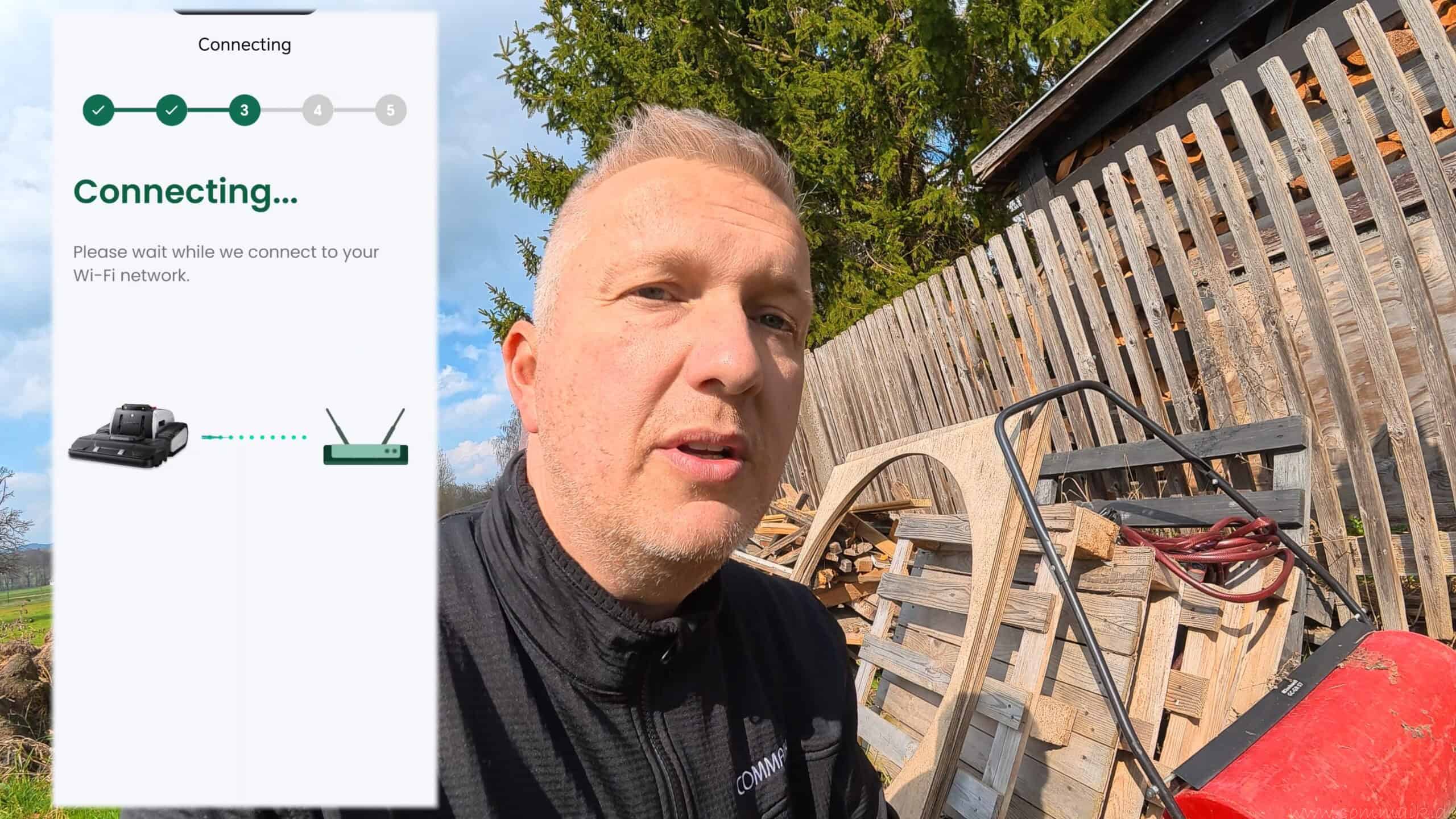
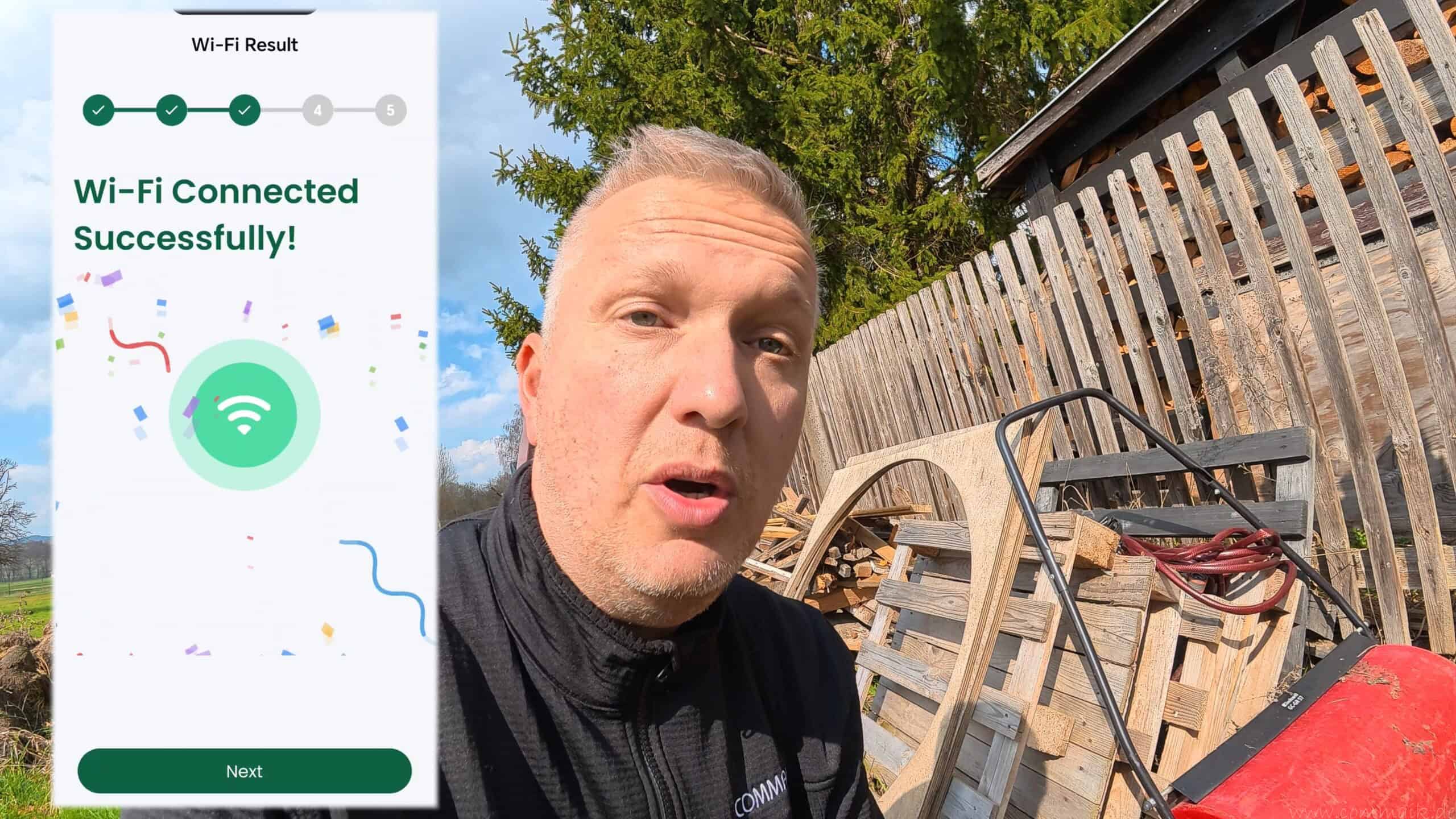
After the physical installation, the connection to the app is established. The first pairing usually takes place via Bluetooth. This means that the Lymow One Plus is initially recognized locally and integrated into the system.
The next step is to set up the WLAN connection. This is necessary in order to be able to control the robotic lawnmower remotely later on and to receive updates. The Lymow One is then controlled entirely via the app.
The app acts as the central control unit. All relevant settings are made here – from area management to time control.
Mapping the area without boundary cable
A major difference to classic robotic mowers is the mapping of the area without a boundary wire. The Lymow One Plus completely eliminates the need for time-consuming manual laying.
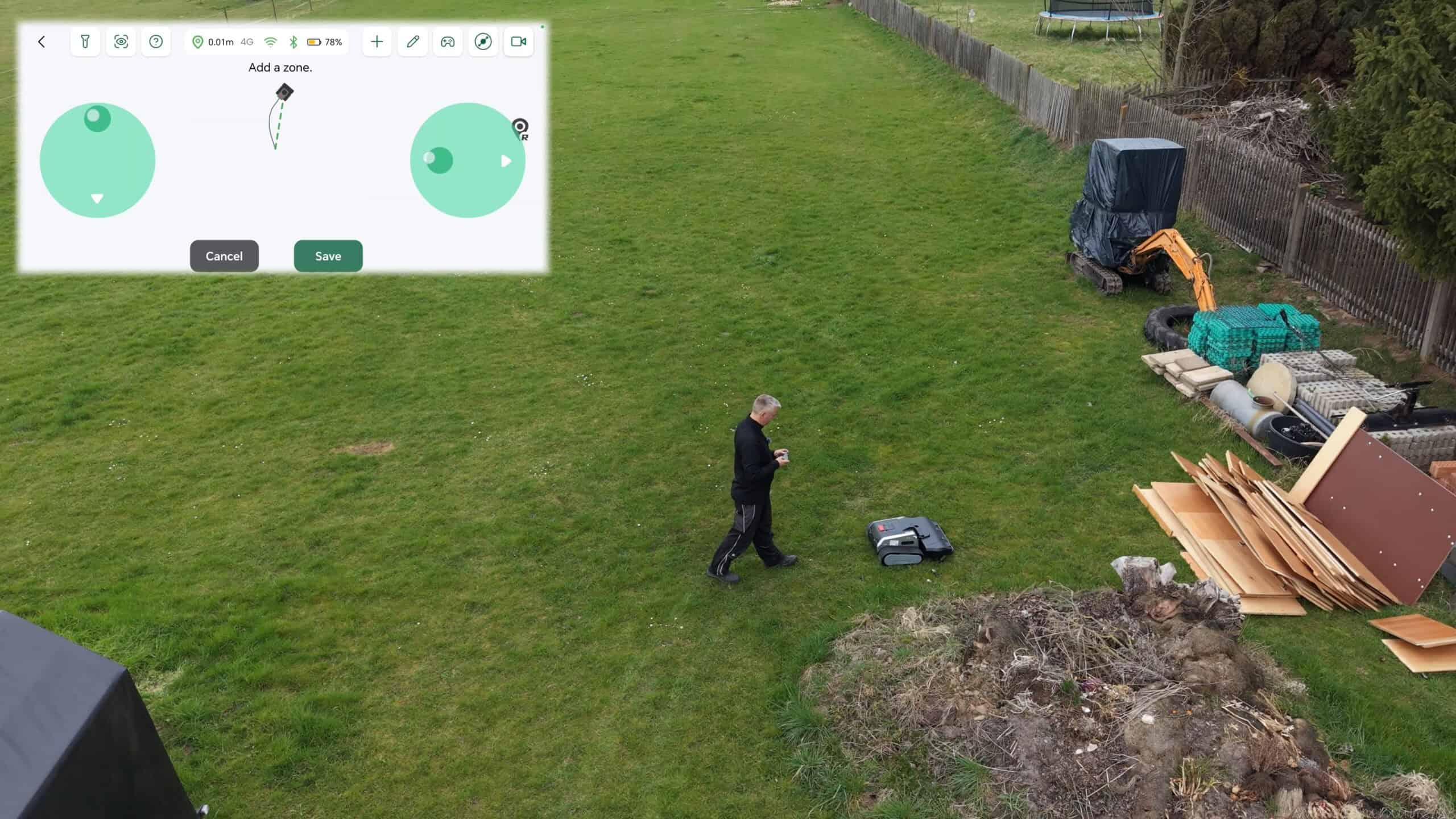
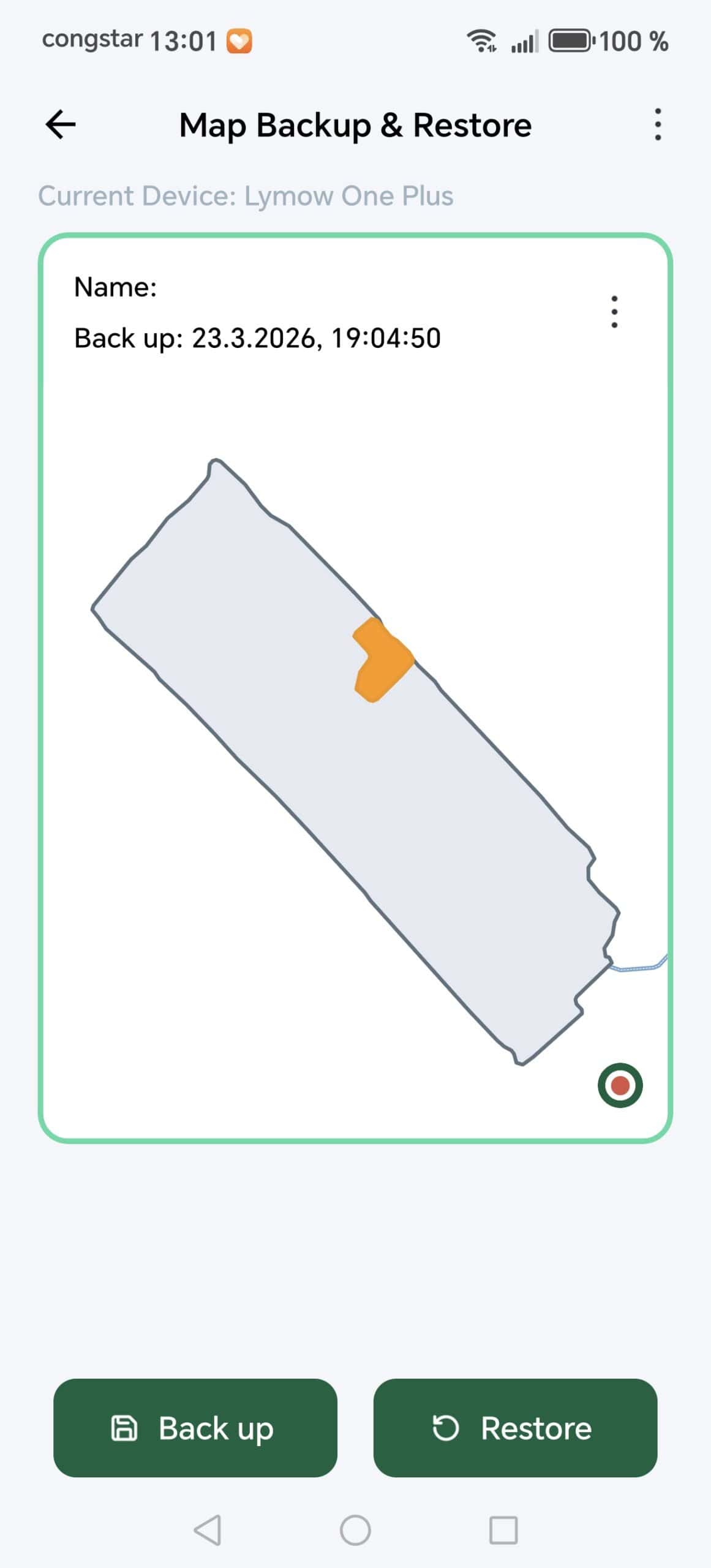
Instead, the surface is actively and smartly taught in. The robot travels over the desired area and digitally records the boundaries. This process is semi-automatic and is controlled via the app.
During the mapping process, I define the outer boundaries of the area as well as possible zones within the property. These can be separate lawns, paths or different areas with individual requirements, for example.
This is an enormous advantage, especially for large properties. Changes can be made directly via the app at any time without having to lay or adjust physical cables.
Zones, schedules and control in everyday life
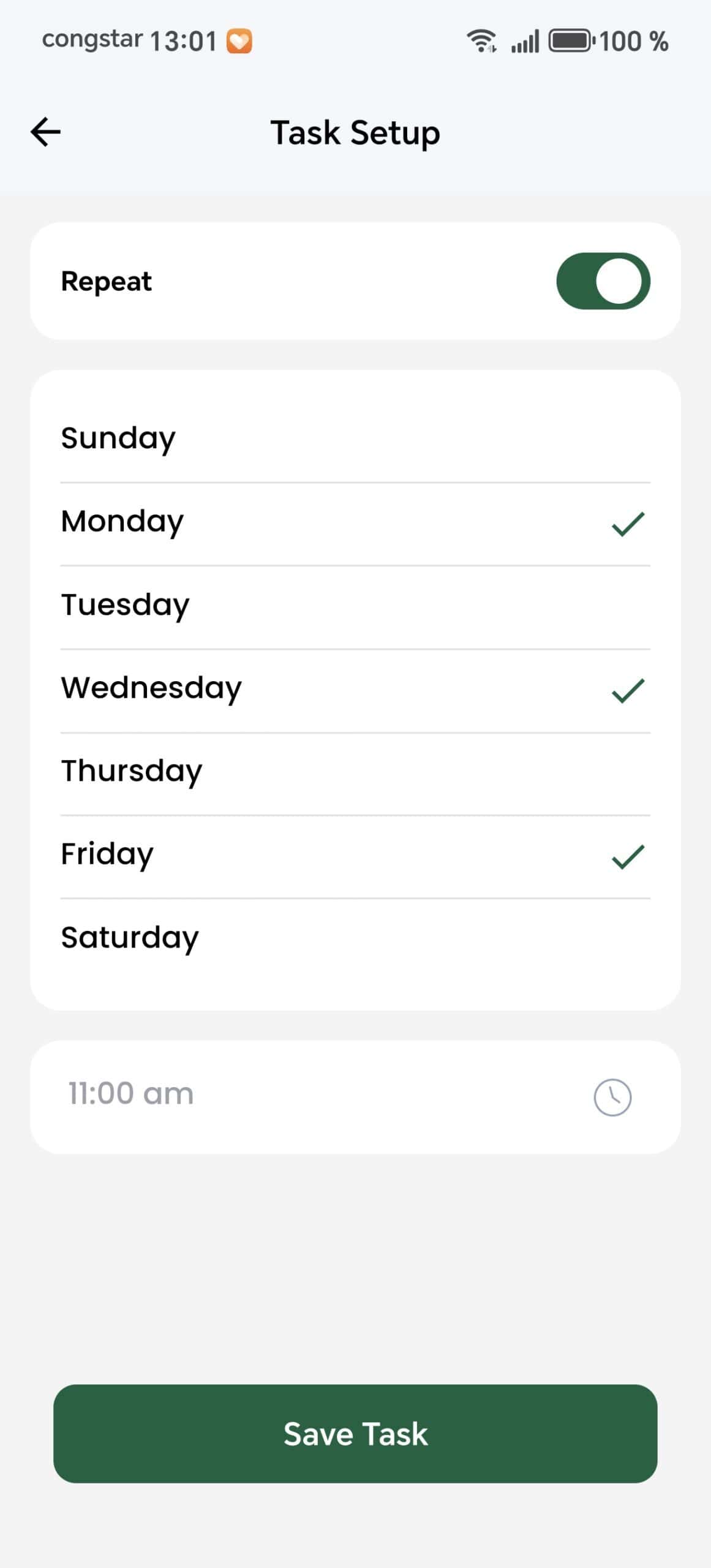
After mapping, individual zones can be defined and individually configured. Mowing times, cutting height and priorities can be set for each zone.
The Lymow One robotic lawnmower is controlled entirely digitally. Once set up, the system works largely autonomously. The robot starts automatically, processes the defined areas and then returns automatically to the charging station.
This combination of RTK, VSLAM and app control creates a system that is particularly suitable for large and complex areas. Although the set-up requires a little more planning than with simple robotic lawnmowers, it offers significantly more flexibility and long-term benefits.
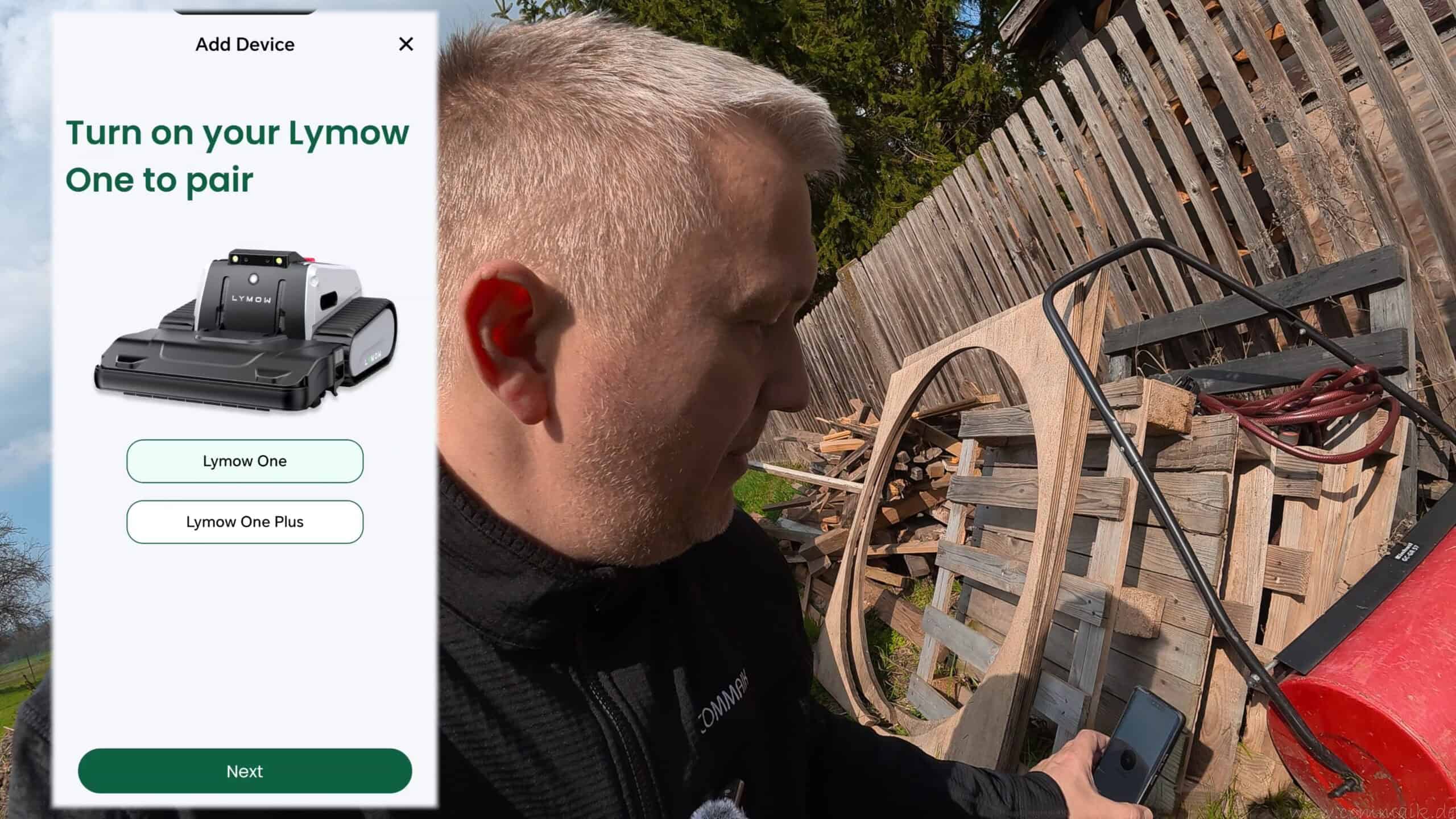
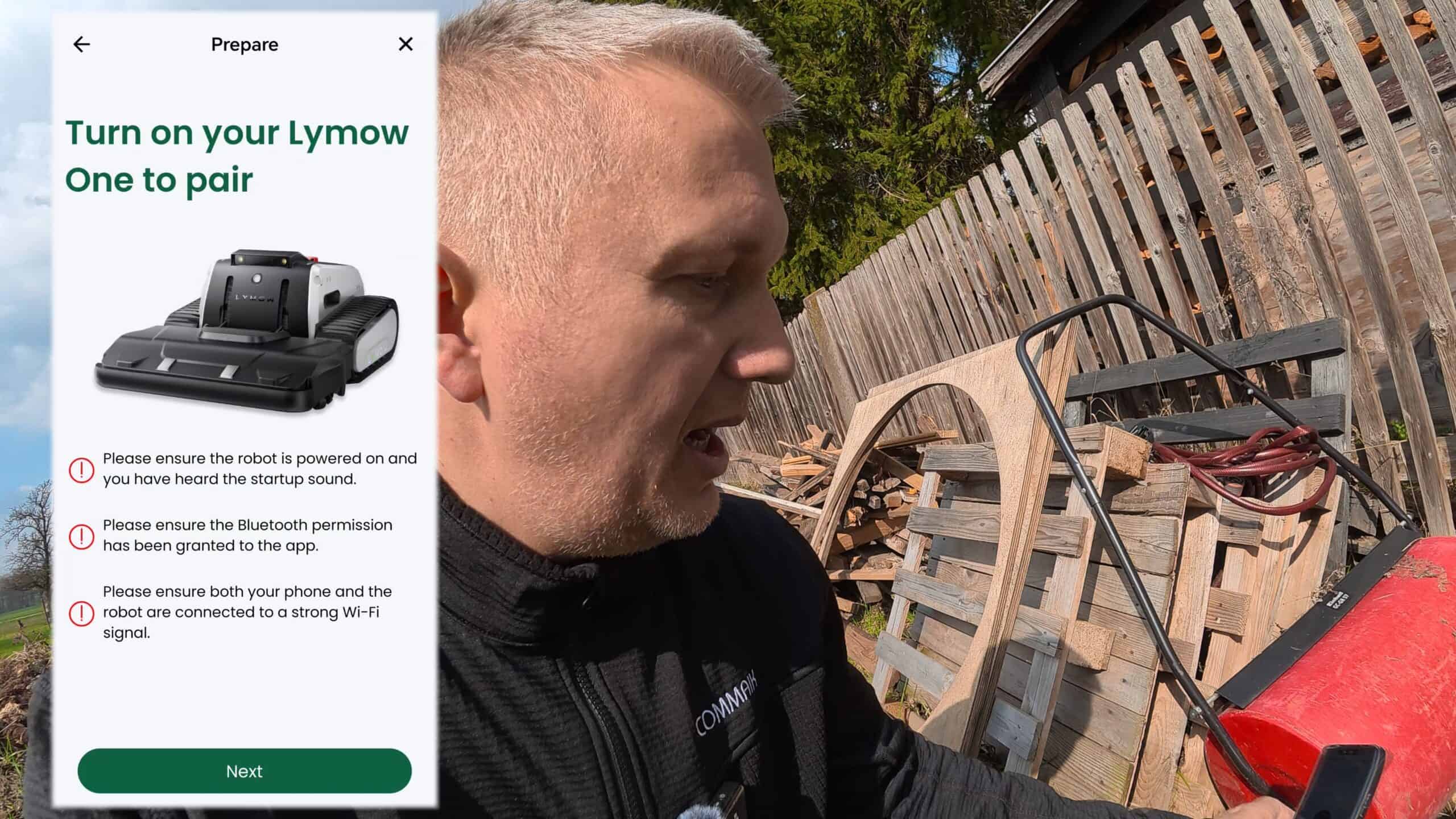
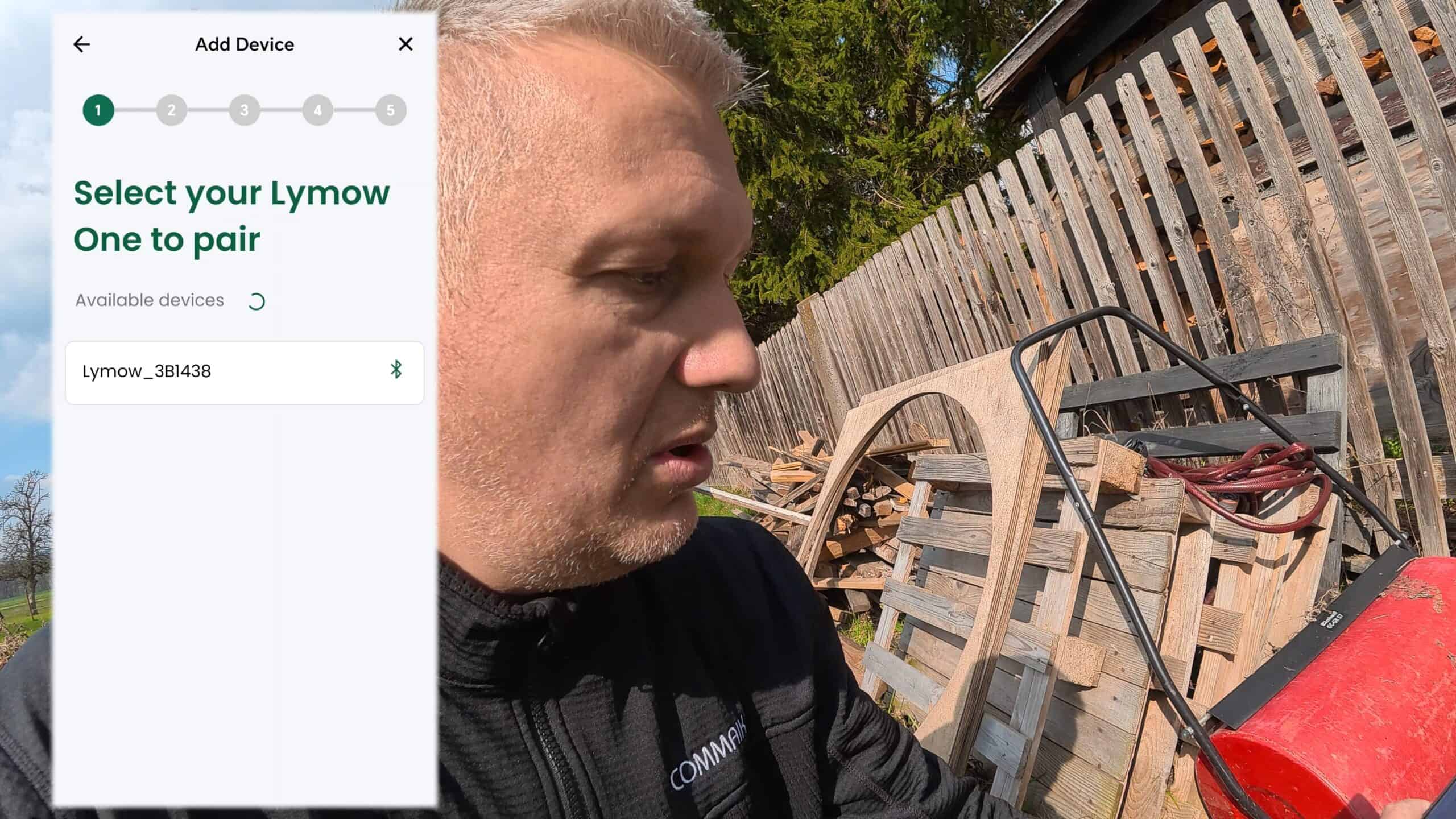
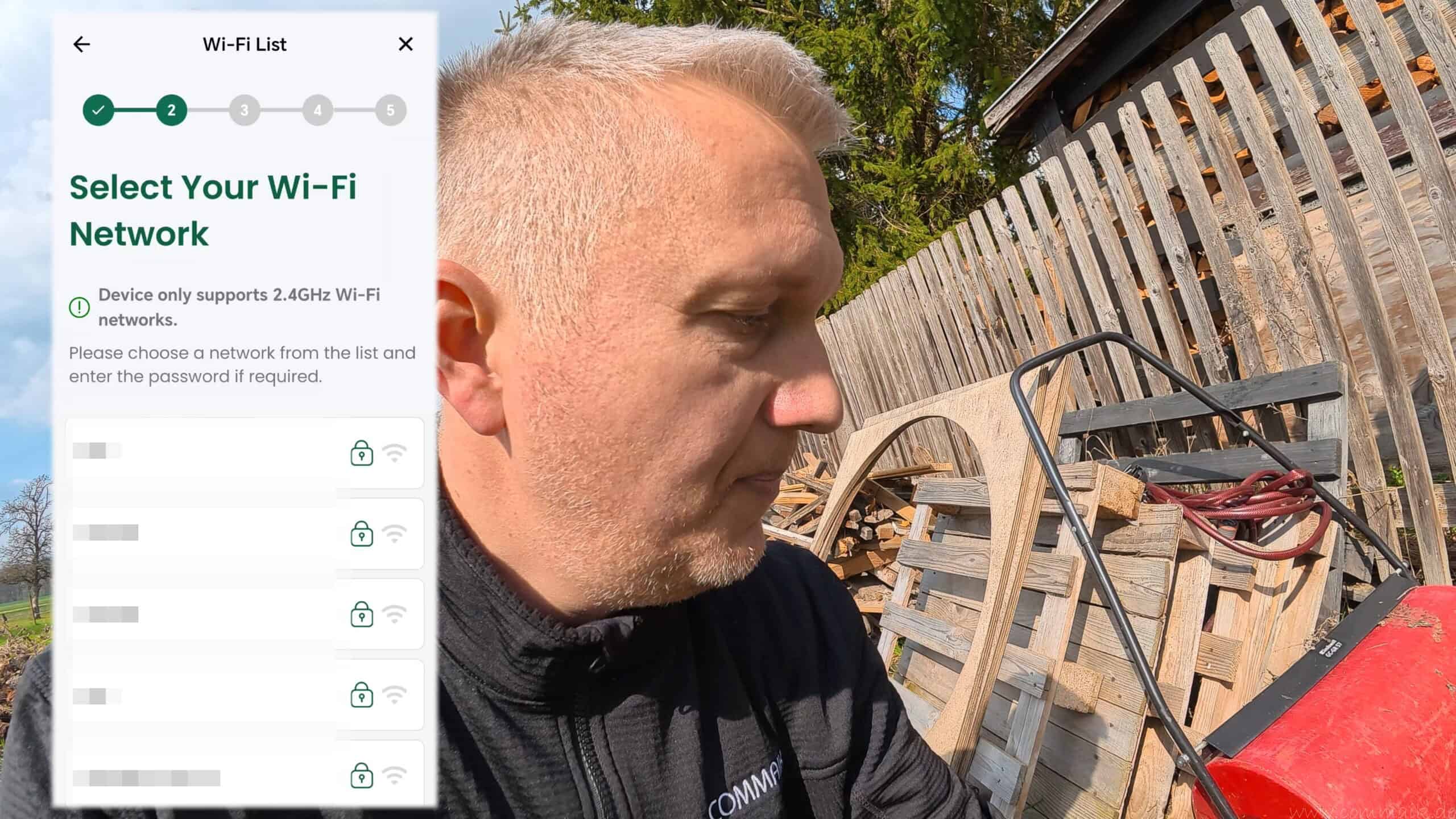
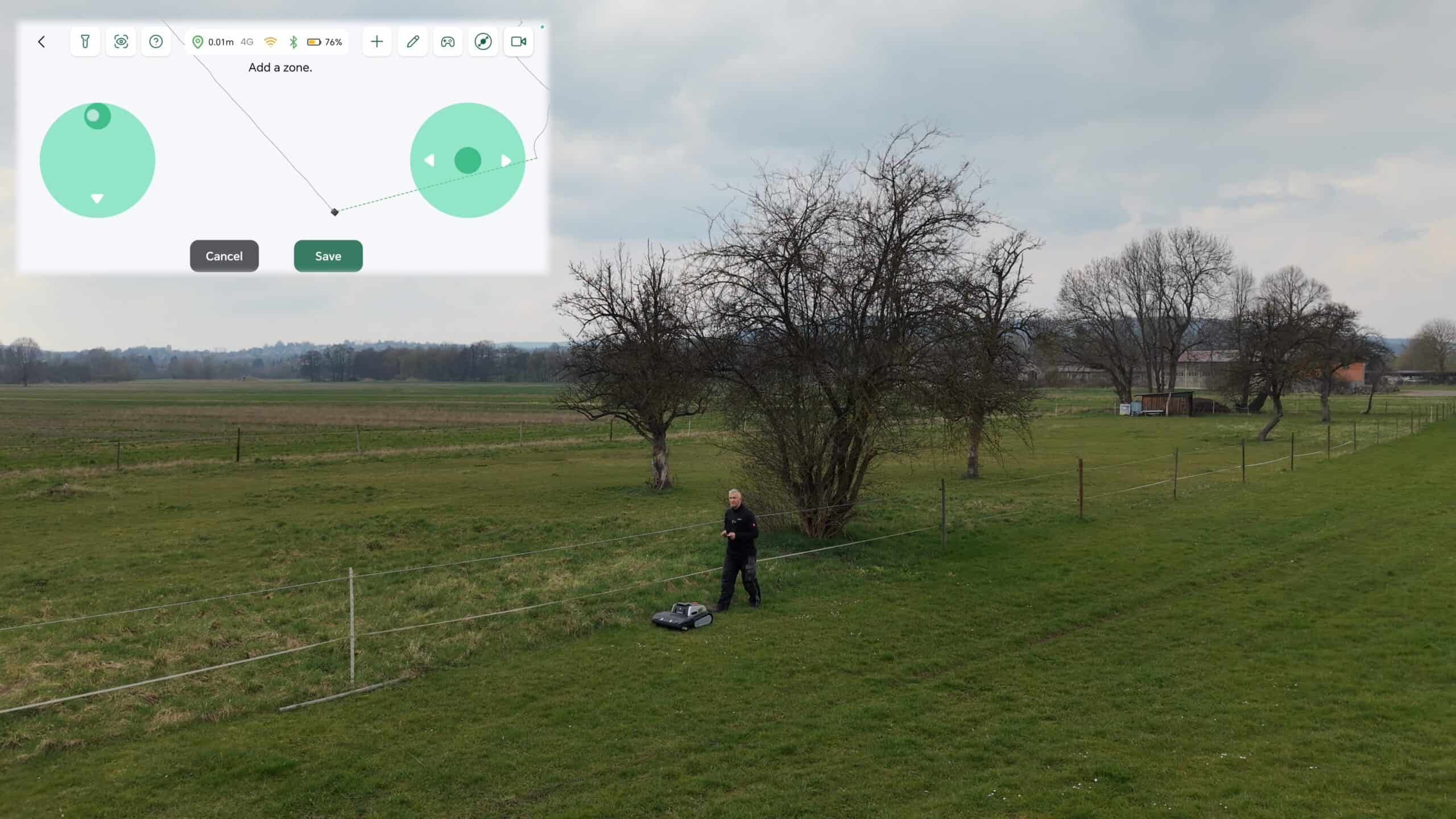
Navigation with RTK and VSLAM on the Lymow One Plus
Hybrid navigation for demanding conditions
The Lymow One Plus uses a hybrid navigation system consisting of RTK, VSLAM (Visual Simultaneous Localization and Mapping) and additional sensors. This interaction is the key difference to many classic robotic mowers, which either only move randomly or rely exclusively on simple GPS or cable systems.
RTK: Precise positioning at centimeter level
The RTK (Real Time Kinematic) system forms the basis for navigation. The Lymow One Plus receives satellite signals that are corrected by the RTK antenna on the property.
Technically, it works like this:
The RTK antenna serves as a reference point with a known position. It compares the received satellite signals with their actual position and calculates correction data from this. These corrections are transmitted to the robot, which makes positioning much more precise – ideally to within a few centimeters.
Advantages:
- Very high accuracy
- Clean, parallel lanes
- Efficient surface removal without randomization
Disadvantages and limitations:
- dependent on a clear view of the sky
- susceptible to heavy vegetation, trees or buildings
- Setting up the RTK antenna is crucial for quality
However, RTK is a clear advantage over a boundary wire, especially on large plots of land, as the area can be flexibly adjusted.
VSLAM: Visual orientation in difficult conditions
The Lymow One Plus also uses VSLAM (Visual Simultaneous Localization and Mapping). This is a camera-based system that visually records the surroundings and creates a map from them.
Technically, the camera continuously analyzes pixels and structures in the surroundings. From this, the system calculates movements and positions relative to the surroundings. This is particularly helpful if the RTK signal becomes inaccurate or fails for a short time.
Advantages:
- Stabilizes navigation with limited satellite reception
- Also works under trees or close to buildings
- usefully supplements the RTK data
Disadvantages and limitations:
- depending on lighting conditions
- Fewer reference points for very homogeneous areas (e.g. large uniform meadows)
- alone cannot replace RTK accuracy
Interaction between sensors and obstacle detection
The system is supplemented by various sensors. These include ultrasonic sensors that measure distances and detect obstacles at an early stage.
These sensors work independently of RTK and VSLAM and ensure that the Lymow One Plus navigates safely in everyday use. Obstacles such as branches, toys or other objects are detected and avoided.
Additional safety mechanisms are also used, such as a lift sensor and a rain sensor, which automatically adjust operation in certain conditions.
Interaction of the systems in practice
The decisive advantage lies in the interaction of all components. RTK provides the exact position, VSLAM stabilizes navigation in critical areas, and the sensors ensure safety in the immediate vicinity.
This results in navigation that not only works on ideal surfaces, but also under real conditions on large and challenging properties.
At the same time, however, it is also clear that the quality of navigation depends heavily on the installation and environmental conditions. A well-placed RTK antenna and well thought-out mapping are crucial for a stable system.
All in all, the Lymow One Plus offers significantly more complex and powerful navigation than many classic robotic mowers – with clear advantages for large areas, but also with higher demands on the set-up.
Video: Lymow One Plus in test – robot mower with chain drive, RTK and 45° incline
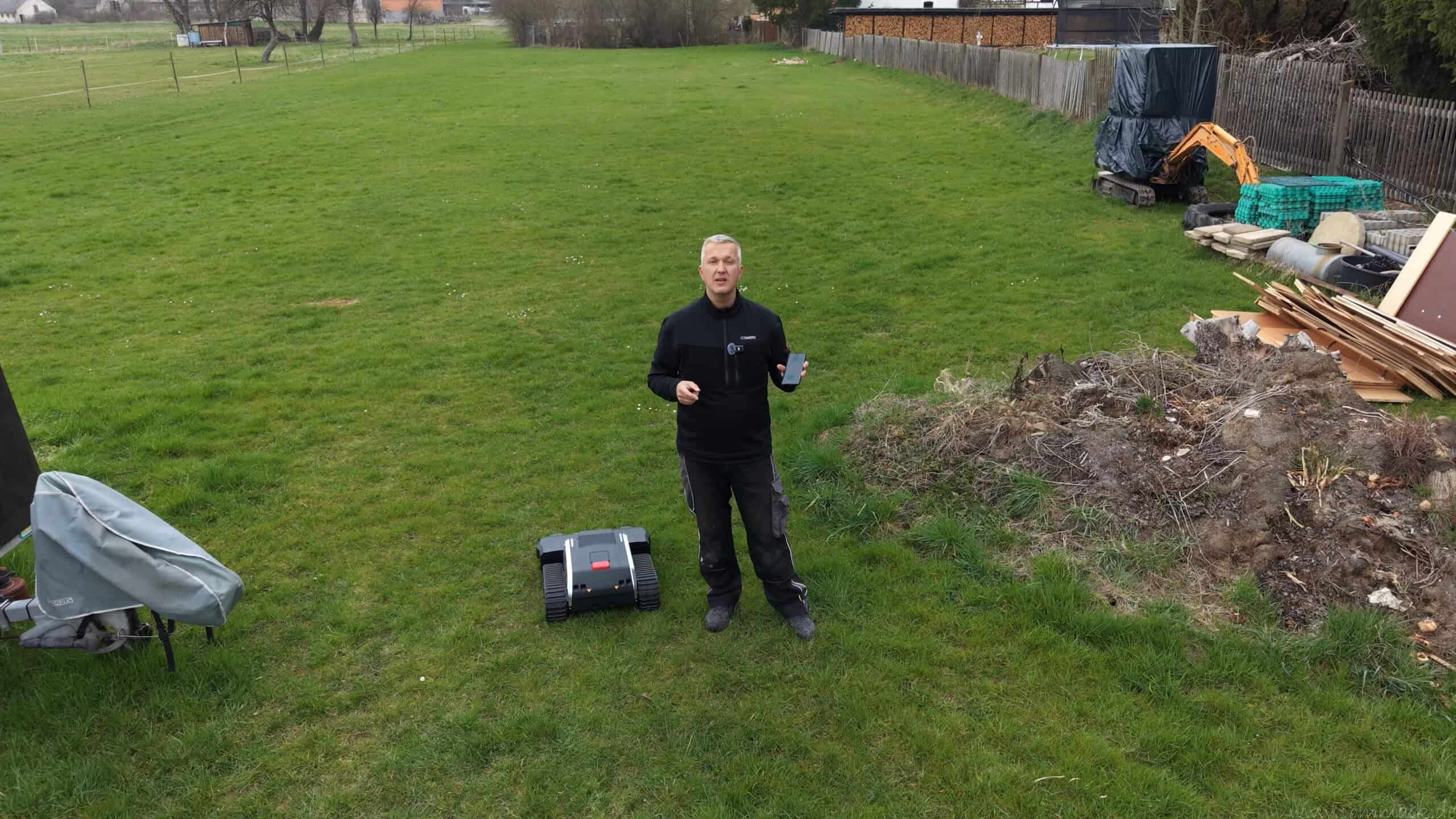
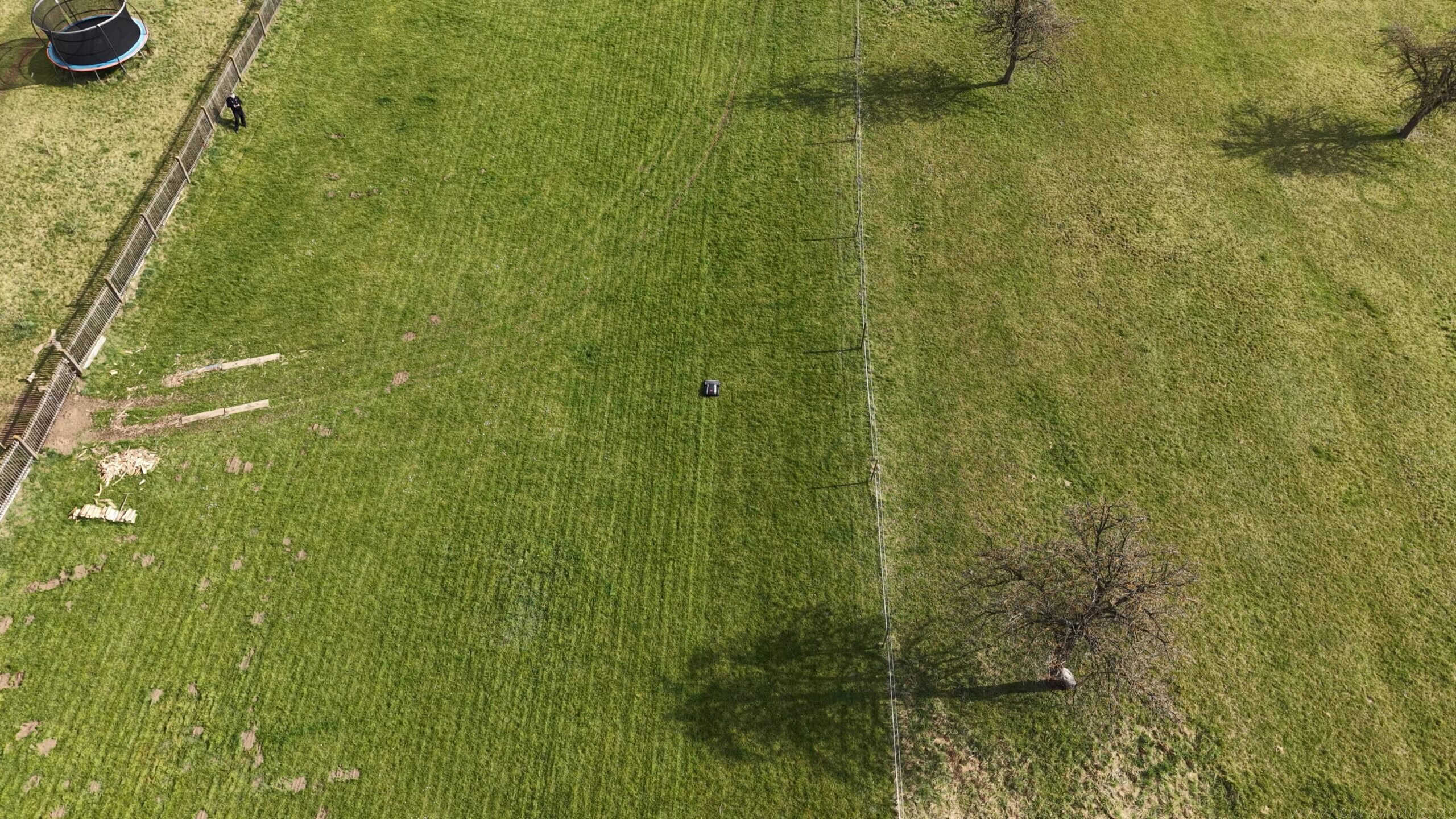
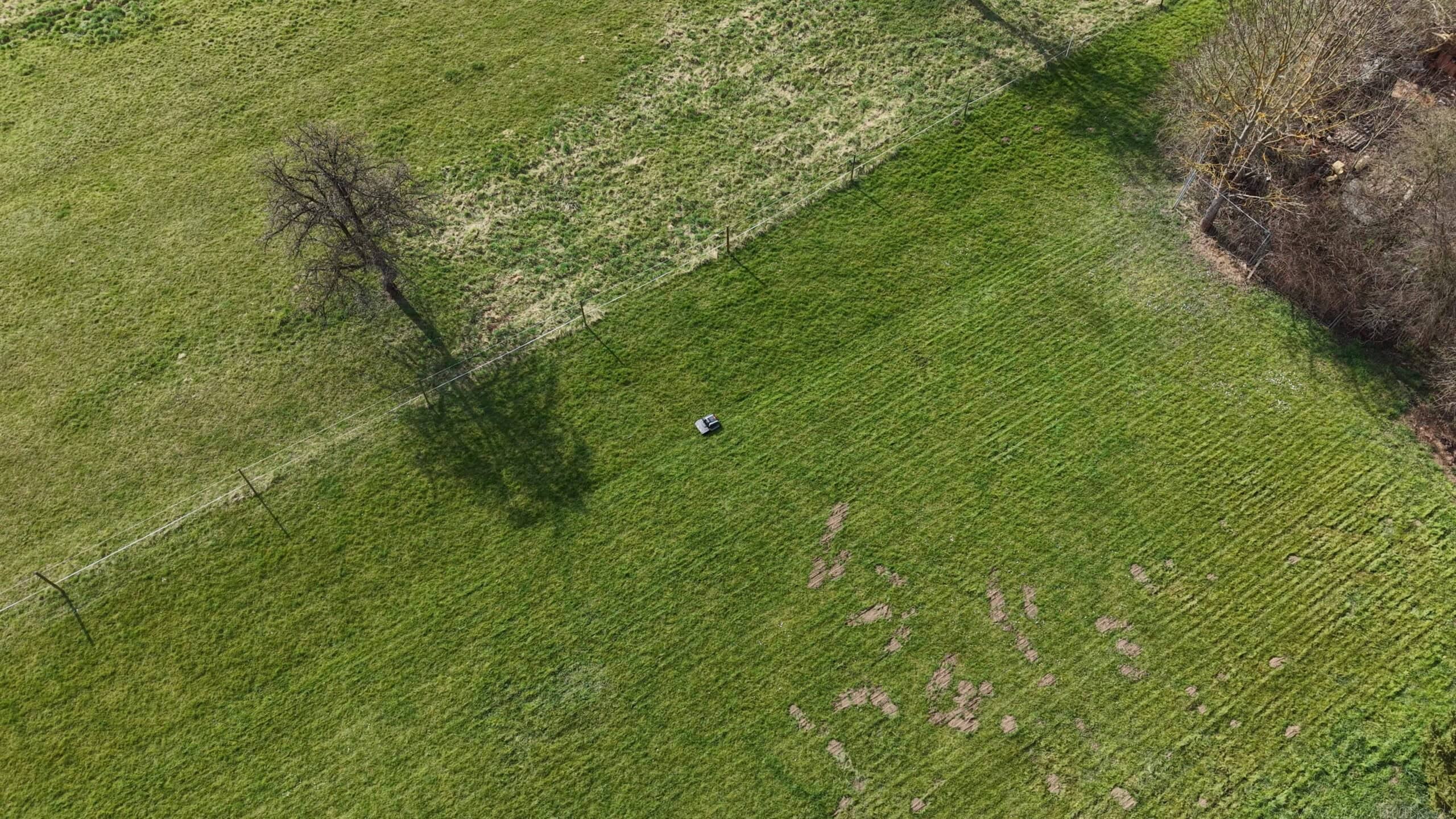
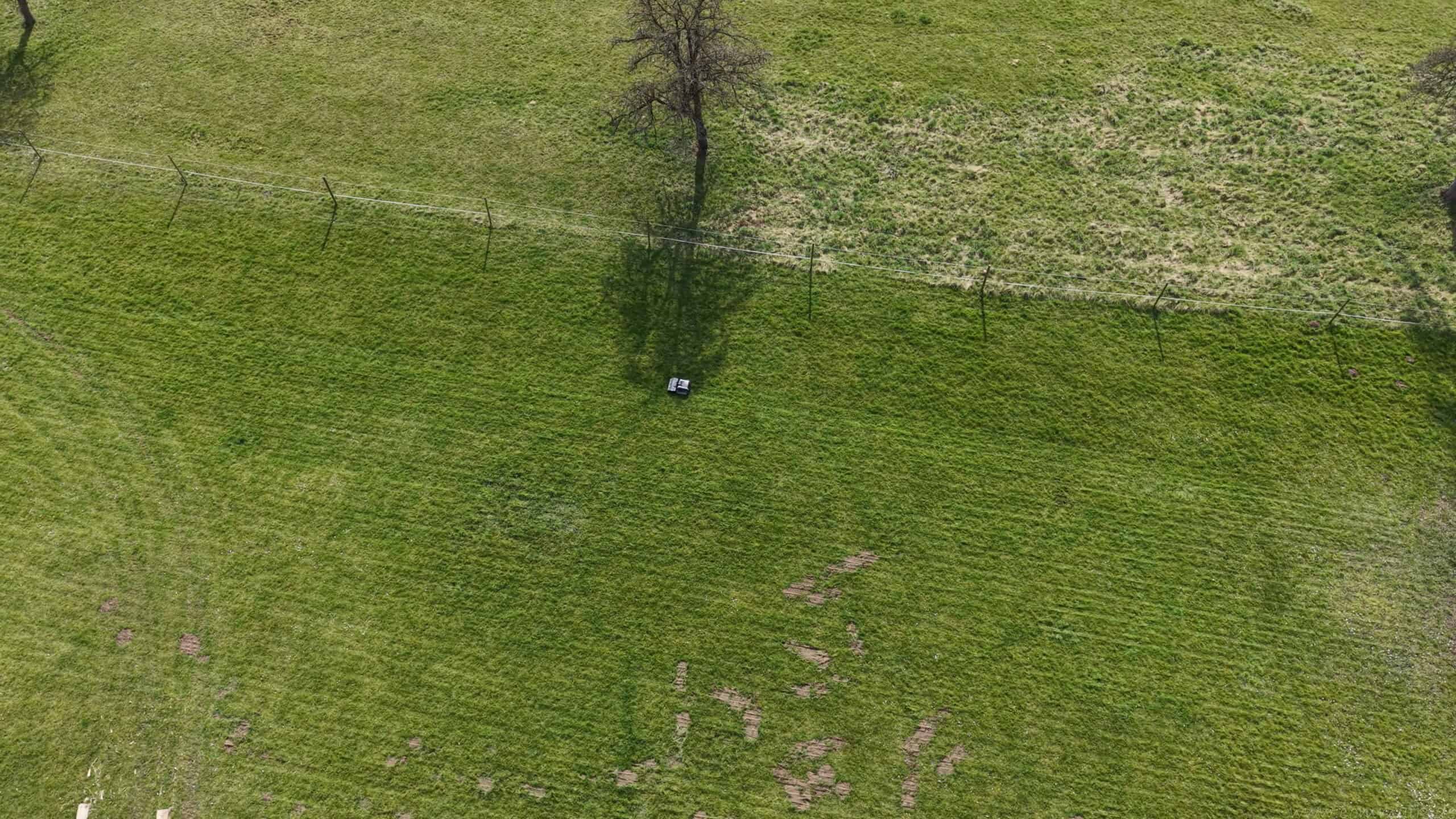
In my video, I show the Lymow One Plus in a detailed practical test on a large and demanding area. It quickly becomes clear that this is not a classic robotic mower, but a powerful system for large plots without boundary wires.
I go through the setup step by step – from installing the charging station and the RTK antenna to mapping the area using the app. I show both the automatic and manual recording of the area and the setup of individual zones.
A particular focus is on the LYCUT 2.0 cutting system, cutting quality and performance on uneven terrain and slopes. Thanks to the chain drive and the wide tracks, the Lymow One Plus can also tackle inclines of up to 45°. I specifically tested this off-road capability in the video.
I also take a detailed look at navigation with RTK, VSLAM and sensor technology and show obstacle detection in real-life use. Topics such as maintenance, cleaning and direct control via app are also presented in a practical way.
The video gives a comprehensive insight into the performance of the Lymow One Plus and shows the areas of application for which this robotic mower is really suitable – especially for large and demanding areas.
You can find more videos about my projects involving robotic lawnmowers, garden maintenance and technology on my YouTube channel COMMAIK or in the video overview on my blog.
Buy Lymow One Plus – current offers and accessories
If you would like to get your own impression of the Lymow One Plus after watching the video, the system is currently available directly from the official distributor. Especially with new models such as the Lymow One Plus, this is often the quickest and most reliable way to get hold of the device.
In addition to the robotic lawnmower itself, it is also worth taking a look at the matching accessories. An additional battery or replacement blade set can be particularly useful for large areas in order to extend operating times and reduce maintenance intervals.
👉 Lymow One Plus & accessories:
🔗 Lymow One Plus: https://lymowtradecolimited.pxf.io/E0EnyX
🔗 Rotation ring set: https://lymowtradecolimited.pxf.io/6kyaEN
🔗 528 Wh additional battery: https://lymowtradecolimited.pxf.io/NG9dbO
👉 Predecessor model Lymow One & accessories:
🔗 Lymow One: https://lymowtradecolimited.pxf.io/2a4gL0
🔗 Mulching blade set: https://lymowtradecolimited.pxf.io/GKLQkn
🔗 Super Swing blade set: https://lymowtradecolimited.pxf.io/YRZjve
🔗 Replacement battery: https://lymowtradecolimited.pxf.io/Z6gmzK
The Lymow One Plus in particular shows that the focus was clearly placed on large and demanding areas. If you have a suitable plot of land and are looking for an alternative to classic robotic lawn mowers, this is a system that has been specifically developed for high performance and maximum area coverage.
LYCUT 2.0 cutting system and mower in detail
Rotating blades and high speed
The new LYCUT 2.0 system of the Lymow One Plus uses two rotating blades made of SK5 steel, which operate at a speed of up to 6000 revolutions per minute. Compared to many classic robotic lawnmowers with small blades, Lymow takes a much more performance-oriented approach here.
The main advantage of this design is the cutting quality. Thanks to the high speed and the larger cutting width of 40 cm, the grass is not only shortened, but actively cut and finely shredded at the same time. The Lymow One has significantly more reserves than many other robotic lawnmowers, especially when it comes to denser or taller vegetation.
Another advantage is the mulching performance. The clippings are distributed very finely, which means that they decompose more quickly and return nutrients to the soil. This further reduces the amount of maintenance required, especially on large areas.
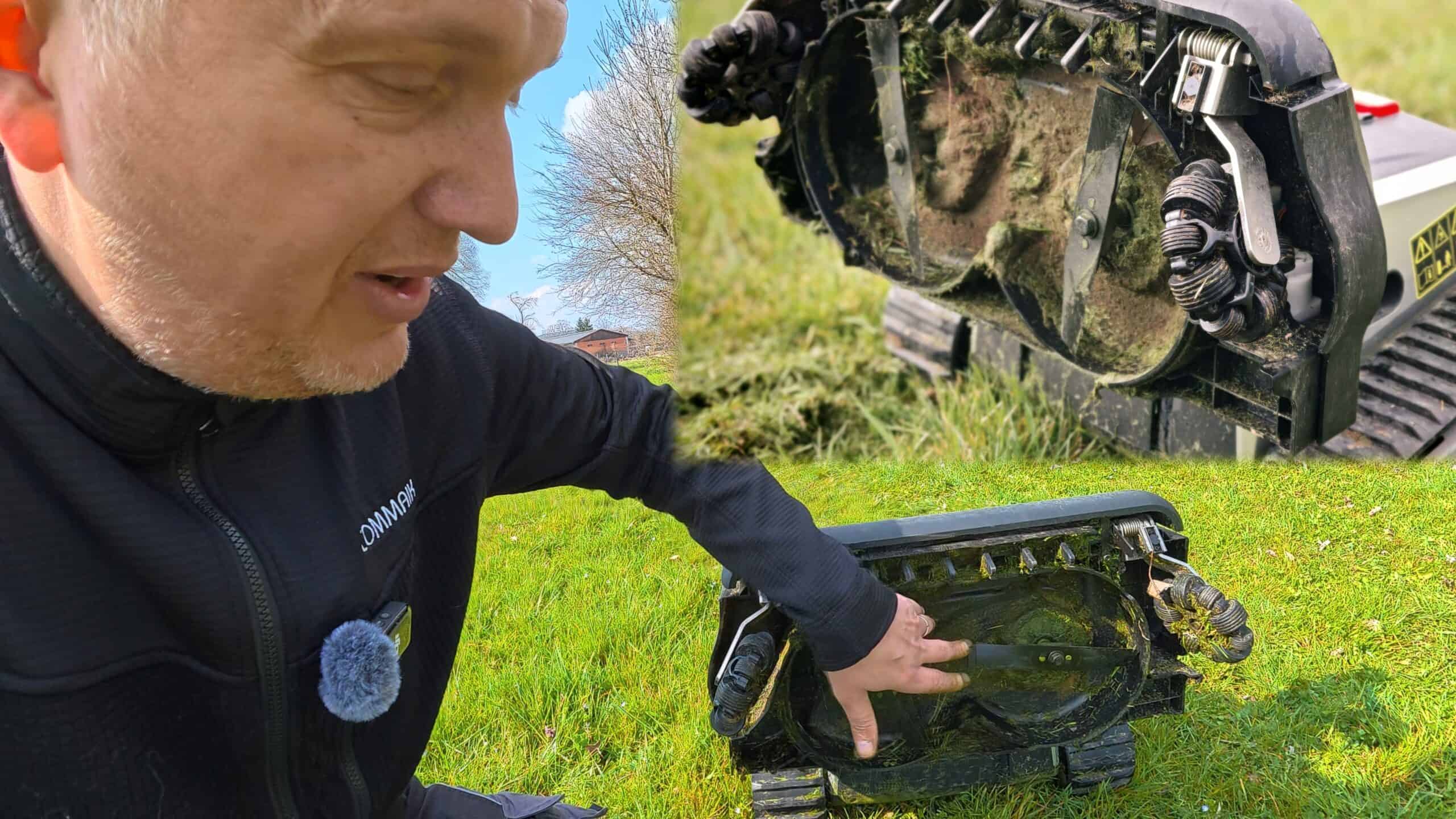
In practice, however, there is also a disadvantage to this system. Due to the high speed and powerful design, the mower is less optimized for quiet operation. The Lymow One Plus is therefore more audible than many smaller robotic lawnmowers. In addition, very coarse or stony ground increases the risk of increased wear on the blades.
Floating mowing deck for uneven terrain
A central element of the Lymow One Plus is the movable mowing deck, the so-called floating deck. This automatically adapts to the ground while driving and ensures that the cutting height remains as constant as possible, even on uneven terrain.
The advantage is particularly evident on large and demanding surfaces. Unevenness, small dips or undulations in the ground are better evened out, resulting in a more even cutting pattern. This is a significant difference, especially compared to rigid systems.
The floating mower deck also improves off-road mobility, as the mower is flexible rather than rigid. In combination with the chain drive, the Lymow One remains stable even on difficult ground.
However, there are limits here too. On very uneven terrain, the system cannot physically compensate for all height differences completely. In such areas, the cutting pattern does not always remain perfectly even despite the adjustment. The system also reacts somewhat more sensitively at high speeds, which can lead to slightly varying results in certain situations.
Classification of the cutting system in the overall picture
The bottom line is that the LYCUT 2.0 cutting system is clearly designed for performance and efficiency. The Lymow One Plus is therefore less of a classic, quiet garden helper and more of a powerful tool for large and demanding areas.
The combination of high speed, large cutting width and movable mowing deck makes for a strong overall package – especially where many other robotic mowers reach their limits. At the same time, this concept also entails typical characteristics of a performance-oriented system, which should be taken into account when classifying it.
Obstacle detection and safety in everyday life
AI, camera and ultrasonic sensors in use
The Lymow One Plus relies on a combination of camera-based AI detection and several ultrasonic sensors for obstacle detection. The system is supplemented by additional safety sensors such as lift and tilt sensors, which interrupt operation immediately in the event of unusual situations.
Technically, the camera works with AI-supported object recognition. Image data is analyzed in real time to identify typical obstacles such as toys, garden furniture or even smaller objects. At the same time, the ultrasonic sensors continuously measure distances at close range. This combination ensures that obstacles are detected both visually and physically.
The advantage of this system lies in the interaction:
While the camera recognizes and classifies complex objects, the ultrasonic sensors react quickly to distances and provide additional protection in the direct vicinity of the robotic lawnmower. This results in significantly more robust obstacle detection than with simple impact sensors, as used in many classic robotic lawnmowers.
Another advantage is the anticipatory reaction. The Lymow One Plus recognizes obstacles not just on contact, but in advance. This reduces collisions and protects both the robot and objects on the surface.
Practical test of obstacle detection
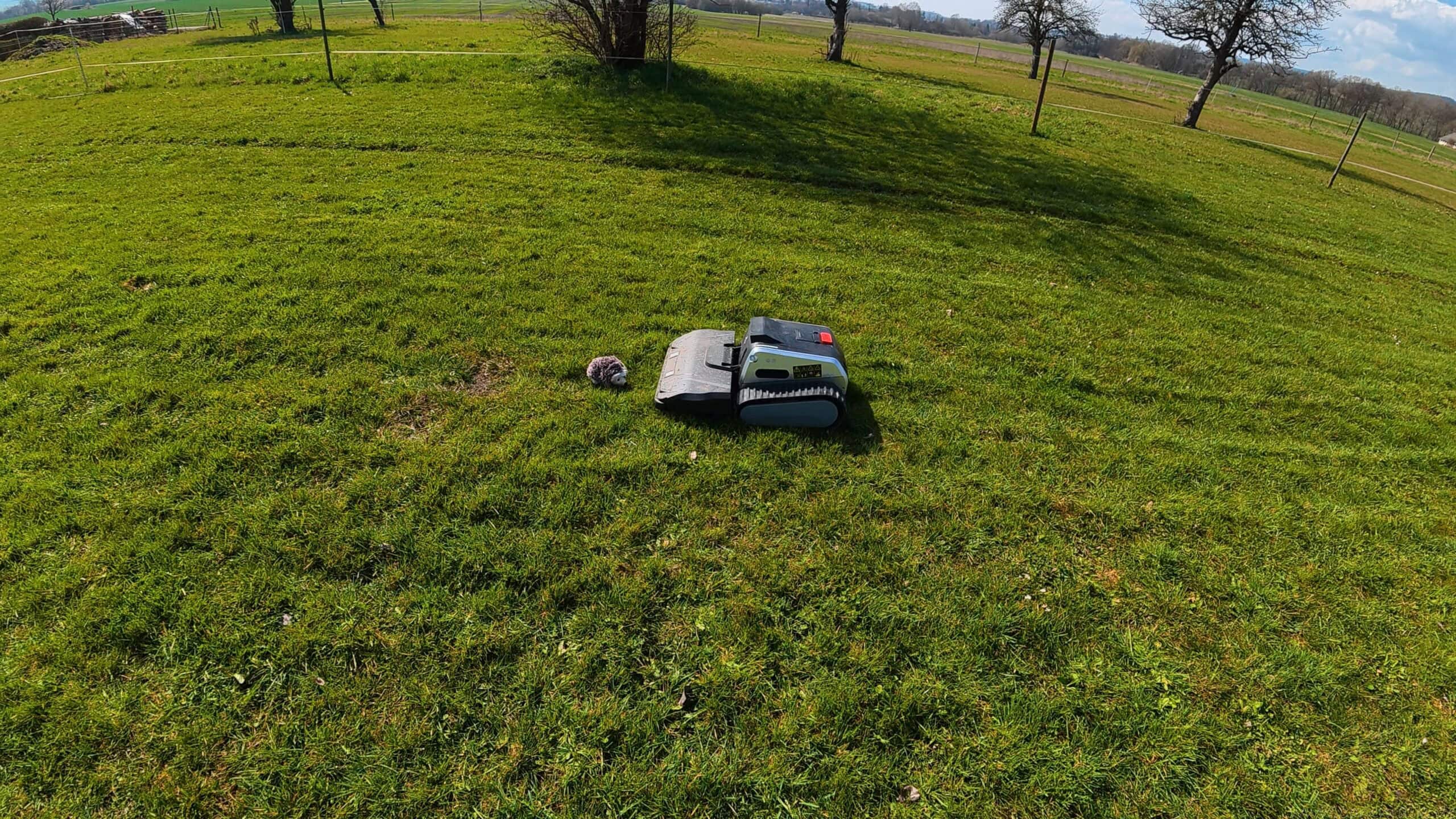
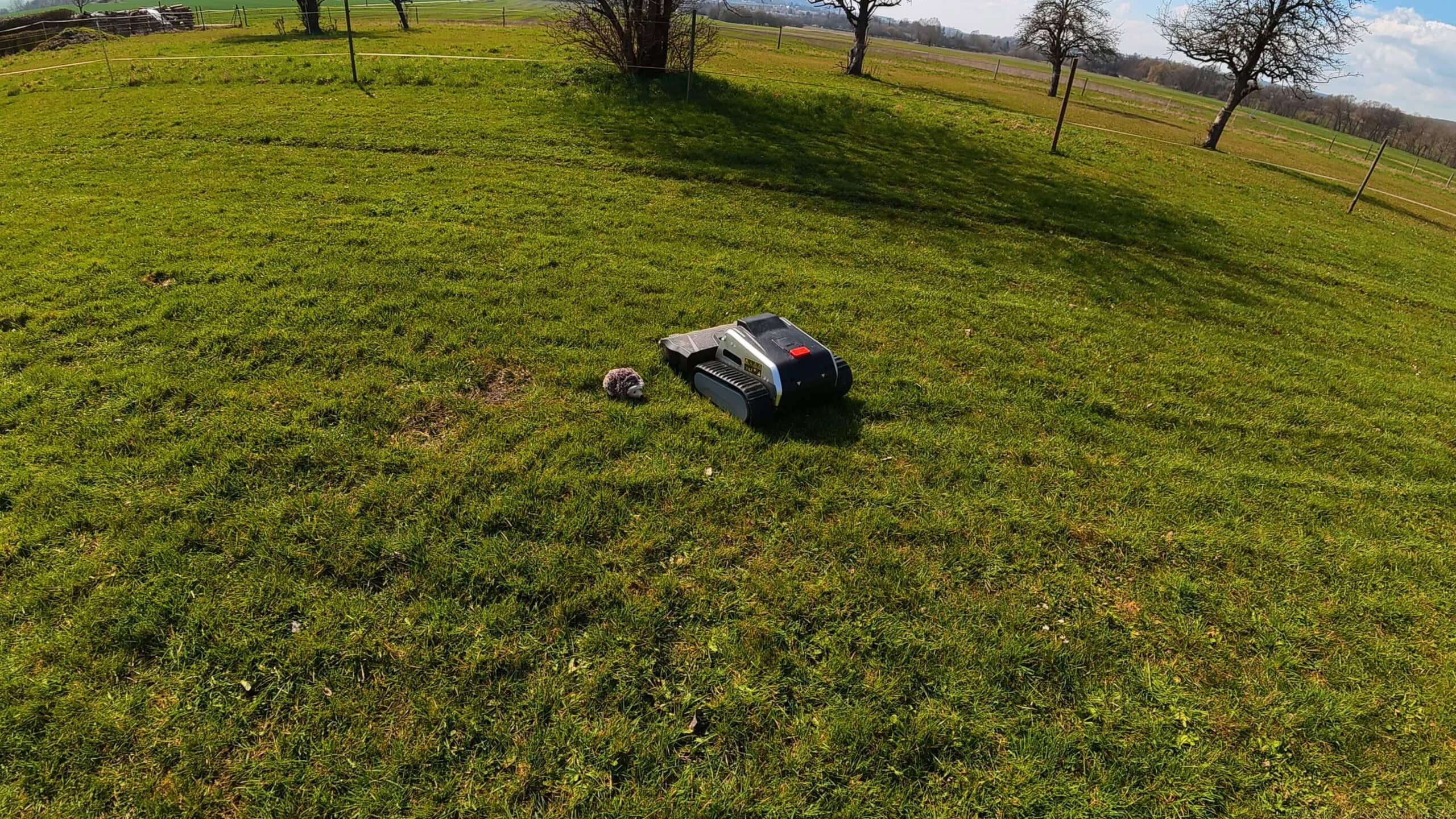
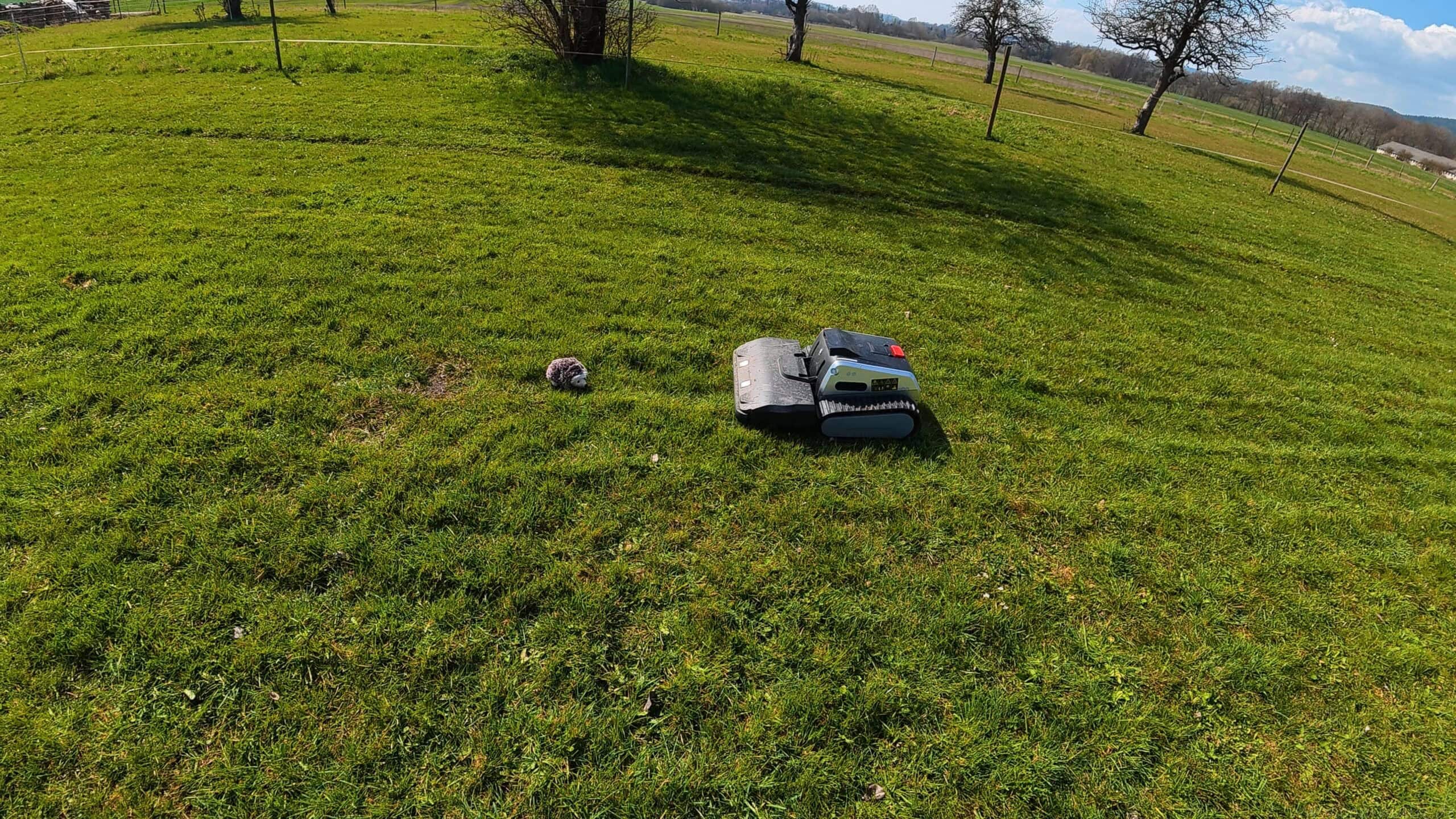
In the practical test, I specifically checked the obstacle detection. Among other things, I placed a plush toy hedgehog on the lawn to simulate a typical everyday situation.
The video clearly shows how the Lymow One Plus reacts to this obstacle. The robot recognizes the hedgehog at an early stage, reduces its speed and drives around it in a controlled manner. This test shows very clearly how the system works in practice.
The test showed that the Lymow One reliably recognizes obstacles such as branches or toys and reacts appropriately to them. This is an important safety factor, especially in larger areas where it is not always possible to control everything perfectly.
Classification of obstacle detection
Compared to many other robotic lawnmowers, obstacle detection on the Lymow One Plus is much more advanced. Many robotic lawnmowers still work with simple impact sensors that only detect an obstacle on contact.
The Lymow One Plus goes one step further and combines several systems. This not only increases safety, but also reduces unnecessary interruptions in operation.
Nevertheless, there are limits here too. Very small or flat objects may be recognized later. Strongly changing light conditions can also influence camera-based detection. In practice, however, the system works reliably overall and makes everyday life much easier.
Speed, cutting height and control
Individual settings via app
The Lymow One Plus is controlled entirely via app and offers significantly more setting options than many classic robotic lawn mowers. In addition to the basic configuration, central parameters can be specifically adapted to the respective area and the desired results.
The cutting height can be set directly in the app and covers a wide range. This means that the Lymow One Plus can be used for manicured lawns as well as for taller or irregular vegetation.
The mowing speed can also be adjusted. A lower speed generally ensures a cleaner cutting pattern, while higher speeds increase the area throughput. This adjustment is an important factor for efficiency, especially in large areas.
Another point is the blade speed. This directly influences the cutting quality and the shredding of the chopped material. A higher speed may be appropriate for thicker grass or demanding conditions, while lower settings are sufficient for regular maintenance.
In addition, the app offers further parameters such as:
- Adaptation of the mowing strategy per zone
- Configuration of working hours and schedules
- Definition of no-go areas
- Selection of driving patterns and processing logic
It is controlled directly via the app, which means that changes can be made at any time without physical intervention on the device.
It is important to note at this point that not all functions were fully activated during my test. As I was able to test the Lymow One Plus well before the official sales launch, some features – such as sharing the device or advanced smart functions – were not yet available. It can be assumed that these functions will be added in later updates.
Optimization for large areas
The advantage of this flexible control system is particularly evident in large areas. The Lymow One Plus is not only powerful, but can also be specifically adapted to different areas of a property.
The combination of adjustable speed, variable cutting height and adaptable mowing strategy allows the robot to work efficiently and react to different conditions at the same time. This is particularly important for large and demanding surfaces.
While many robotic lawnmowers tend to be designed for standardized processes, the Lymow One Plus offers significantly more fine-tuning options. This allows the throughput to be optimized without neglecting the cutting quality.
The bottom line is that the app is not just a control tool, but a central component of the entire system, especially when it comes to large areas and individual requirements.
Maintenance, cleaning and suitability for everyday use
Automatic cleaning of the chains
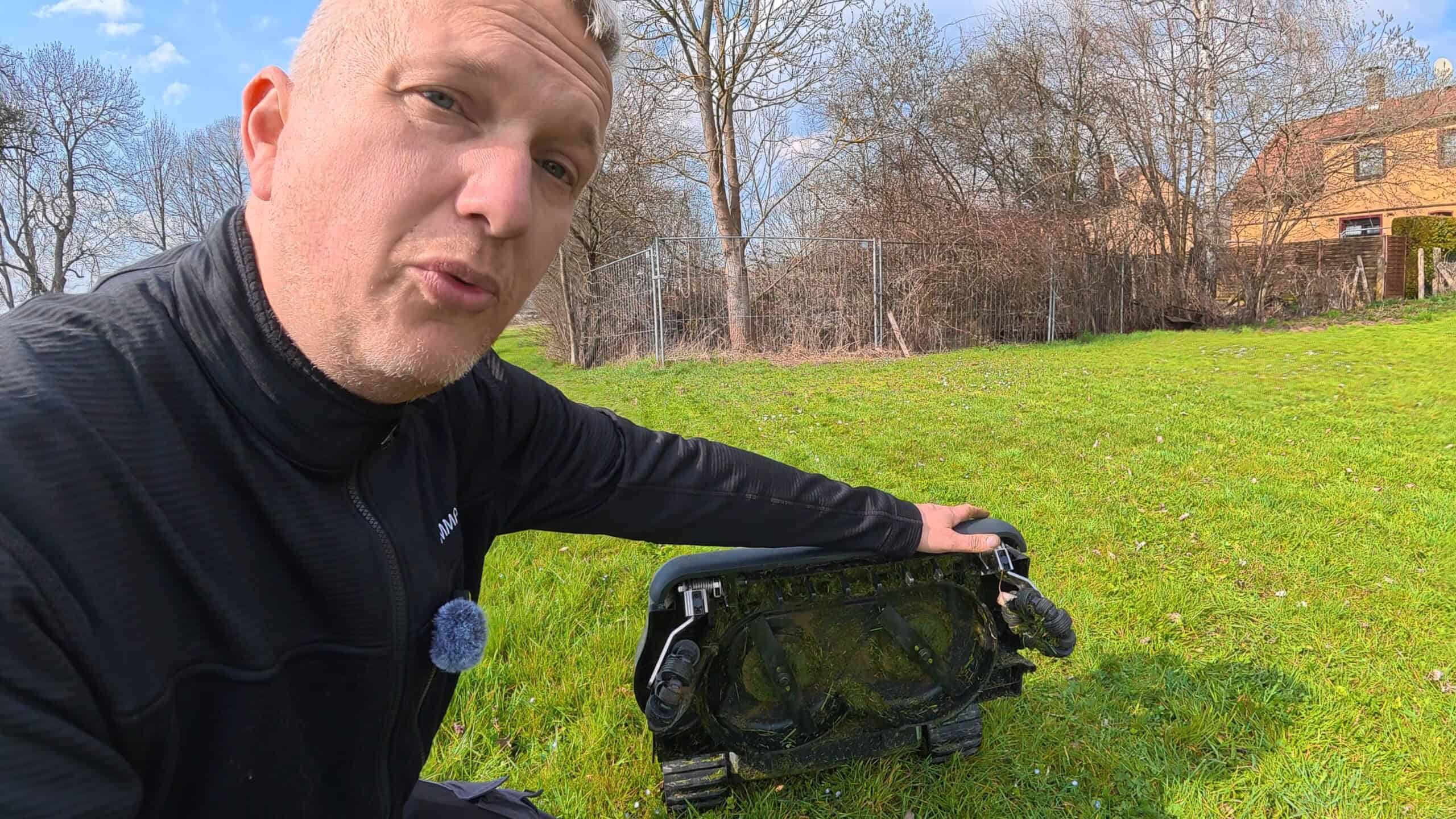
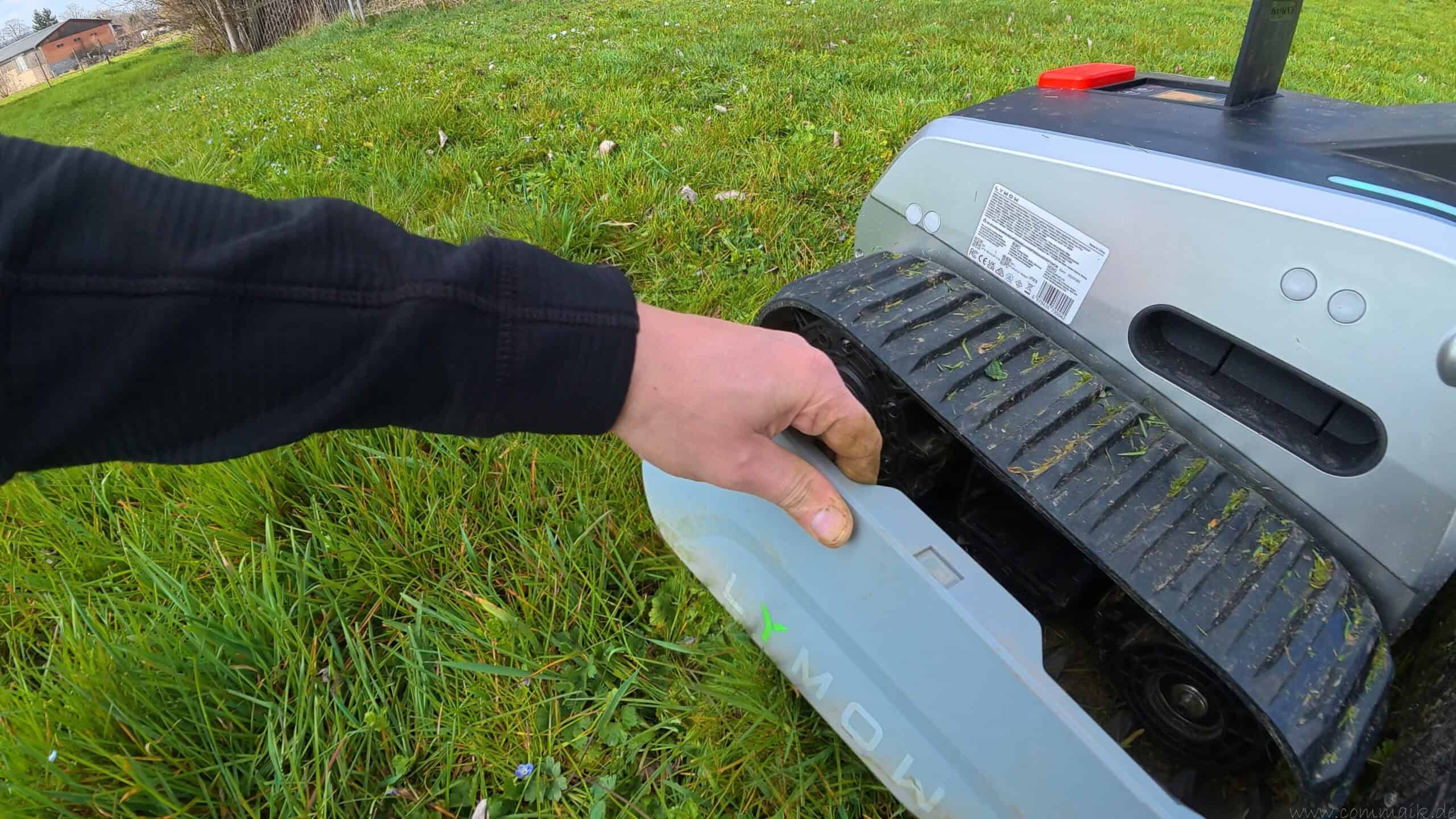
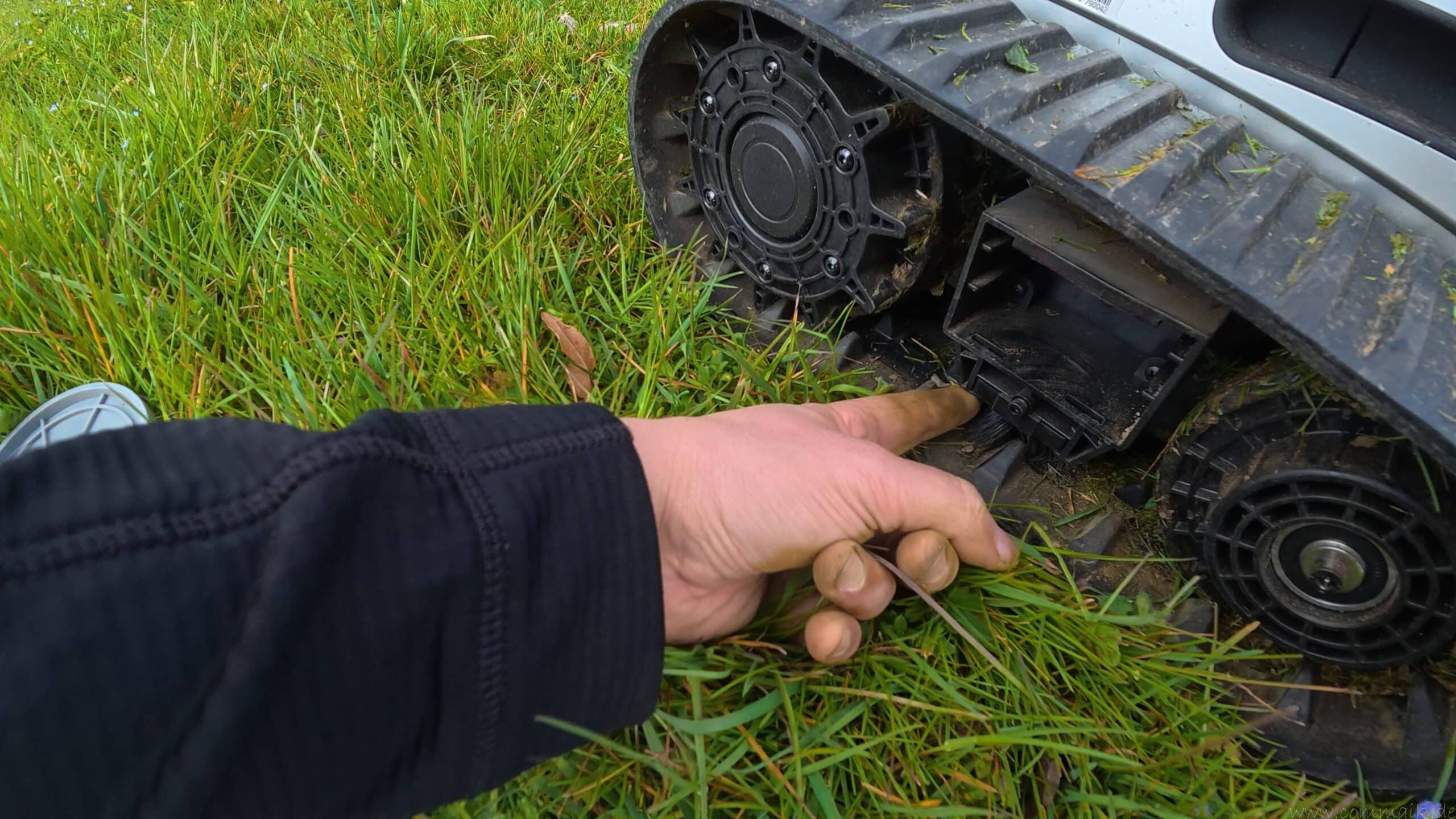
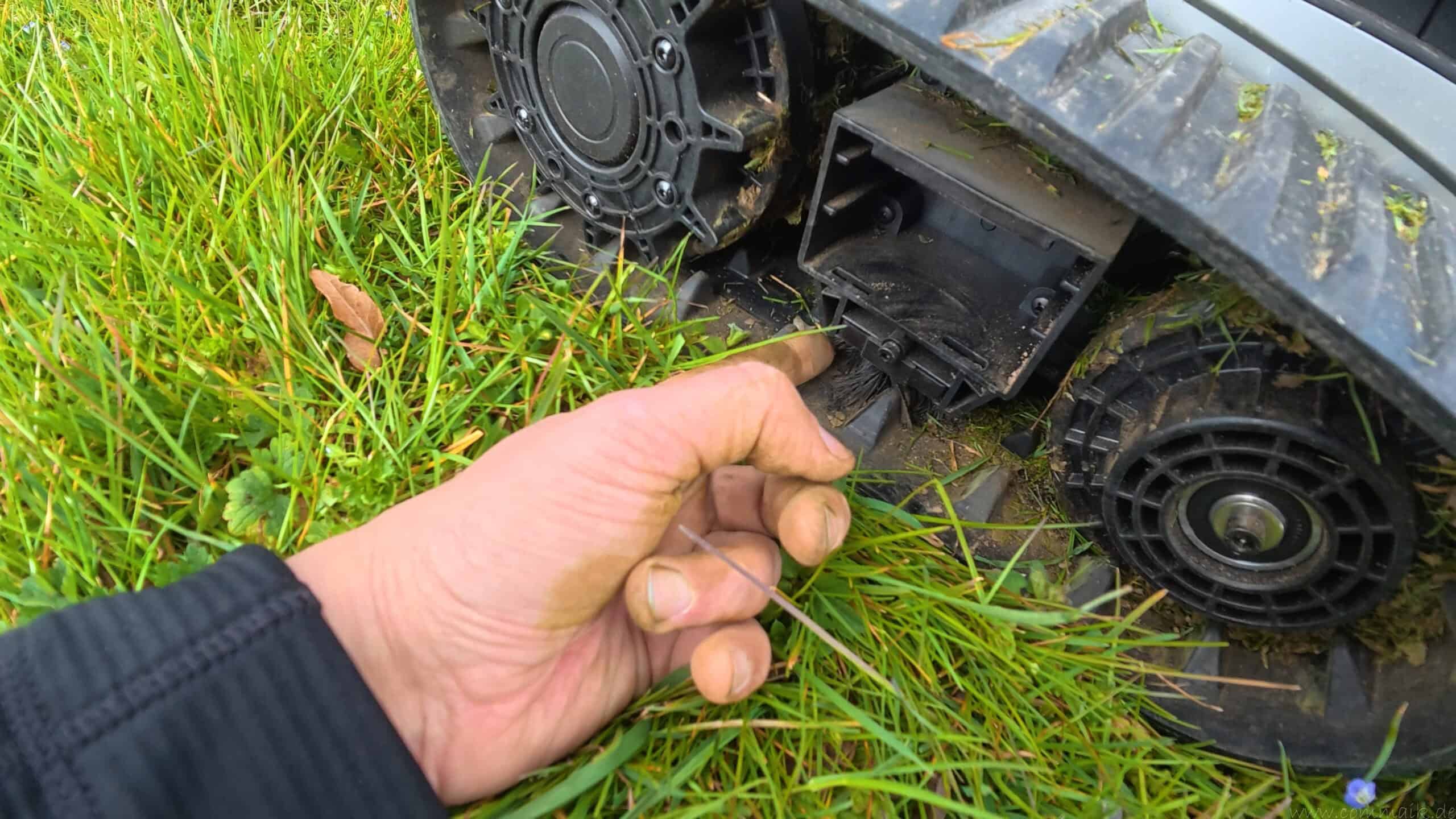
A special feature of the Lymow One Plus is the integrated cleaning system for the caterpillar tracks. During operation, adhering dirt, grass clippings and soil are continuously reduced. This is a clear advantage, especially on uneven terrain or in damp conditions, as significantly less material gets stuck in the chains.
In practice, this ensures that traction remains constant and maintenance costs are reduced. With many robotic lawnmowers with a classic wheel drive, dirt must be removed manually on a regular basis, as otherwise the driving characteristics deteriorate. With the Lymow One Plus, this process is partially automated.
Nevertheless, the system does not replace complete maintenance. Especially when used intensively over large areas or in difficult conditions, it makes sense to check the chains regularly and clean them manually if necessary. This is especially true when damp soil or very sticky dirt accumulates.
Cleaning the mower deck and underside
The mower deck should also be checked regularly. Due to the high speed and powerful design, grass clippings can collect under the mower deck. Occasional cleaning ensures consistent cutting quality and reduces component wear.
Access to the mowing deck is comparatively easy, so that maintenance work can be carried out without much effort. Especially for large areas where the robotic lawnmower is used regularly, this point plays an important role in long-term reliability.
Water resistance and everyday cleaning
The Lymow One Plus is designed for outdoor use and is protected against water. The robotic lawnmower itself has a protection class of IPX6. This means that it is protected against strong jets of water and can be easily cleaned with a water hose.
The charging station, including the electrical connections, is even protected to IPX67. As a result, the sensitive components are much better protected against moisture and water ingress, which is an important advantage, especially in continuous outdoor operation.
In practice, this means that rain is no problem for the Lymow One Plus, and cleaning is also straightforward. At the same time, care should be taken not to use high-pressure cleaners directly on sensitive areas in order to protect seals and components in the long term.
Suitable for everyday use on large and demanding surfaces
The Lymow One Plus is designed for long-term use, especially in everyday use. The combination of automatic chain cleaning, robust construction and waterproof system ensures that the robotic lawnmower works reliably even in difficult conditions.
Compared to many classic robotic mowers, the maintenance effort is not completely reduced, but it is postponed. Instead of frequent small interventions, the focus is more on regular monitoring, especially in the case of intensive use on large and demanding areas.
App control and screenshots at a glance
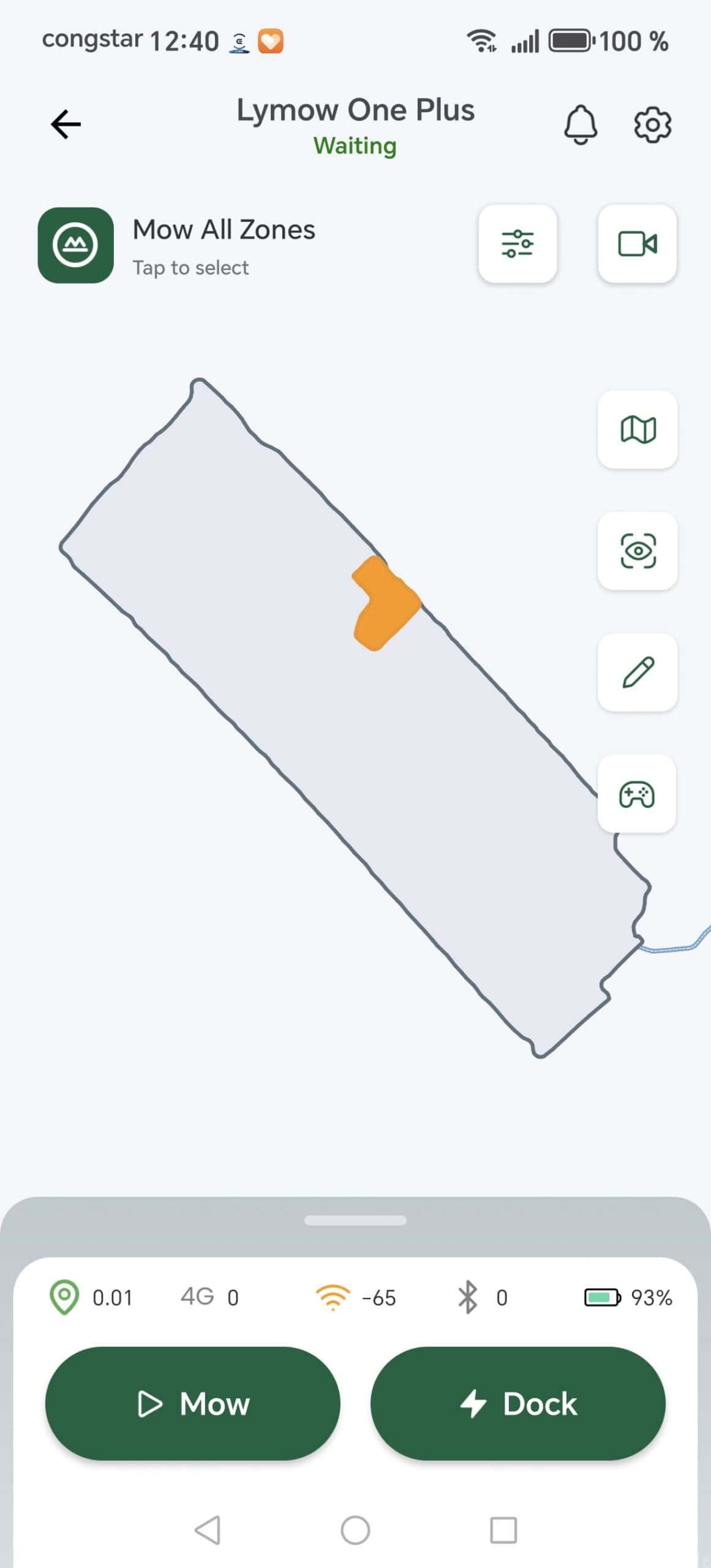
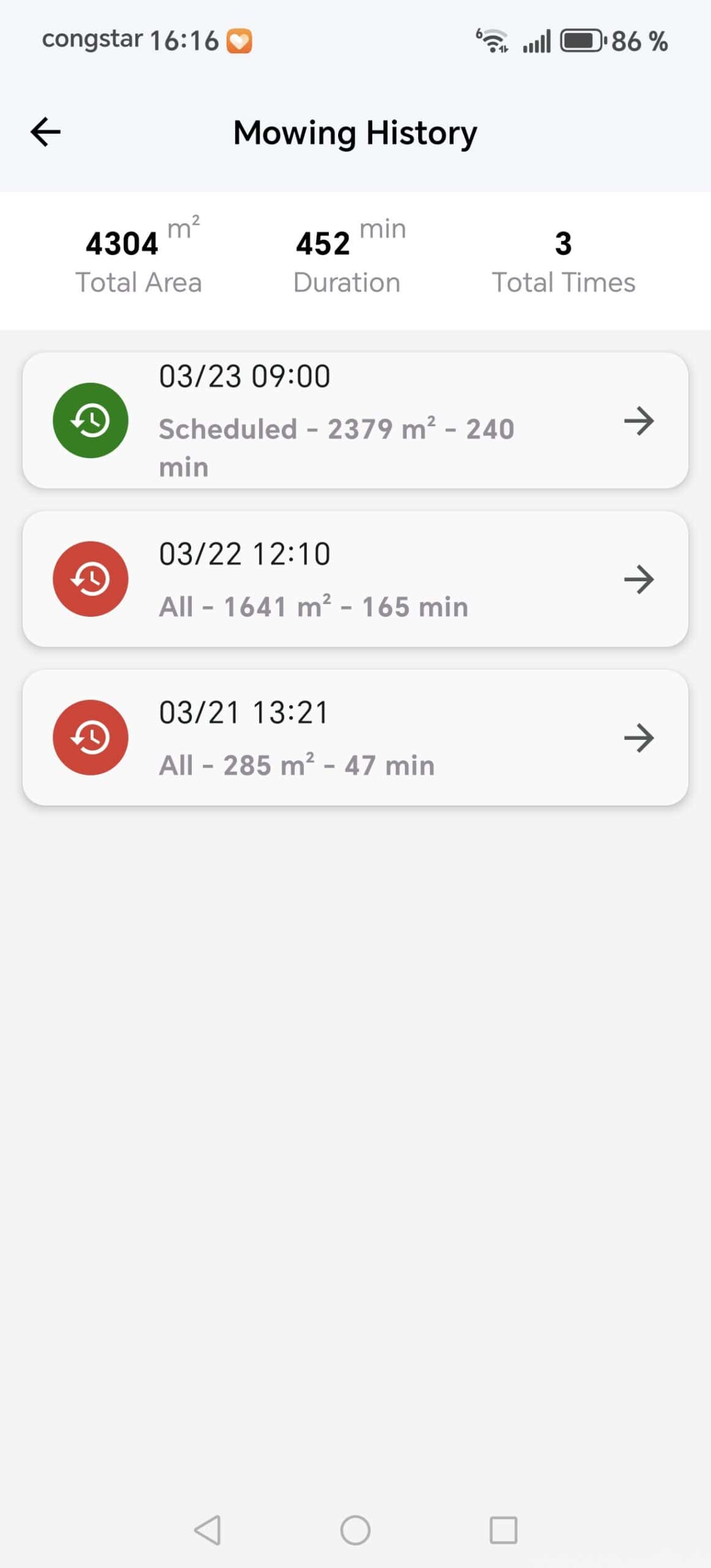
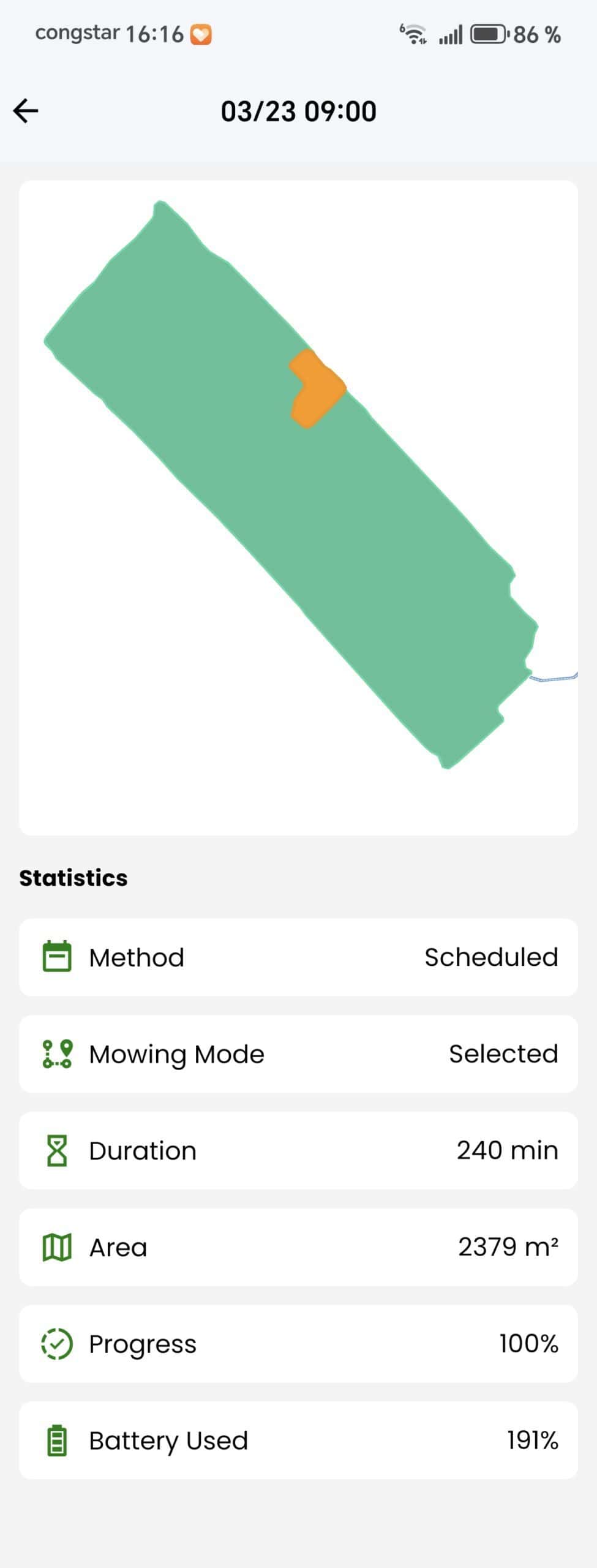
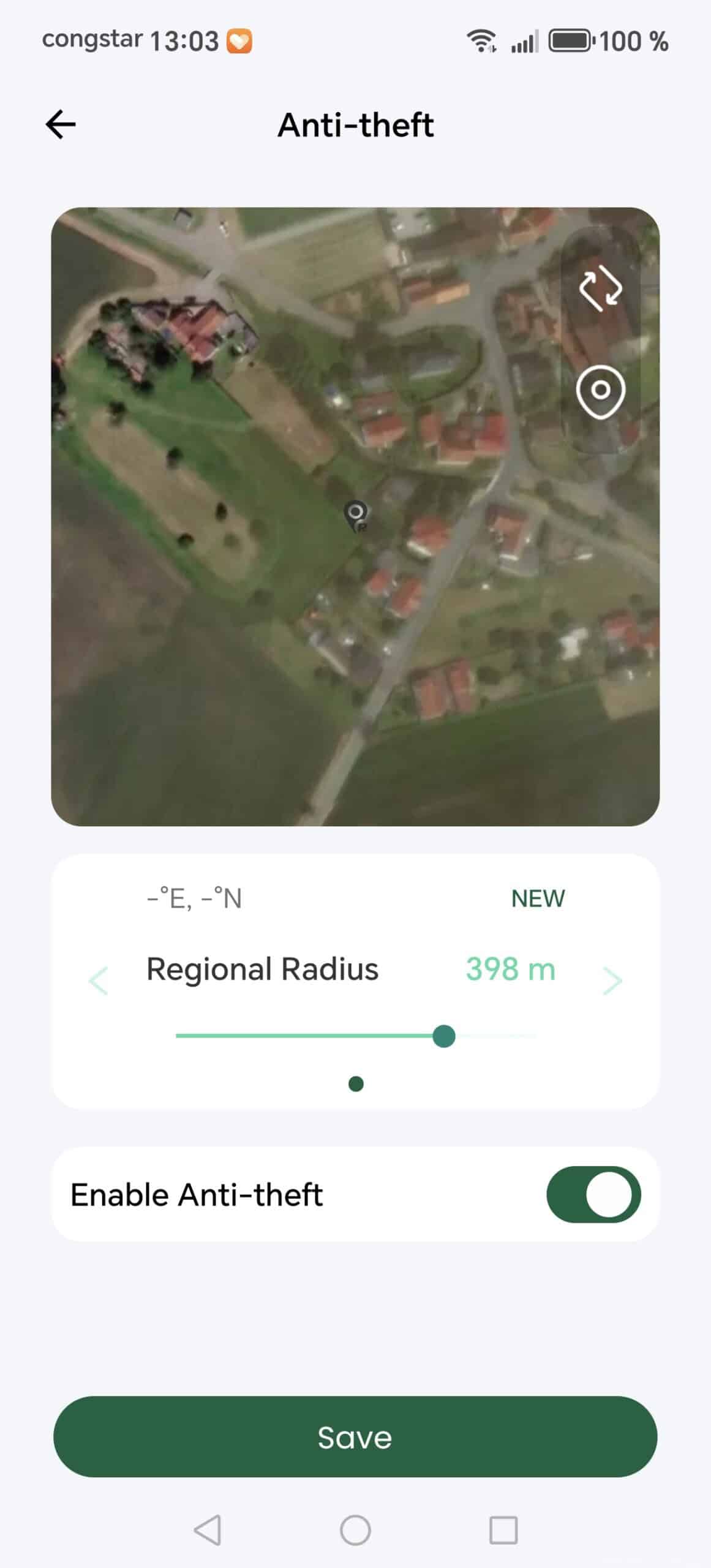
For better illustration, I have also included some screenshots from the app. These show the surface, the mapping of the area, the zoning and central settings such as cutting height, speed and mowing strategy. The control system of the Lymow One Plus clearly shows how flexibly the robotic lawnmower can be configured and how much the system differs from classic robotic lawnmowers with boundary wires.
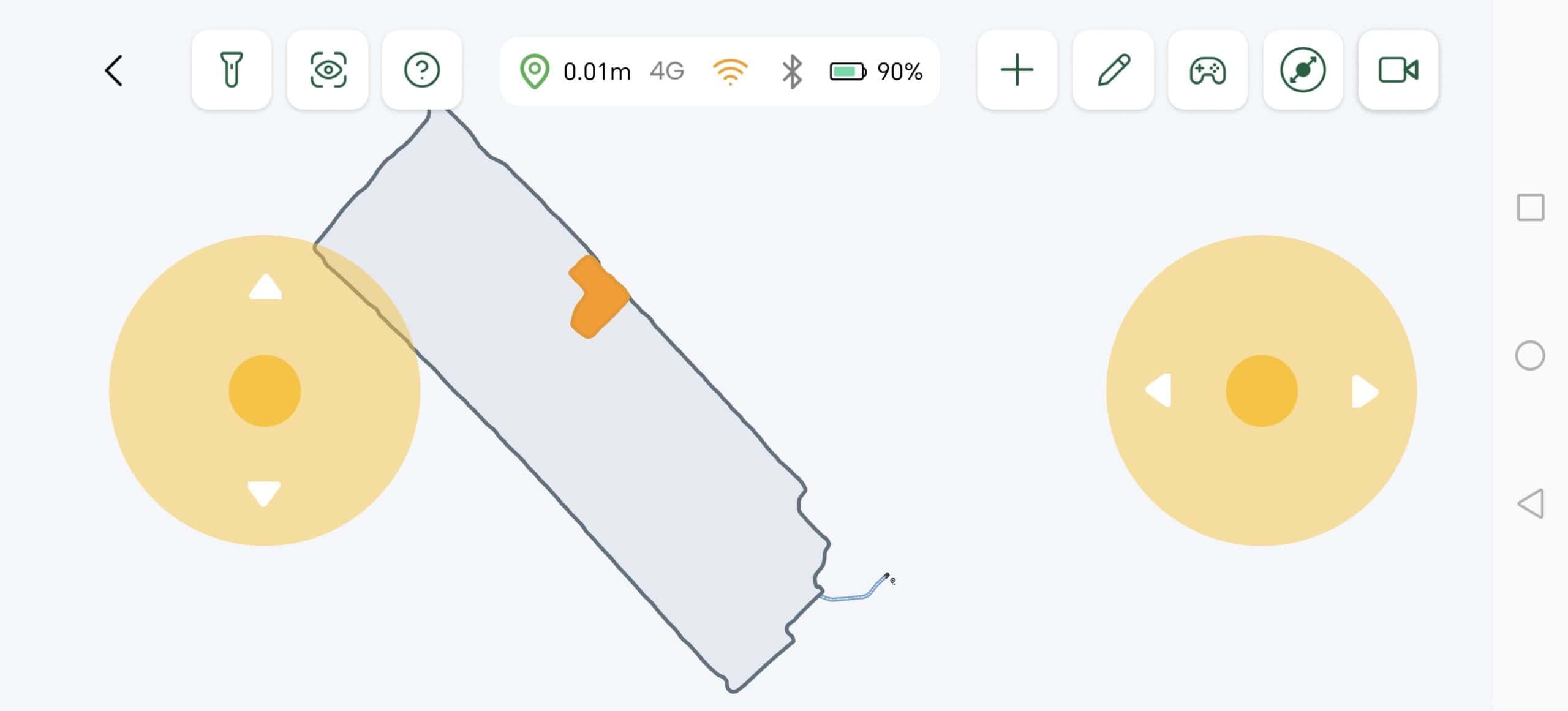
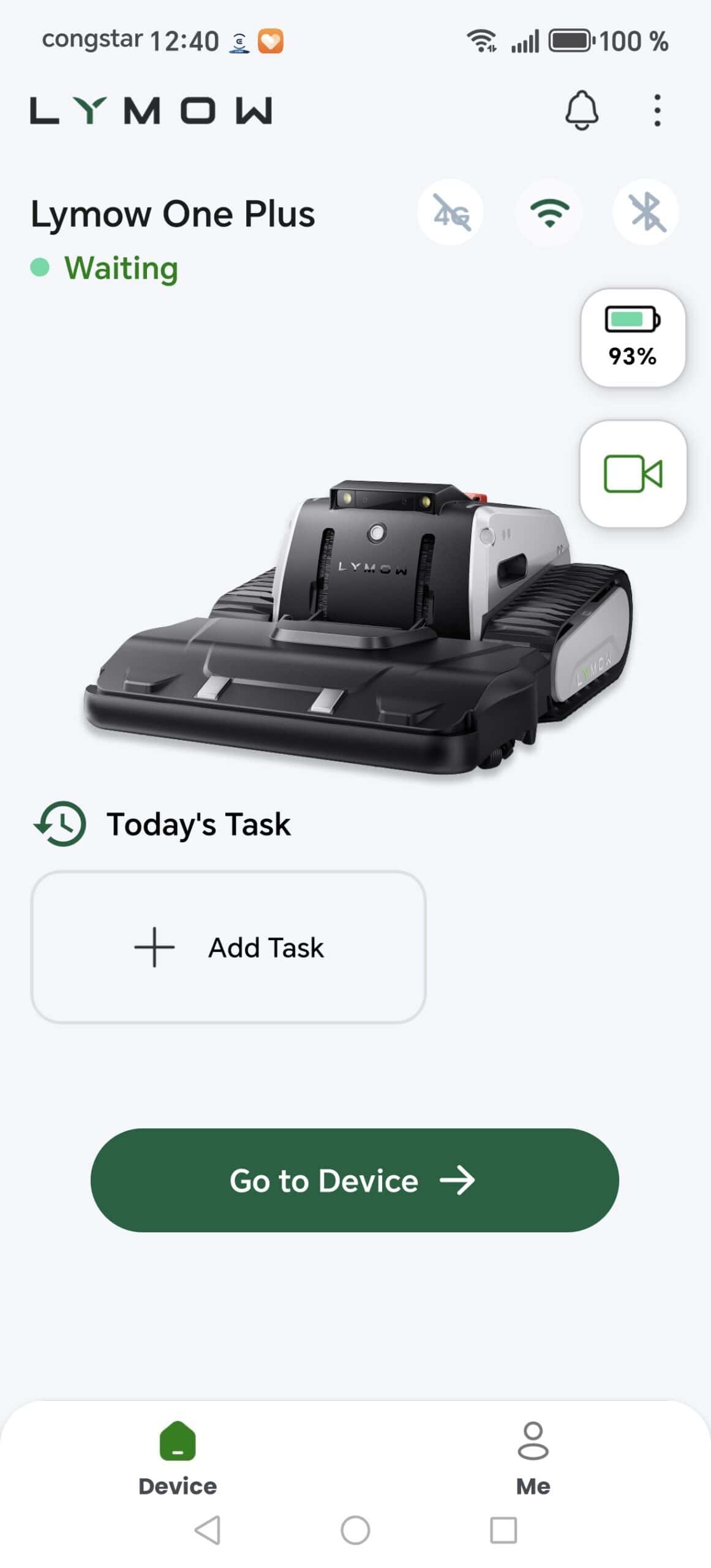

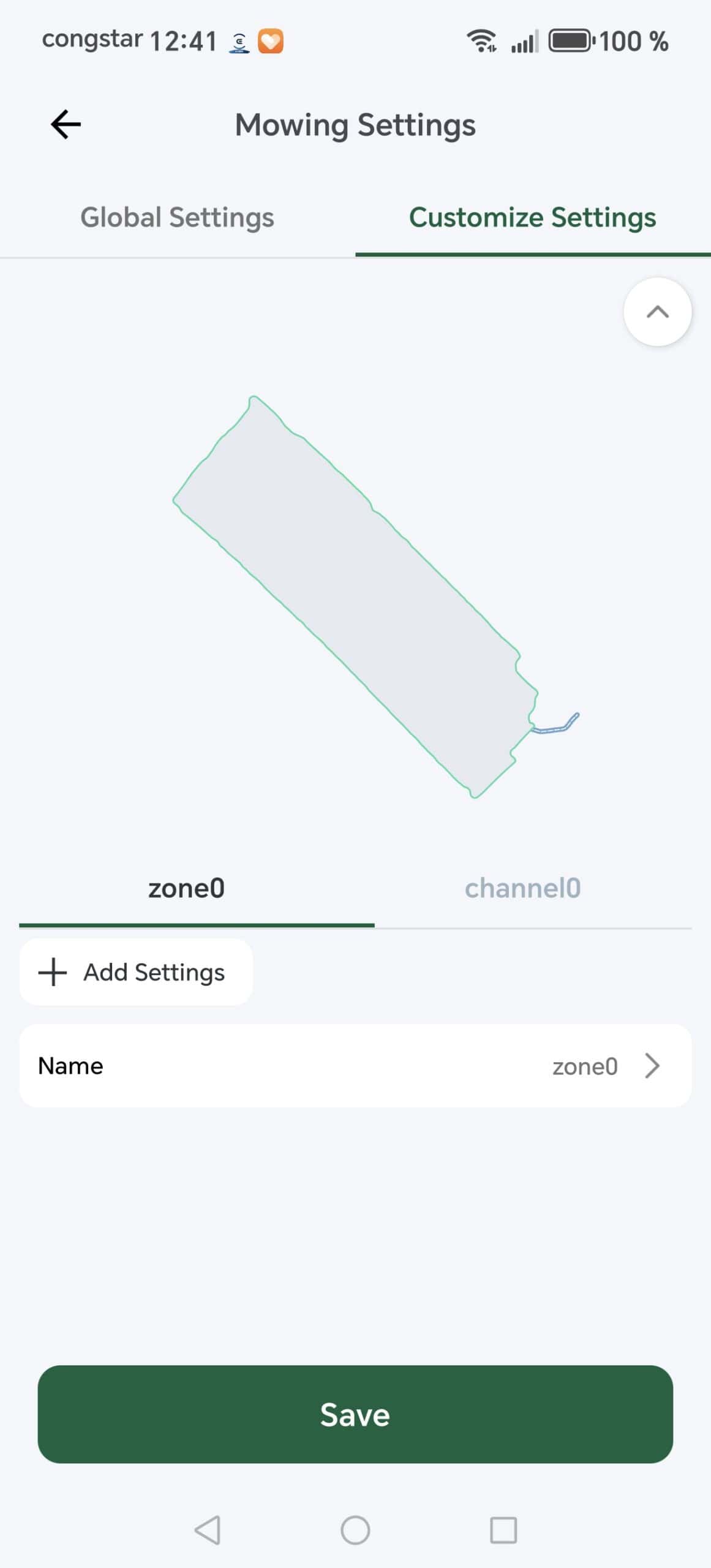
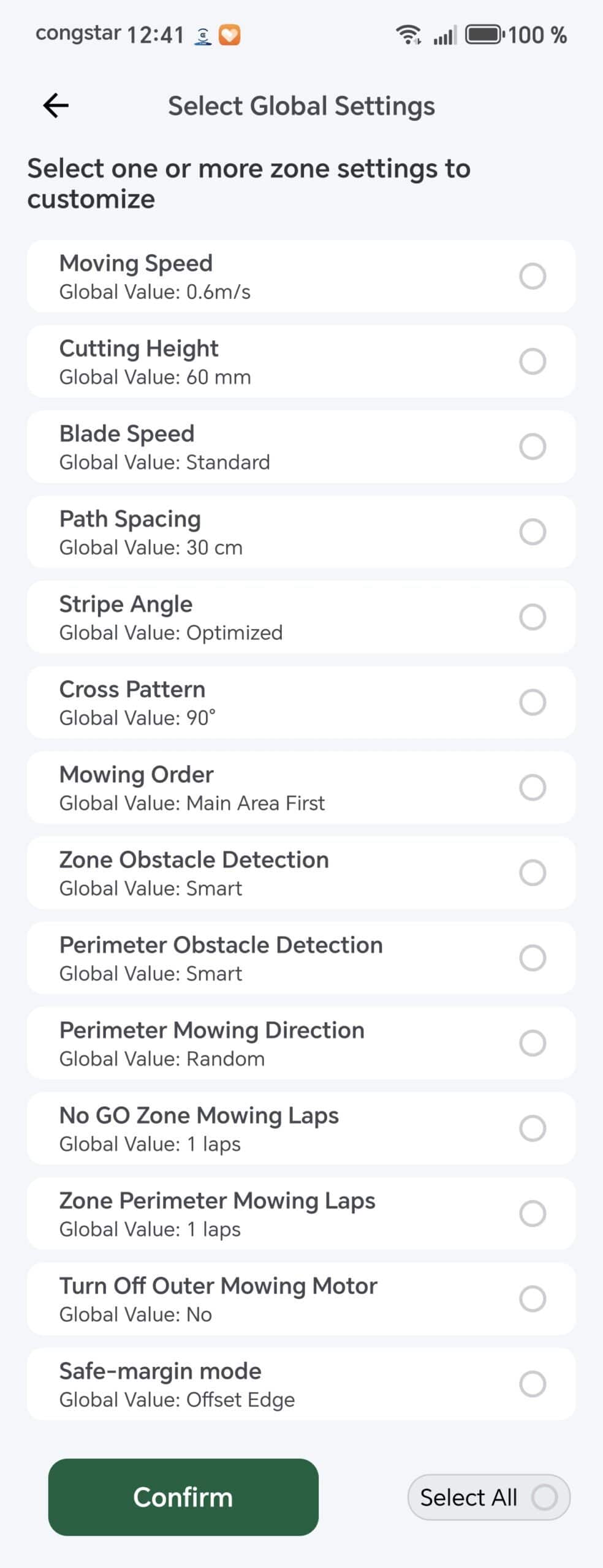
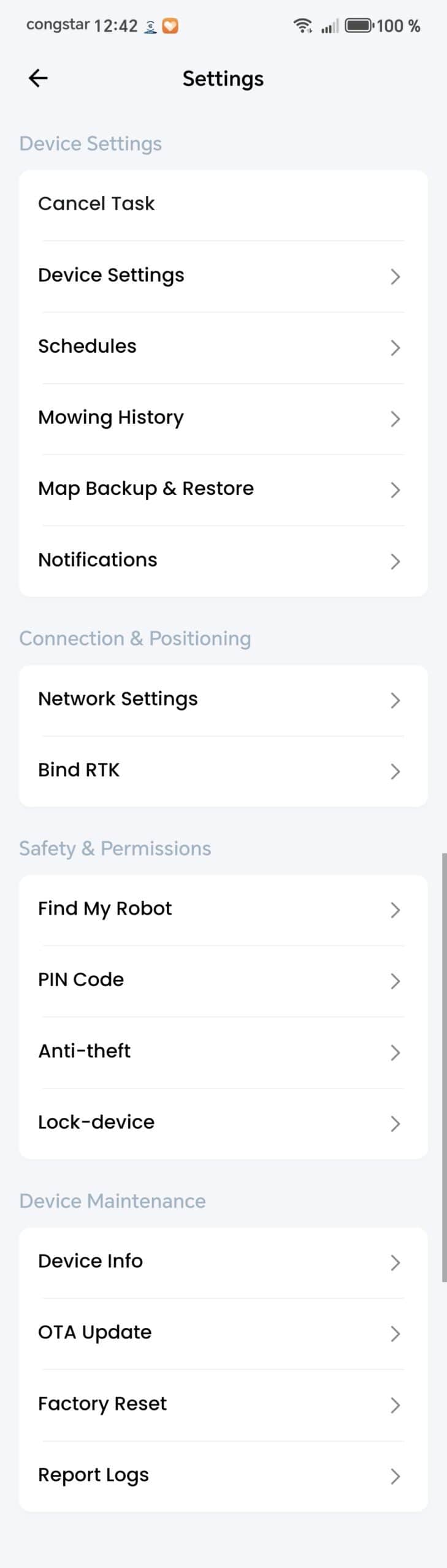
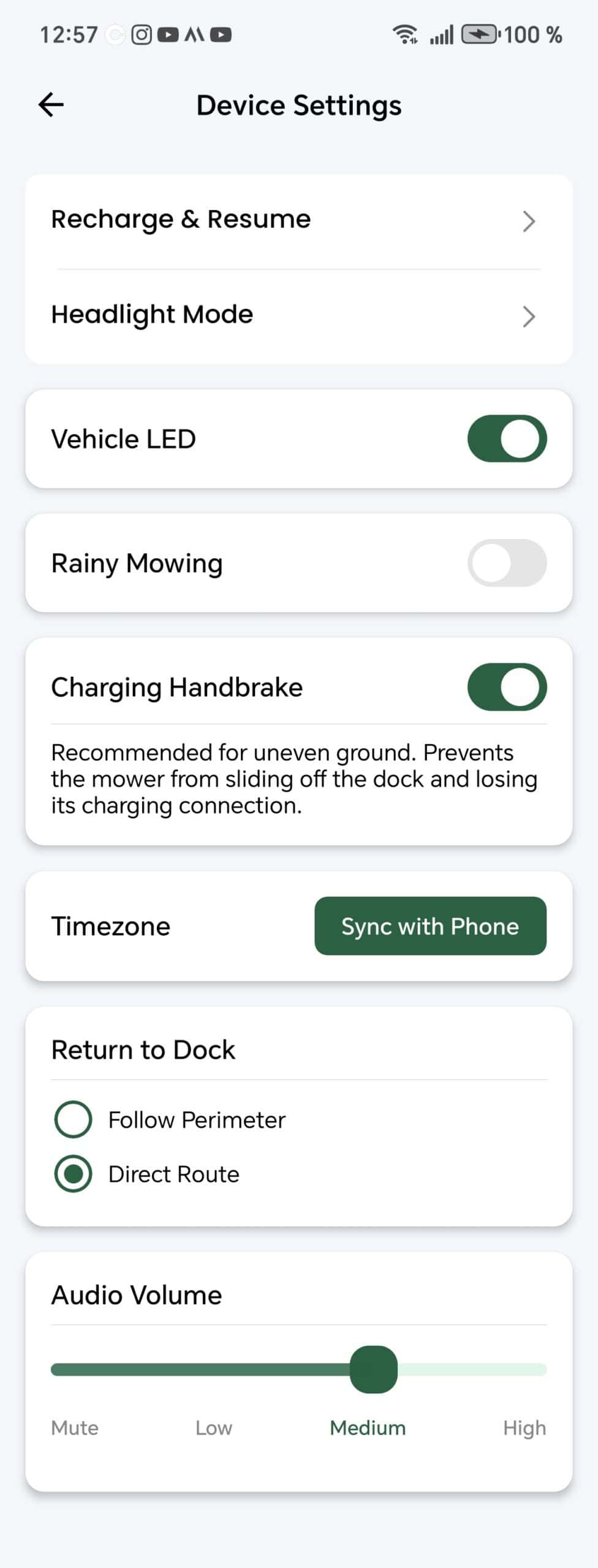
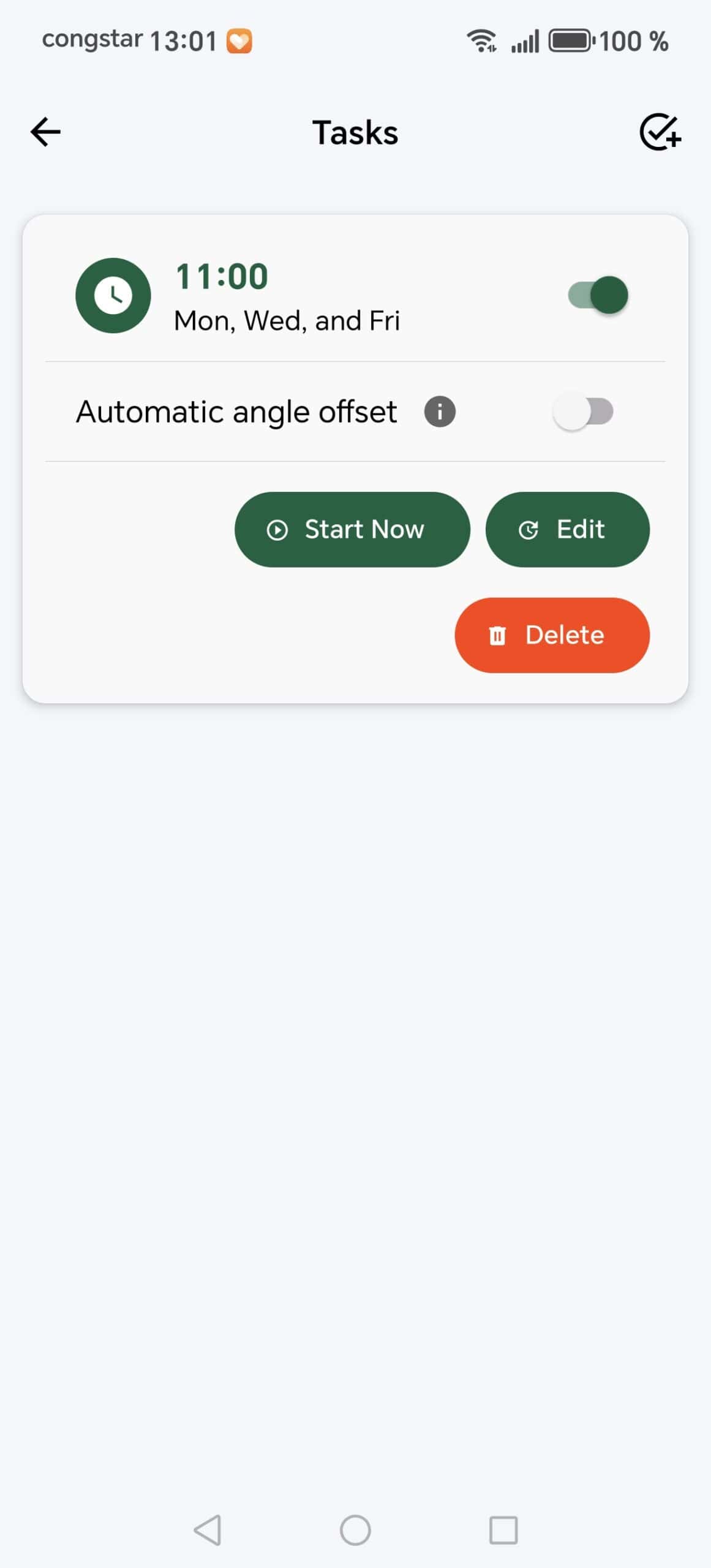
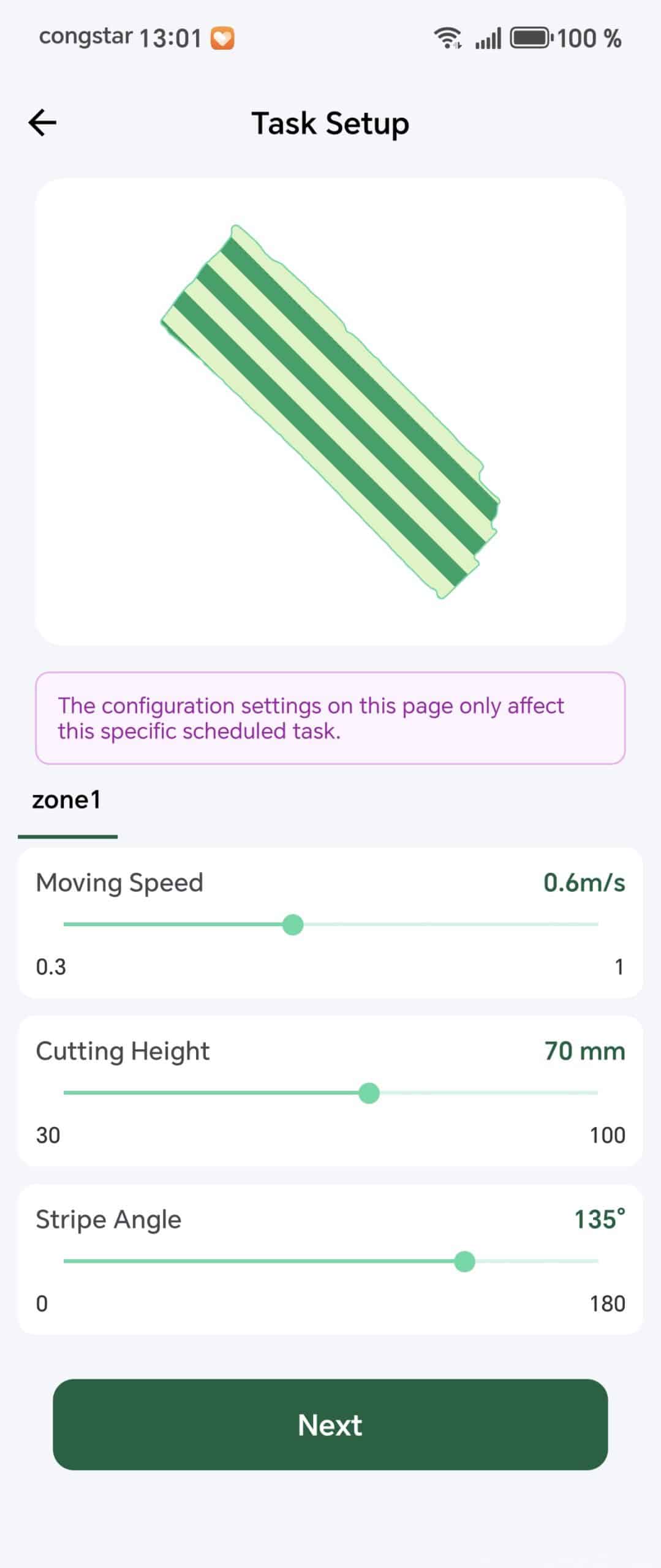
My experiences: Lymow One Plus tested on a large area
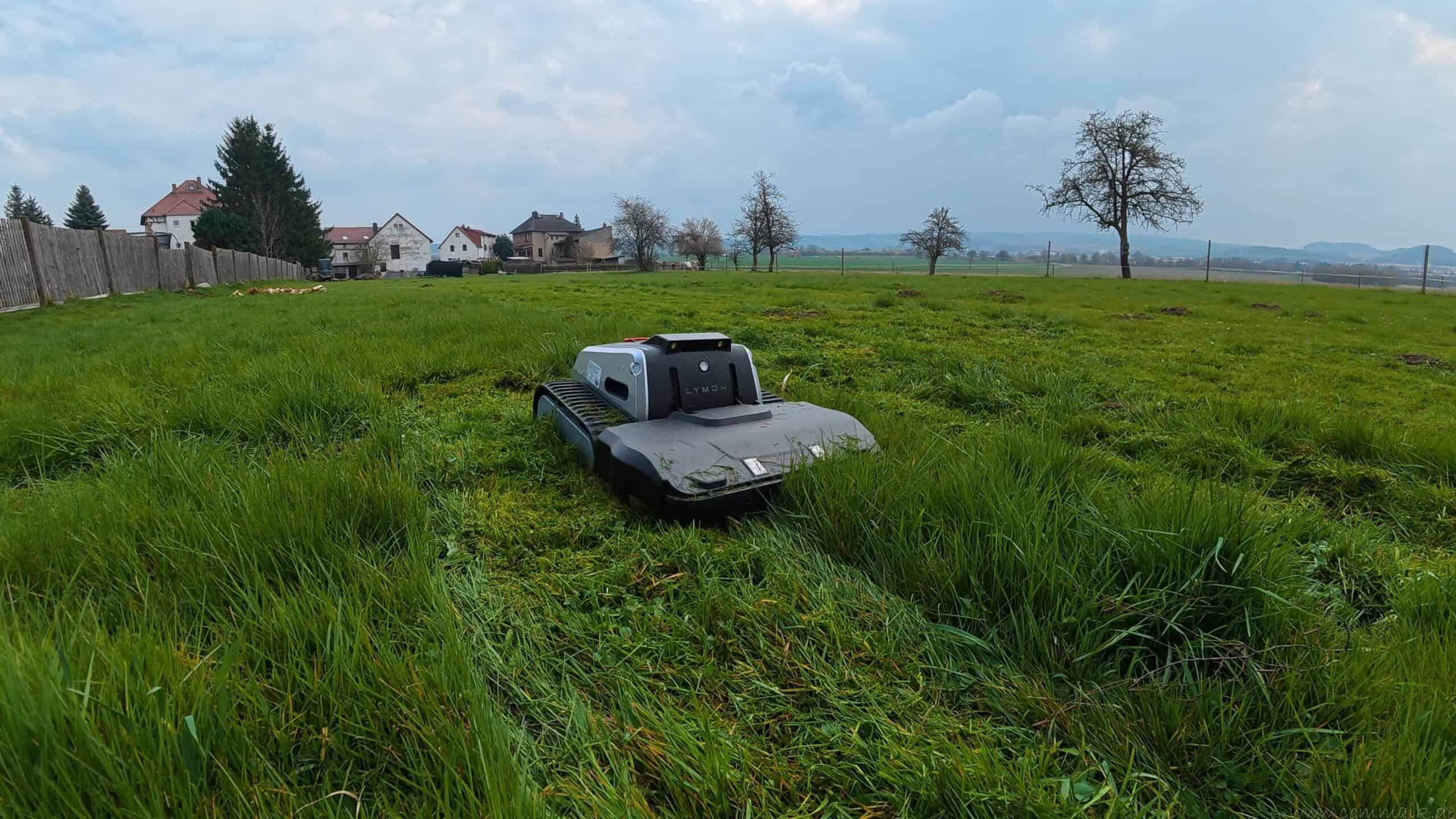
In my test area, the Lymow One Plus clearly demonstrated its strengths. Especially when it comes to large and demanding areas, it is very clear that this system works differently to traditional robotic mowers. While many robotic lawnmowers reach their limits on uneven terrain, taller grass or larger areas, the Lymow One Plus remains stable and efficient.
I was particularly impressed by the area coverage. Thanks to the large cutting width of 40 cm and the high blade speed, the robot works the area visibly faster than many other systems. This is particularly noticeable in everyday life on large properties.
The off-road capability is also a clear advantage. The chain drive ensures that the Lymow One Plus also works reliably on slopes or uneven ground. Even in difficult conditions, the robot remains stable and hardly loses any traction.
Navigation also worked well in the test. The combination of RTK, VSLAM and sensor technology ensures that the Lymow One Plus moves over the area in a structured and efficient manner. Especially in comparison to randomly moving robotic lawnmowers, this appears much more controlled and targeted.
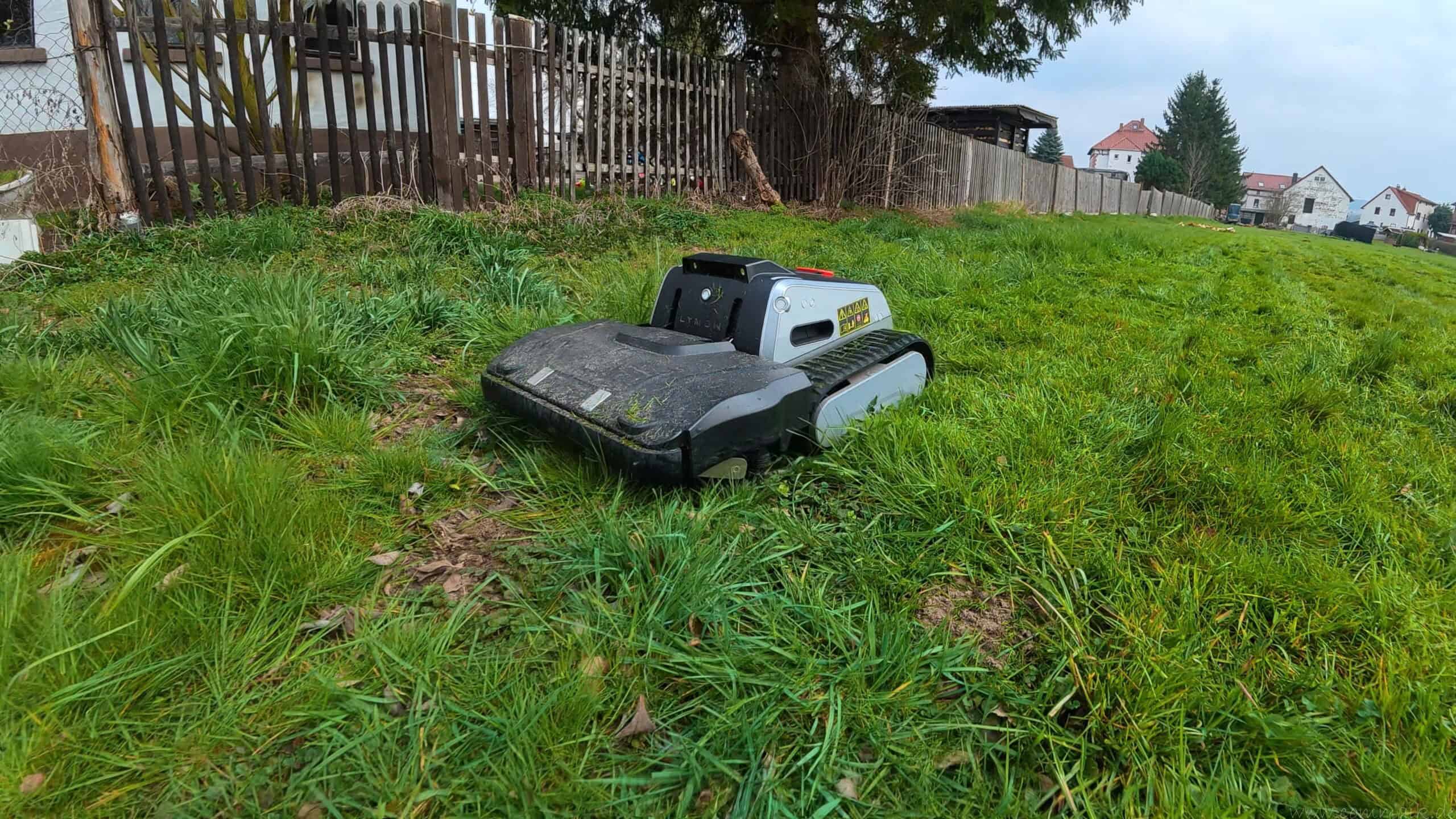
One point that has been noticed in practical use concerns the mower in wet grass. In appropriate weather conditions, wet clippings may collect in the area of the discharge and stick there. In some situations, this has led to the sputum being partially blocked.
This is not a fundamental problem with the system, but rather a typical characteristic of powerful mowers in combination with damp material. Nevertheless, you should keep this point in mind.
From my point of view, this can be optimized relatively easily. For long-term use, I would unscrew the protective flap on the side of the mower in this area to allow the clippings to be ejected more freely. This can further improve operational safety, especially for larger areas and changing conditions.
All in all, the test shows very clearly that the Lymow One Plus shows its strengths above all where many other robotic lawnmowers reach their limits: on large, uneven and demanding areas.
Conclusion: Is the Lymow One Plus worth it?
The Lymow One Plus is not a classic robotic mower, but a clearly performance-oriented system for large and demanding areas. The test showed that the focus is not on comfort for small gardens, but on efficiency, throughput and off-road capability.
The combination of high performance, a large cutting width of 40 cm and the powerful mower deck is particularly noteworthy. This means that the Lymow One Plus can also process larger areas in a comparatively short time. In conjunction with RTK navigation, the classic boundary wire is also no longer required, which significantly simplifies installation and at the same time allows more flexibility in terms of area design.
Another clear advantage is the chain drive. Especially on uneven terrain or slopes of up to 45°, the Lymow One Plus has significantly more reserves than many classic robotic mowers. This off-road capability makes it particularly interesting for plots that are not perfectly level.
On the other hand, the Lymow One Plus is simply oversized for small, simple gardens. Size, weight and performance are clearly designed for larger areas. If you only have a small, well-kept lawn, you will hardly be able to make full use of this system.
All in all, the Lymow One Plus is a real alternative to classic robotic lawnmowers – but only if the conditions are right. Large plots of land, demanding areas and a need for high area coverage are the decisive factors where the Lymow can play to its strengths.
Pros and cons at a glance
| Advantages | Disadvantages |
|---|---|
| Very high area coverage for large plots | Oversized for small gardens |
| Large cutting width (40 cm) for fast work progress | Heavier than classic robotic lawn mowers |
| No boundary wire thanks to RTK navigation | More complex to set up than simple systems |
| Very good off-road mobility due to chain drive | Dependence on good RTK signal quality |
| Powerful mower also for thicker grass | Prone to sticking in the mower when the grass is damp |
| Flexible control and customization via app | Louder than small robotic lawnmowers |
Buy Lymow One Plus – further information and current offers
If you are interested in the Lymow One Plus and are looking for a suitable system for large areas, you can find all the latest information and prices directly from the official distributor. Especially with a specialized robotic lawnmower like the Lymow One Plus, it is worth taking a look at the available options and suitable accessories.
In addition to the appliance itself, wearing parts such as blades or an additional battery are of particular interest in order to extend the service life and make operation more efficient in the long term. A second battery can make a significant difference in everyday use, especially on large properties.
👉 Click here to go directly to the Lymow One Plus and accessories:
🔗 Lymow One Plus: https://lymowtradecolimited.pxf.io/E0EnyX
🔗 Rotation ring set: https://lymowtradecolimited.pxf.io/6kyaEN
🔗 528 Wh additional battery: https://lymowtradecolimited.pxf.io/NG9dbO
👉 Alternative: Lymow One (predecessor) at a glance:
🔗 Lymow One: https://lymowtradecolimited.pxf.io/2a4gL0
🔗 Mulching blade set: https://lymowtradecolimited.pxf.io/GKLQkn
🔗 Super Swing blade set: https://lymowtradecolimited.pxf.io/YRZjve
🔗 Replacement battery: https://lymowtradecolimited.pxf.io/Z6gmzK
Especially for large and demanding areas, the Lymow One Plus offers a concept that differs significantly from classic robotic mowers. Anyone working in this area will get a powerful system with a clear focus on efficiency and area coverage.
Summary
The Lymow One Plus is a robotic mower for large and demanding areas that differs significantly from many classic robotic mowers. The focus is on high area coverage, RTK-supported navigation without boundary wire, a robust track drive and a clear focus on difficult operating conditions. With a cutting width of 40 cm, the new LYCUT 2.0 mower deck, the powerful battery and the high speed, the Lymow is designed for efficiency and throughput.
Compared to the Lymow One, which I tested last year, the new Lymow One Plus offers more power, an improved cutting system and optimized obstacle detection. The chain-driven robotic lawnmower really comes into its own on large areas, slopes, inclines and uneven terrain. According to the manufacturer, inclines of up to 45° or 45 degrees are possible. Thanks to the wide tracks or caterpillar tracks, the robot remains stable and on track even on difficult surfaces.
Another key aspect is hybrid navigation using RTK, VSLAM and sensor technology. Mapping is done via app, so no boundary wire needs to be laid. The Lymow One is controlled completely digitally, including zone management, time schedules, cutting height, mowing speed and mowing strategy. This offers clear advantages in terms of flexibility and maintenance, especially for large properties.
In everyday use, the Lymow One robot mower impresses with its high area coverage, robust construction and good off-road mobility. Obstacle detection with AI camera and ultrasonic sensors also worked practically and sensibly in the test. At the same time, it is clear that the Lymow One Plus is not a model for small gardens. However, if you have a lawn with many requirements, you will find a powerful system that occupies a very special role in the upper segment of robotic mowers.
All in all, the article shows that the lymow one and the new lymow one plus are particularly convincing where conventional systems reach their limits: on large and challenging areas, on slopes of up to 45, on uneven ground and wherever a current robotic lawnmower needs to be able to do more than just maintain a small ornamental lawn.
FAQ: Lymow One Plus in test – Frequently asked questions
1. which surfaces is the Lymow One Plus suitable for?
The Lymow One Plus is designed for large and demanding areas. According to the manufacturer, up to 7,000 m² per day are possible. It is particularly suitable for large plots, uneven terrain and slopes.
2. does the Lymow One Plus need a boundary wire?
No, the Lymow One Plus works without a boundary wire. Instead, it uses RTK navigation and creates the area via app using digital mapping.
3. how does navigation with RTK and VSLAM work?
RTK technology ensures very precise positioning via satellites. VSLAM supplements the system with visual orientation via camera. Together they enable stable navigation even in difficult conditions.
4. can the Lymow One Plus also work with poor GPS reception?
Yes, limited. If the RTK signal becomes weaker, for example under trees, the VSLAM system partially takes over the orientation. However, proper installation of the RTK antenna remains crucial.
5. how steep can the terrain be for the Lymow One Plus?
The robotic lawnmower is designed for slopes of up to 45°. Thanks to the chain drive, it remains stable and mobile even on steep slopes.
6 What is the advantage of the chain drive over wheels?
The chain drive ensures better traction, even weight distribution and greater stability. It is clearly superior to conventional wheel drives, especially on uneven or slippery surfaces.
7 How good is the obstacle detection in everyday life?
The Lymow One Plus uses a combination of AI camera and ultrasonic sensors. Obstacles such as branches or toys are detected and avoided at an early stage. However, very small or flat objects can only be detected to a limited extent.
8. how is the setup and mapping done?
Set up via the app. After installing the RTK antenna, the area is scanned once and digitally recorded. Zones, no-go areas and schedules can then be flexibly adapted.
9. how maintenance-intensive is the Lymow One Plus?
The maintenance effort is moderate. The chains are partially cleaned automatically, the mower should be checked regularly. Damp grass can cause buildup, which must be removed occasionally.
10 For whom is the Lymow One Plus really worthwhile?
The Lymow One Plus is particularly suitable for large, complex or steep plots. It is clearly oversized for small gardens and usually does not make economic sense.
Dieser Beitrag ist auch verfügbar auf:
 English
  Deutsch

Ähnliche Beiträge
Planning automatic garden irrigation: step-by-step instructions for efficient lawn irrigation
MOVA Z60 Ultra Roller Complete test: Fully automatic cleaning with AI and hot water