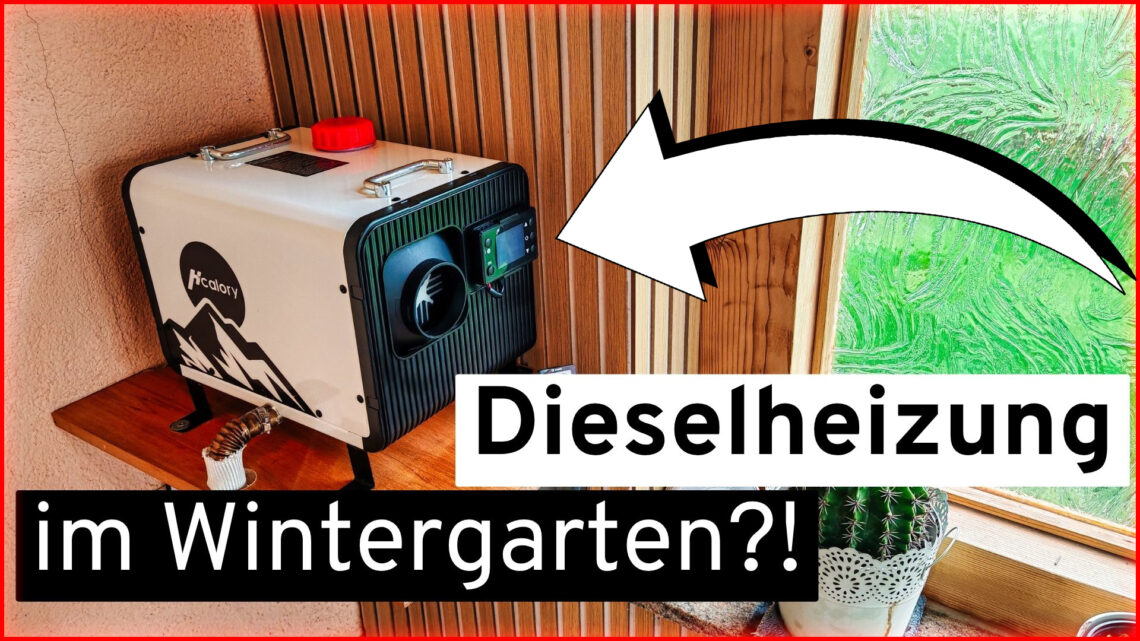
Diesel heating for motorhomes & campers: optimal heating of the conservatory with diesel
A diesel heating system can be a surprisingly efficient solution for heating rooms independently of the power grid – whether in a conservatory, motorhome or camper. In this article, I will show you why I decided to install an Hcalory HBH2 diesel heater, how it is installed and what advantages it offers over a classic electric heater. The article combines technical background, practical experience and concrete consumption data – from the first test run to app control. If you want to know how a modern diesel heating system can be installed and used efficiently, you will find all the important information in detail here.
What you can expect in this blog post
- Reasons why installing a diesel heater is often the better choice – especially compared to electric heating.
- Presentation of the tested Hcalory HBH2 model with all technical data, advantages and special features.
- Detailed installation instructions with tips on safe flue gas routing and power supply in the conservatory.
- Information on app control, automatic start/stop mode and the Bluetooth remote control.
- Practical results on heating output, actual consumption and temperature distribution in the room.
- Assessment for use in a motorhome, camper, truck or garden shed.
- Information on maintenance, retrofitting and sensible safety measures.
- Comparison between heating with diesel, gas and electricity – including the advantages and disadvantages of each system.
- My personal conclusion after several weeks of operation in the conservatory with recommendations for different areas of application.
Why install a diesel heater?
The conservatory has an area of around 6 × 6 meters with a room height of around 2.5 to 3 meters. Two sides are adjacent to the house, the other two are half-timbered with single glazing – a structure that loses a lot of heat in winter and is difficult to heat evenly. Previously, the room was heated with a 2000 watt electric radiator, which ran continuously to keep the temperature reasonably stable. Despite the high power consumption, the heat distribution remained uneven: It became noticeably warm in the immediate vicinity of the radiator, but significantly cooler in the far corners of the room.
A diesel heater works in a fundamentally different way. It burns diesel or heating oil and converts the resulting heat into warm air via an integrated heat exchanger, which is distributed evenly throughout the interior by a fan. The effect is a significantly more homogeneous temperature distribution and faster heating, even in larger or poorly insulated rooms.
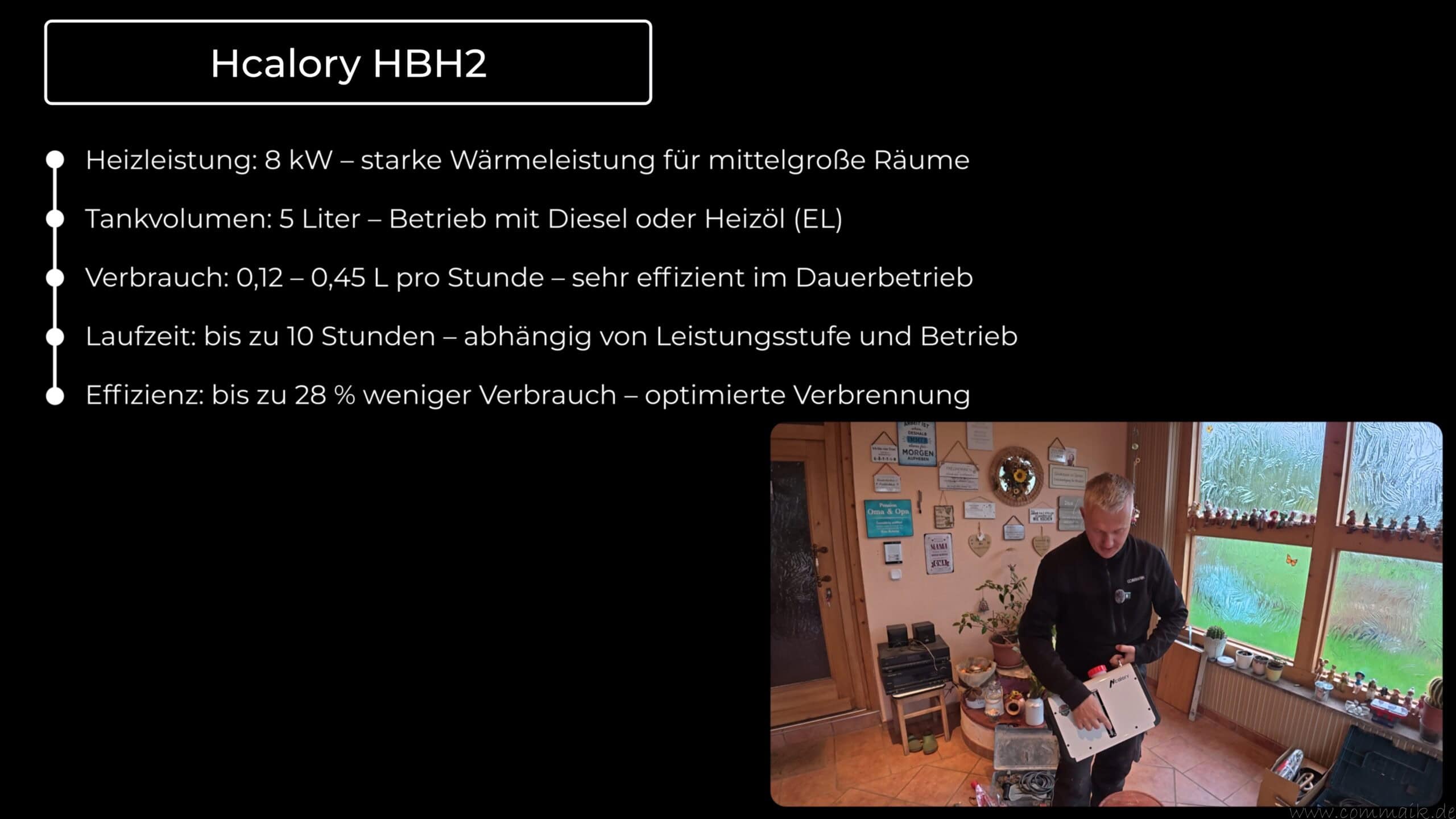
In contrast to electric heating, which converts electricity directly into heat and therefore incurs high operating costs, the Hcalory HBH2 diesel heater uses the energy content of the fuel much more efficiently. It is specified with a maximum heat output of 8 kW. However, this figure describes the theoretically possible heat output if the heater were to burn around 0.8 liters of diesel per hour – with an energy content of around 9.8 kWh per liter of diesel. As the HBH2 consumes only 0.12 to 0.45 liters of diesel per hour in practical operation according to measurements, the actual usable heating output is realistically between 1.2 and around 4.5 kW. This output is sufficient to reliably heat the approximately 90 m³ conservatory, especially at moderate outside temperatures.
Thanks to the app control and the automatic start/stop mode, the parking heater regulates its output as required, which is particularly beneficial in cold weather. This further reduces energy consumption and makes operation independent of the power grid – a decisive advantage, especially for applications in campers, motorhomes or places without a fixed power supply.
Portrait of the manufacturer: Hcalory
Hcalory is a manufacturer that specializes in compact heating and cooling solutions for vehicles – in particular diesel parking heaters for motorhomes, boats and small spaces.
In recent years, the company has developed several models that are designed for mobile use as well as for stationary operation in the garden, workshop or conservatory.
Well-known variants include the TBS2 diesel heater, the TB2, the compact L1 and the HBH2 shown here with integrated tank and Bluetooth app.
Design, workmanship & scope of delivery
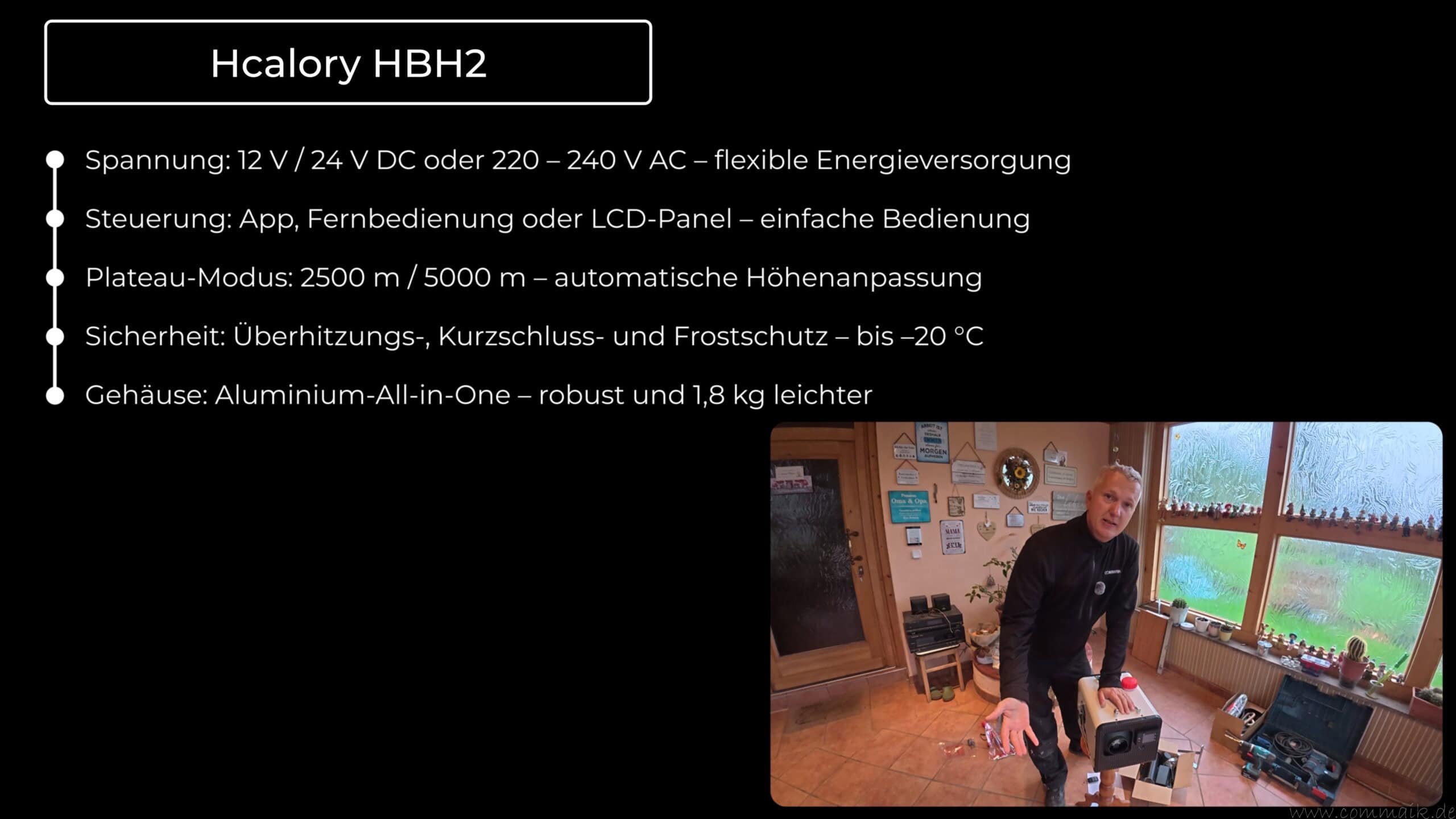
The housing of the Hcalory HBH2 diesel heater is made of robust aluminum and is around 1.8 kilograms lighter than previous models. The material not only ensures stability, but also improves heat dissipation on the surface. Thanks to its compact design, the heater is easy to install and is suitable for permanent installation in conservatories as well as for use in smaller vehicles, motorhomes or campers.
Structure and mode of operation
The diesel heater works according to a simple but efficient principle: a small combustion chamber is continuously supplied with fuel via a diesel pump. At the same time, a fan draws in fresh air, which is mixed with the injected diesel and ignited by a glow plug. The heat generated is transferred to a compact heat exchanger, which heats the ambient air flowing through it. This warm air then enters the interior via an air outlet or diffuser.
The exhaust gases from the combustion process are routed to the outside via a flexible stainless steel exhaust hose, while a separate fresh air duct ensures clean supply air. The system is therefore closed and completely separates the combustion air from the room air – a key safety aspect, especially when used indoors.
The integrated 5-liter tank supplies the heater with fuel. With an average consumption of 0.2 to 0.3 liters of diesel per hour, one tank of fuel lasts for around 15 to 20 hours of operation. Power can be supplied either via the 230-volt power supply unit or via a 12-volt or 24-volt power source, such as a battery. This means that the diesel heater can also be operated off-grid, i.e. independently of the power grid – for example with an off-grid PV system or in a car.
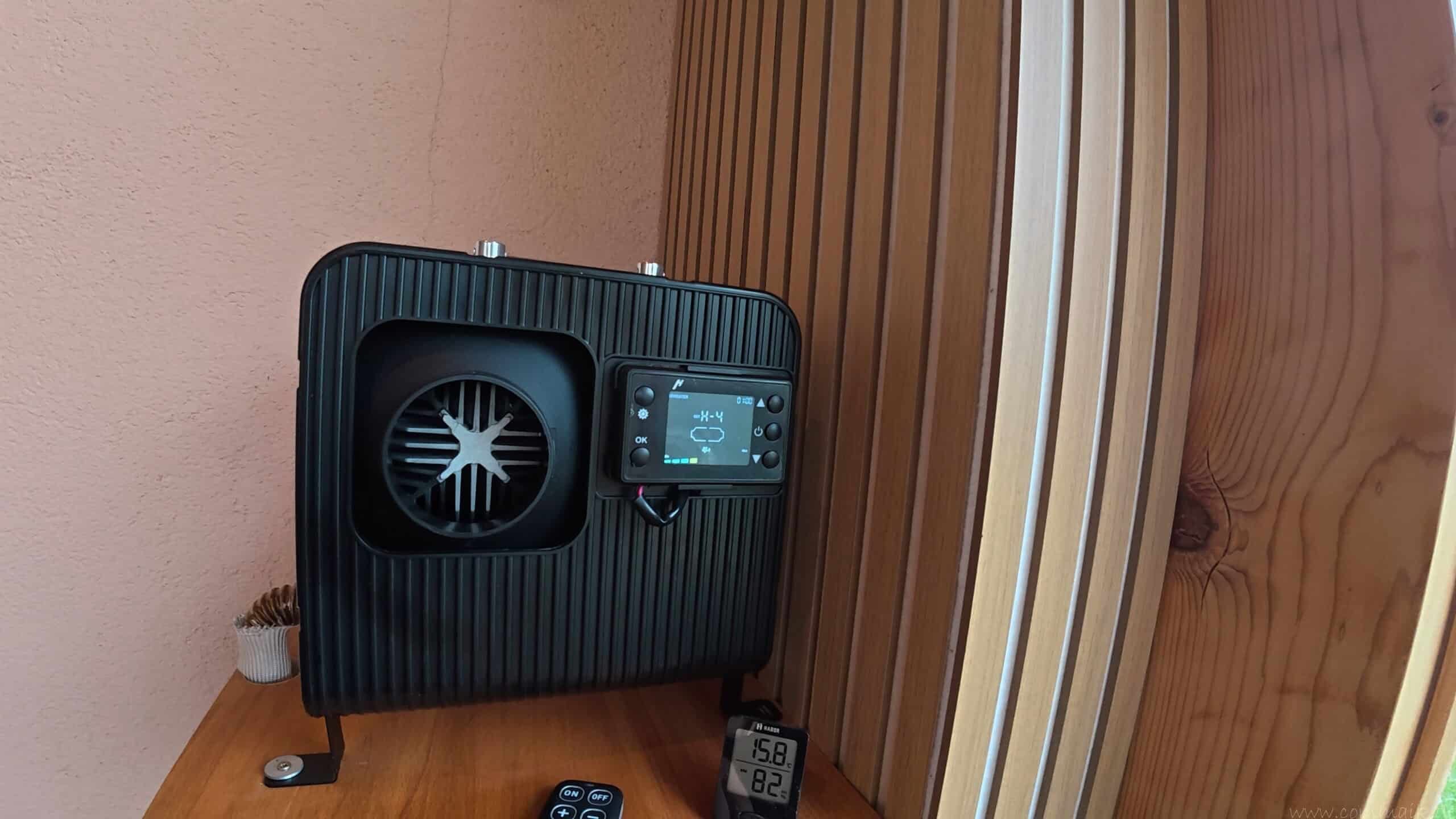
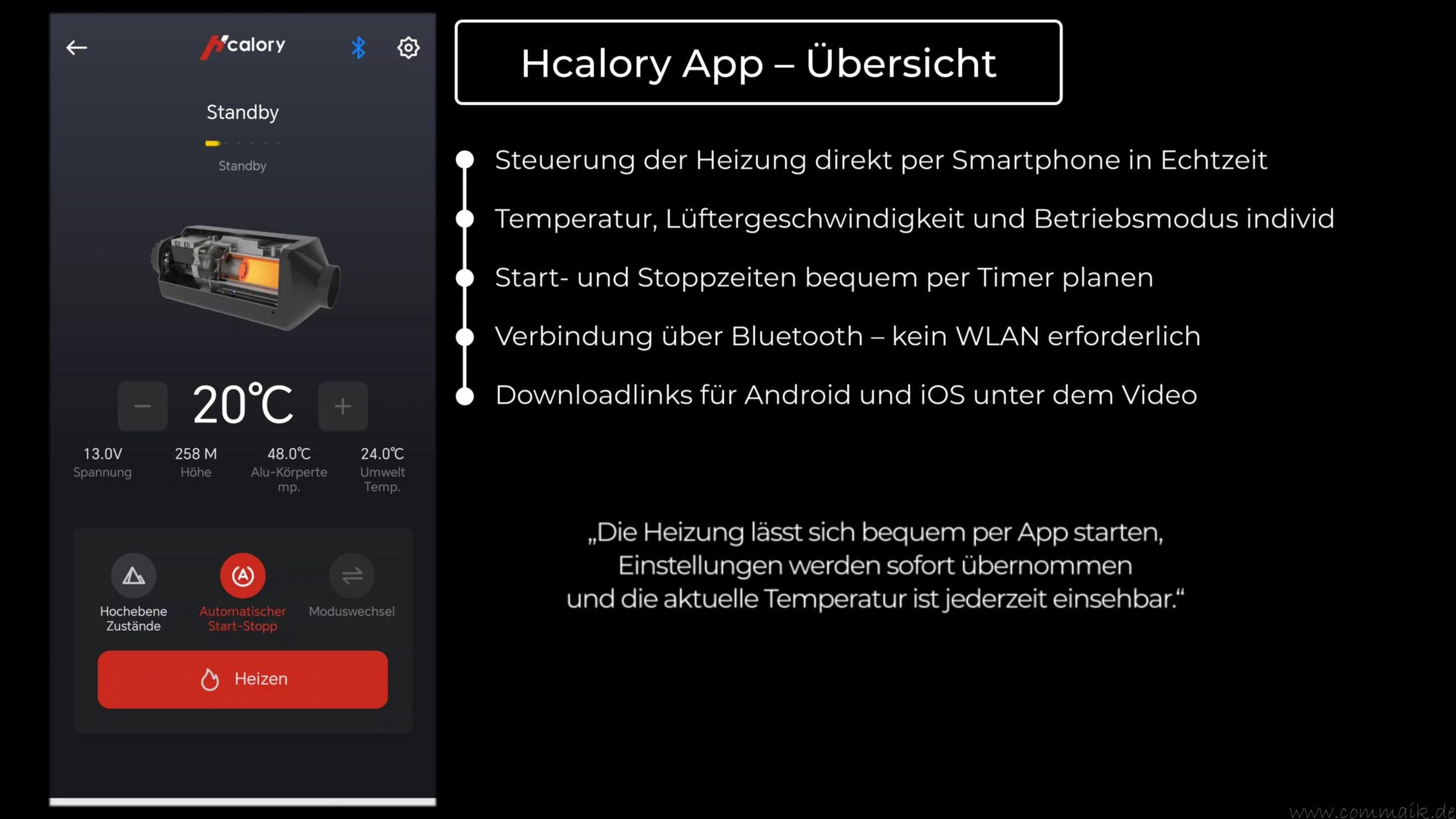
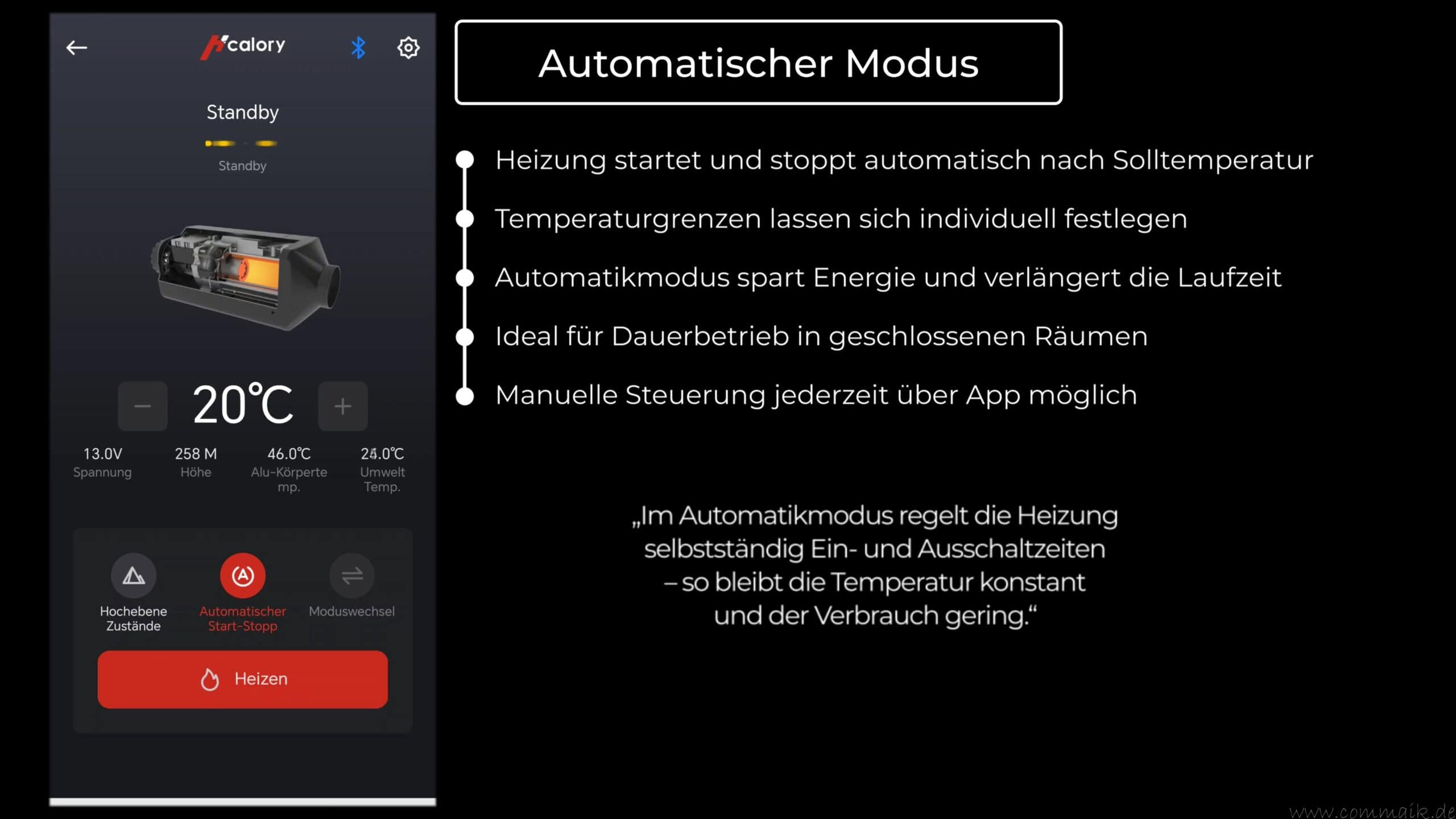
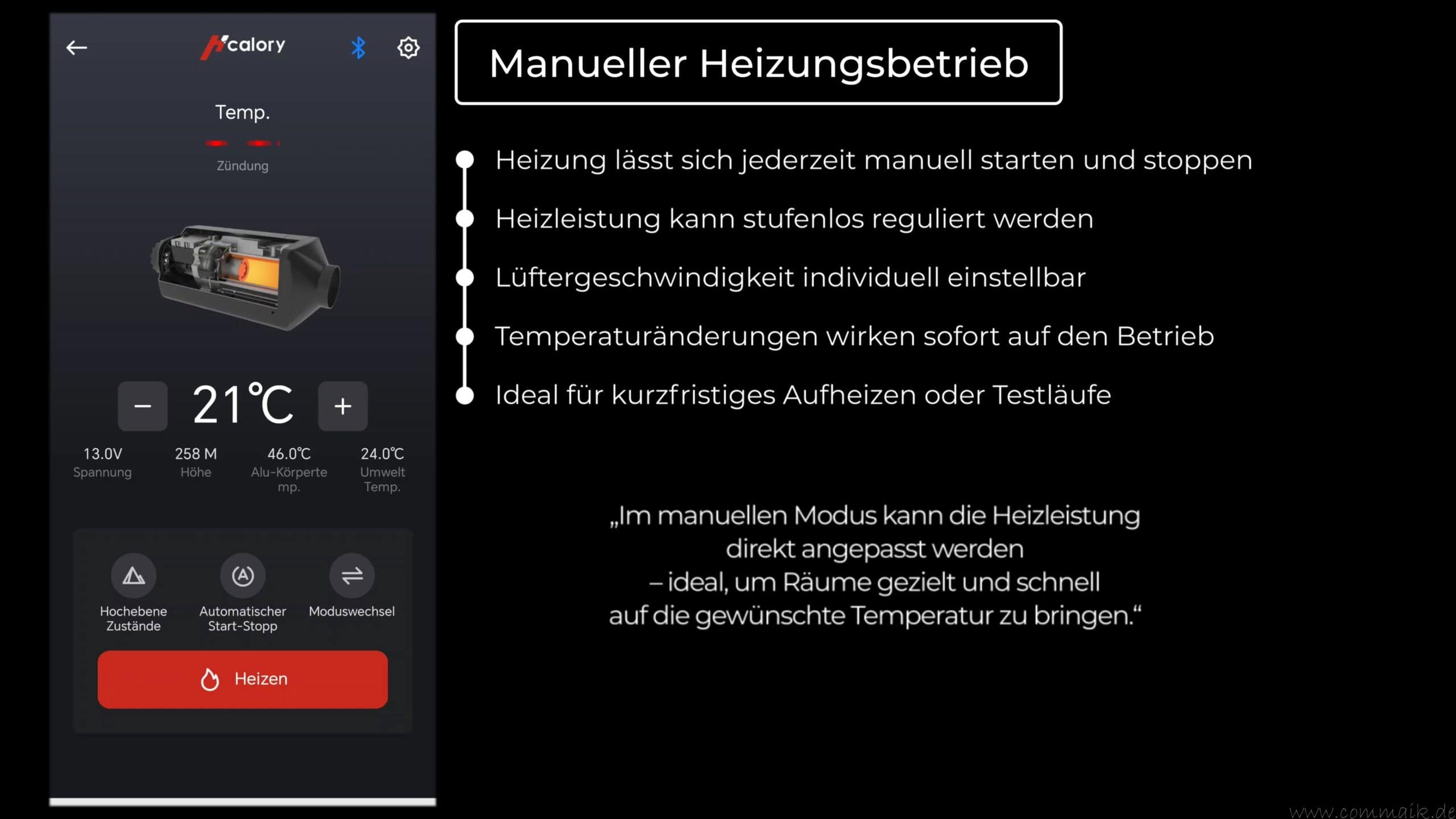
The Bluetooth remote control and the removable LCD panel make it easy to control: temperature, fan speed and operating mode can be conveniently adjusted. The automatic start-stop mode switches the heating off as soon as the set temperature is reached and on again when the room temperature drops.
Scope of delivery
- Hcalory HBH2 diesel heater (8 kW)
- Integrated 5-liter tank
- Exhaust hose and exhaust angle
- Air filter, hot air connection with diffuser
- Bluetooth remote control
- Transformer/mains adapter with Schuko plug
- Screws, plugs and clamps
I also recommend the following for installation: heat-resistant exhaust paste, heat protection tape and a CO detector to ensure safe operation in the interior.
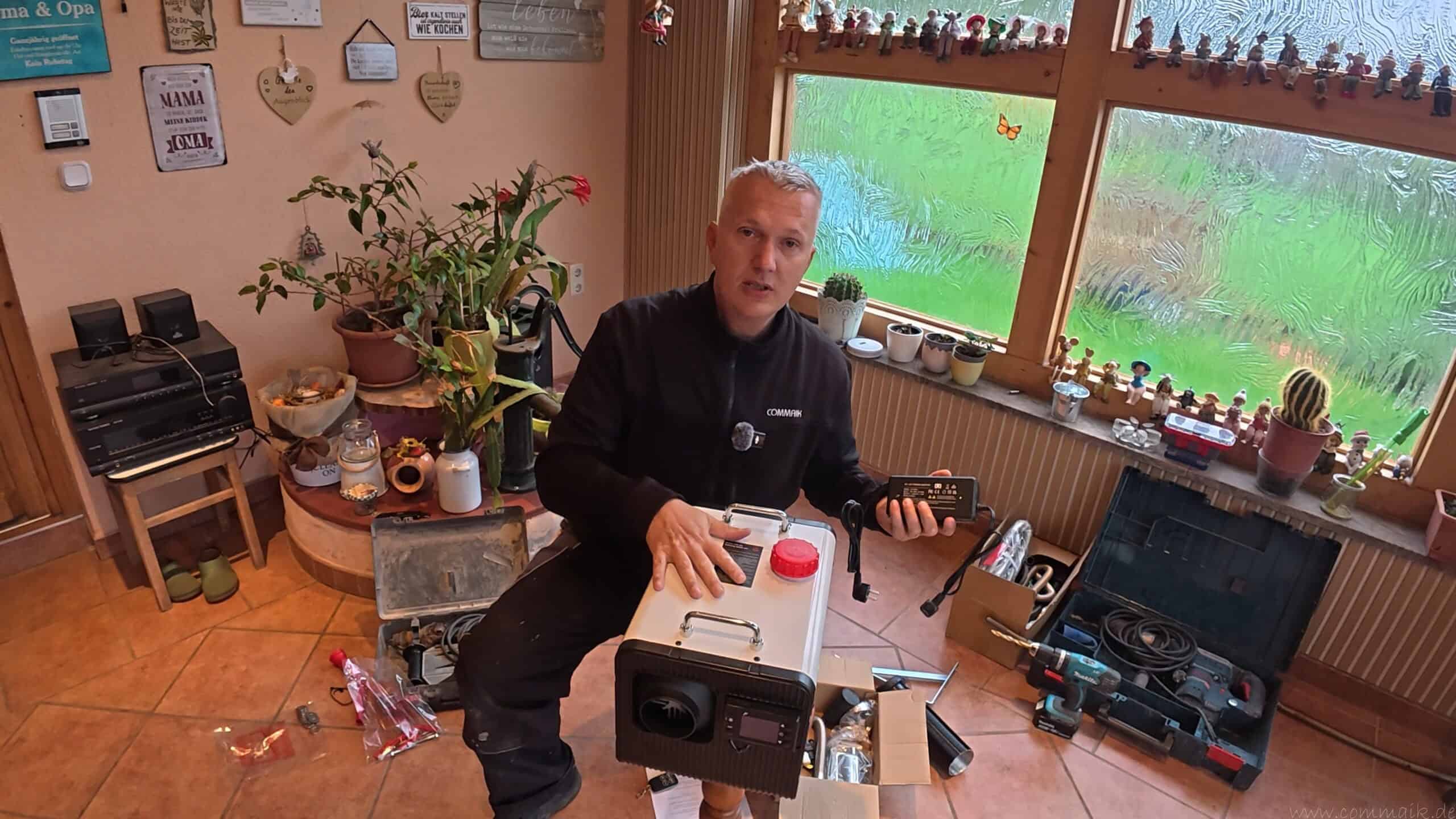



Technical data of the Hcalory HBH2 diesel parking heater
| Feature | Value |
|---|---|
| Heat output (theoretical) | 8 kW |
| Effective heat output (realistic) | approx. 1.2 – 4.5 kW depending on consumption and operating settings |
| Fuel | Diesel or heating oil |
| Tank volume | 5 liters (integrated) |
| Consumption | 0.12 – 0.45 L / h (depending on power level) |
| Tension | 12 V / 24 V DC or 220 – 240 V AC |
| Power consumption at startup | approx. 120 W for glow plug (short-term) |
| Operating current consumption | 8 – 12 W in normal operation |
| Control system | Bluetooth app, LCD control panel, remote control |
| Plateau mode | 2,500 m / 5,000 m Altitude adjustment |
| Heat exchanger material | Die-cast aluminum |
| Air flow rate | approx. 180 – 200 m³/h |
| Exhaust pipe diameter | 24 mm |
| Air outlet diameter | 75 mm |
| Operating temperature range | -20 °C to +40 °C |
| Protective functions | Overheating protection, short-circuit protection, frost protection, undervoltage and overvoltage protection |
| Noise level | approx. 45 – 52 dB (depending on level and distance) |
| Weight | approx. 6 kg |
| Areas of application | Conservatory, workshop, garden shed, motorhome, camper, boat |
Control and operating options of the Hcalory HBH2
The Hcalory HBH2 diesel heater can be controlled in three different ways – all systems access the same internal controller, but offer different comfort functions.
| Control type | Description | Functions |
|---|---|---|
| LCD control panel (integrated or extended by cable) | Included in the scope of delivery, can be permanently mounted or installed inside. Ideal for stationary use in conservatories or mobile homes. | – Switching the heating on/off – temperature selection in °C
– Performance levels (1-6)- Plateau mode (2,500 / 5,000 m) – Display of voltage, operating status, pump frequency |
| Bluetooth app (Hcalory app for Android & iOS) | Connection via Bluetooth, quick setup without WLAN. Ideal for control via smartphone or tablet. | – Real-time control (temperature, fan speed, timer)
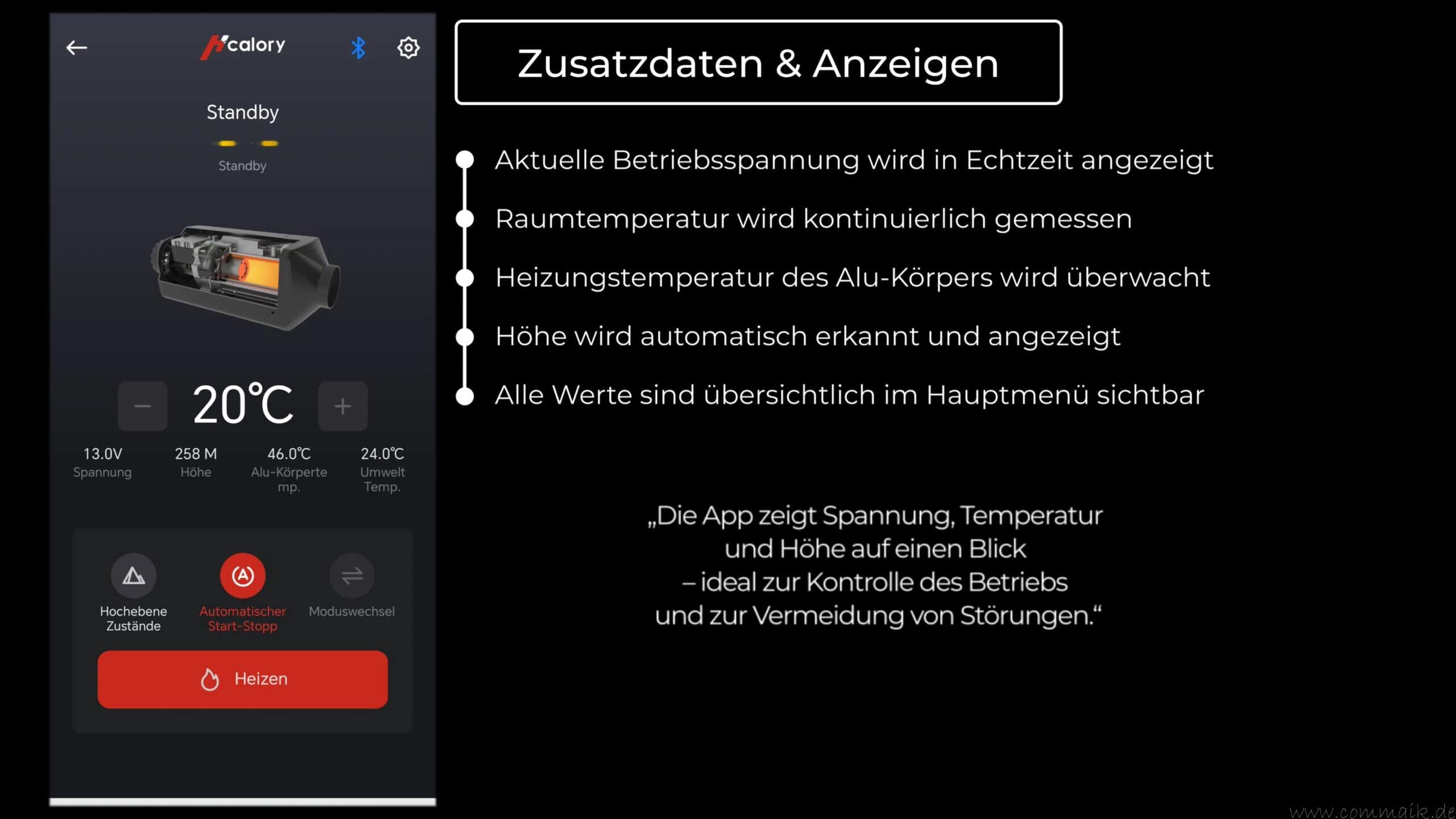
– Automatic start/stop operation – Height adjustment – display of voltage, room and radiator temperature – Timer functions and fault diagnosis |
| Bluetooth remote control | For quick operation without a smartphone. Particularly practical in vehicles or if the heater is located in a separate room. | – Start/stop- Increase/decrease temperature
– Activate/deactivate timer – Status display via LED |
In addition, the heater has an automatic start/stop function that stops the firing process as soon as the set temperature is reached and restarts automatically when it cools down. This ensures even heat distribution, reduces consumption and extends the service life of the diesel pump.
The plateau mode regulates the amount of fuel injected depending on the ambient altitude and thus improves combustion in mountainous regions – a detail that is particularly relevant when used in motorhomes or campers.




- [Exklusive Dieselheizung für zuverlässige Wärme]: Die LF Bros 5 kW Diesel Standheizung liefert zuverlässige Heizleistung (1375-5000 Watt) bei einem Verbrauch von nur 0,18-0,53 l/h. Der Betriebstemperaturbereich von -40°C bis +40°C.Kein mühsames Schichtenanziehen mehr oder Zusammenkauern in kalten Ecken. Schluss mit dem Frieren - genießen Sie wohlige Wärme mit LF Bros
- [Universell einsetzbar – Wärme, wo Sie sie brauchen]: Neben 12V/24V-Anschluss enthält das Set einen 220-240V-Adapter. Einfach in die Steckdose stecken - keine zusätzlichen Teile nötig für Garage, Keller oder Wohnmobil. Verlässliche Wärme im Winter für Wohnmobile, Autos, Camper, Anhänger, Gewächshäuser, Läden und Keller
- [Einfache Bedienung & Fernbedienung]: Diese All-in-One-Dieselheizung ist sehr einfach einzurichten und sofort einsatzbereit. Sie wird mit einer sehr detaillierten Gebrauchsanweisung geliefert, Sie können auch den QR-Code für eine Installationsanleitung scannen. Mit der gut verständlichen Anleitung ist die Heizung in Minuten einsatzbereit. Die Fernbedienung hat eine Reichweite von 30 Metern
- [Exklusive Ölleckagesicherung]: Im Gegensatz zu anderen Produkten verfügt der von LF Bros für Dieselheizungen verwendete Kraftstofftankdeckel über ein Innengewinde, das wie der Tankdeckel eines Autos funktioniert und so wirksam verhindert, dass Öl ausläuft, wenn Ihr Fahrzeug auf unebenen Straßen fährt
- [Sorgfältige Verpackung]: Das Set ist in einer sorgfältig verpackten Box verpackt. Das Hauptgerät ist mit Kunststoffschaum geschützt, um Kratzer und Stöße zu vermeiden. Die Bedienungsanleitung liegt bei. Sie können Ihre Dieselheizung auch in der Box für den nächsten Winter aufbewahren. Bereiten Sie sich auf den Winter vor – bevor die Kälte kommt! Egal ob Camping, Werkstatt oder Zuhause - mit LF Bros bleiben Sie immer warm
Video: Diesel heating in the conservatory – installing the Hcalory HBH2 step by step
I have documented the complete installation of the Hcalory HBH2 diesel heater, including mounting the wall bracket, connecting the flue gas and fresh air pipes, integrating the power supply and filling the tank, in a detailed video. In it, I show you how to install the heating in the conservatory in a practical way – from drilling the wall duct and sealing the pipes to initial commissioning and control via app.
The video is part of my playlist Product Tests, Experiences & Conclusion on my YouTube channel and shows the entire process from planning to the successful test run.
Another overview of my videos on building the animal house with outdoor aviary can be found in the Garden blog category.
If you want to see more of me and my projects, feel free to check out my YouTube channel.
-

-
-
-
Price: € 14.31
-
-
-
-
Price: € 14.52
-
-
-
-
-
-
Price: € 5.76instead of: € 6.69
-
-
Price: € 9.99instead of: € 10.68
-
-
-


![Pinava® Stufenbohrer [ROBUST Line] für Metall, Edelstahl, Kunststoff & Holz [Ø 4-32 MM] - Profi HSS Kegelbohrer - Schälbohrer 10mm Schaft - Blechbohrer Step Drill Bit](https://m.media-amazon.com/images/I/51Ny8y0OJSL._SL75_.jpg "Diesel heating for motorhomes & campers: optimal heating of the conservatory with diesel 41")


Installation of the diesel heater
The Hcalory HBH2 diesel heater was installed on the inside wall of the conservatory. The aim was to install the heating system in a space-saving, efficient and safe manner. It is particularly important that the flue gas hose is properly routed to the outside and that the interior is sufficiently ventilated to ensure safe combustion and air circulation.
Step-by-step installation
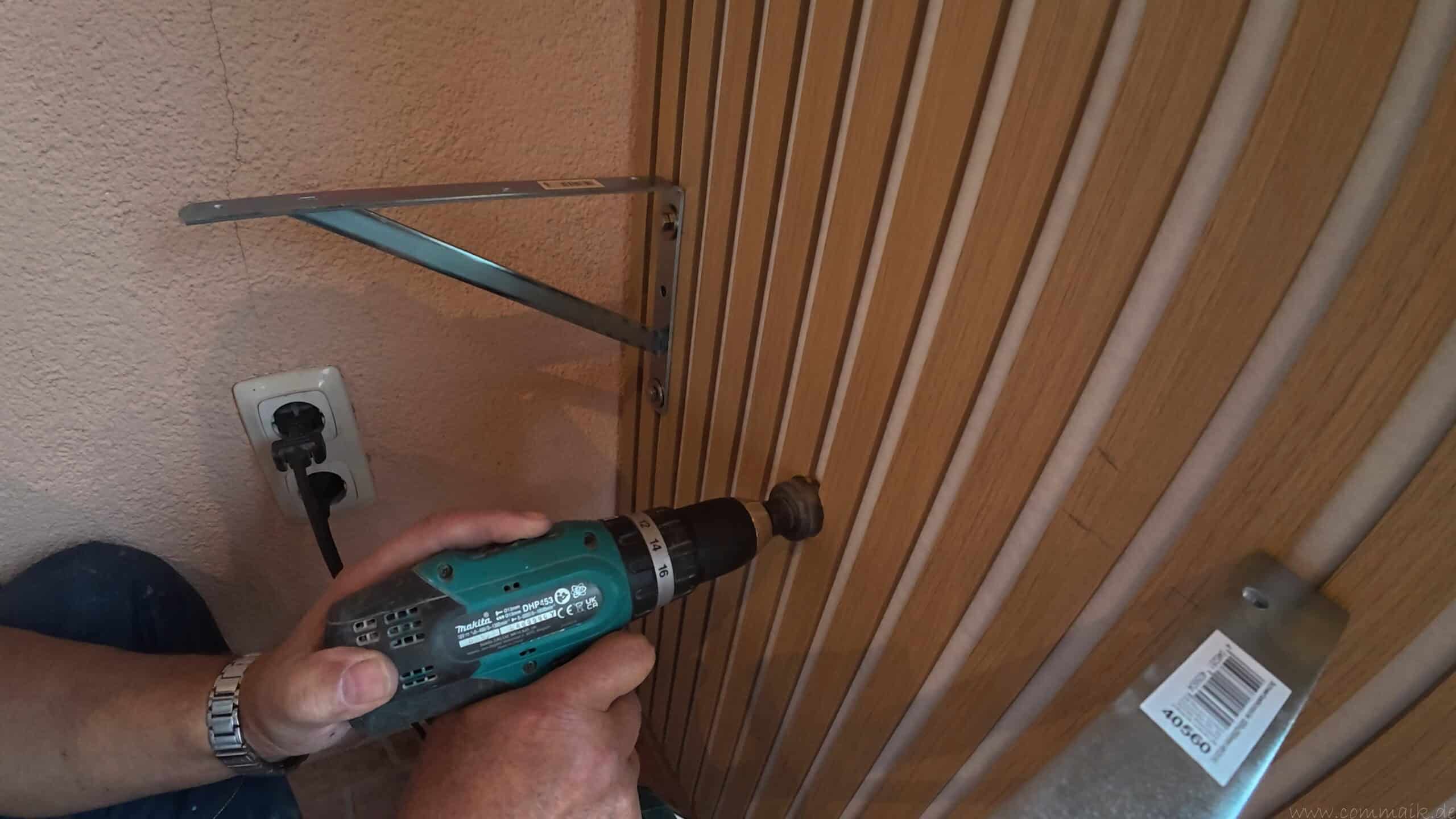
- Attaching the mounting plate to the wall
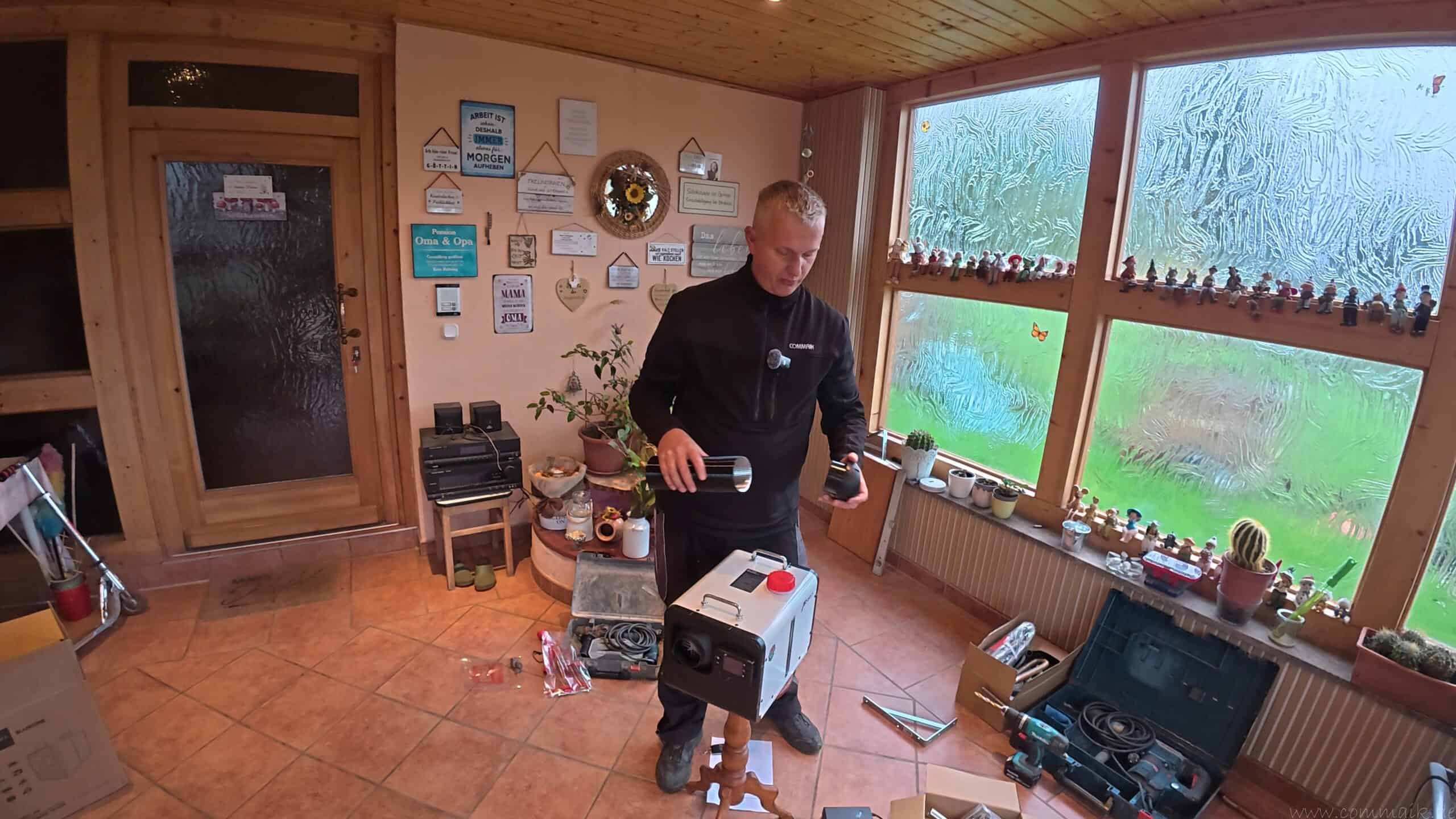
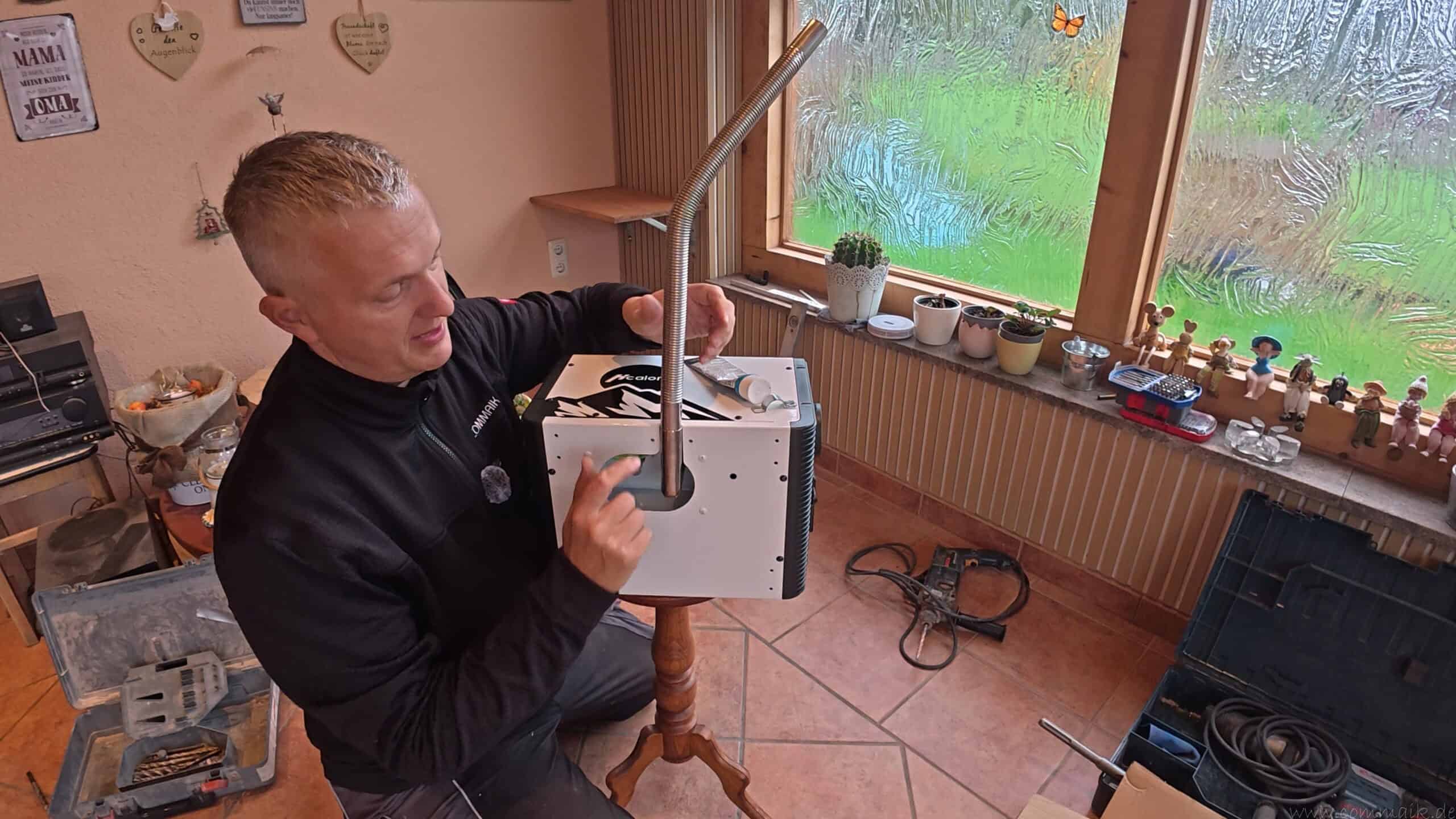
A sturdy wooden panel was used as the base, which was attached to the wall with robust metal brackets. It serves as a stable base to safely support the weight of the heater and minimize vibrations. The mounting plate also provides a clean separation between the wall and the appliance, ensuring reliable air circulation behind the heater. When attaching the bracket, make sure that the surface is absolutely horizontal – this makes it easier to connect the flue gas and hot air pipes later on. - Attach and screw on the heater
The diesel heater has feet with drill holes on the underside, making it very easy to screw onto the wooden panel. The aim of this step is to achieve a vibration-free and stable mounting in order to reduce running noise and ensure a long service life for the components. It is important that the air outlets remain unobstructed and that no material is in direct contact with them that could be deformed by heat. - Connect exhaust hose to exhaust bracket and seal joints
For the exhaust gas routing, heat-resistant exhaust paste was first applied evenly to the pipe ends. Only then were the pipes and brackets inserted into each other and then screwed together. This sequence ensures that the sealant is evenly distributed and that no cavities are created when it is inserted. The aim is to achieve a permanently gas-tight connection, as escaping exhaust gases can be harmful to health. After curing, the joint should be checked again to rule out leaks. - Drill an opening (25 mm) to the outside and route the flue gas pipe
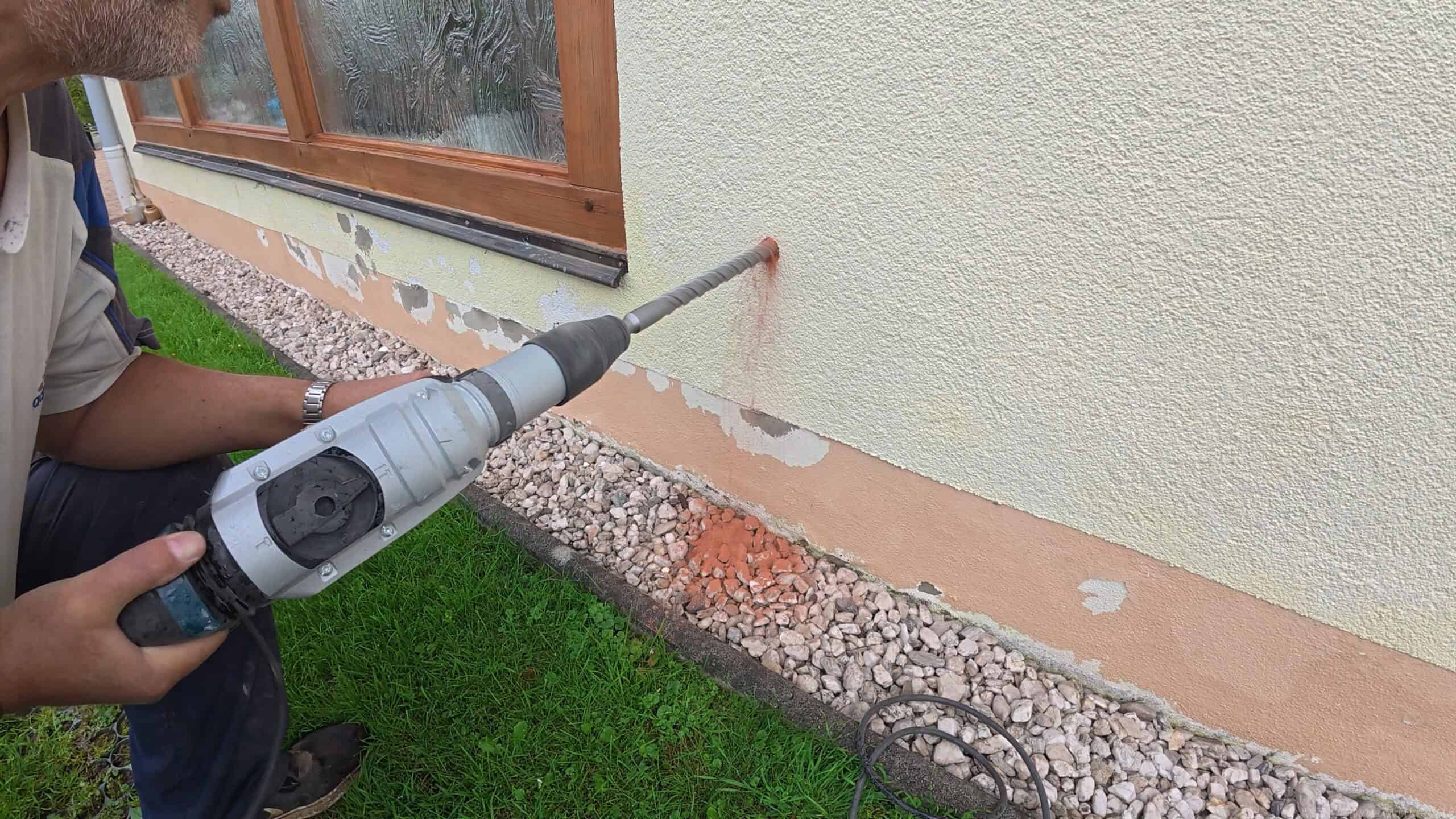
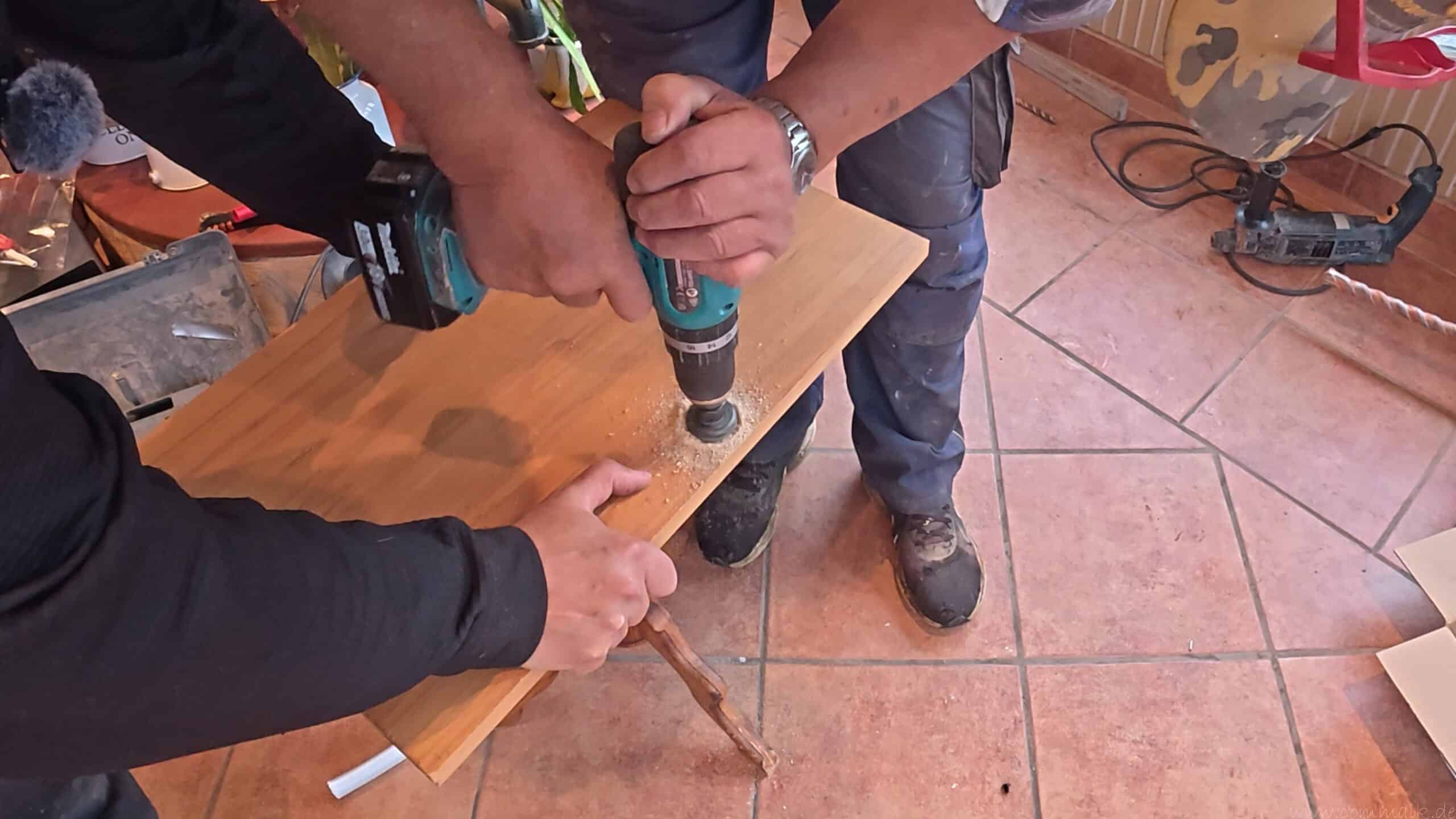
The wall breakthrough was made directly after the wooden panel had been installed, once the exact flue gas paths had been measured. The hole with a diameter of around 25 mm was positioned in such a way that the exhaust pipe can be routed as short and straight as possible. A slight outward inclination prevents rain or condensation from entering the pipe. When feeding the pipe through, ensure that there is sufficient distance from combustible materials. - Establish power connection via the supplied power supply unit
The heater requires a reliable power supply for the glow plug, fan and control electronics. There was already a socket outlet at the installation site that provided sufficient protection for the high starting currents of the heating system. The connection is made via the 230V power supply unit supplied, which provides the necessary voltage for the starting process. Alternatively, the power supply can be provided by a 12V or 24V battery, for example for off-grid applications or in vehicles. All cable connections should be laid neatly and protected against moisture. - Fill the tank with diesel and bleed the system
Finally, the integrated 5-liter tank was filled and the system bled so that the diesel pump delivers fuel evenly. When filling, diesel should be filled using a funnel or hose to avoid contamination in the tank. After the first start, the pump is slightly audible until the line is completely filled. As soon as the flame is burning steadily, the system continues to work automatically.
The installation of diesel heating in the conservatory requires precise work, clean seals and safe exhaust gas routing. All connections were carefully sealed with exhaust paste and checked for leaks. A CO detector in the room is essential to ensure that the heating runs safely in the long term. It warns of leaks in good time and makes a decisive contribution to operational safety.



- Hochwertige Materialien: Abgasschlauch für stromerzeuger besteht aus edelstahl, der sicher und gesund ist, die vorteile korrosionsbeständigkeit, verschleißfestigkeit usw. Aufweist, wirtschaftlich und langlebig ist.
- Geräuschreduzierung und Luftdichtheit: Abgasschlauch hat einen guten geräuschreduzierungseffekt, der lärm für sie effektiv reduzieren kann. Es gibt auch zwei klemmen, mit denen die standheizung auspuff besser befestigt werden kann, um eine perfekte abdichtung zu gewährleisten. Die klemmen bestehen aus edelstahl und haben eine lange lebensdauer.
- Einfache Installation: Entfernen sie direkt den alten oder beschädigten edelstahl auspuff schalldämpfer, schließen sie das neue auto edelstahl auspuffrohr an und befestigen sie beide enden des auspuffrohrs mit clips.
- Breites Anwendungsspektrum: Edelstahl abgasschlauch eignet sich zum parken von lufterhitzern, luftrohölheizungen zum parken, kfz-lufthilfsheizungen und generatorabgasen.
- Verpackung und Service: Sie erhalten eine 200 cm standheizung abgasschlauch und zwei edelstahlklammern. Wenn sie fragen haben, können sie sich gerne an uns wenden. Wir werden das problem innerhalb von 24 stunden für sie lösen!
Safety & exhaust gas routing
Installing a diesel heater indoors or in a mobile home requires special care. It is crucial to understand risks and control them with appropriate measures.
Possible security risks
- Carbon monoxide (CO): Incomplete combustion or leaks in the flue gas path can lead to CO entering the interior. CO is odorless, colorless and dangerous even in low concentrations.
- Exhaust gas and heat damage: Hot exhaust gas (>150 °C) can cause thermal damage to adjacent components, insulation or cables; contact can cause burns.
- Fuel risks: Although diesel/fuel oil is less volatile than gasoline, it can ignite if there is a leak; the smell of diesel in the passenger compartment indicates leaks or spilled fuel.
- Electrical risks: Undersized cables, missing fuses or loose terminals cause heating, contact fires or failures (especially with starting current).
- Lack of air / negative pressure: A lack of supply air or blocked intake worsens combustion; soot formation, flame break-off and rising CO values are possible consequences.
- Condensate & rainwater: Incorrectly routed flue gas pipes can lead condensate back into the appliance or allow rainwater to penetrate; there is a risk of corrosion and malfunctions.
- Vibration & loosening: Vibrations loosen clamps and clips; over time, leaks occur in the exhaust or fuel system.
Safety precautions and their effect
1) Exhaust gas routing (tight, short, safe)
- Continuous tightness: Moisten all plug-in connections in the exhaust path with heat-resistant exhaust paste before plugging them together, then plug them completely into each other and screw them together. Prevents CO/exhaust gas from entering the interior.
- Slope to the outside: Run the flue pipe out of the room with a slight slope (slightly deeper on the bore side) so that condensate and moisture can drain to the outside. Prevents water ingress and corrosion.
- Thermal shielding: Wrap exhaust pipe with heat protection tape and provide heat shielding plate or distance to combustible materials at penetrations. Reduces the risk of fire and contact.
- Keep the blow-out zone clear: Position the end piece so that exhaust gas does not flow back into windows, vents or intake areas. Prevents exhaust gas recirculation and CO enrichment.
- Vibration-proof clamps: Use stainless steel clamps with sufficient width; tighten after the first hour of operation and regularly thereafter. Works against loosening.
2) Fresh air & combustion air
- Separate paths: Always supply combustion air from outside, spatially separated from the flue gas outlet. Ensures clean combustion, prevents backflow.
- Intake protection: Protect intake opening against splash water and dirt (cap/filter), do not place in dust or snow swirls. Prevents blockages and soot formation.
3) Fuel system
- Tight lines: Select a fuel-tight fuel hose and secure it on both sides with suitable hose clamps. Works against leaks.
- Clean filling: Use a funnel/hose when filling; remove spilled residues immediately. Avoids odor and fire load.
- Decoupling the diesel pump: Mount the pump elastically (rubber holder) and at the correct angle (manufacturer’s specification) so that the delivery rate and noise behavior remain stable.
4) Electrical safety
- Adequate fuse protection: Provide your own fuse suitable for the maximum current (start phase ~120 W); use an existing socket with adequate fuse protection. Prevents line overload.
- Cable cross-section: Dimension power supply and DC cables sufficiently, strain-relieve connections and protect against moisture. Reduces voltage drop, contact heat and failures.
- Cable routing: Distance to hot areas (flue gas/radiators), with heat protection conduit if necessary. Prevents insulation damage.
5) Room and operational safety
- Install CO detector: Fit carbon monoxide detectors in the occupied area and near the installation, test regularly. Early warning of malfunctions.
- Ensure ventilation: Sufficient basic ventilation in the installation room; prevents oxygen deficiency and flue gas recirculation.
- Provide fire protection: Fire extinguishers (fire class A/B) ready to hand; clear escape and shutdown plan. Minimizes damage in the event of an incident.
Checklist: safe commissioning & control
- Visual inspection of all exhaust connections (paste beads, clamps, seat) before the first start.
- First start in observation mode: Exhaust odor outside, no odor inside.
- CO detector test via test button, check battery/mains.
- Check power supply for heat/hum (socket, power supply unit, terminals).
- After 30-60 minutes of operation: retighten the clamps, check the flue gas path again.
- Regular maintenance: Visual inspection monthly during the heating season, check seals every six months, keep flue gas end clear.
Indicators for problems (act immediately)
- Diesel smell in the interior → Check fuel leak or exhaust gas leak, interrupt operation.
- Visible smoke/smoke at the breakthrough → Leak in the flue gas path; switch off immediately.
- Unsteady flame, frequent switch-off → Check supply air/exhaust gas path, keep intake free.
- Unusual noises from the diesel pump → Check fastening/venting/fuel supply.

- asbestfrei
- einfache Handhabung
- hohe Gasdichtigkeit
- einfache Anwendung ohne Demontage
- hervorragende Hitzebeständigkeit
Operation and control of the heating
The Hcalory HBH2 diesel heater is not only easy to install, but also versatile to operate. It can be controlled either via the integrated LCD display, the Bluetooth app or a wireless remote control. This means that the heater can be conveniently operated both stationary – for example in a conservatory – and mobile in a motorhome or camper.
Control via the LCD display
The LCD control panel is permanently connected to the heater, but can be flexibly positioned using the extension cable supplied. This means that the display can also be mounted in the interior and conveniently used as a remote control without having to stand directly next to the heater.
The following functions can be controlled and read via the display:
- Switching the heating on and off
- Selecting the temperature or power level
- Control of voltage, pump frequency and operating time
- Activation of plateau mode (2,500 m / 5,000 m)
- Display of error codes in the event of faults
Advantage: Fast, direct operation without a smartphone; ideal for stationary operation.
Disadvantage: No option to save timers or schedules – these functions are only available in the app.
Control via the Hcalory app
The Hcalory app is the most convenient way to operate the heating. It connects via Bluetooth and works independently of WLAN or the Internet.
Functions and modes:
- Temperature mode: The heating switches on and off automatically as soon as the temperature reaches or falls below the desired temperature.
- Advantage: Energy-saving and ideal for continuous operation.
- Disadvantage: Short switch-on and switch-off intervals can be audible in small rooms.
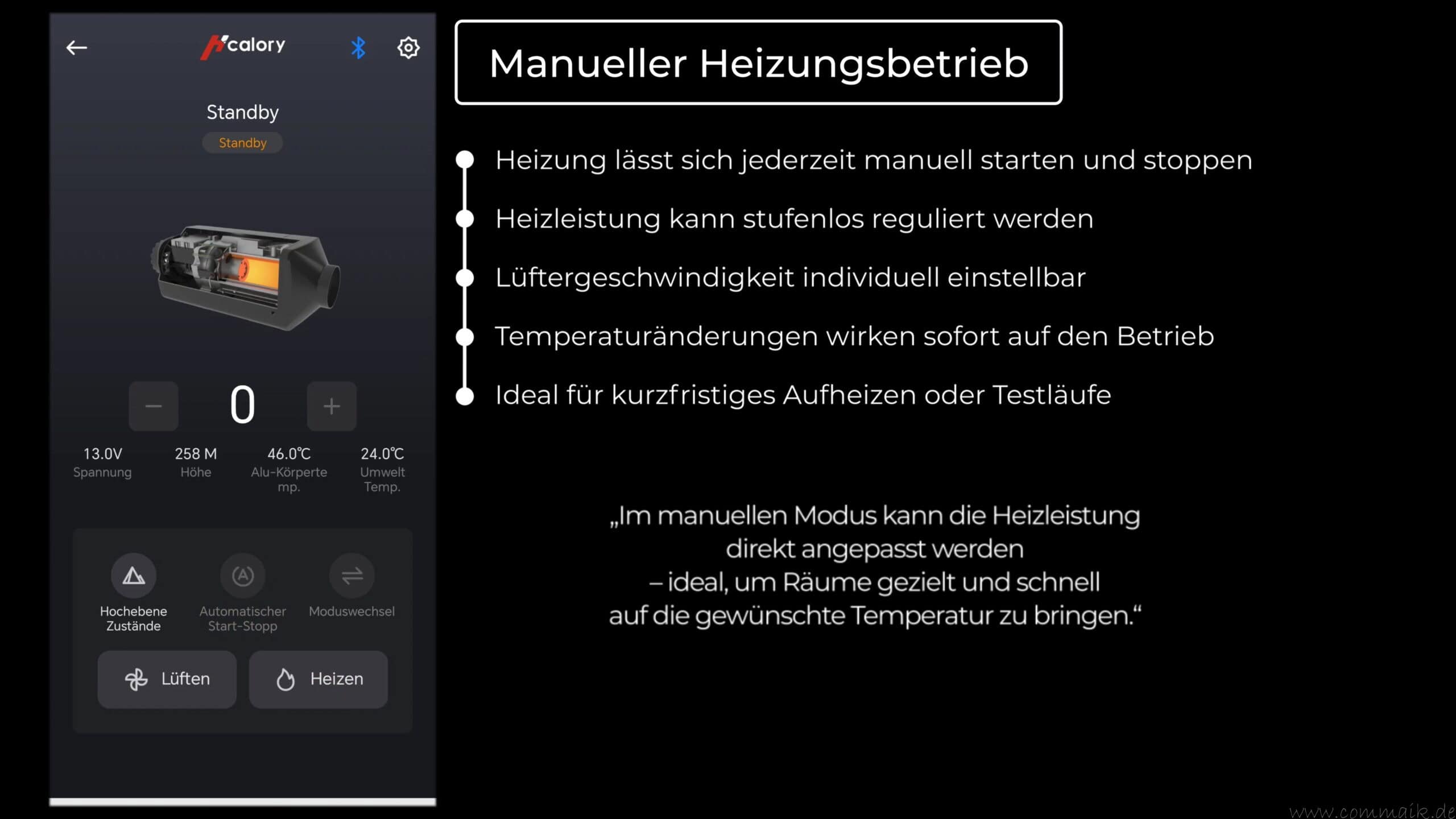
- Power mode: The heat output is set manually via levels – regardless of the room temperature.
- Advantage: Constant heat emission, e.g. with open doors or frequent ventilation.
- Disadvantage: No automatic switch-off – regular checks necessary.
- Timer function: Enables time-controlled starting and stopping, for example as overnight heating or for automatic morning operation.
- Advantage: High level of comfort, especially in mobile homes or with fixed heating times.
- Disadvantage: App must be actively connected to apply changes.
- Plateau mode: Reduces the injection quantity for altitudes (2,500 m or 5,000 m).
- Advantage: Clean combustion in thin air, less soot formation.
- Disadvantage: Slightly reduced heat output in valley locations.
The app also displays the voltage, current room temperature, radiator temperature, fan speed and consumption in real time.
Important: The app only needs to be actively connected during programming or direct control via Bluetooth. As soon as schedules, timers or operating modes have been saved, the heating works autonomously – it reliably executes the saved sequences, even without an active Bluetooth connection.
Bluetooth remote control
The Bluetooth remote control is particularly practical for everyday use when no app connection needs to be established. It provides access to the most important basic functions without the need for a smartphone.
Functions of the remote control:
- Switching the heating on and off
- Increase or decrease temperature
- Activate or deactivate the timer
- Status display via LED
This control unit is ideal for use in motorhomes, campers or in larger rooms where the display is not directly accessible.
A typical application scenario is to start the heating remotely, for example from bed or before entering the conservatory – this way, the room can already be preheated.
Reliability in operation
In daily operation, the heating works reliably and evenly. The diesel pump delivers the fuel constantly, creating a stable flame and preventing temperature fluctuations.
Thanks to the combination of manual power mode, automatic temperature control and app-supported timer operation, the Hcalory HBH2 can be flexibly adapted to any situation – from quickly heating up a room to economical continuous operation overnight.

- BITTE BEACHTEN SIE, DASS DAS XP0A-SR NICHT MIT SBS50 BASISSTATIONEN KOMPATIBEL IST. Nur die deutsche Sprache wird unterstützt. Eine App-Unterstützung ist nicht verfügbar. Wenn Sie App-Funktionen benötigen, wählen Sie bitte das XP0A-MR11 (mit Basisstation) oder das XP0A-iR (WLAN-Verbindung).
- Alarm per Sprachausgabe: Zusätzlich zu der Alarmsirene erklingt eine Sprachausgabe, um Bewohner unmittelbar auf die vorhandene Gefahr hinzuweisen. So gibt der eingebaute Lautsprecher je nach Art der erkannten Gefahr spezifische Warnmeldungen aus, wie etwa: „Warnung! Rauch entdeckt. Evakuieren Sie.“ oder „Warnung! Kohlenmonoxid erkannt. Begeben Sie sich an die frische Luft.“ (Nur Deutsch)
- Einfacher bedeutet sicherer: Praktische Sprachwarnungen informieren Sie schnell und einfach über wichtige Ereignisse wie Notfälle, Batteriestatus, Fehler und Lebensdauer. Auf dem LCD-Display werden Kohlenmonoxid-Messwerte, Batteriestatus und andere Informationen in Echtzeit angezeigt. So können Sie die Situation rasch einschätzen, ohne das Handbuch herauskramen zu müssen – und schnell handeln, um Ihre Familie zu schützen
- Barrierefrei: Dank der Sprachwarnungen ist dieser Melder auch für Kinder geeignet. Zudem können Kinder dank des LCD-Displays und der LED-Statusleuchte problemlos informiert werden
- 2-in-1-Schutz: Umfassender Schutz durch einen einzigen Rauchmelder: der photoelektrische und der elektrochemische CO-Sensor funktionieren unabhängig voneinander und warnen Sie unverzüglich im Falle von gefährlichen Rauch- oder CO-Werten. So ist Ihre Familie mit minimalem Aufwand vor zwei tödlichen Bedrohungen geschützt
Practical test and experience
The diesel heater was tested in continuous operation for several hours. It heats the room by around 2-3 °C per hour and produces uniformly warm air that is well distributed throughout the room.
Experience shows: The automatic mode saves noticeable amounts of fuel, as the heating switches off automatically as soon as the desired temperature is reached and restarts when required. This keeps the room temperature constant while consumption remains at a very low level.
Advantages of diesel heating
- High heat output with low consumption
- Independence from external power supply
- Control via app or remote control
- Durable components with a robust design
- Low maintenance requirements
Another advantage: The Hcalory HBH2 diesel heater can be operated not only with conventional diesel, but also with heating oil or so-called HBV fuels.
HBV diesel (hydrogenated vegetable oil, also known as “HVO diesel”) is a synthetic biofuel produced from vegetable oils or waste fats. It burns cleaner than conventional diesel, reduces soot formation and CO₂ emissions and is therefore particularly suitable for indoor applications or operation in garden sheds.
It is even technically possible to use vegetable oil – old frying fat, for example – as long as it is filtered and brought to room temperature. However, it should be noted that the higher viscosity can cause deposits to form on the nozzle and in the combustion chamber. To counteract this, the heater should be regularly “burned free” with commercially available diesel or additives.
Disadvantages of diesel heating
Despite many advantages, there are also some points that should be considered:
- Noise development: The diesel pump produces a rhythmic clicking noise that can be heard in very quiet environments.
- Odor development on starting: In the first few seconds after ignition, a diesel odor may develop briefly until combustion is stable.
- Exhaust system: The exhaust hose must be checked regularly for leaks to prevent leaks and CO entering the interior.
- Maintenance: After long periods of operation, soot deposits can build up in the combustion chamber or on the glow plug – regular cleaning extends the service life.
- Temperature control: In very small rooms, the heating switches on and off relatively frequently due to the high heat output, which can make operation somewhat unstable.
Overall, the HBH2 diesel heater impresses with its efficiency and flexibility – the ability to use different fuels makes it a versatile solution for stationary use as well as for operation in motorhomes and campers.
Diesel heating in motorhomes, campers and other applications
A diesel heater is now the preferred solution when it comes to heating in a motorhome, camper or truck. Unlike a gas heater or water heater, it does not require an external tank or gas cylinders, but taps directly into the vehicle tank or uses an integrated fuel tank. This makes them particularly safe, efficient and flexible to use.
Thanks to direct access to the vehicle’s diesel supply, the heating in the motorhome works independently of external energy sources. There is no need to refill or check gas cylinders, which not only increases convenience but also safety. A diesel heater is therefore particularly suitable for long journeys or self-sufficient operation on remote pitches.
Comparison of different heating systems in the vehicle
| Type | Advantages | Disadvantages |
|---|---|---|
| Diesel parking heater | Efficient, simple refueling via vehicle tank, independent of the power grid | Pump noise and fan slightly audible |
| Gas heating | Quiet, reliable, proven in the camping sector | Regular cylinder replacement, gas testing, higher installation costs |
| Water heating | Even heat distribution via heating circuits | High power consumption, longer heat-up time |
The diesel parking heater has established itself as the standard, particularly in the motorhome sector. Manufacturers such as Webasto, Eberspächer and Planar offer models that can be retrofitted in almost any vehicle. The same applies to the Hcalory HBH2, which can also be used in smaller vehicles, boats or construction containers thanks to its compact design and universal power supply (12 V, 24 V or 230 V).
Other possible applications
In addition to the classic use in motorhomes or trucks, a diesel heater is also ideal for camping, camping, fishing or in outdoor huts where there is no fixed power supply. With an off-grid PV system or a battery, the heating system can be operated completely independently and provides a reliable source of heat even at sub-zero temperatures.
The Hcalory HBH2 consumes an average of around 0.2 liters of diesel per hour, making it significantly more efficient than electric heaters. While heating with electricity quickly results in high energy costs, diesel heating enables a consistent and cost-effective heat supply – both stationary in the home and mobile when camping or traveling.
Whether in a camper, caravan, truck, boat or small garden shed: Diesel heating offers advantages wherever a constant heat source with low consumption and high efficiency is required – ideal for anyone who wants independent, flexible and energy-efficient heating.
Maintenance and retrofitting
A diesel heater is virtually maintenance-free and requires hardly any care during normal operation. Occasional refilling of the fuel is sufficient to ensure reliable operation. Nevertheless, some components should be checked regularly: These include the exhaust pipe, the diesel pump and the air supply, as soot or deposits can build up over time. A visual inspection every few months ensures that the heating system is always clean and efficient.
Anyone using an older heater in their vehicle can easily retrofit it with a modern model. Installing a new diesel heater is usually straightforward as long as there is enough space for the tank, exhaust gas routing and air heater. Especially in motorhomes, campers or trucks, retrofitting offers a considerable increase in comfort, as the systems today are more compact, quieter and more economical than older models.
For stationary applications, it is also worth taking a look at the implementation of similar projects. In my article “Installing a diesel parking heater permanently in the workshop – explained step by step”, I show in detail how an 8 kW parking heater can be permanently installed – including exhaust gas routing, power connection and safety measures.
The “mobile heater box” on my website also offers a practical alternative to retrofitting in the vehicle. It combines a diesel heater with an integrated tank in a compact housing and is ideal for garden sheds, workshops or off-grid applications.
If you are generally interested in projects for saving energy in the home or garden, you can find an overview of my DIY projects relating to heating technology, solar and smart home solutions under “Home & Energy”.

- LIQUI-MOLY_bundle | 2 x Liqui Moly Motorsystemreiniger Diesel 300 ml | 5128 | SET000310222
My conclusion on the test of the Hcalory HBH2
After several weeks of practical use, the Hcalory HBH2 diesel heater has proven to be reliable and efficient. In conservatories, it ensures even heat distribution and reliably prevents frost without consuming unnecessary amounts of energy. The combination of compact design, robust workmanship and simple controls makes it a versatile solution for a wide range of applications.
The option of operating the heating system independently – either via the power grid, a 12V or 24V battery or an off-grid PV system – was particularly impressive. This makes the HBH2 not only suitable for permanent installation in the home, but also ideal for mobile use in motorhomes, campers or trucks. The heat output is impressive for its size, and consumption remains pleasingly low at an average of 0.2 liters of diesel per hour.
The Hcalory HBH2 is a real alternative for anyone looking for additional heating or who wants to reduce the amount of electricity used for heating. It works quietly and efficiently and offers a high level of user convenience thanks to the app control and timer function.
The Hcalory HBH2 diesel heater is therefore a convincing solution both for stationary operation – for example in conservatories, workshops or garden sheds – and for retrofitting in vehicles. It combines flexibility, performance and safety in a compact system and is therefore a clear recommendation for anyone who wants to heat efficiently and independently.
Summary
The blog post “Why install a diesel heater?” describes in detail the installation and practical experience with the Hcalory HBH2 diesel heater – a compact, energy-efficient and versatile alternative to conventional electric heaters.
A 2000-watt electric radiator was previously used in the 6 × 6 meter conservatory with single glazing and high heat loss, which caused high electricity costs and only heated unevenly. By installing the diesel heating system, it was possible to achieve an even temperature distribution. The appliance burns diesel or heating oil, generates warm air via a heat exchanger and distributes it evenly throughout the interior.
With a consumption of just 0.12 to 0.45 liters of diesel per hour, the effective heating output is between around 1.2 and 4.5 kW – enough to reliably heat even larger or poorly insulated rooms. The integrated app control, automatic start/stop mode and operation via 12 V, 24 V or 230 V make the heater particularly flexible and also suitable for use in motorhomes, campers, trucks or boats.
The article also explains the design, technical data, installation, flue gas routing and safety measures in detail. The installation was carried out on the inside wall of the conservatory with secure sealing of the flue gas pipe and installation of a CO detector. The temperature, timer and fan speed can be controlled via app, display or remote control – even independently once schedules have been programmed.
In the practical test, the HBH2 impressed with a stable flame, quiet operation and low consumption. In addition to diesel, heating oil, HVO diesel (HBV) or even filtered vegetable oil can also be used – the latter, however, with regular cleaning to avoid deposits.
The article concludes on a positive note: the Hcalory HBH2 offers an efficient, safe and cost-effective solution for heating with diesel instead of electricity – whether stationary in a conservatory, workshop or garden shed or mobile in a motorhome or camper. Anyone looking for an independent and economical heating system will find a real alternative to electric or gas heating systems here.
FAQ – The 10 most frequently asked questions about installing a diesel heater
1. why install a diesel heater?
A diesel heater offers an efficient way of heating independently of the electricity grid. Compared to an electric heater, it saves energy, reduces operating costs and provides evenly warm air – ideal for the conservatory, motorhome or camper.
2 How does a diesel heater work?
The heater burns diesel or heating oil in a combustion chamber. The heat is transferred to the room air via a heat exchanger and distributed evenly by a fan. Exhaust gases are routed outside through an exhaust pipe – safely separated from the indoor air.
3. how high is the consumption of a diesel heater?
Depending on the heating level and model, consumption is between 0.12 and 0.45 liters of diesel per hour. With a diesel price of €1.70, this results in heating costs of around €0.20 to €0.75 per hour. This means that heating with diesel is significantly cheaper than heating with electricity.
4. can a diesel heater be operated with heating oil?
Yes. Heating oil is almost identical to diesel and is ideal for stationary operation in the house, garden shed or conservatory. It is important that the pipes are stored cleanly and checked regularly to avoid contamination.
5 Is a diesel heater suitable for motorhomes or campers?
Definitely. A diesel heater in a motorhome or camper uses the existing vehicle tank as a fuel source and makes heating possible without gas bottles or an electricity connection. This ensures greater safety, comfort and independence when traveling.
6. how complicated is the installation of a diesel heater?
Installation is easy to carry out with experience. It is important to have a fixed installation surface, secure flue gas routing, the correct power connection and sufficient space for the tank and hot air ducts. Many models, such as the Hcalory HBH2, are designed for self-installation.
7. how loud is a diesel heater in operation?
During operation, the diesel pump produces a rhythmic clicking noise, while the fan is barely audible at low speed. The noise level is between 45 and 52 dB – comparable to a refrigerator. Rubber mounts and insulation can further reduce noise.
8. is a diesel heater in the passenger compartment safe?
Yes, if installed correctly. Combustion takes place in a closed system and the exhaust gases are safely discharged to the outside. In addition, a carbon monoxide detector should always be installed. Modern diesel heaters have overheating, short-circuit and frost protection functions.
9. which fuels can a diesel heater use?
In addition to diesel, heating oil, HVO diesel (hydrogenated vegetable oil) and even filtered vegetable oil are also possible. The latter should only be used occasionally, as it can lead to deposits in the combustion chamber. Regular cleaning or operation with conventional diesel prevents problems.
10. how often does a diesel heater need to be serviced?
A modern diesel heater is virtually maintenance-free. However, an annual inspection of the exhaust pipe, combustion chamber and diesel pump is recommended. After several hours of operation, it may be necessary to clean the glow plug and heat exchanger in order to maintain full heating performance.

- 【Hochwertiges Material】 Sie erhalten 1 Edelstahl-Auspuffrohr + 2 Schlauchschellen. Das Auspuffrohr der Autoheizung besteht aus hochwertigem Edelstahl, der eine lange Lebensdauer hat, langlebig, korrosionsbeständig und verschleißfest, gesund und sicher ist.
- 【Mehrfachnutzungsanlässe】Geeignet für Outdoor-Camping, Holzofen, Ofenheber-Heißzelt oder Warmwasserbereiter-Rohrleitungen im Innenbereich. Die 90-Grad-Biegung kann in Bereichen verwendet werden, in denen der Platz begrenzt ist oder eine Biegung erforderlich ist.
- 【Hohe Prozessgenauigkeit】Beim Verbinden mit anderen Rohren gleichen Durchmessers sind die Verbindungsstellen dicht und luftdicht. Achten Sie darauf, das Ofenrohr nicht durch Kompression zu verformen.
- 【Perfekter Ersatz des Originals】 Dieses Zubehör ersetzt das Original perfekt. Bringen Sie die Standheizung wieder in den Normalbetrieb. Sparen Sie Wartungszeit und -kosten.
- 【Breite Anwendung】 Das Abgasrohr der Dieselheizung ist ein praktisches Zubehör. Dieses Produkt ist eine Autoauspuffdüse mit 25 mm Durchmesser, die für die meisten Autos geeignet ist.
Dieser Beitrag ist auch verfügbar auf:
 English
  Deutsch


Ähnliche Beiträge

Expand Reolink NVR storage space – Installing and configuring hard disks correctly

Build your own smoke-free fire barrel: DIY instructions from a 200 L oil drum with secondary ventilation